
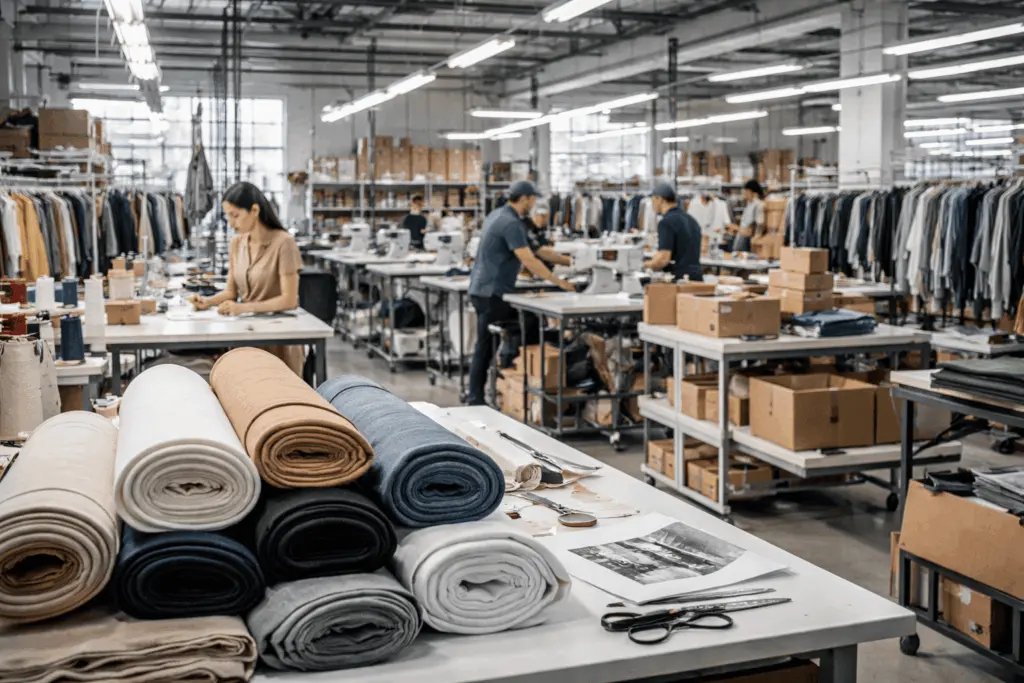
The supply chain in fashion drives every product, deadline, and margin. Yet many fashion brands struggle to control it. Delays, excess inventory, rising costs, and missed trends often come from the same place. The fashion supply chain is complex by design. The fashion industry is a highly competitive, making supply chain optimization essential for brands to stay ahead.
This guide explains the fashion supply chain explained from the ground up. It focuses on why this supply chain important for success often breaks down. In the fashion business, supply chain strategy is central to operations and long-term success. It also shows where fashion companies lose visibility and control across the entire supply chain.
What the Fashion Supply Chain Refers To
The supply chain refers to the full journey of a product. It starts with raw materials and ends at the final sale. This complex network includes design, sourcing raw materials, production process steps, logistics providers, distribution centers, retail stores, and returns. Apparel brands require tailored supply chain strategies to improve operations and meet marketing objectives.
The fashion industry supply chain spans multiple countries. Each step adds risk, cost, and delay. Sustainable sourcing is increasingly important at each step of the supply chain to meet ethical and regulatory expectations. The fashion supply chain explained simply still hides many dependencies.
Fast Fashion vs Long Lead Times
Fast fashion promises speed. The fast fashion supply chain reacts to fashion trends in weeks. However, raw material production often takes months. Fabric mills need forecasts early. Factories lock capacity far in advance.
This mismatch creates pressure across the supply chain. Supply chain managers commit before demand becomes clear. Effective production planning, supported by integrated supply chain management software, can help align inventory with demand and streamline manufacturing workflows, improving operational efficiency in the fashion industry.
When trends shift, fashion supply plans fail.
Fast fashion brands face higher environmental impact, rising transportation costs, and excess inventory when forecasts miss.
Seasonal Collections and Demand Forecasting Risk
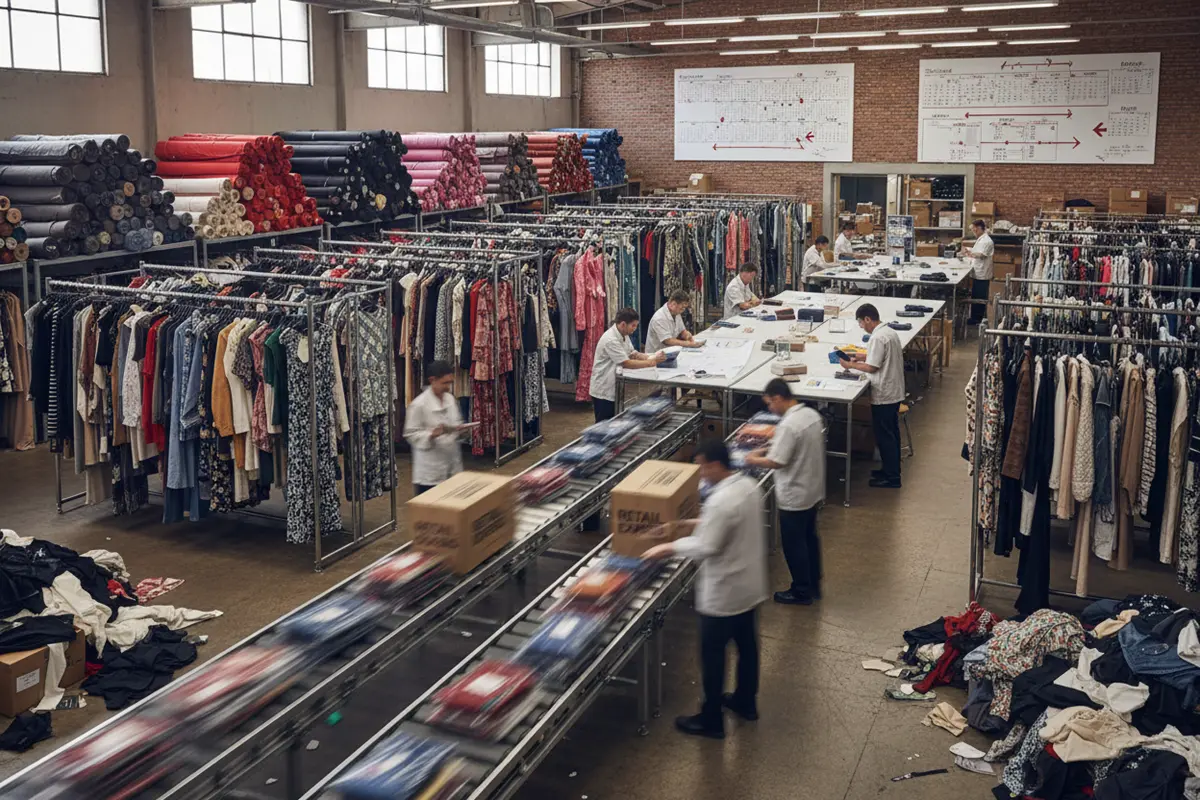
Seasonality defines the fashion industry. Brands plan collections far ahead. Demand forecasting relies on historical data. Shifting consumer demands reduce forecast accuracy.
Consumer demand now reacts to social media, climate changes, and global events. Market demand shifts quickly. When demand forecasting fails, inventory levels spike or stock runs out.
Poor forecasting damages customer satisfaction and leads to lost sales.
Multi-Supplier and Multi-Country Production
Most fashion companies rely on a global supply chain. Suppliers operate across multiple countries. Each region adds compliance rules, currency risks, and shipping delays.
A delay at one supplier impacts the entire supply chain. Quality control becomes harder. Risk management becomes critical.
Many brands lack real-time supply chain visibility across borders.
Raw Materials and Fabric Dependencies
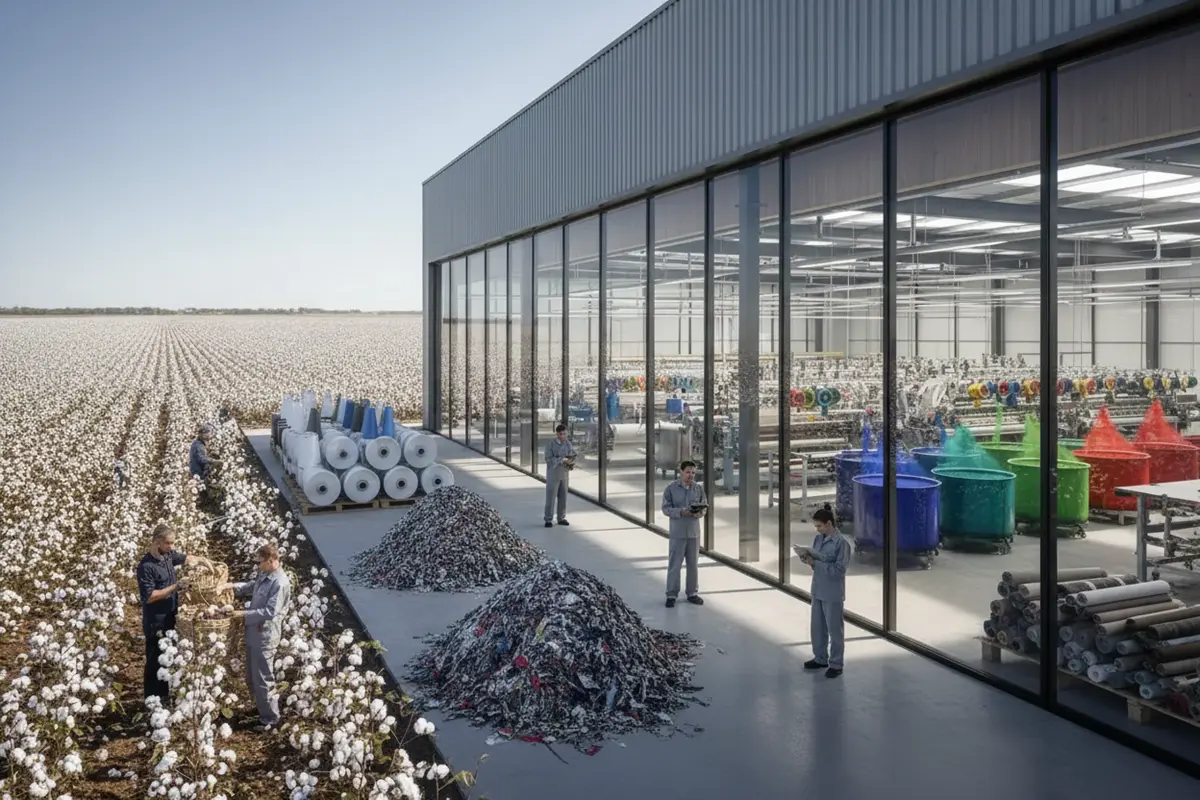
Raw materials sit at the core of the supply chain. Cotton, synthetics, and recycled materials depend on global markets. The growing use of sustainable materials helps reduce environmental impact and appeals to ethically conscious consumers. Raw material sourcing often limits flexibility.
Fabric mills require minimum orders. Dyeing and finishing add time and energy consumption. Any disruption affects multiple styles.
Sourcing costs rise when alternatives replace delayed materials.
Many brands are transitioning to organic cotton and recycled polyester as part of the shift toward eco-friendly fibers.
Last-Minute Design Changes
Design teams adjust products to meet consumer expectations. Late changes affect the production process. Pattern updates delay factories. Material changes increase cost management pressure.
These changes ripple across supply chain processes. Timely delivery becomes harder. Product quality risks increase.
Without firm deadlines, the fashion supply chain absorbs constant shocks.
Data Silos Across the Supply Chain
Many fashion brands operate with disconnected systems. Design, sourcing, inventory management, and production teams store data separately.
These silos block supply chain transparency. Teams work with outdated information. Decisions rely on assumptions.
Supply chain management software helps only when processes align.
How Poor Visibility Impacts Fashion Supply
The supply chain in apparel inductry depends on clear visibility. Without it, brands react instead of plan. Delays surface too late. Costs rise fast.
Poor visibility increases excess inventory and air freight use. It also raises environmental impact and energy consumption.
Supply chain visibility supports better risk management and cost efficiency.
Creating an Agile Supply Chain
In today’s fast-paced fashion industry, creating an agile supply chain is essential for fashion brands to keep up with ever-changing fashion trends and shifting consumer demands. An agile supply chain allows fashion companies to respond quickly to market changes, reduce lead times, and deliver products that meet customer demand with greater accuracy. Strategies such as nearshoring — producing goods closer to key markets — help reduce transportation costs and speed up delivery. Outsourcing certain production steps can also improve efficiency and allow brands to focus on their core strengths.
Investing in supply chain management software is another critical step. These tools provide real-time data and analytics, enabling fashion companies to optimize inventory management, improve demand forecasting, and streamline logistics. With better visibility and faster decision-making, brands can minimize stockouts, reduce excess inventory, and enhance product quality. Ultimately, an agile supply chain empowers fashion brands to adapt quickly, meet customer expectations, and maintain a competitive edge in a rapidly evolving market.

Sustainability Pressures in the Fashion Industry
The global fashion industry faces scrutiny. Consumers expect ethical sourcing and fair labor practices. Regulators demand transparency.
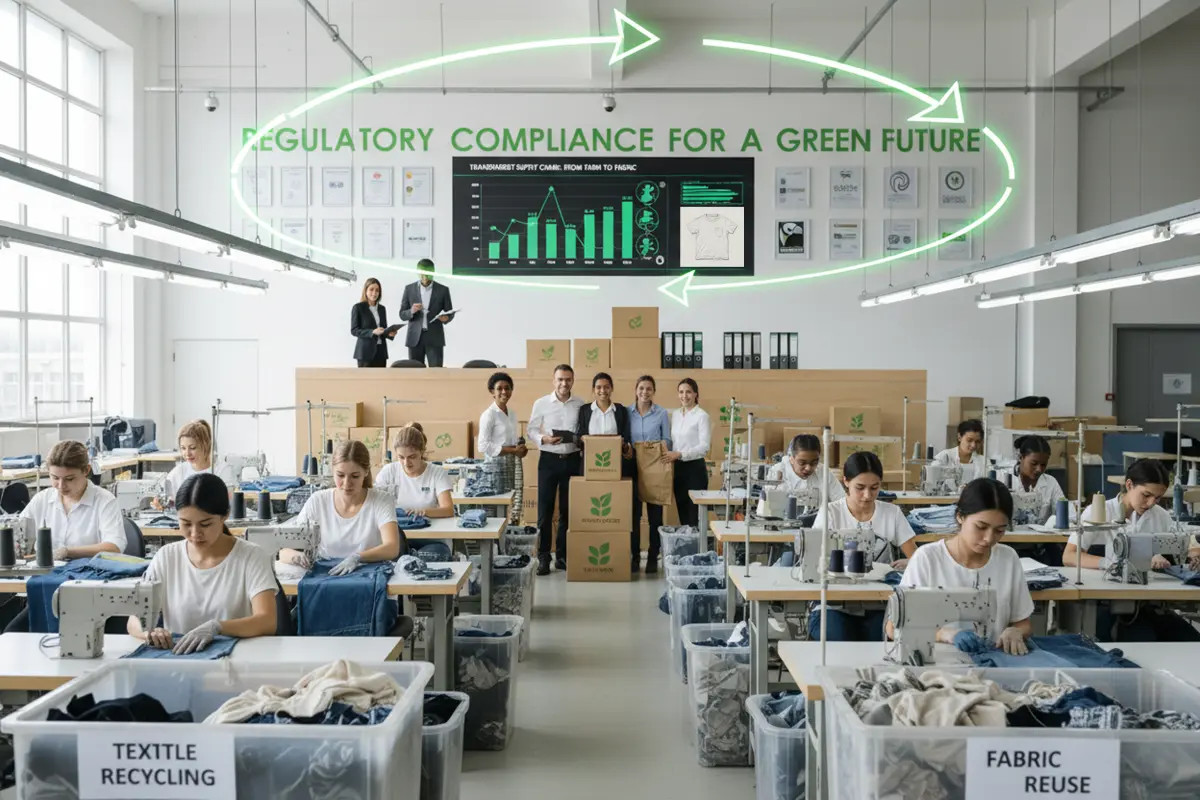
Unsustainable practices increase environmental impact. Forced labor risks damage brand trust. Sustainable practices sustainability now affect buying decisions. Many brands are adopting circular models and recycling initiatives to reduce waste, making their fashion supply chain more environmentally friendly.
Fashion companies must balance speed with sustainable business practices. A significant number of fashion brands are committing to circularity by recycling, repairing, and repurposing materials to further reduce waste.
Inventory Management Challenges
Inventory management plays a major role in shaping profitability. When visibility is poor, brands face excess inventory or stockouts, and both outcomes negatively impact fashion retailers.
Well-optimized inventory management helps brands meet customer demand while reducing waste and unnecessary costs.
Distribution centers play a critical role in this process by helping balance supply and demand across channels and markets.
Cost Pressures Across the Entire Supply Chain
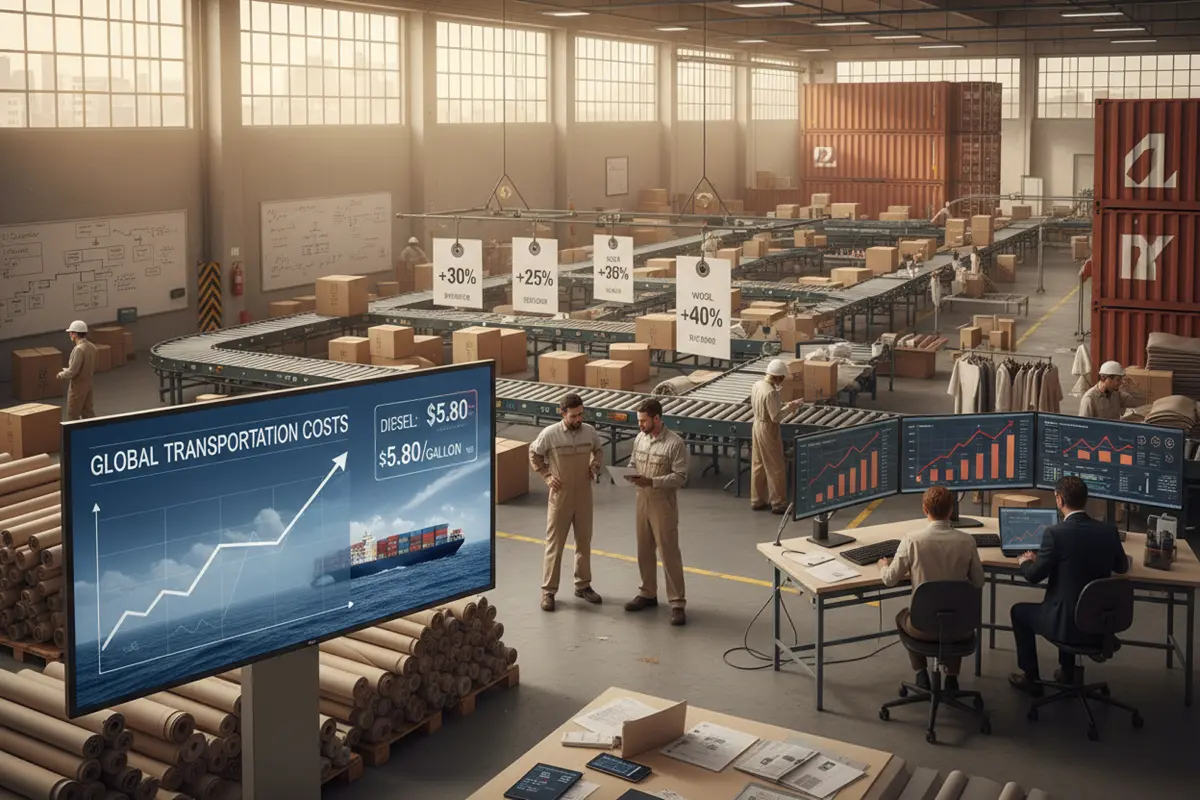
Rising costs impact every stage of the fashion supply chain. Transportation costs continue to increase, raw materials fluctuate, and labor expenses keep rising.
Effective cost management depends on accurate data and agile planning. Without clear, reliable information, brands quickly lose control and margins shrink.
As a result, many fashion brands struggle to manage and control costs across the entire supply chain.
Why Process Clarity Comes First
Technology alone does not fix chaos. Process clarity is what defines ownership, timing, and accountability across the organization.
When supply chain processes are clear, errors are reduced and teams collaborate more effectively. This clarity creates a strong foundation for effective supply chain management.
Without clear processes in place, even the best optimization efforts are likely to fail.
How PLM Supports Fashion Supply Chain Management
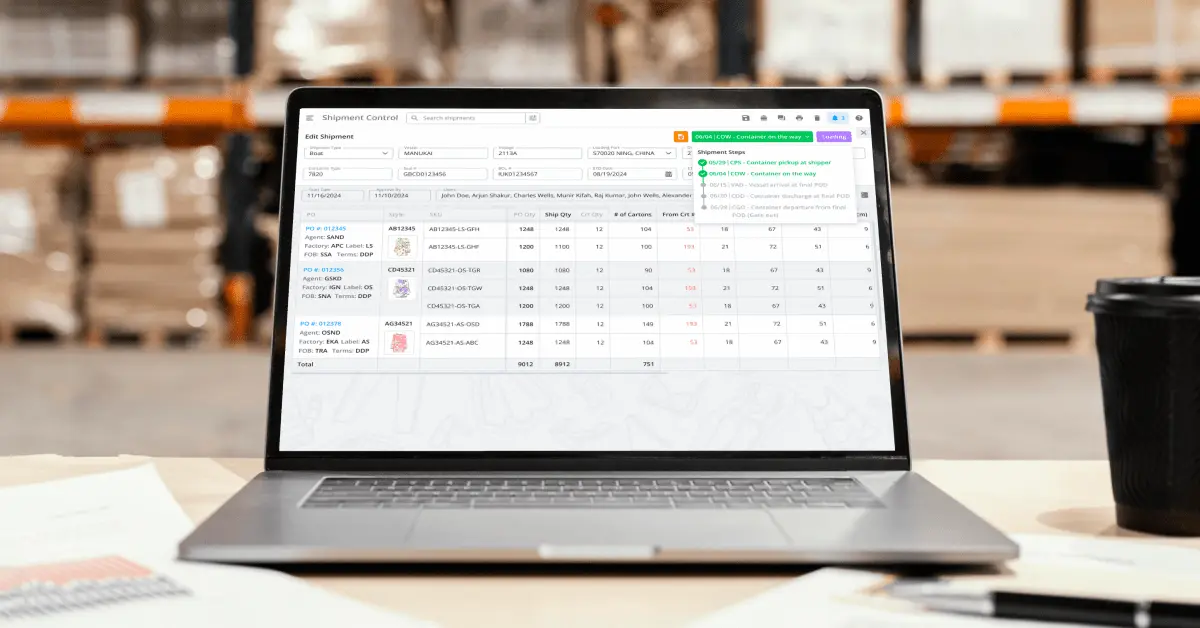
Product lifecycle management (PLM) supports fashion supply chain management by centralizing product data and connecting teams around one source of truth.
By improving supply chain transparency, PLM allows brands to track raw materials, timelines, and product changes early in the process, before issues escalate.
This approach enables a more agile supply chain while working alongside existing execution tools, rather than replacing them.
The Role of Advanced Technologies
Machine learning and artificial intelligence improve demand forecasting. They analyze consumer demand patterns. They reduce risk.
Used correctly, these tools support supply chain management decisions.
Importance of Customer Satisfaction
Customer satisfaction sits at the heart of the fashion industry’s success. For fashion companies, a well-managed supply chain is key to delivering the right products, at the right time, and in the right condition. Supply chain managers, logistics providers, and retail stores must work in close coordination to ensure timely delivery and a seamless shopping experience across all channels. High product quality and reliable availability drive repeat purchases and build brand loyalty.
Beyond logistics, today’s consumers expect supply chain transparency, fair labor practices, and sustainable business practices from the brands they support. Meeting these expectations not only enhances customer satisfaction but also strengthens a brand’s reputation and trust in the market. By prioritizing these elements throughout the fashion supply, companies can drive growth, foster loyalty, and stand out in a crowded marketplace.
Why Control Matters More Than Speed
Many brands chase speed. Control creates resilience. Controlled processes support timely delivery and customer satisfaction.
An agile supply chain balances flexibility and discipline.
The Future of Fashion Supply Chain Management
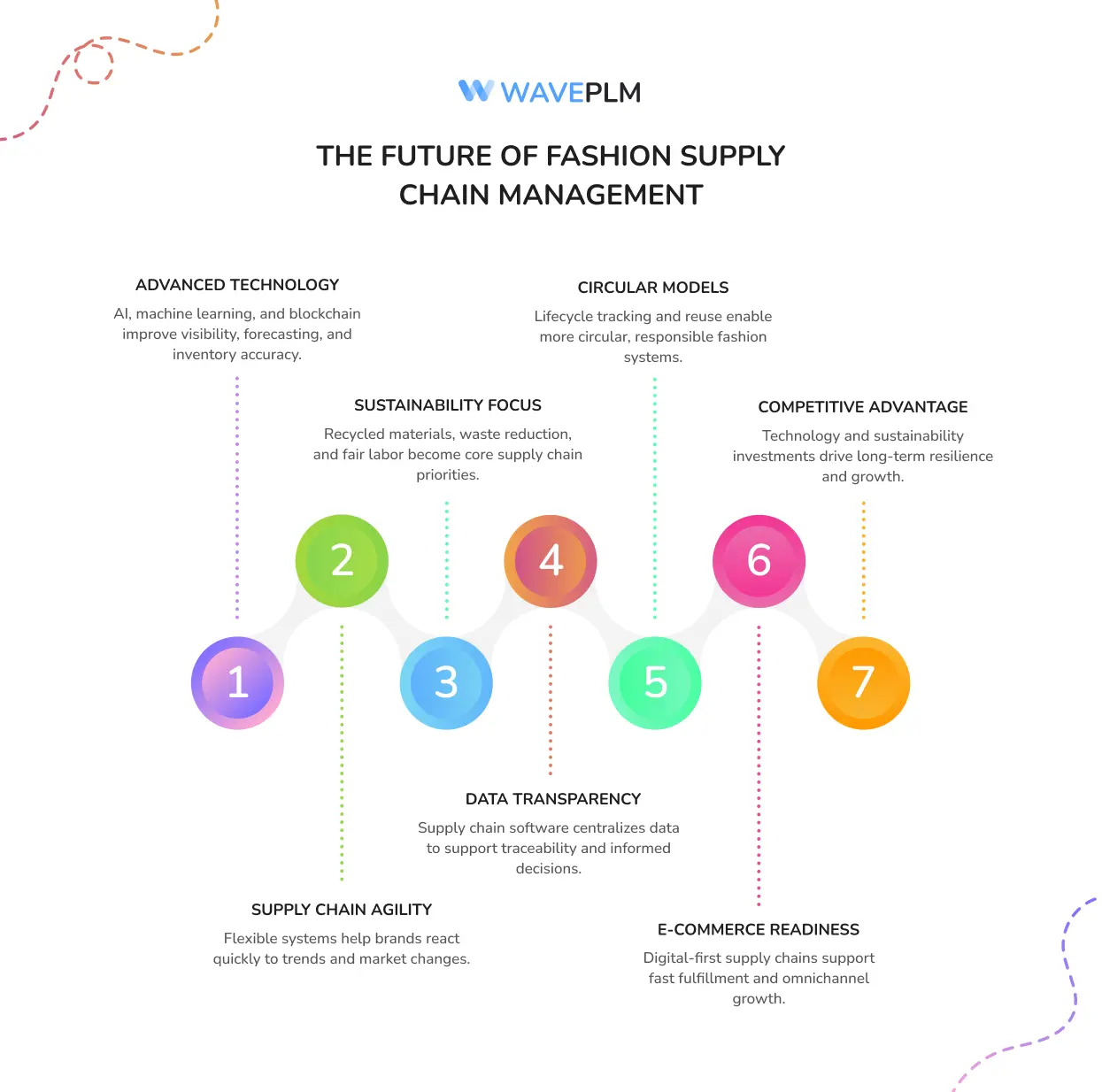
The future of fashion supply chain management will be defined by innovation, adaptability, and a strong commitment to sustainability. As the fashion industry faces shifting consumer demands and increasing pressure for ethical practices, fashion companies must embrace advanced technologies such as artificial intelligence, machine learning, and blockchain. These tools will enhance supply chain visibility, improve demand forecasting, and optimize inventory management, allowing brands to respond swiftly to market changes and reduce operational costs.
Sustainable practices will also become central to supply chain strategies. Using recycled materials, reducing waste, and ensuring fair labor practices will not only meet regulatory requirements but also align with consumer values. Supply chain management software will play a pivotal role in tracking progress, supporting transparency, and enabling data-driven decisions. In 2025, optimizing fashion supply chains necessitates a focus on technological integration and circular economy models.
With the continued rise of e-commerce and the influence of social media, fashion companies must build flexible, responsive supply chains that can adapt to new trends and customer expectations. By investing in technology and sustainable practices, brands can secure long-term success and maintain a competitive advantage in the global fashion industry.
Fashion Supply Chain FAQs
Why is the fashion supply chain so complex?
It spans multiple countries, suppliers, and raw materials. Each step adds risk.
Why is fashion supply chain management important?
Strong fashion supply chain management supports cost efficiency, sustainability practices, and customer satisfaction.
Final Thoughts
The fashion supply chain will always involve a certain level of complexity. Speed, seasonality, and global sourcing naturally create pressure across teams and partners.
However, fashion executives who understand the root causes of these challenges are better positioned to regain control. Clear processes, strong visibility, and aligned teams help reduce friction and protect margins.
Before focusing on optimisation, brands must first stabilise the fashion supply chain. A stable foundation makes long-term efficiency and growth possible.





Leave a Reply