
By the Wave PLM Team · Updated April 29, 2026
The levels of fashion brands form a five-tier fashion pyramid — mass market, premium/bridge, contemporary, luxury brands, and haute couture. Each level differs in price points, craftsmanship, production volume, and distribution. This guide breaks down all five tiers with real brand examples, a comparison table, and a quick template to identify any brand’s market level.
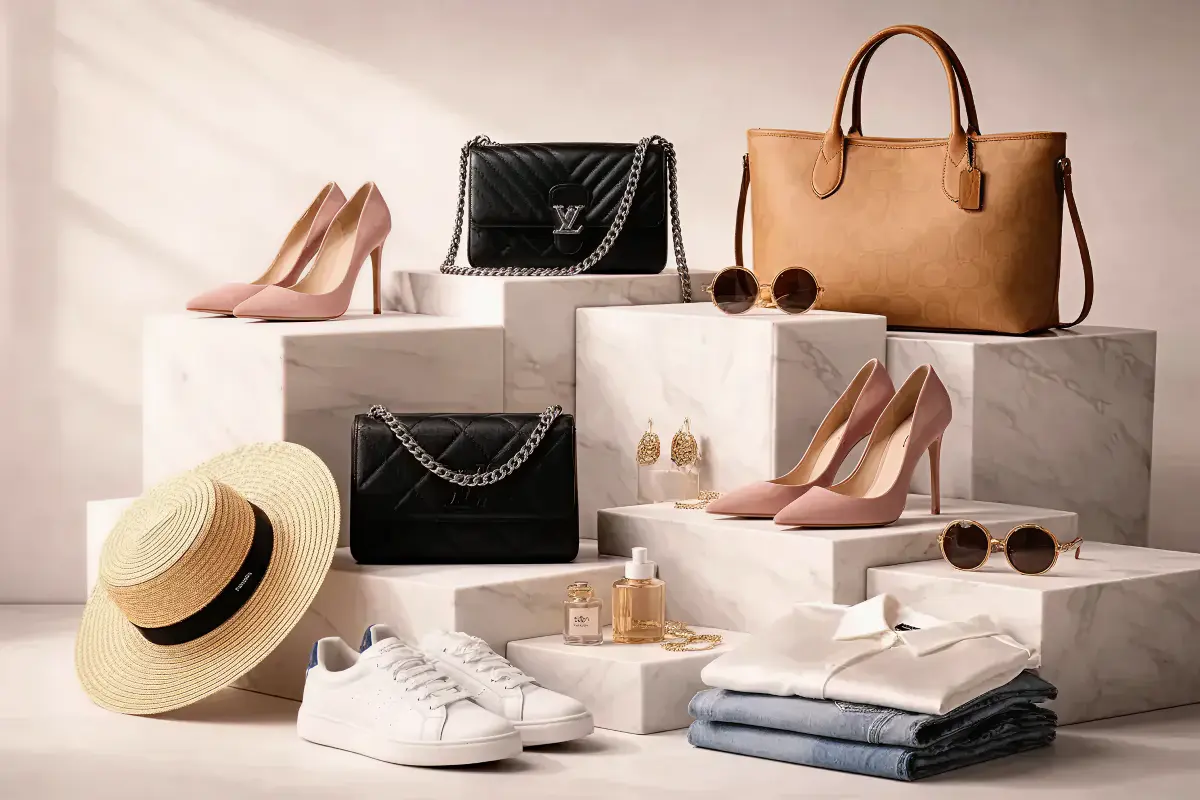
Fashion can feel like a maze. One store sells a crisp white shirt for $19, while another sells a similar one for $390. Both look “simple,” so what changes? The answer is fashion levels.
The answer sits inside one powerful idea: the levels of fashion brands. These levels explain how the fashion industry works, how fashion brands compete, and why the same product type can feel completely different.
In this guide, you will explore the full fashion pyramid, from mass market to haute couture. You will also learn how each fashion market level shapes price points, quality, distribution, and product development.
What are fashion market levels?
Fashion market levels describe how the fashion industry groups fashion brands into different segments. Each segment sits at a specific point in the fashion pyramid.
A fashion market level depends on price points, quality and craftsmanship, production volume, distribution channels, customer experience, and brand identity. Another key factor is the target audience, as understanding who the brand is designed for helps determine its position in the fashion pyramid and shapes its pricing, identity, and marketing strategies. People also call this structure the market level in fashion.
Here is the simplest way to remember it: as you climb the fashion pyramid, brands raise price points, improve craftsmanship, and reduce production volume. They also create more emotion, meaning, and exclusivity.

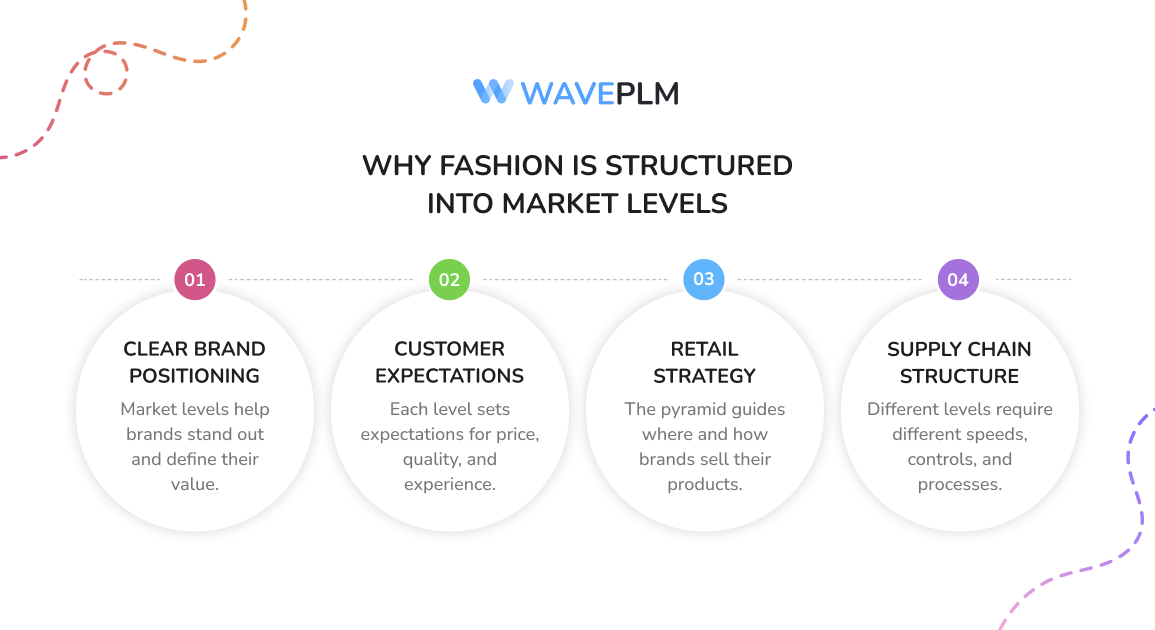
Why is fashion structured into market levels?
The fashion industry serves different segments, and customers buy for different reasons. Some customers want affordable prices and quick updates. Others want artistry, history, and prestige. That is why the fashion pyramid exists.
This structure helps fashion brands stay clear, competitive, and profitable.
1) Market levels make brand positioning easier
In a competitive market, a brand must stand for something. Brand positioning gives customers a reason to choose. Without it, brands blend together.
2) Market levels shape what customers expect
Mass market brands promise easy style and convenience. Luxury brands promise heritage, craftsmanship, and status. Haute couture brands promise one-of-a-kind artistry.
3) Market levels guide retail strategy
Retailers use the fashion pyramid to build assortments. Premium and contemporary labels often sell through department stores, while mass market retail relies on reach, speed, and volume.
4) Market levels change the supply chain
Fast fashion needs quick approvals and fast production. Luxury needs control, precision, and consistency. Haute couture needs time, handwork, and careful fittings. So the fashion pyramid affects every business decision.
What are the 5 levels of fashion brands?
Most experts describe five main levels in the fashion pyramid. This conceptual framework helps you compare brands in seconds.
1) Mass market
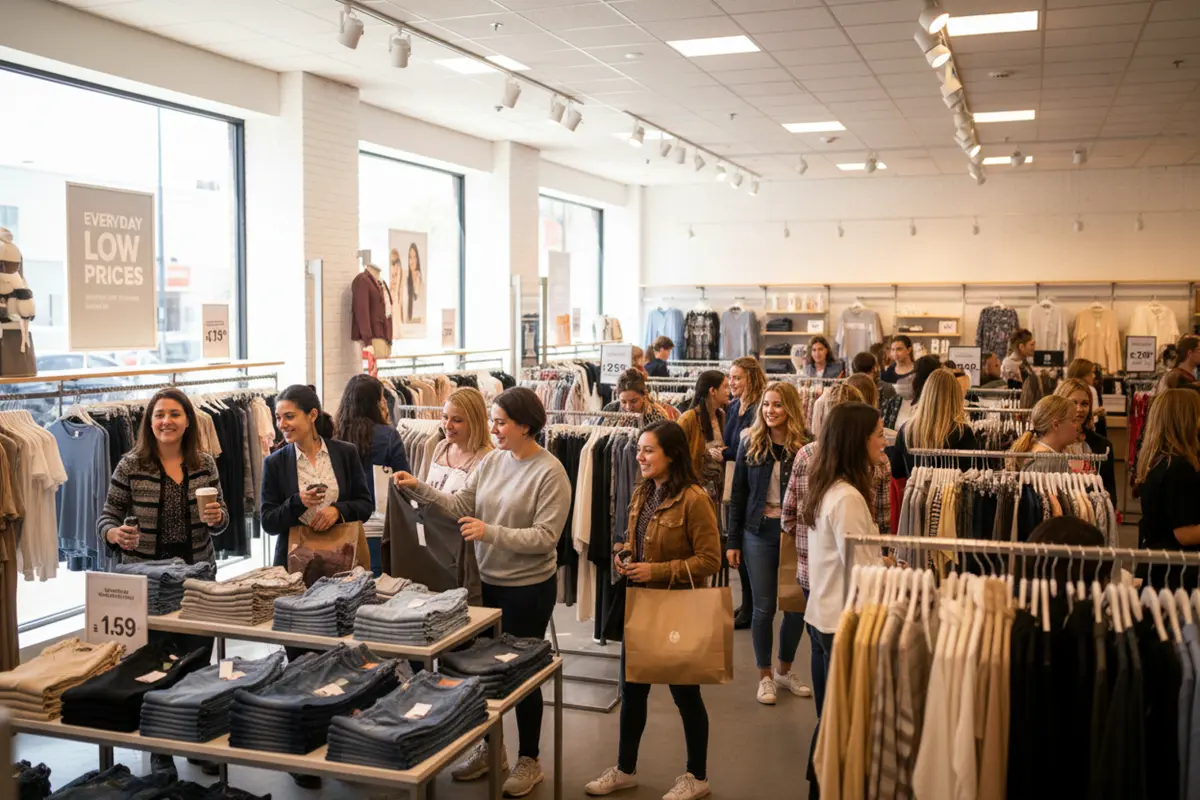
Mass market sits at the base of the fashion pyramid. Mass market brands sell everyday pieces at affordable prices, reach a broader audience, and focus on speed, availability, and scale.
You will often see mass market in high street shopping areas, and many people also call these high street brands. Mass market often overlaps with fast fashion.
What defines mass market
- prices low for frequent buying
- lower price points across most categories
- standardized sizes and simple grading
- high production volume
- mass production and fast turnarounds
Many mass market brands produce items that feel mass produced. That is not always bad. It simply matches the market.
Who mass market serves
Mass market serves customers who want value. They want easy basics and current trends, and they want fast access. That is why mass market dominates the fashion industry by volume.
2) Premium / bridge
Premium brands sit above mass market in the fashion pyramid. People often call them bridge brands.
They offer better quality and design, but they stay more reachable than luxury. Many shoppers call this space accessible luxury, because accessible luxury feels elevated while still fitting real life.
What defines premium / bridge
- premium pricing compared to mass market
- better construction and premium materials
- stronger brand identity and clearer style codes
- wider audience than luxury
Bridge brands often use diffusion lines and secondary lines. Diffusion brands aim to reach a wider audience at more affordable prices while still drawing inspiration from Ready-to-Wear collections.
Examples of premium / bridge
You often see Michael Kors in this level. You also see Tory Burch and Kate Spade. Ralph Lauren is another key example, positioned as a bridge or designer brand that appeals to consumers seeking accessible luxury. You may also see Hugo Boss depending on the category. These fashion brands speak to aspirational consumers.
3) Contemporary
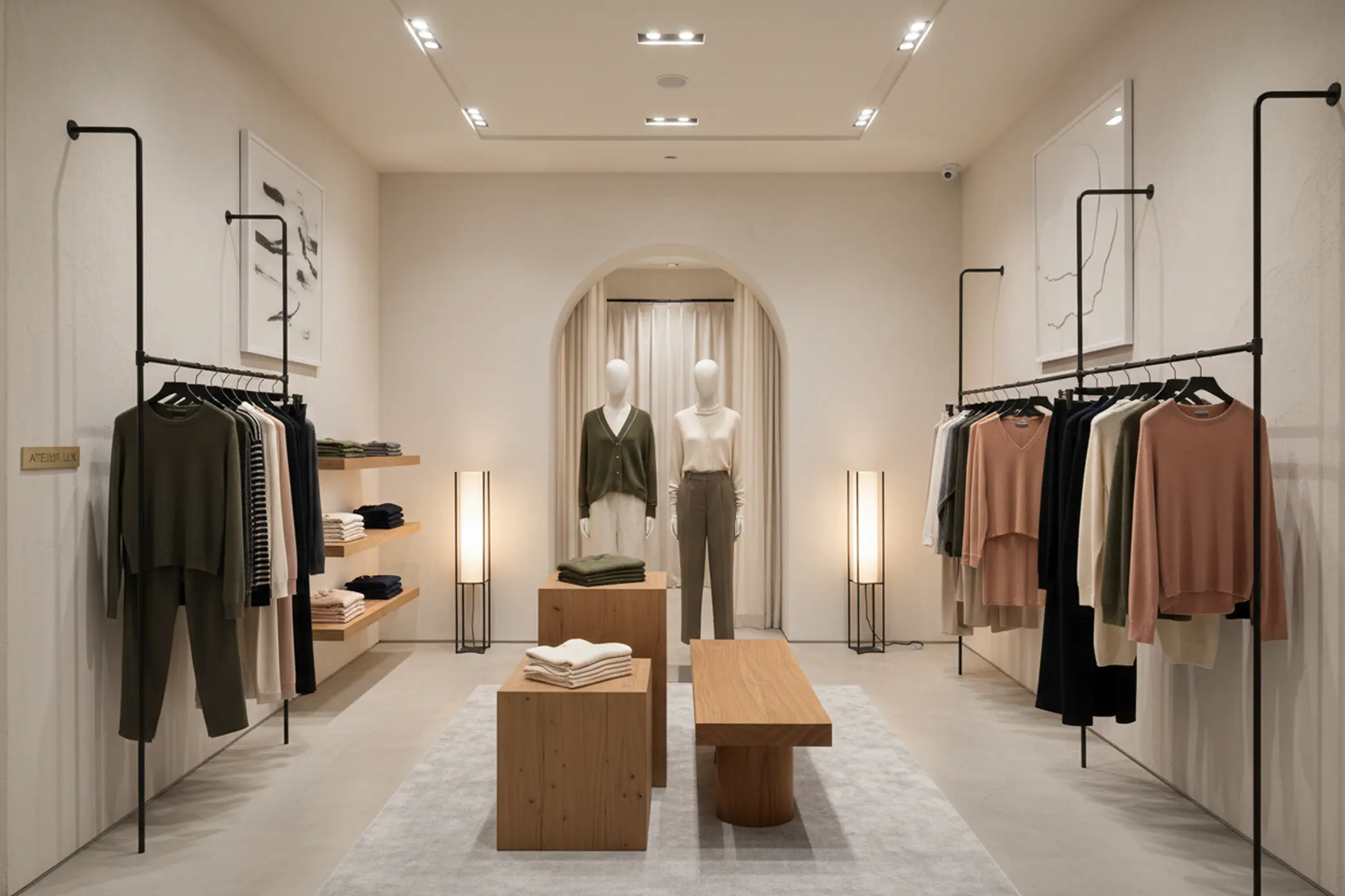
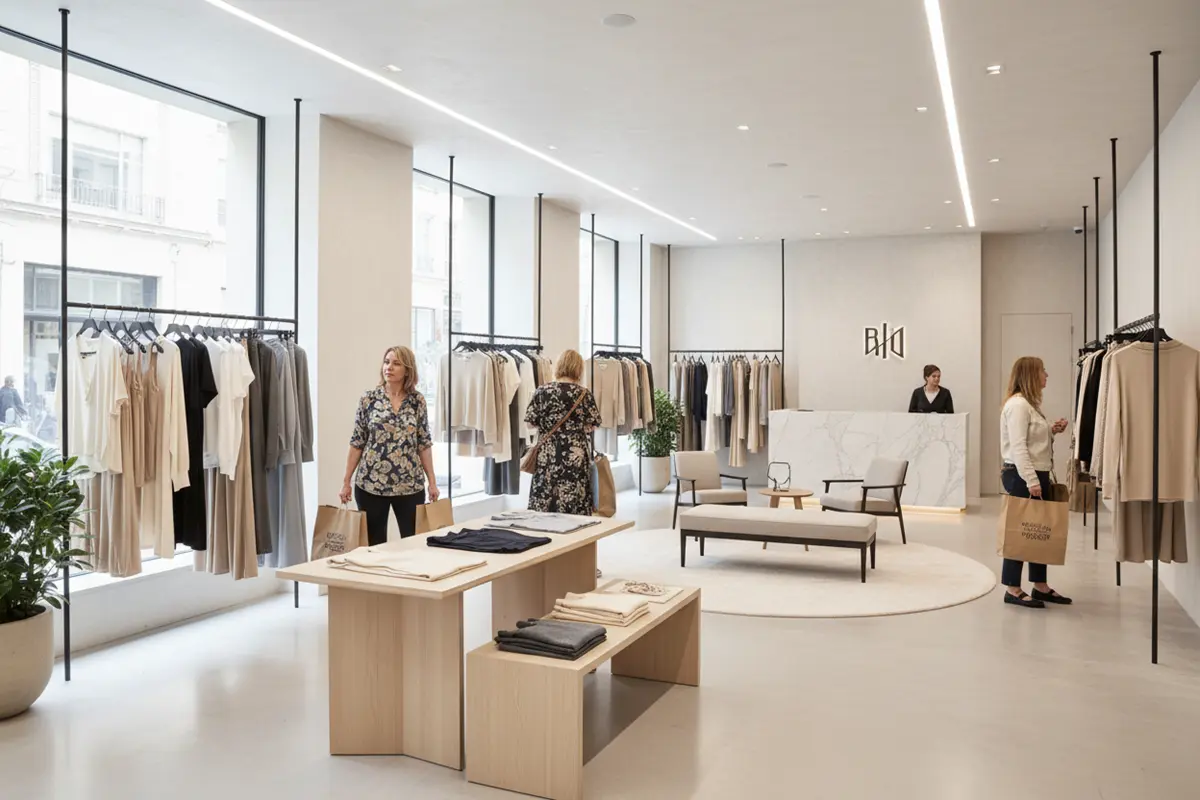
Contemporary brands sit in the middle of the fashion pyramid. They focus on fit, silhouette, and modern styling.
They usually sell ready to wear collections, and they often feel fashion-forward while staying wearable. Contemporary brands also balance creativity and commercial demand.
What defines contemporary
- design-led collections with a clear design philosophy
- reliable quality and strong fit development
- selective distribution and curated drops
- medium production volume
Many contemporary brands build capsule collections. These capsules help them test ideas fast, and they help them tell fresh stories.
4) Luxury
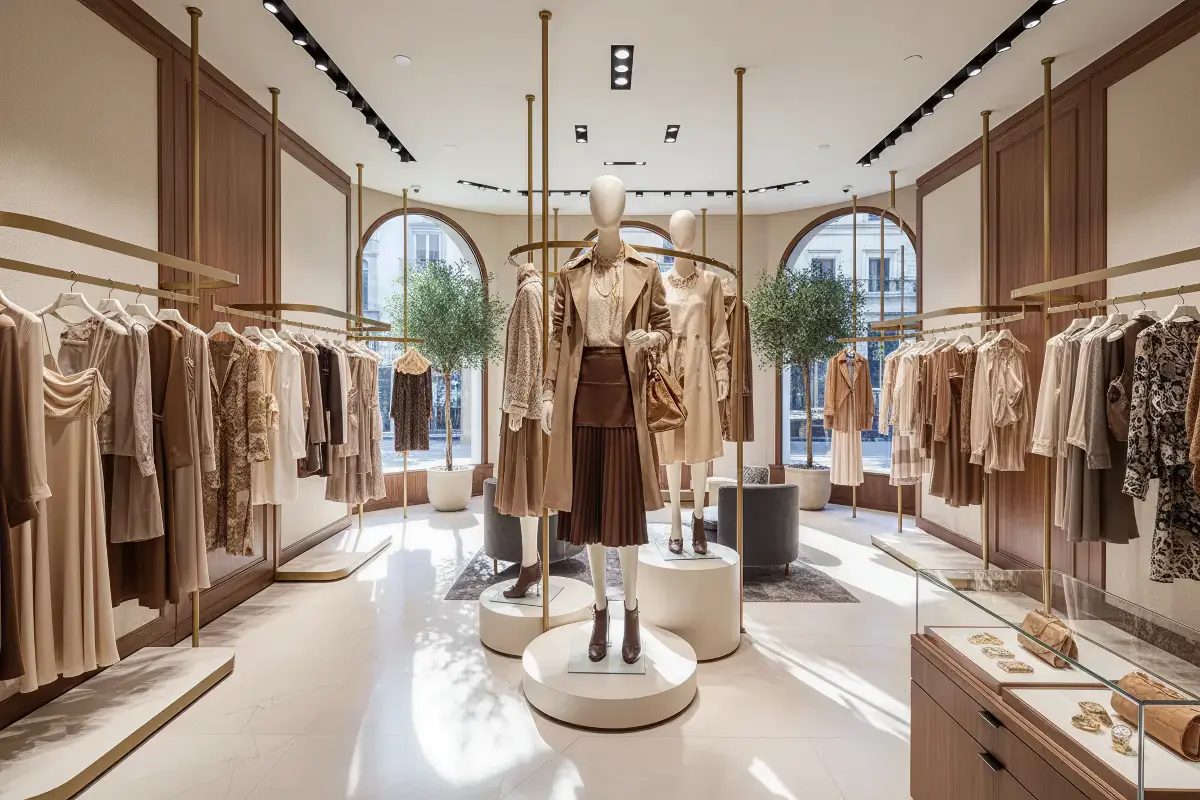
Luxury sits near the top of the fashion pyramid. Luxury brands sell more than clothing, because they sell identity, prestige, and emotion. These luxury brands are often referred to as ‘designer brands’, known for their ready-to-wear collections, brand prestige, and exclusivity.
They protect brand heritage, and they protect brand identity with strict control. Luxury houses shape culture, and they also shape desire.
What defines luxury
- high price points and premium pricing
- premium materials and refined finishing
- limited availability and controlled distribution
- strong customer experience and storytelling
Luxury houses often manage ready to wear, accessories, and leather goods. Luxury labels may also run diffusion lines, and these designer lines can attract a wider audience while protecting the main label’s exclusivity.
Examples of luxury
You will often see louis vuitton as a clear example. You will also see saint laurent, and you may also see marc jacobs discussed in luxury conversations. Armani Exchange is another example, serving as a diffusion or secondary line of Giorgio Armani, designed to make the brand more accessible to a wider audience through lower price points.
Many people ask: Is Gucci higher than YSL? Gucci and saint laurent both sit inside the luxury level, but they compete with different brand codes and attract different customers. So the answer depends on product category, price points, and brand heritage.
5) Haute couture
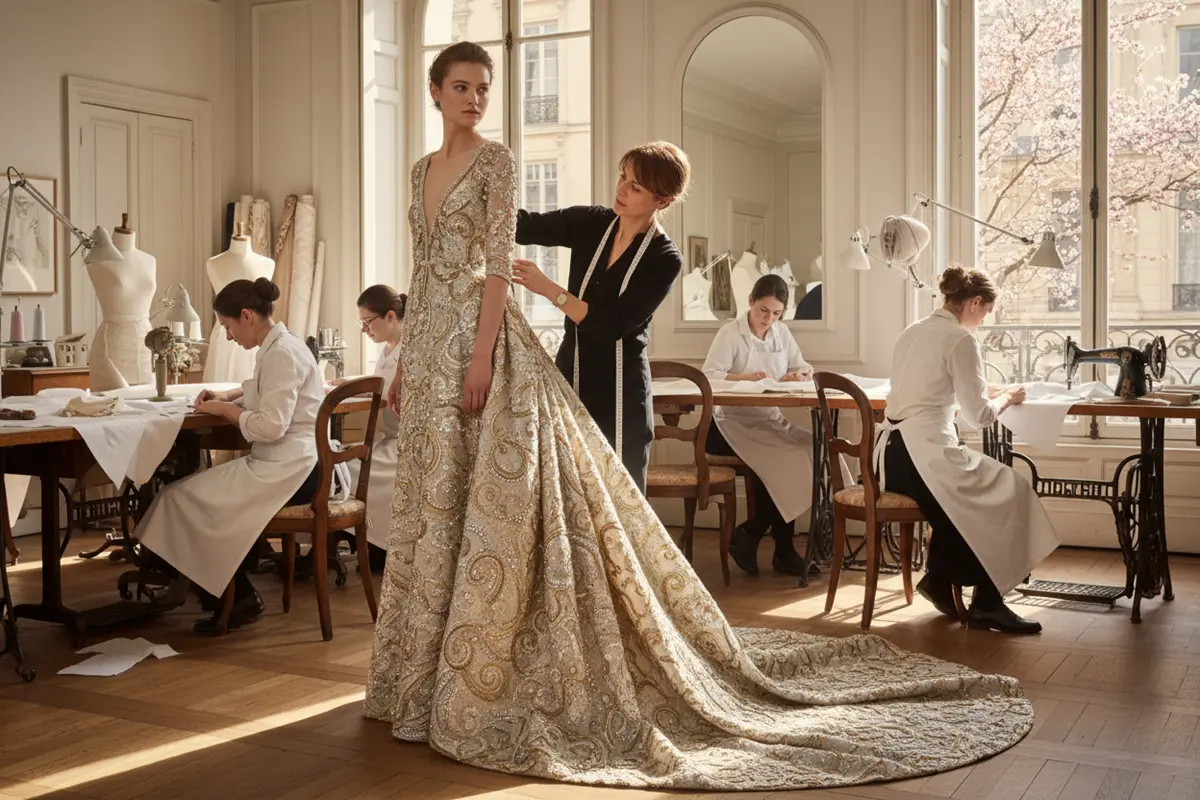
Haute couture sits at the top of the fashion pyramid. It represents the highest form of fashion craftsmanship.
Haute couture brands create made to measure garments for elite clientele, and these pieces require handwork, fittings, and time.
Haute couture houses often use couture to define supreme luxury, and they also use it to inspire ready to wear collections. Only a handful of brands can truly operate as haute couture houses, which is why couture stays rare.
What defines haute couture
- made to measure pieces for specific clients
- exceptional handwork and finishing
- extremely low production volume
- extremely high price points
Haute couture often moves beyond normal calendars. It focuses on artistry, craft, and prestige.
How do fashion market levels differ?
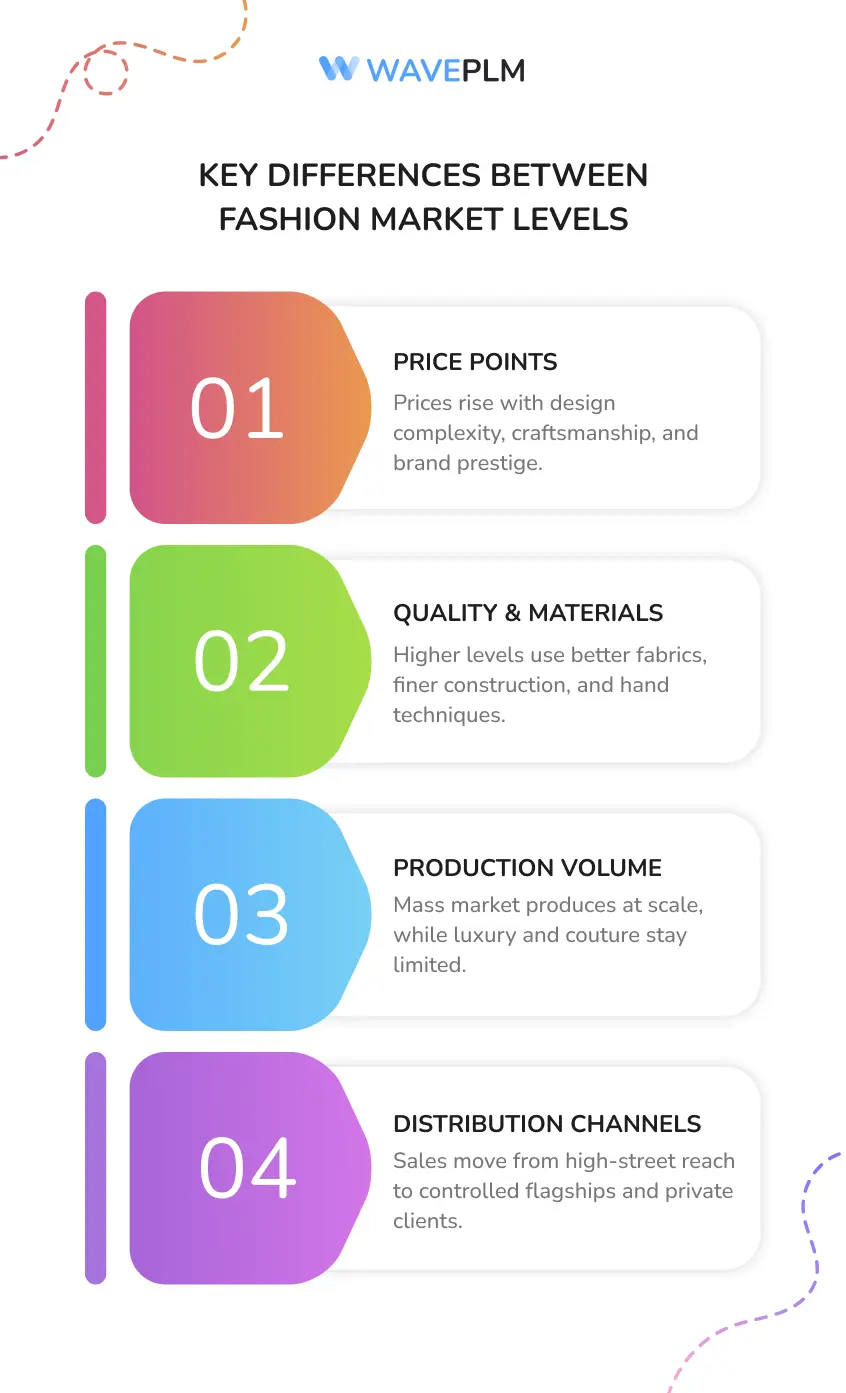
The fashion pyramid becomes clear when you compare the basics. Use these four factors.
Quick comparison table
| Fashion pyramid level | Price points | Quality and materials | Production volume | Distribution channels |
|---|---|---|---|---|
| Mass market | Lower price points | Basic fabrics, sometimes low quality | Very high | Mass market retail, online marketplaces |
| Premium / bridge | Mid to higher price points | Better fabrics and premium materials | High | Department stores, DTC, brand stores |
| Contemporary | Mid to high price points | Strong fit and quality | Medium | Curated retail, DTC, boutiques |
| Luxury | High price points | Craftsmanship and premium materials | Low | Flagships, controlled wholesale |
| Haute couture | Highest price points | Handcrafted, made to measure | Very low | Private salons and appointments |
This table gives a fast view of the fashion market level differences.
Price points
Price points separate levels faster than anything else. Mass market keeps price points accessible. Premium and contemporary raise price points with better design and quality. Luxury increases price points through prestige and craftsmanship. Haute couture pushes price points into supreme luxury.
Quality and premium materials
Quality changes as you climb the fashion pyramid. Mass market often uses cost-focused fabrics, which can lead to low quality in some product groups. Premium and contemporary brands improve fabric and construction, while luxury brands invest in premium materials and finishing. Haute couture brands add hand techniques and custom fitting.
Production volume
Mass market relies on mass production, and many items get mass produced in huge quantities. Luxury houses keep quantities smaller to protect exclusivity, while haute couture stays extremely limited and serves elite clientele through private service.
Distribution channels
Distribution reveals the market level in fashion. Mass market sells through high street stores and global platforms. Premium and contemporary often rely on department stores. Luxury houses control access through flagships and select partners, while haute couture houses sell through private relationships.
Which fashion brands sit at each level of the fashion pyramid?
Examples help you understand the fashion pyramid faster. Brands can shift over time, and they can also use diffusion lines and diffusion brands, but these examples fit common patterns.
| Fashion pyramid level | Examples | Why they fit |
| Mass market | Zara, H&M, Uniqlo, american eagle | Fast fashion speed, affordable prices |
| Premium / bridge | michael kors, tory burch, kate spade, hugo boss | Accessible luxury appeal, broader audience |
| Contemporary | Sandro, Maje, Reiss, victoria beckham | Design-led ready to wear |
| Luxury | louis vuitton, Gucci, Prada, saint laurent | Luxury houses with strong brand heritage |
| Haute couture | Chanel, Dior | Haute couture houses with made to measure work |
You can use these as a guide, but you should still check price points and distribution, because that tells you the real fashion market level.
FAQ: Questions People Ask About the Fashion Pyramid
What is the hierarchy of fashion brands?
The hierarchy follows the fashion pyramid. It starts with mass market, then moves to bridge brands, then contemporary, then luxury, and finally reaches haute couture.
What are the 4 levels of the fashion industry?
Many people simplify the fashion industry into four levels: mass market, premium or contemporary, luxury, and haute couture. This version still follows the fashion pyramid.
What are the 5 stages of fashion?
People often mean the five levels inside the fashion pyramid: mass market, premium / bridge, contemporary, luxury, and haute couture.
Is Gucci higher than YSL?
Gucci and saint laurent both sit in the luxury level. Some Gucci pieces sit at higher price points, and some saint laurent pieces sit at similar price points. Brand identity and design direction create the difference.
How does market level affect product development and the supply chain?
Market level shapes how fashion brands build products. It changes timelines, sourcing, and cost control.
Mass market product development
Mass market brands move fast, chase current trends, and plan around speed. They often use simplified tech packs, fewer fabric options, quick approvals, and large factory capacity. Fast fashion brands may drop products weekly, which keeps the fashion pyramid moving.
Premium and contemporary product development
Premium and contemporary brands add detail, refine fit, and test fabrics. They may run more sampling rounds, and they also protect brand identity. Bridge brands also manage diffusion lines, which adds complexity.
Luxury product development
Luxury brands focus on craftsmanship, and luxury houses invest in detail. They may develop custom hardware, and they protect quality across ready to wear. Luxury products often include leather goods, which requires careful sourcing and traceability.
Haute couture product development
Haute couture works through fittings. Teams create made to measure pieces and adjust garments for each client. Haute couture brands document every step, and only a handful of teams can manage this process.
How does PLM support brands at different market levels?
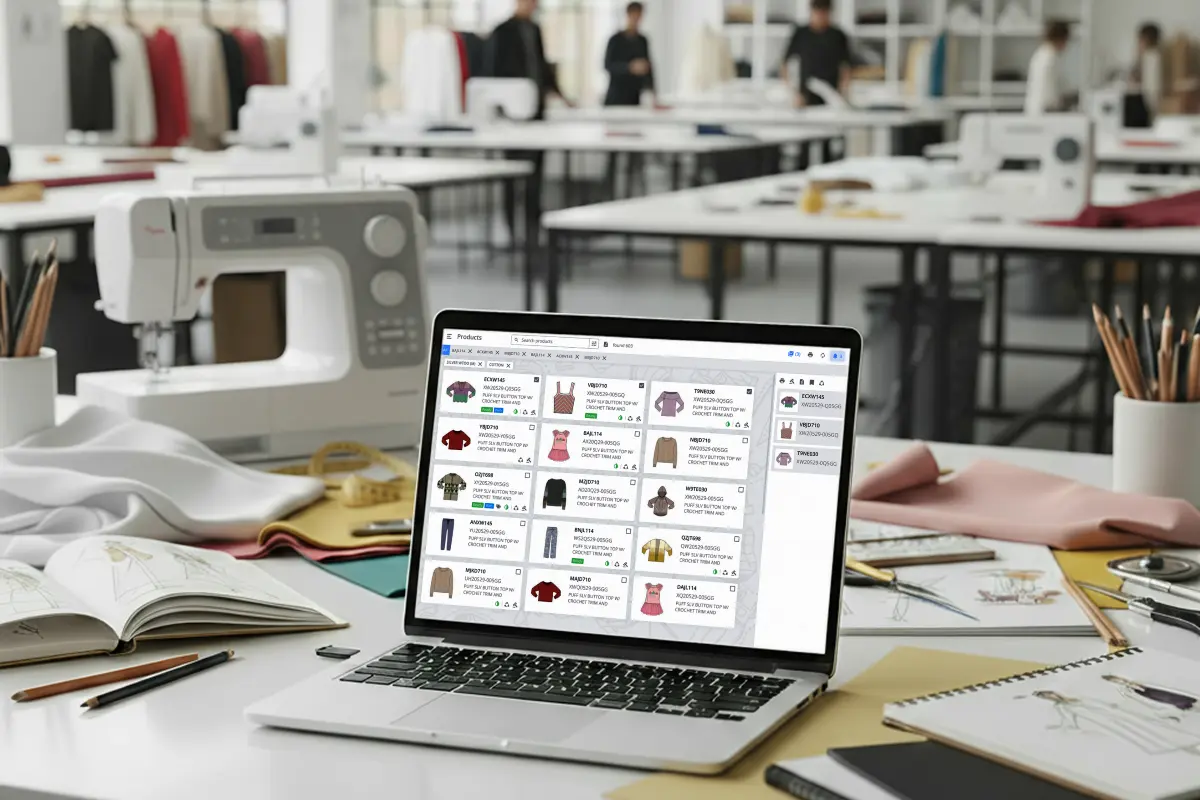
PLM helps fashion brands manage products from concept to delivery. It supports design, sourcing, and production, and each fashion market level uses PLM differently.
Mass market: speed and scale
Mass market brands handle huge style counts. PLM supports faster creation of SKUs, costing and margin control, vendor communication, and calendar tracking. This matters in mass market retail.
Premium / bridge: better control and consistency
Bridge brands need repeatability. PLM supports material libraries, spec accuracy, supplier tracking, and workflow approvals. This helps premium pricing feel justified.
Contemporary: agility and clear collaboration
Contemporary brands move fast but stay design-led. PLM supports capsule collections planning, line reviews, accurate BOMs, and delivery tracking.
Luxury: precision and traceability
Luxury houses need control. PLM supports detailed BOM management, approval workflows, supplier access control, and traceability and compliance. Luxury brands cannot afford mistakes, because a small error can damage customer experience.
Haute couture: documentation and custom workflows
Haute couture houses need custom tracking. PLM supports client notes, made to measure adjustments, special materials, and handwork instructions. This protects the history of haute couture pieces.
Mini Glossary (Quick definitions)
- Fashion pyramid: the hierarchy that ranks fashion market levels.
- Mass market: affordable fashion with high volume and wide access.
- Ready to wear (prêt à porter): clothing made in standardized sizes and sold off the rack.
- Luxury: premium fashion with strong brand heritage and controlled distribution.
- Haute couture: made to measure fashion with elite craftsmanship.
How do you identify a brand’s market level in fashion?
Use this quick template to classify fashion brands.
Step 1: Check price points
Write the average price points for T-shirts, denim, outerwear, and bags.
Step 2: Check distribution
Ask: does the brand sell in department stores, does it sell in high street stores, and does it rely on limited availability?
Step 3: Check product type
Ask: is it ready to wear, is it made to measure, and does it include leather goods?
Step 4: Decide the fashion pyramid level
Low price points + high volume → mass market. Better quality + accessible luxury feel → bridge brands. Design-led ready to wear → contemporary. Heritage + exclusivity → luxury. Made to measure pieces + supreme luxury → haute couture.
Conclusion
The fashion pyramid gives you a simple way to understand the fashion industry. It shows how fashion brands compete through price points, quality, and distribution.
Now you can compare mass market brands, bridge brands, luxury brands, and haute couture brands with confidence. You can also use this conceptual framework to support business strategies and business aspects like pricing and product planning.
Recommended next reads
- Price points in fashion
- Luxury management
- Fashion business model breakdown
If you want to scale product development across the fashion pyramid, PLM helps every level.




Leave a Reply