

Design teams generate large volumes of design data every day. Engineers create CAD files, drawings, documents, and revisions across multiple projects. Without proper data management, this information becomes hard to control. Teams lose visibility, mistakes increase, and productivity drops. High-quality data is essential for reliable outcomes in decision-making.
DDM software exists to solve this challenge. Design data management software gives engineers a structured way to store, manage, and control design data throughout the design process. In addition to CAD files, DDM software manages documents by tracking their lifecycle status, recording change notes, and maintaining version control to ensure all data is organized and up to date. Many companies still misunderstand what ddm software can and cannot do. This guide explains the role of design data management, how it compares to PLM, and how to choose the right solution.
If you evaluate ddm software today, this article helps you make a confident and informed decision. One of the main benefits of DDM software is increased efficiency, as it streamlines design processes and reduces costs.
What Is Design Data Management?
Design data management refers to the processes and systems used to manage design data created during product design. This data includes CAD models, drawings, specifications, and supporting documentation.
DDM software, also called design data management software or a pdm system, provides one secure workspace for storing and organizing engineering data. Engineers use the system to control files, manage revisions, and ensure data integrity across projects.
Most design data tools integrate directly with cad software and cad tools. Engineers can access, update, and track files without leaving their design environment. This integration supports efficient engineering workflows and reduces errors.
Design data management focuses on the design phase only. It does not manage the entire product lifecycle. Understanding this scope helps companies choose the right system.

Engineering Data Management Systems
Engineering Data Management (EDM) systems are essential for companies looking to organize and control their engineering data throughout the entire design lifecycle. By providing a centralized system for storing and managing files, EDM systems help teams maintain data integrity and streamline workflows. All engineering data—including CAD files, technical documents, and supporting materials—can be managed in one place, making it easier to track design changes and ensure that everyone is working with the most up-to-date information.
With real-time access to accurate data, teams can quickly respond to design changes and collaborate more efficiently. EDM systems also reduce the risk of errors by enforcing structured data management practices and providing clear version histories. This leads to improved productivity and higher product quality, as engineers spend less time searching for files and more time focusing on innovation. By implementing an EDM system, companies can better manage their engineering data, support efficient workflows, and drive successful project outcomes.
What Problems DDM Software Solves
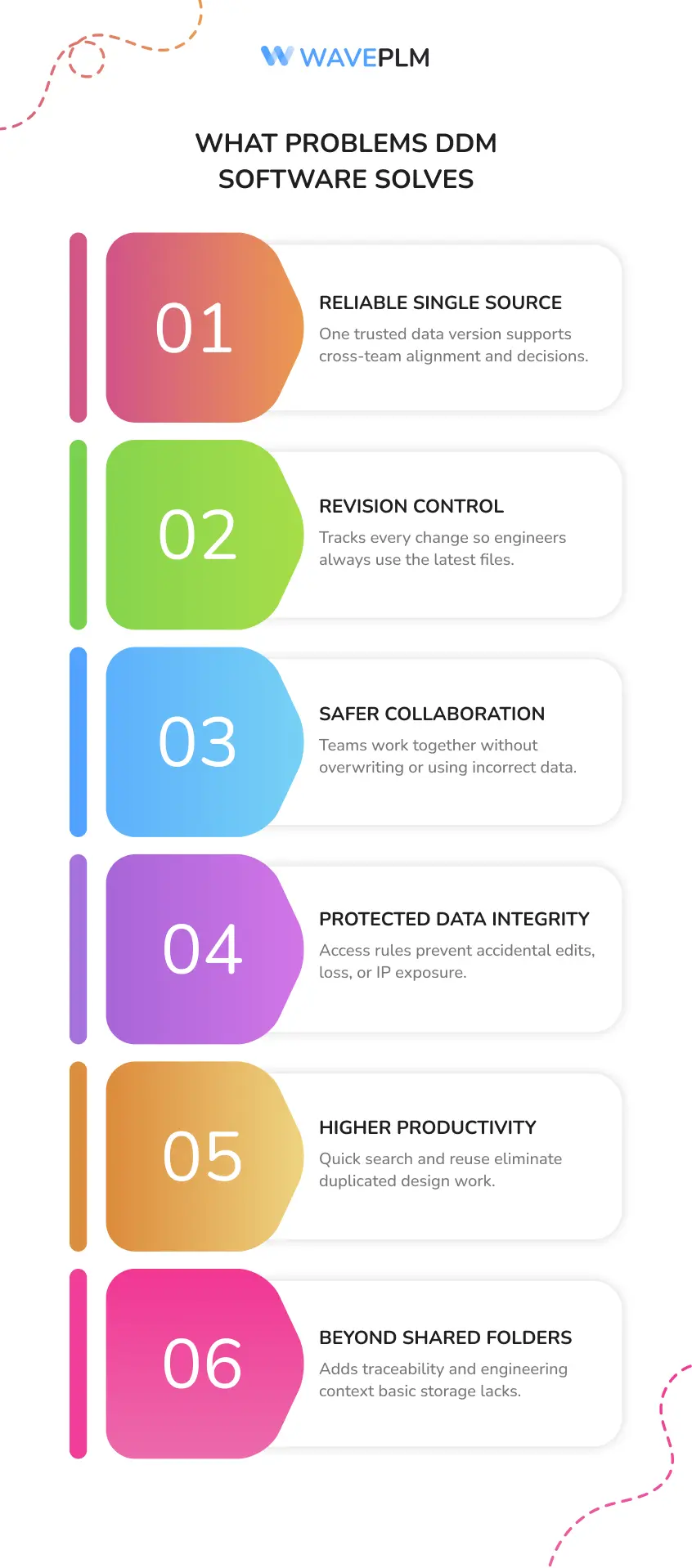
Engineering teams across industries face similar challenges with data management. DDM software addresses these issues at the source. Data management supports strategic agility by providing a single, reliable version of truth for cross-functional alignment.
First, it establishes revision control. Engineers always work with the latest design files. The system tracks every change, date, and user, which improves reliability and compliance.
Second, ddm software improves collaboration. Designers and engineers can efficiently collaborate on the same project without overwriting files. Controlled access ensures the entire team sees correct data.
Third, design data management software protects data integrity. File management rules prevent accidental deletions or incorrect edits. Access control and security features protect intellectual property.
Fourth, the system improves productivity. Engineers easily find files, reuse components, and avoid duplicated work. This reuse increases efficiency and supports new projects.
Without design data management, teams rely on shared folders or basic storage tools. These systems lack control, traceability, and engineering context.
Core Features of Design Data Management Software
Most mature design data management software platforms share essential features that support engineering data management.
| Feature | Description | Business Value |
|---|---|---|
| Revision control | Tracks design changes and history | Reduces errors and improves compliance |
| File management | Organizes files in a structured system | Ensures correct data usage |
| Access control | Manages data access for users | Improves security |
| CAD integration | Connects directly to cad software | Supports engineers |
| Metadata | Adds attributes to design data | Improves search and analysis |
| Audit trails | Records all actions | Supports documentation and compliance |
These features help teams manage project data, engineering data, and product data in one secure workspace. Automated workflows support approval processes and streamline workflows without adding complexity.
CAD Software and Design Process
CAD software is at the heart of the modern design process, empowering engineers and designers to create, modify, and analyze digital models with precision. When integrated with Product Data Management (PDM) systems, CAD software becomes even more powerful, enabling seamless management and tracking of design data across the entire product lifecycle. This integration ensures that all design data, including revisions, versions, and approvals, is accurately managed and easily accessible to the entire team.
One of the key benefits of connecting CAD software with PDM systems is the automatic generation of Bill of Materials (BOM) data. This automation reduces manual errors and increases efficiency, allowing engineers to focus on design rather than administrative tasks. Furthermore, integrating CAD and PDM with ERP systems provides a complete view of product data, from initial concept through manufacturing and beyond. This holistic approach to data management supports better decision-making, improves collaboration, and ensures that product data remains consistent and reliable throughout the design and development process.
DDM Software vs PLM Software
Many companies compare ddm software with plm solutions. While related, these systems serve different purposes.
Design data management software focuses on files and design data. Product lifecycle management systems focus on managing product data across the entire product lifecycle.
| Area | DDM Software | PLM Software |
| Focus | Design files | Product lifecycle |
| Users | Engineers and designers | Engineers and other stakeholders |
| Data | CAD files and documents | Product data, BOM data, processes |
| Scope | Design process | Design to manufacturing |
DDM software supports engineering workflows. PLM connects engineering data with business processes, manufacturing, and erp systems. The two systems work best together.
When DDM Alone Is Enough
In some situations, ddm software fully meets company needs. Design data management systems help reduce design cycle times and costs through increased efficiency and security.
Small engineering teams benefit from design data tools that provide control without heavy processes. Startups also prefer ddm software to maintain speed and flexibility during product design.
Contract design firms use design data management to protect project data and manage multiple clients. File-level control and secure access support efficient collaboration.
If your company does not manage complex bom information, manufacturing workflows, or formal change processes, a pdm system may be sufficient.
When Teams Outgrow DDM Tools
As companies grow, data management requirements change. Manufacturing introduces new challenges. Engineers must share correct data with production teams. Manual exports increase errors and reduce product quality.
Change management becomes harder. Email approvals lack visibility and traceability. Teams struggle to track design changes and impact.
Reporting also becomes limited. Management needs analysis across projects, components, and materials. File-based systems cannot deliver this insight.
At this stage, ddm software still supports engineers, but plm becomes necessary.
How PLM Expands Beyond Design Data
Product lifecycle management systems extend design data management into a complete platform.
PLM manages product data, bom data, and product structures. Files link to items instead of acting as the primary data source.
PLM supports manufacturing, compliance, and documentation. It integrates with erp systems and supports the development process from concept to production.
Design data management feeds accurate data into PLM. Together, they create a single source of truth.
Example Workflow: DDM → PLM → ERP
Many manufacturers follow a layered system approach.
| Stage | System | Purpose |
| Design | DDM software | Control design data |
| Product definition | PLM | Manage product data and processes |
| Execution | ERP system | Manufacturing and business execution |
Engineers create and manage design data in ddm software. PLM structures that data for manufacturing. ERP handles production, purchasing, and materials planning.
This approach improves data access, reduces errors, and increases efficiency.
How Wave PLM Handles Design Data End-to-End
Wave PLM extends design data management without disrupting engineers.
Wave PLM integrates with existing design data tools and pdm systems. Engineers continue using familiar cad tools while Wave PLM manages product data, workflows, and compliance.
The platform supports collaboration across departments. It prepares reliable product data for manufacturing and erp integration.
Wave PLM provides one secure workspace that connects design, manufacturing, and business teams.

Best Practices for Implementation
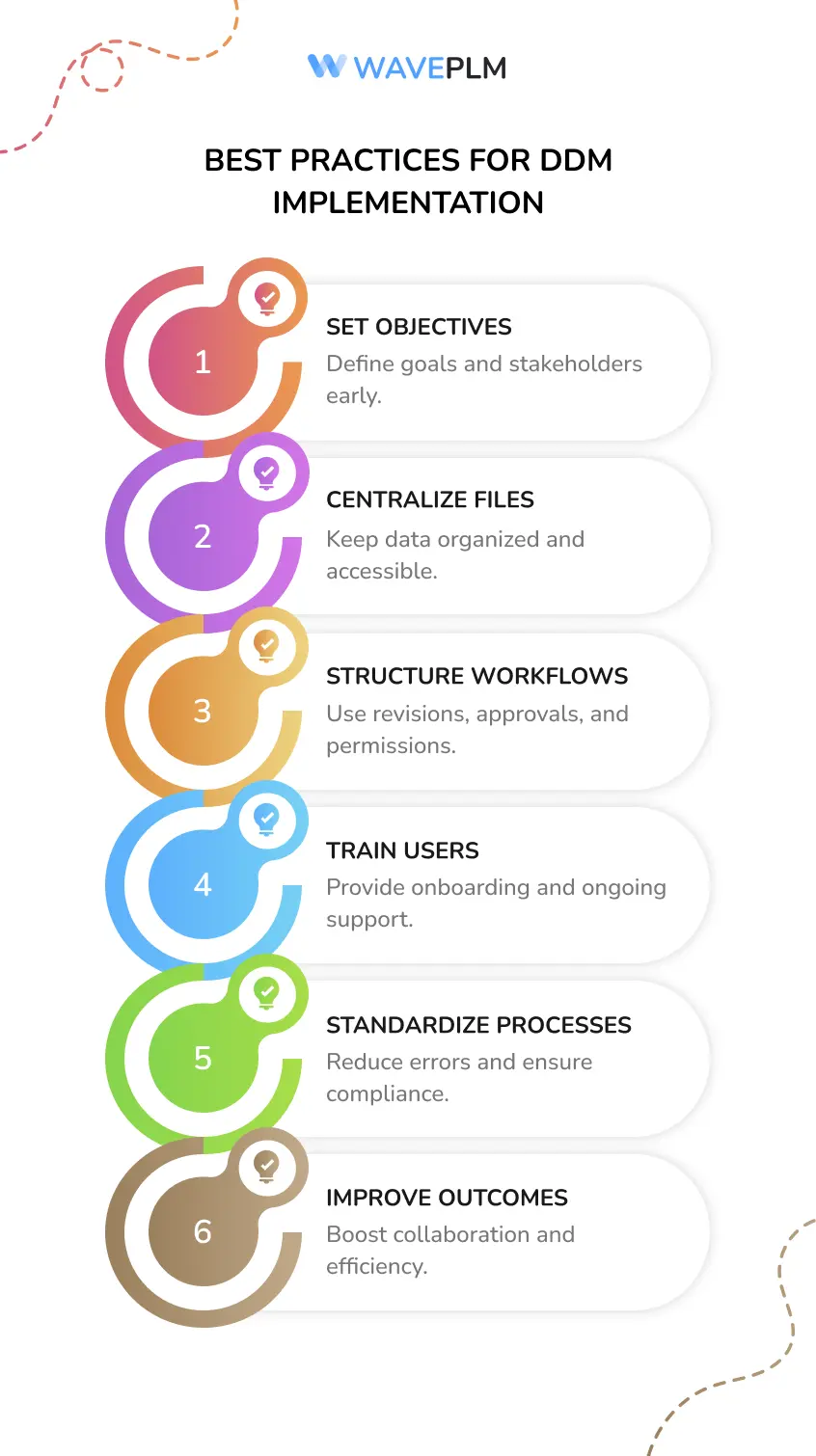
Successfully implementing a Design Data Management (DDM) system starts with clear planning and a focus on best practices. Begin by defining your goals and objectives for data management, and identify the key stakeholders who will be involved in the process. Establish a centralized repository for all design data to ensure that files are organized and easily accessible.
It’s important to set up structured workflows for managing design data, including robust revision control, approval processes, and access controls. These workflows help maintain control over data, reduce errors, and support compliance with internal standards. Providing comprehensive training and ongoing support for users is also critical to encourage adoption and maximize the system’s benefits.
By following these best practices, companies can improve collaboration, increase efficiency, and enhance product quality. A well-implemented DDM system empowers users to manage design data effectively, supports streamlined processes, and drives better outcomes across the organization.
Common Challenges and Solutions
Implementing a DDM system can present several challenges, but with the right strategies, these obstacles can be overcome. One of the most common issues is maintaining data integrity and ensuring that all information is accurate and up to date. To address this, companies should implement data validation and verification processes, along with clear workflows and approval steps to catch errors before they impact the project.
Another challenge is making sure that all users and stakeholders have access to the correct data at the right time. Role-based access controls and targeted training can help ensure that everyone can find and use the data they need, while protecting sensitive information. Integrating the DDM system with other business tools, such as ERP and Product Lifecycle Management (PLM) systems, can also be complex. Working with experienced partners and using industry-standard integration tools and protocols can simplify this process and ensure smooth data flow across systems.
By proactively addressing these challenges, companies can maximize the value of their DDM system, support business processes, and maintain control over their product lifecycle data.
Future of Design Data Management
The future of Design Data Management is being shaped by rapid advances in technology, including Artificial Intelligence (AI), Machine Learning (ML), and the Internet of Things (IoT). These innovations are enabling companies to analyze and leverage design data in new ways, such as predicting product performance, optimizing design processes, and automating routine tasks. As a result, data management is becoming more intelligent and proactive, helping teams make better decisions and accelerate development.
Cloud-based DDM systems are also transforming the way teams collaborate, offering greater flexibility, scalability, and real-time access to design data from anywhere in the world. This shift supports more efficient collaboration, enhances security, and ensures compliance with industry standards. As companies continue to adopt these advanced systems, maintaining data integrity, security, and compliance will remain top priorities.
By embracing emerging technologies and focusing on robust data management practices, organizations can unlock the full potential of their design data, drive innovation, and achieve greater success in manufacturing and product development.
Conclusion
Design data management plays a critical role in modern product development. DDM software helps engineers manage design data, protect data integrity, and support collaboration. Scalability in data management allows organizations to grow without compromising data quality.
However, design data management software alone cannot manage the entire product lifecycle. Growing companies need plm to connect engineering data with manufacturing and business processes.
Wave PLM helps companies scale beyond ddm software while preserving efficient engineering workflows.
If you evaluate design data management today, choose a system that supports growth, reliability, and long-term productivity.





Leave a Reply