

What Is Management in Fashion?
Management in fashion describes how creative and business teams work together to turn ideas into successful fashion products. It connects design, development, sourcing, marketing, and retail into one coordinated system. In the fashion industry, management shapes how brands plan, execute, and deliver products under constant change.
Many people believe management in fashion only covers marketing or retail stores. That view misses the bigger picture. Fashion management spans the entire process, from early concepts to post-season analysis. It aligns creativity with business goals and supports informed decisions across different departments. The various aspects of fashion management include retail operations, marketing, economics, and consumer behavior, all of which play a vital role in the success of a fashion business.
Fashion business management requires a solid understanding of creativity, timelines, costs, finance, and customer demand. Fashion managers guide teams through tight deadlines while protecting brand identity and quality standards.
Take the opportunity to explore the different aspects and opportunities within management in fashion to better understand its dynamic and evolving nature.
Introduction to the Fashion Industry
The fashion industry is a vibrant and fast-paced sector that shapes global culture and commerce. Encompassing everything from the initial design of fashion products to their production, marketing, and distribution, the fashion industry is a major economic force worldwide. Fashion business management is at the heart of this industry, requiring a comprehensive understanding of the fashion world, evolving market trends, and shifting consumer behavior. Fashion managers must balance creativity with strong business acumen, ensuring that fashion companies remain both innovative and profitable. As technology advances and digital marketing becomes increasingly important, the entire process—from concept to retail—has grown more complex. The rise of e-commerce has opened new avenues for fashion companies, making it essential for fashion managers to master the latest tools and strategies to succeed in this dynamic industry.

Why the Fashion Industry Needs Specialized Management
The fashion industry moves faster than most industries. Trends change quickly, seasons define strict launch dates, and supply chains stretch across the world. These pressures demand a unique approach to management.
General business models assume stable demand and flexible timelines. Fashion business operates differently. Fashion management adapts planning and execution to uncertainty.
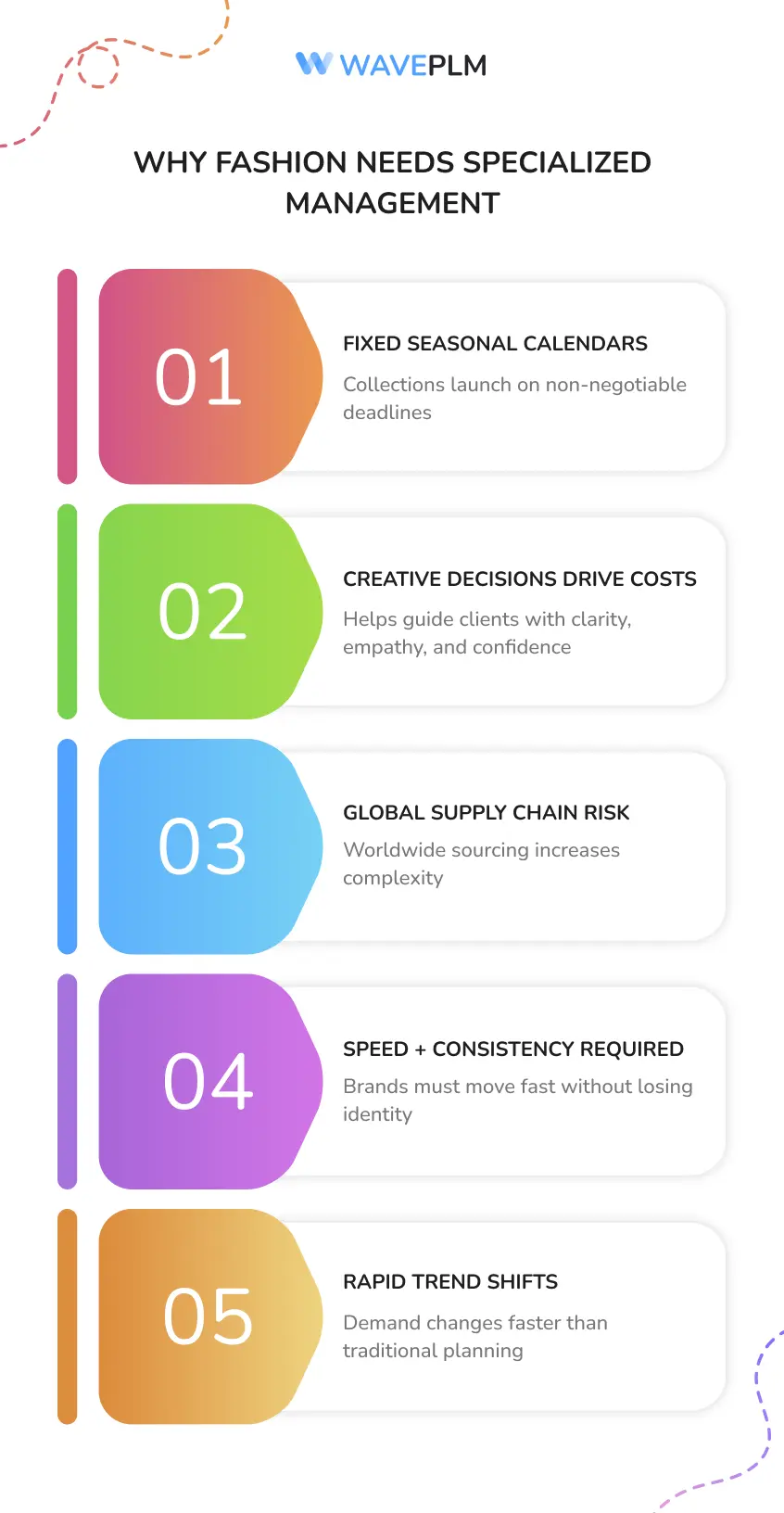
Key reasons why specialized fashion management matters:
- Seasonal fashion collections follow fixed calendars
- Creative choices affect cost, production, and margins
- Global supply chain dependencies increase risk
- Fashion brands depend on consistency and speed
- Market trends shift rapidly
Fashion business management creates structure without limiting creativity. It supports a balancing act between vision and execution.
Core Areas of Management in Fashion
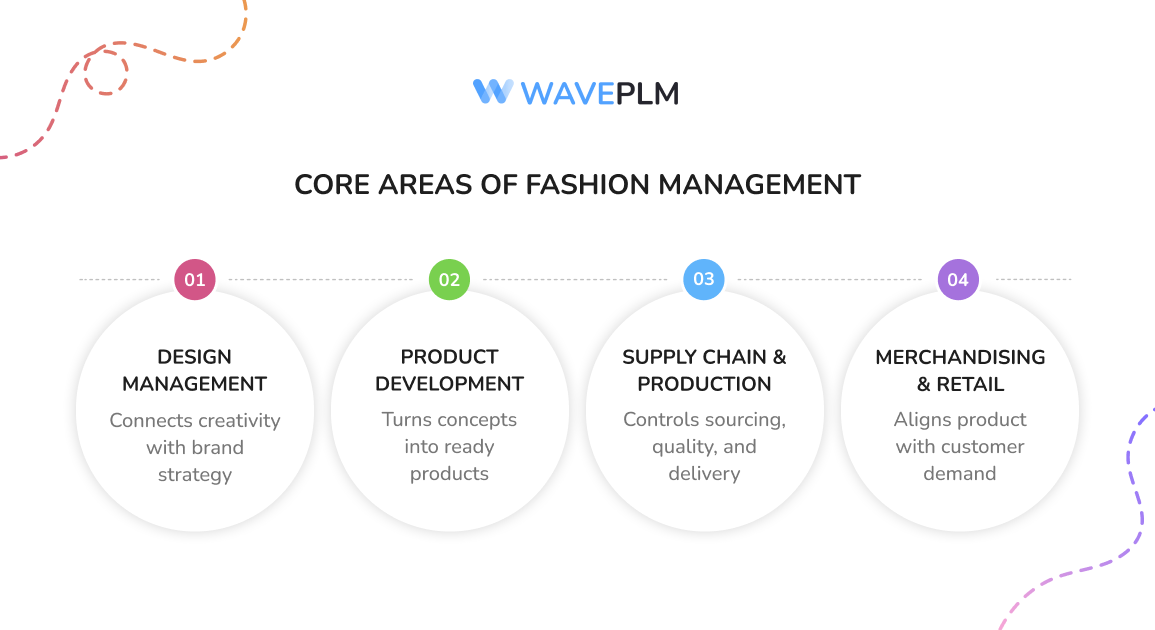
Fashion management covers several interconnected areas. Each area influences business success in the fashion world.
Design Management
Design management connects fashion designers with business strategy. It ensures that creative direction supports the fashion brand, target customer, and market position.
Design managers coordinate designers, product teams, and merchandisers. They guide decisions on silhouettes, materials, colors, and collection size.
Key responsibilities include:
- Translating brand strategy into creative direction
- Managing design timelines and approvals
- Balancing creativity with production limits
- Maintaining consistency across fashion collections
Strong design management protects creativity while supporting fashion business goals.
Product Development Management
Product development management turns creative concepts into market-ready fashion products. It connects sketches, materials, fit, and construction into clear technical plans.
This area controls sampling, costs, and revisions. Fashion managers here ensure that development stays aligned with timelines and budgets.
Core tasks include:
- Managing tech packs and specifications
- Coordinating sample development
- Leading fit sessions and approvals
- Controlling development costs
Product development sits at the center of fashion management. Mistakes here affect the entire process.
Supply Chain and Production Management
Supply chain management ensures that fashion products move from sourcing to production and delivery. It connects suppliers, factories, logistics, and quality control.
In the fashion industry, supply chain management must handle long lead times, changing demand, and strict deadlines.
Responsibilities include:
- Supplier sourcing and negotiation
- Production planning and tracking
- Quality standards and compliance
- Logistics coordination
Efficient supply chain management protects margins and brand reputation.
Brand, Merchandising, and Retail Management
Brand and merchandising management connects creative output with consumer behavior. It ensures the right products reach the right channels. Brand collaborations are a key strategy for fashion brand managers to create marketing campaigns and maintain brand identity.
Merchandise planning relies on sales data, market trends, and inventory management. Retail management balances availability, pricing, and sell-through.
Key activities include:
- Assortment and merchandise planning
- Pricing and margin control
- Retail and e commerce channel strategy
- Sales performance analysis
Digital transformation in fashion includes integrating technology to enhance both production and marketing.
Fashion managers here guide strategic decisions that shape business results.
Fashion Company Structure
A successful fashion business relies on a well-organized company structure, with each department playing a vital role in bringing fashion collections to market. At the core are fashion designers, who create the vision and direction for each season. Production teams transform these ideas into tangible products, overseeing every step of manufacturing. Marketing and sales departments work together to build the brand, launch advertising campaigns, and drive sales both in retail stores and through e-commerce platforms. Retail teams manage the customer experience, ensuring that products are available and presented effectively across all channels. Effective communication and collaboration between these departments are essential for achieving business objectives and maintaining a cohesive brand identity. For those looking to enter the industry, fashion business courses offer a solid understanding of these roles and the essential skills needed to manage and succeed in the competitive world of fashion.
How Fashion Management Differs From Other Industries
Fashion differs from most industries in speed, creativity, and risk. Management in fashion must respond quickly to trends and customer demand.
| Aspect | General Business | Fashion Business |
|---|---|---|
| Timelines | Flexible | Season-driven |
| Demand | Stable | Trend-based |
| Product lifecycle | Long | Short |
| Creative role | Limited | Central |
| Cost shifts | Gradual | Rapid |
Fashion business management requires strong leadership skills and fast decision making across teams.
The Role of Management in Seasonal Fashion Collections
Seasonal collections define how fashion companies operate. Each season follows a structured cycle.
- Trend research and concept development
- Design and assortment planning
- Product development and sampling
- Production and sourcing
- Distribution and launch
- Performance review
Fashion management ensures smooth transitions between each phase. Clear communication prevents delays and misalignment.
Strong fashion managers keep teams focused and aligned throughout the entire process.
Common Challenges in Fashion Management
Fashion management faces recurring challenges across the industry.
Cross-Team Misalignment
Designers, sourcing teams, and marketing often prioritize different goals. Management aligns teams around shared objectives.
Limited Visibility
Without centralized data, fashion managers rely on assumptions. This leads to poor informed decisions.
Late Changes
Last-minute changes disrupt production and supply chain flow. Strong management controls changes without blocking creativity.
Manual Processes
Disconnected tools slow collaboration and increase errors. Modern fashion management relies on integrated systems.
Why Data and Process Matter in Fashion Business Management
Fashion relies on creativity, but business success depends on structure. Data and process turn ideas into repeatable results.
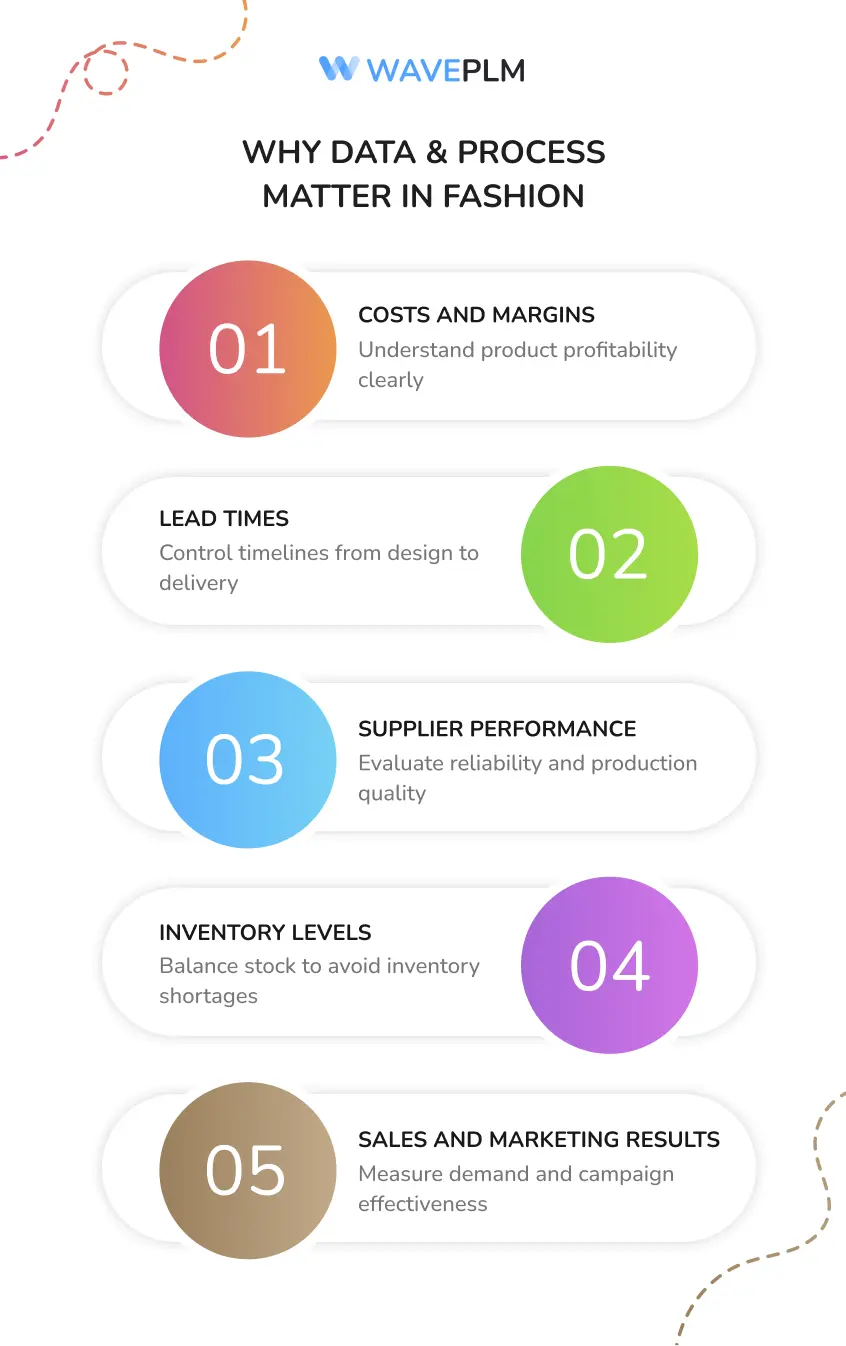
Fashion management uses data to track:
- Costs and margins
- Lead times
- Supplier performance
- Inventory levels
- Sales and marketing results
Clear processes define roles, responsibilities, and approvals. They reduce friction across different departments.
Data-driven fashion business management improves speed, accuracy, and profitability.
E-commerce in Fashion Management
E-commerce has dramatically reshaped the fashion industry, offering fashion companies powerful new ways to connect with consumers and expand their reach. Fashion managers must now possess a deep understanding of e-commerce platforms, digital marketing strategies, and inventory management to thrive in this environment. Online retail stores require careful merchandise planning, as well as the ability to analyze market trends and consumer behavior to make informed decisions.
The influence of social media has also grown, providing fashion brands with innovative solutions for engaging customers and promoting fashion products. To stay competitive, fashion managers must develop and implement effective digital marketing campaigns, leveraging data and technology to optimize the customer experience and drive sales. Mastery of e-commerce is now a critical component of successful fashion management in the modern industry.
How Wave PLM Supports Modern Fashion Management
Technology now plays a central role in fashion management. Product Lifecycle Management platforms connect people, data, and workflows.
Wave PLM supports fashion business management by providing a single source of truth for product data. It connects design, development, sourcing, and merchandising in one system.
Wave PLM helps fashion managers:
- Centralize product information and specifications
- Manage development timelines and approvals
- Track changes across the supply chain
- Improve communication between teams
- Gain real-time visibility into costs and progress
Wave PLM supports fashion companies that need speed, accuracy, and flexibility. It reduces manual work and supports innovative solutions across the fashion industry.
By aligning creative teams with business needs, Wave PLM strengthens fashion management from concept to launch.

Business Goals and Objectives in Fashion
In the highly competitive fashion industry, setting clear business goals and objectives is essential for long-term success. Fashion companies often aim to increase sales, grow their market share, and enhance brand awareness. Achieving these goals requires fashion managers with strong leadership skills, capable of developing and executing effective strategies based on market trends and consumer behavior. Fashion managers must analyze data, monitor performance, and make informed decisions that drive business growth and profitability. Leadership skills are crucial for motivating teams, fostering collaboration, and ensuring that everyone is aligned with the company’s vision. By combining strategic thinking with a deep understanding of the industry, fashion managers help their companies succeed in a rapidly changing marketplace.
Essential Skills for a Career in Fashion Management
Fashion management careers require a mix of creative and analytical skills. Taking a relevant course in fashion management is essential to gain the necessary qualifications and industry knowledge.
Essential skills include:
- Management and leadership skills
- Strong leadership skills
- Business knowledge and business acumen
- Communication and collaboration ability
- Analytical and problem-solving skills
- Understanding of fashion trends and consumer behavior
Strong analytical skills are necessary for data-driven decision-making, while exceptional communication and negotiation abilities foster strong industry relationships.
Fashion business courses often focus on these areas to prepare future fashion managers. Fashion management programs often include a mix of theoretical knowledge and practical applications to prepare students for real-world scenarios.
Career opportunities include roles in merchandising, retail management, supply chain management, brand strategy, and marketing campaigns. Specific positions in the field include fashion design manager, fashion brand manager, and fashion marketing manager. Fashion management is a fast-growing sector that includes many players such as designers, manufacturers, retailers, journalists, and stylists. Internships and work experience are extremely important for building a thorough understanding of the fashion industry. Creativity is the driving force behind fashion success, enabling professionals to develop innovative concepts and marketing campaigns. Circular business models, including resale and rental, are projected to tap into a $367 billion secondhand market by 2029.
Industry Landscape and Trends
The fashion industry is in a constant state of evolution, shaped by new trends, emerging technologies, and shifting consumer preferences. Fashion managers must stay ahead of the curve, monitoring developments such as sustainable fashion, fast fashion, and luxury fashion to identify both opportunities and challenges. Understanding market trends and consumer behavior is key to developing strategies that keep fashion companies competitive. The industry is influenced by a range of factors, including cultural shifts, technological advancements, and economic changes, all of which require fashion managers to be adaptable and forward-thinking. By cultivating a deep understanding of the industry landscape and the latest trends, fashion managers can develop innovative strategies that drive business growth and ensure long-term success in the ever-changing world of fashion.
Conclusion
Fashion management connects creativity with execution. It supports fashion designers while ensuring business success.
In the fashion industry, management shapes how brands plan, develop, and deliver products. It goes beyond marketing and retail to coordinate the entire system.
As fashion business grows more complex, strong fashion management becomes essential. Data, process, leadership, and technology define long-term success.
Wave PLM supports this evolution by enabling better collaboration, visibility, and control across the fashion world.




Leave a Reply