
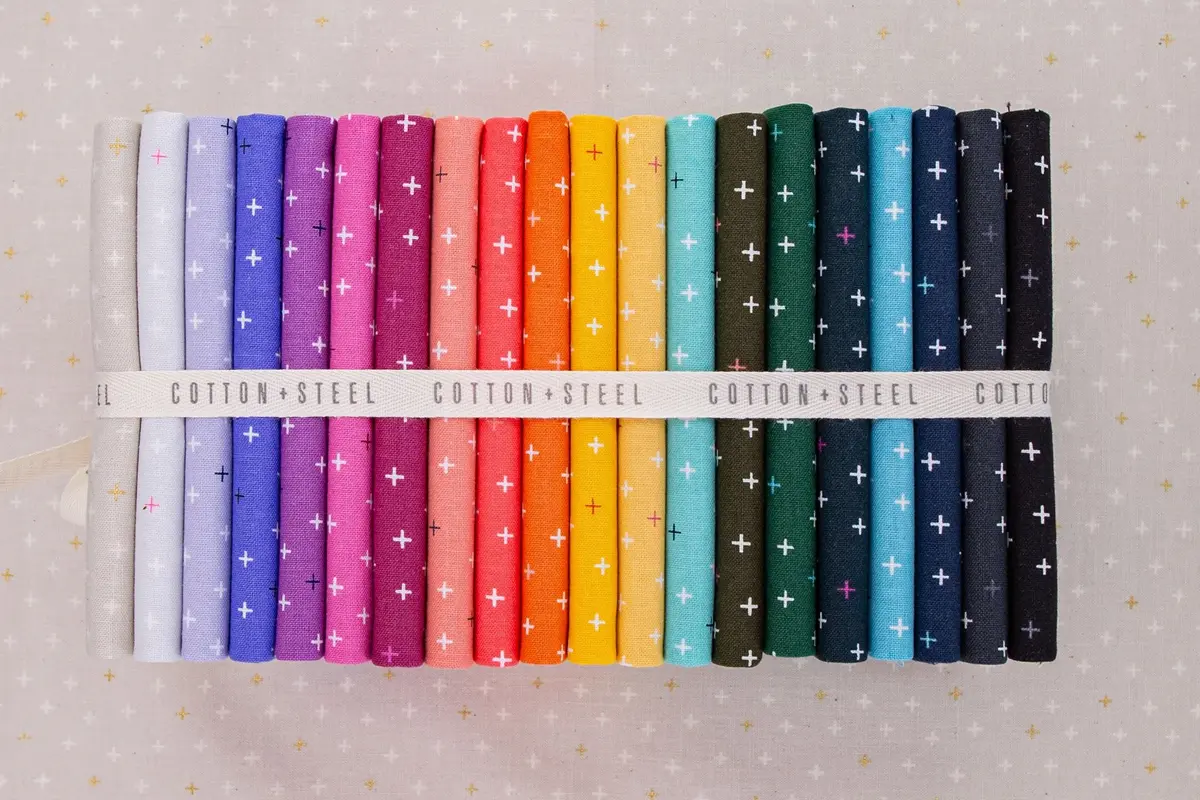
Fashion designers frequently search for a fabric that performs in production, photographs beautifully, and holds its shape. In sourcing conversations, one category keeps coming up: cotton and steel fabric. Lightweight yet structured and printable yet breathable, cotton steel fabric bridges craft quilting and commercial garment production. Their fresh designs have made a significant impact on modern quilting. They blend contemporary aesthetics with traditional techniques and inspire creative projects.
This guide explains what cotton and steel fabrics are and why they attract independent designers and fashion brands. It covers how to source and specify them correctly. It also shows how PLM tools help teams manage cotton steel fabrics at scale. The original founding designers left in 2018. Since then, Cotton + Steel has continued to work with new artists. The brand maintains its reputation for high-quality, contemporary fabric.
📎 Related reading from the Wave PLM blog
- Inside the Fashion Supply Chain: From Concept to Customer
- Quality Control in the Clothing Industry: A Complete Guide
- Design Development in Fashion: From Concept to Production
- Clothing Supply Chain Issues: Explaining the Fashion Value Chain
What Is Cotton and Steel Fabric?
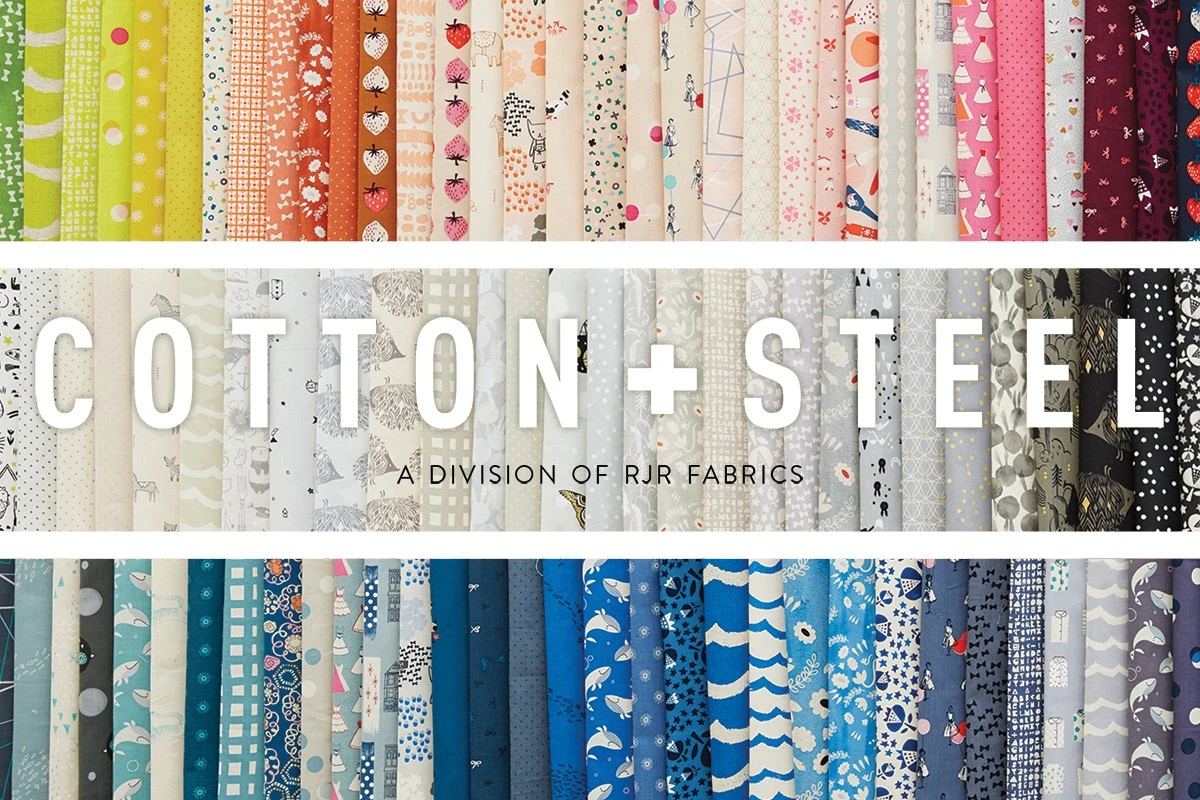
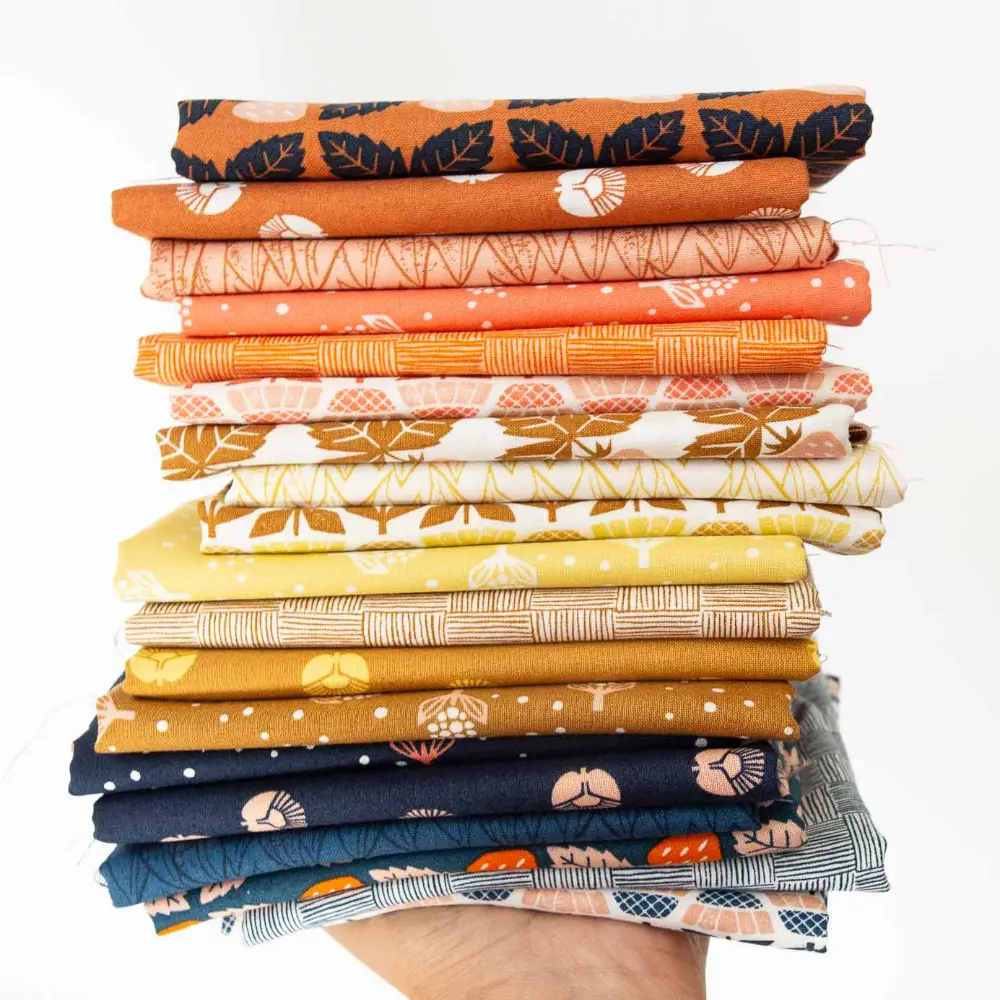
A group of designers who had previously worked with fabric house Kokka founded Cotton and Steel in 2013. The name describes both a brand identity and a broader aesthetic. Cotton and Steel popularised tightly woven, 100% quilting-weight cotton printed with sophisticated, nostalgic designs — florals, geometrics, Japanese-inspired motifs, and intricate surface patterns. Cotton+Steel has also collaborated with Rifle Paper Co. and other artists. These partnerships produced bold patterns and innovative designs that stand out in the fabric industry. Cotton + Steel fabrics are stable, woven materials. They do not slip or slide during cutting and sewing, which makes them ideal for beginners.
People searching for cotton and steel fabric may mean the brand’s collections specifically. Others use the term more broadly. Both groups look for the same properties: high thread count, crisp hand, excellent print clarity, and consistent width. Both uses are valid. Cotton+Steel fabrics come in a variety of bases, including rayon. Rayon offers a soft feel and suits both modern quilting and apparel. Cotton+Steel blends retro charm with modern graphics and playful themes. Their curated, cohesive collections make them ideal for modern quilting.
Their collections feature a wide range of prints, including florals, animals, geometric, and whimsical designs. Cotton+Steel fabrics are a favourite among modern sewists and quilters. This guide covers both the brand context and the wider category. It focuses on structured, print-ready quilting cotton that works well in garment construction.
“Cotton and Steel fabrics sit in a design niche that mass-market apparel mills rarely fill — high-quality surface decoration on a stable, workable base cloth. That combination explains their appeal across quilting, capsule collections, and limited-edition apparel.”— Textile development perspective
Key Fabric Properties
Cotton and Steel fabrics share key properties with high-quality quilting cottons. The table below outlines the most relevant specifications for garment use.
| Property | Typical Specification | Significance for Garment Use |
|---|---|---|
| Fibre content | 100% cotton (combed or ring-spun) | Breathable, dye-receptive, easy to cut and sew |
| Weight | ~3–4 oz/yd² (quilting weight) | Suitable for blouses, dresses, lightweight shirts |
| Width | 44–45 inches standard | Narrower than apparel fabric rolls; affects yardage calculation |
| Thread count | High (poplin-range) | Prints appear crisp; fabric drapes with mild structure |
| Print type | Rotary or digital screen print | Complex designs, tight registration, rich colour gamut |
| Pre-shrinkage | Not always pre-washed | Requires wash-test protocols before cutting in production |
| Hand | Crisp to medium-soft | Holds seams well; minimal fraying on clean cuts |
Why Fashion Brands Work With Cotton and Steel Fabrics
The appeal of cotton steel fabrics extends well beyond hobbyist quilting. Several market forces push apparel brands — especially independent designers and direct-to-consumer labels — toward this fabric category.
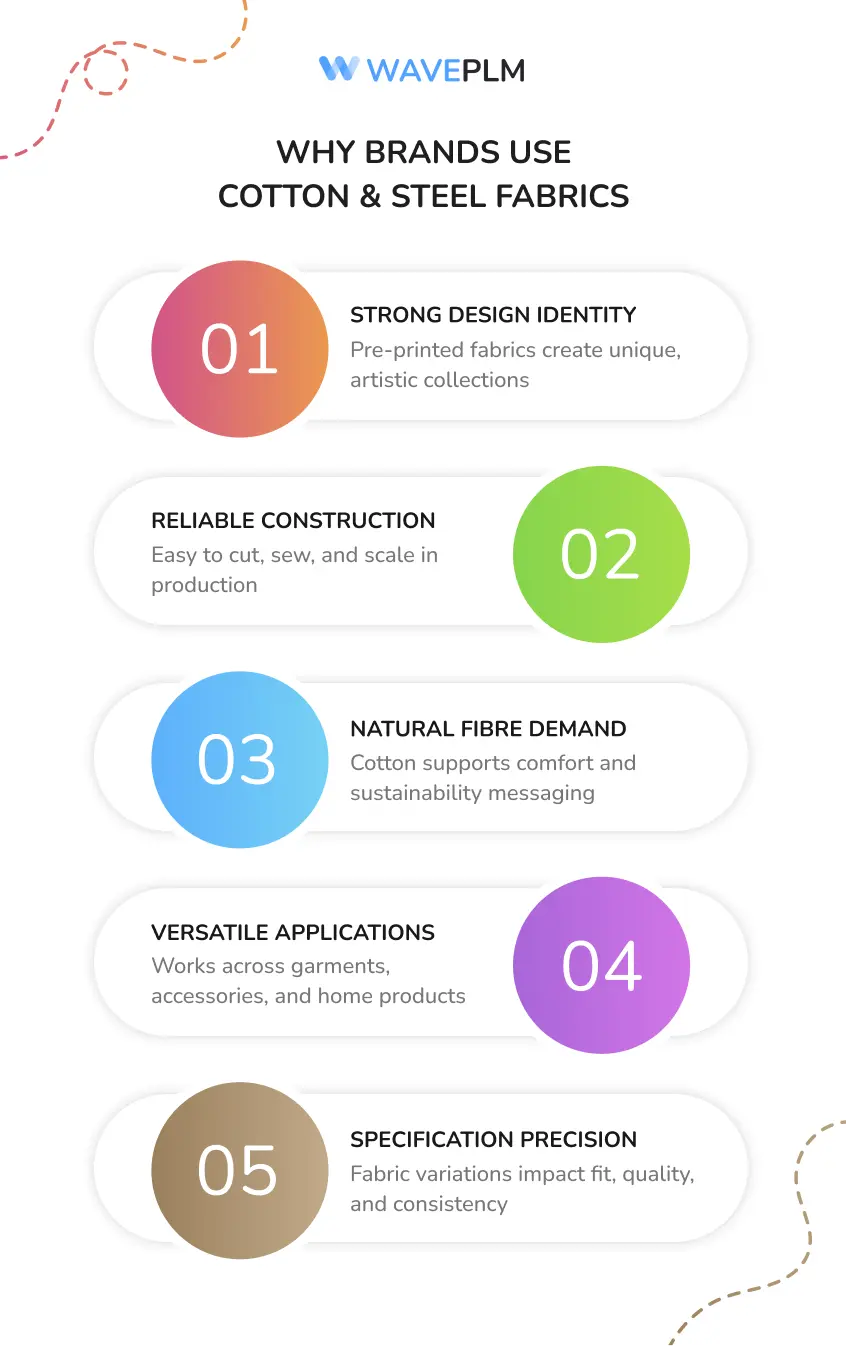
1. Strong Design Identity in Every Metre
Unlike plain utility fabrics, cotton and steel fabrics carry strong visual design as part of their value. Buying pre-printed fabric with distinctive artwork offers an alternative to commissioning an exclusive print from a mill. Commissioning a custom print is both costly and time-consuming. Small brands can deliver a coherent, artistic collection aesthetic without the minimum order quantities a custom print run requires.
2. Predictable Construction Behaviour
Quilting-weight cotton is one of the most forgiving fabrics to work with in production. It cuts cleanly, feeds evenly through industrial machines, and responds predictably to pressing and seaming. Brands transitioning from sampling to small-batch manufacturing benefit from this reliability. A known-quantity fabric significantly reduces technical risk in production.
3. Growing Consumer Preference for Natural Fibres
As explored in our discussion of fast fashion and the economy, consumers increasingly scrutinise the materials in their wardrobe. Cotton positions well against synthetic alternatives in consumer perception. A 100% cotton garment supports brand messaging around comfort and breathability. When the fabric has traceable origins, it also signals reduced synthetic fibre dependency.
4. Versatility Across Product Categories
Cotton and steel fabrics suit a wide range of garment applications. These include smock dresses, patchwork coats, structured blouses, children’s clothing, tote bags, quilted accessories, and home goods. The same fabric collection can anchor multiple SKUs. This simplifies sourcing and reduces the number of supplier relationships a brand needs to manage.
Brands working with cotton and steel fabrics often discover that fabric specification precision matters more than they expected. Thread count, print registration tolerances, and shrinkage rates vary between collections and print runs. These variations can affect cut quality, fit accuracy, and seam integrity.
Cotton and Steel Fabric vs Standard Apparel Cotton: Key Differences
Teams must distinguish between cotton steel fabric in the quilting sense and the broader category of apparel-weight cotton. The two share fibre content but differ in ways that affect sourcing, specification, and production management.
| Factor | Cotton & Steel / Quilting Cotton | Standard Apparel Cotton |
|---|---|---|
| Roll width | 44–45 inches | 57–60 inches |
| Yardage per garment | Higher requirement due to narrow width | Standard patterns apply directly |
| Print design quality | High — designed as the primary feature | Variable — print is often secondary to drape |
| Price per yard | Premium tier ($10–$18+ retail) | Wide range; basic shirting from $3–$8 |
| Pre-washing requirement | Often necessary; shrinkage can be significant | Depends on finishing; often pre-shrunk for garment use |
| MOQ for brand purchase | Cut-length available at retail; bulk orders via distributors | Mill MOQs typically 200–500 metres per colourway |
| Drape | Structured, minimal drape | Varies; voile and lawn have excellent drape |
Understanding these differences is critical when teams move from concept to production. A design that works in a cotton steel fabric sample may need pattern adjustments. The fabric width is 45 inches, not the 58 inches the original block assumed. Teams must track this variable systematically. Informal notes and email threads are not enough.
How to Source Cotton and Steel Fabrics for a Collection
Sourcing cotton and steel fabrics for a production collection requires a different approach than picking yardage for a single garment. Fashion brands must account for availability windows, minimum quantities, print run consistency, and lead times. These factors vary by channel.
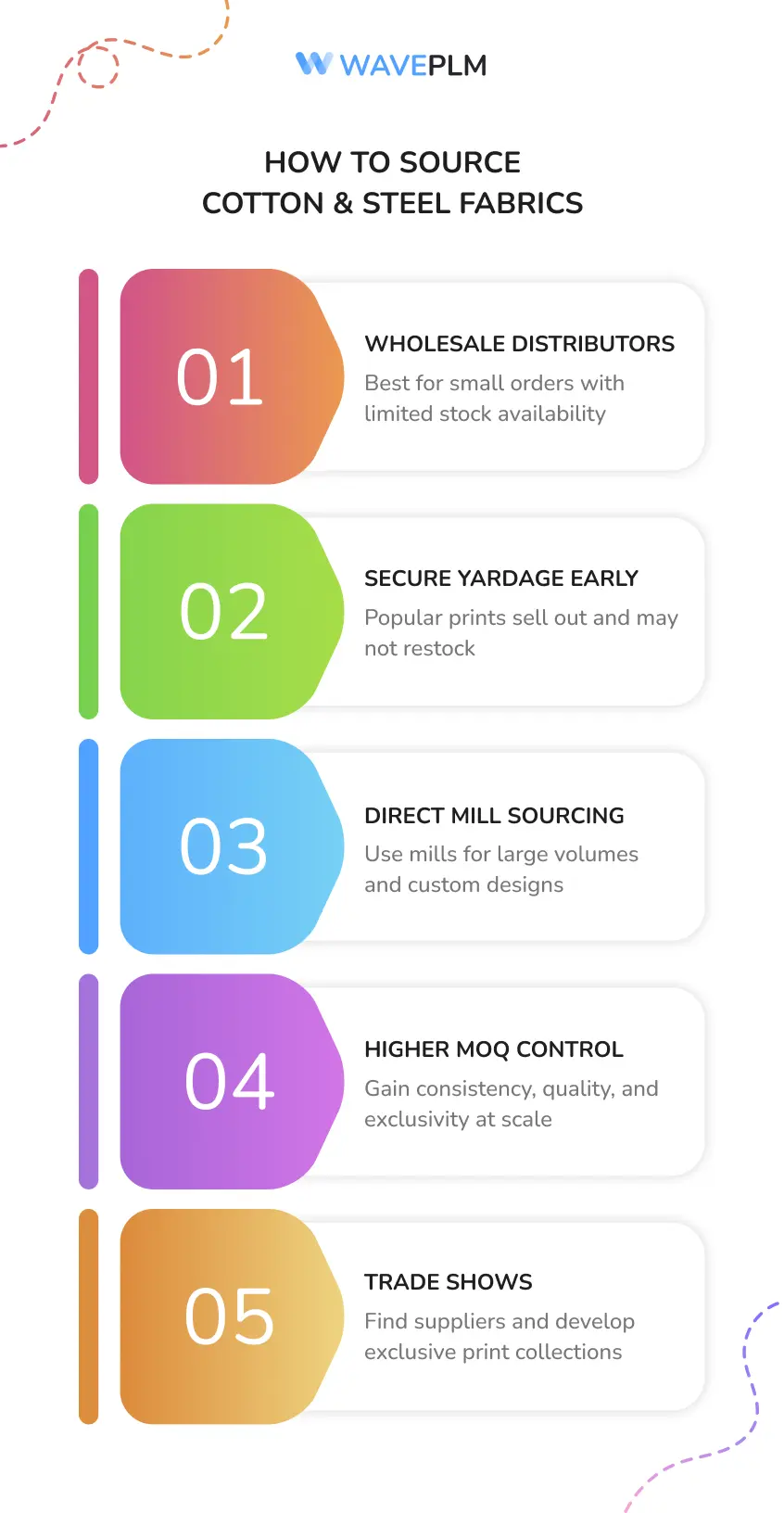
Option 1: Licensed Wholesale Distributors
Cotton and Steel distributes its collections through authorised wholesale accounts worldwide. Independent fabric retailers, online quilting stores, and some specialty distributors carry current and back-catalogue collections at wholesale prices. This is the most practical channel for small brands purchasing 20–100 yards of a print.
The risk: collections sell out quickly. Suppliers may not restock popular prints from a given season. Brands building a multi-season capsule around specific prints must secure sufficient yardage early. They should act before fabric availability becomes uncertain.
Option 2: Direct Mill Relationships for Volume Production
For brands producing more than 200 units of a garment style, sourcing through retail or wholesale distributors becomes cost-inefficient. At scale, brands should approach cotton fabric mills in Japan, South Korea, or India. These mills can produce a similar-specification fabric with custom artwork — high thread count, print-ready quilting weight cotton. This requires a minimum order commitment but gives the brand full control over design exclusivity and repeatable quality.
As our guide to the fashion supply chain explains, sourcing decisions at the material stage affect cost, timeline, and sustainability metrics. These effects flow across the entire product journey.
Option 3: Fabric Marketplaces and Trade Shows
Platforms like Première Vision, Texworld, and Kingpins connect brands with cotton fabric suppliers. These suppliers produce quilting-weight prints comparable to cotton steel fabrics at commercial minimums. Trade show sourcing suits brands that want to commission exclusive prints. It gives access to mill-grade consistency and width.
Sourcing Tip
Always request at least three metres of pre-production fabric for wash and shrinkage testing. Confirm the fabric for production only after completing these tests. Quilting cotton can shrink 3–5% in the warp direction on the first wash. This dimension shift matters when working with fitted bodices or precise patchwork placement.
Managing Cotton and Steel Fabrics Inside PLM: Why It Matters
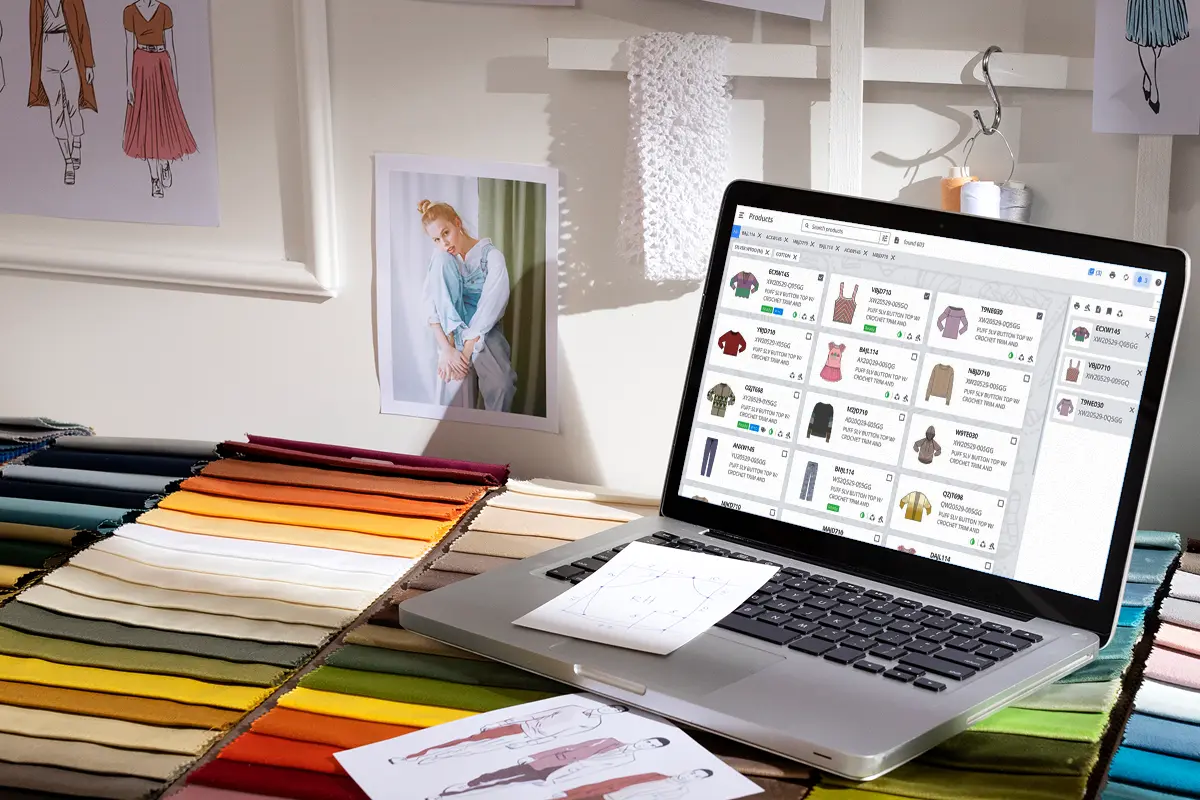
Independent designers at small scale manage fabric informally — swatch folders, handwritten notes, photos on a phone. But as a brand grows and begins producing collections at volume, that informal system breaks down fast.
A structured design development process requires that fabric data live in one accessible, version-controlled place. That is where PLM (Product Lifecycle Management) software becomes indispensable.
Fabric Library and Material Records
In a PLM system, teams should record each cotton and steel fabric as a distinct material. Each entry gets its own specification sheet. The record captures supplier name and contact, fabric composition, width, weight, colourways, and price per yard. It also includes minimum order quantity, lead time, and quality parameters agreed with the supplier. When teams use the same fabric across multiple styles, all associated styles link back to the same material record. A price update, quality note, or stock limit then cascades automatically to every affected style.
Bill of Materials for Cotton Steel Fabric Styles
Every garment made with cotton steel fabrics requires a precise Bill of Materials (BOM). The BOM specifies exactly how much fabric each size and colourway needs. It accounts for seam allowances, cutting waste, and special placement for directional prints. Without a properly maintained BOM, production teams cannot calculate accurate material costs or place accurate fabric orders. Our guide to the BOM table in fashion production covers this in depth.
Print Placement and Technical Specifications
One of the distinctive challenges of working with cotton and steel fabrics is their printed surface. Unlike a solid fabric, a printed quilting cotton often requires deliberate placement decisions. Teams must consider a specific motif at the centre front, repeat matching across seams, and directional orientation that cannot change in the cutting lay. Teams must document these requirements in the technical package and communicate them clearly to the factory. PLM lets teams attach placement diagrams, annotated flat sketches, and print approval records to the relevant style file. This eliminates the ambiguity that arises when notes live in emails.
Quality Control for Printed Cotton Fabrics
Fabric inspection is the first gate in any production quality system. Our guide to quality control in the clothing industry covers this in depth. For cotton and steel fabrics specifically, incoming inspection should verify:
- Print registration accuracy (are repeat joins aligned within tolerance?)
- Colour consistency against the approved lab dip or print strike-off
- Fabric width within stated tolerance (±¼ inch)
- Thread count and weight against specification
- Absence of weave defects: skipped threads, snags, oil stains
- Shrinkage within agreed limits after a single standard wash test
Teams that document these checks in PLM — rather than on paper or in spreadsheets — can track defect patterns over time. They can benchmark supplier performance and reject non-conforming fabric before it enters the cutting room.
Print registration is the quality dimension brands most often overlook when first working with cotton and steel fabrics. A half-centimetre mis-registration in a tight geometric print creates a jarring visual inconsistency. The inconsistency only appears after assembly, which makes it expensive to correct. Early-stage fabric inspection catches this before teams commit yardage to cut.
Designing Collections Around Cotton and Steel Fabrics
The most commercially successful collections built on cotton and steel fabrics share common design principles. Brands should understand these before they start developing.
Let the Print Lead, Keep the Silhouette Simple
Complex surface design asks for restraint in construction. A heavily printed cotton steel fabric works best with a clean silhouette and minimal seaming. This lets the design speak without distraction. A-line skirts, wrap blouses, straight-leg trousers, and boxy shirts are natural choices. Overly complex construction competes with the print rather than letting it perform.
Use Solids and Coordinates to Build Range
The Cotton and Steel brand typically releases each collection with both printed and solid fabrics in a coordinating palette. Fashion brands can adopt this approach in their own lines. Pair a statement print fabric with a complementary solid in the same colourway. This lets customers mix pieces and increases per-order basket size. Solids serve as lining, binding, and contrast fabric. They extend yardage without adding more print SKUs to the sourcing matrix.
Consider the Patchwork and Quilted Aesthetic Deliberately
Part of the cultural identity of cotton and steel fabrics is their association with craft, intentionality, and slow fashion. Brands that lean into this aesthetic connect more authentically with their target customers. Visible piecing, quilted panels, and hand-stitching details all reinforce the connection. This is not a mandatory direction, but it is a market signal worth reading.
Mind the Fashion Movement Context
Consumer appetite for tactile, print-rich, handcraft-adjacent clothing follows cultural cycles. Our analysis of fashion movements and how fashion changes examines this in detail. The current interest in slow fashion, maximalist print, and artisanal aesthetics favours collections built on cotton steel fabrics. However, the positioning window is competitive. Brands need a clear design point of view to stand out in this space.
Sustainability Considerations for Cotton and Steel Fabrics
Fashion sustainability discussions often fixate on fibre alternatives — recycled polyester, Tencel, organic cotton. Cotton steel fabrics, being standard cotton, do not escape scrutiny in this conversation. However, their sustainability profile is nuanced.
Where Cotton and Steel Fabrics Perform Well
100% cotton is biodegradable, unlike synthetic blends. Consumers who value high-quality quilting cotton tend to care for it properly. They wash at lower temperatures, air-dry, and repair rather than discard. The slow-fashion culture around this fabric category naturally supports longer garment lifespans.
Manufacturers who use reactive dyes and OEKO-TEX certified processes produce cotton steel fabrics that meet the standards conscientious brands require. Always verify certifications with the supplier and document them inside the material record in PLM.
Where Brands Need to Be Careful
Conventional cotton farming is water-intensive. Brands making sustainability claims should ask suppliers about cotton sourcing. They need to know whether it is conventional, Better Cotton Initiative (BCI), or certified organic. Print processes also matter. Reactive printing uses significant water in wash-off processes. Digital printing, by contrast, reduces water and chemical waste considerably. These distinctions belong in supplier qualification data, which PLM can help maintain systematically.
Cotton and Steel Fabric in the Context of Brand Positioning
The fabric choices a brand makes are not merely operational decisions. They communicate identity. Every material decision — from fibre content to print aesthetic — sends a signal about what a brand stands for and who it targets. Our complete guide to brand management in fashion explores this in depth.
Cotton and steel fabrics carry a specific set of connotations: care, quality, individuality, and a connection to making culture. Their strong design heritage, craft association, and premium positioning in the quilting world reinforce this. Brands that choose this fabric category thoughtfully can build genuine differentiation. Communicating that choice clearly in product marketing helps stand out in a market saturated with genericised fast fashion.
The most successful brands manage the full cycle with the same intentionality. This means applying equal care to sourcing, specification, quality, and storytelling. PLM is the infrastructure that makes that intentionality scalable.
Conclusion
Cotton and steel fabric occupies a distinctive and growing position in the fashion sourcing landscape. Whether a brand works with the Cotton and Steel label, sources quilting cottons from mills, or builds a custom print programme, the opportunity is significant. The key is having the operational foundations in place to manage it well.
The details that determine production success are well-defined: accurate fabric specification, BOM management, print placement documentation, and incoming inspection protocols. PLM software captures, organises, and communicates all of these across teams. The aesthetic vision is the starting point. The operational system delivers it consistently, at scale, without quality loss.
If your brand works with cotton and steel fabrics, Wave PLM provides the tools to bring that level of rigour to product development. It centralises your material library and maintains accurate BOMs. It also manages supplier quality data and keeps your team aligned from first swatch to final shipment.




Leave a Reply