
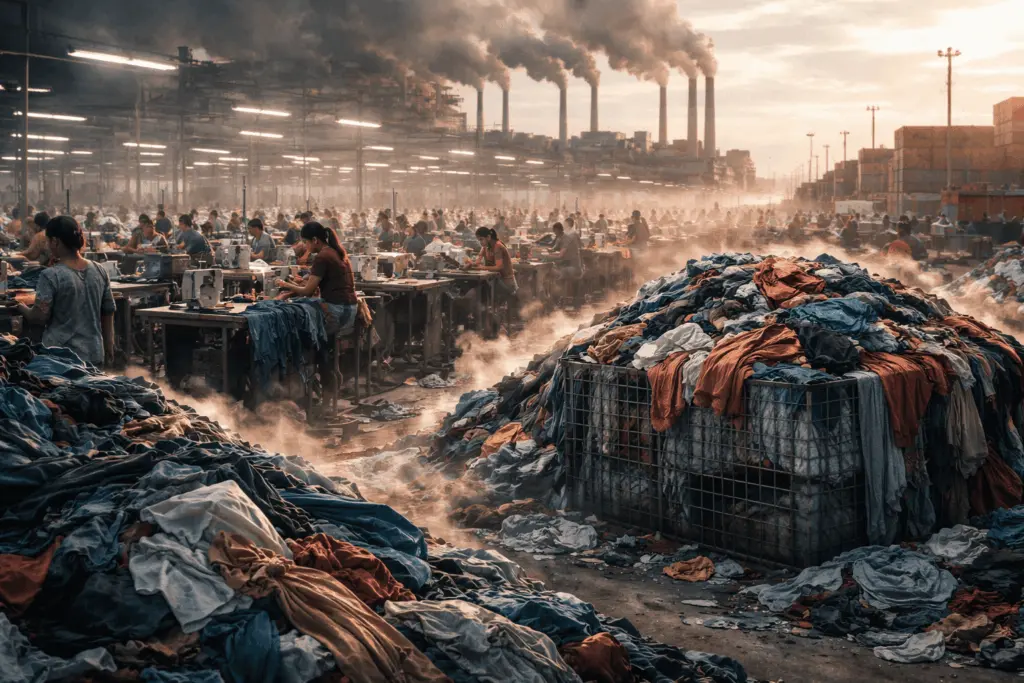
Fast fashion dominates the fashion industry today. It delivers trendy clothing at record speed. It promises cheap clothing and constant fashion trends. Many consumers enjoy new clothing every week. Many young women feel pressure to avoid wearing the same outfit twice. The economic benefits of fast fashion often accrue to corporate shareholders and executives, exacerbating income inequality and wealth disparities.
Yet serious economic questions remain. Many experts now ask: why is fast fashion bad for the economy?
This guide explains the impacts of fast fashion using data and economic logic. It explores fast fashion and the economy from a global perspective. It also examines fashion industry economics across supply chains, labor markets, and environmental systems.
Short Answer: Why Is Fast Fashion Bad for the Economy?
Fast fashion damages long-term economic stability. It increases textile waste. It weakens supply chains. It relies on cheap labor in developing countries. It shifts environmental impacts to the public.
The fast fashion industry creates short-term economic growth. However, it also drives environmental degradation, unstable profit margins, and rising public costs.
Many workers in fast fashion industries face precarious employment conditions and low pay, perpetuating cycles of poverty and economic instability.
In simple terms, fast fashion contributes to waste, inequality, and market volatility.
Understanding Fast Fashion in the Fashion Industry
The fast fashion industry focuses on rapid production cycles. Designers transform runway ideas into trendy clothes within weeks. Fast fashion brands release new collections constantly. A fast fashion retailer may introduce thousands of styles per year.
This business model depends on speed, volume, and low production costs. The apparel industry shifted toward fast fashion production to satisfy rising consumer demand.
The creative process now moves faster than ever. However, speed creates hidden economic risks.
How Fast Fashion Production Works
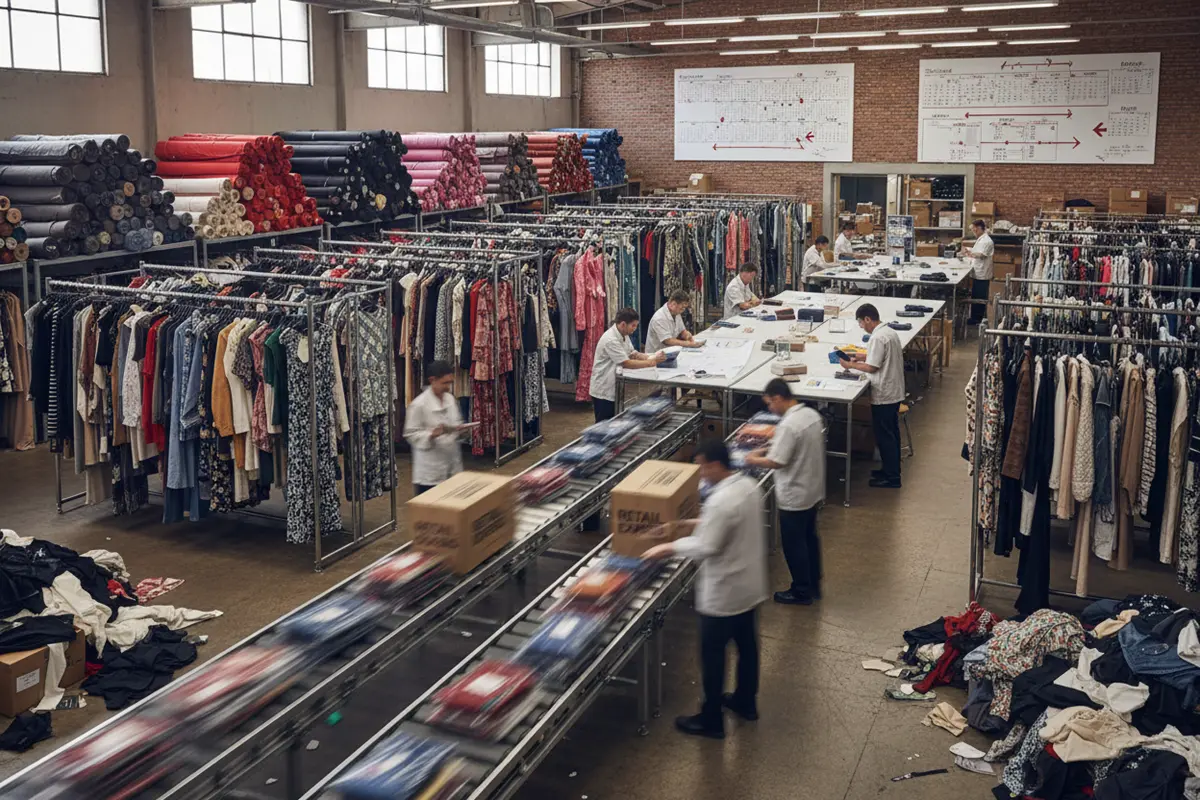
Fast fashion production follows a compressed manufacturing process. Brands forecast short-term fashion trends. Textile manufacturers source synthetic fibers or cotton production inputs quickly. Garment factories assemble cheap garments under strict deadlines.
This rapid production model reduces design time. It also reduces quality control. Many fast fashion companies push suppliers to cut costs.
Lower production costs often rely on cheap labor. Many garment workers face long working hours and unsafe working conditions. In some regions, reports of child labor still appear in the garment industry.
These labor conditions affect economic development in many developing countries.
Overproduction and Textile Waste
Overproduction defines fast fashion.
Fast fashion brands produce far more garments than consumers need. When items do not sell, retailers discount heavily. Unsold stock often becomes discarded clothing.
Textile waste rises sharply under this system. The environmental protection agency reports millions of tons of textile waste each year. Synthetic textiles and synthetic fibers do not biodegrade easily. Textile waste accumulates in landfills across the global south.
The environmental footprint of fast fashion increases public cleanup costs. Governments fund waste management systems. Taxpayers absorb those expenses.
From an economic perspective, overproduction destroys value.
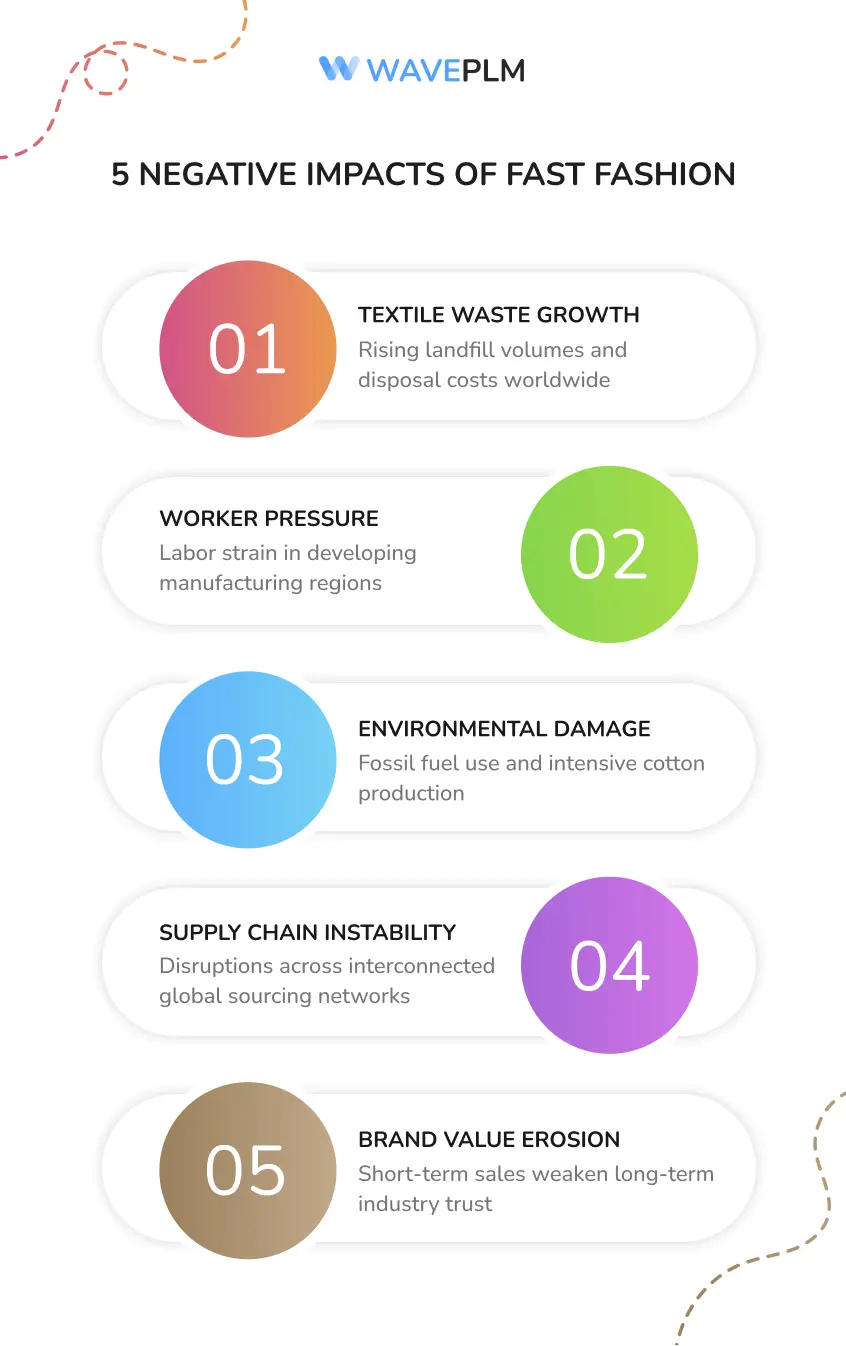
5 Negative Impacts of Fast Fashion
Here are five major impacts of fast fashion on the global economy:
- Rising textile waste and landfill costs.
- Pressure on garment workers in developing countries.
- Environmental degradation from fossil fuels and cotton production.
- Supply chain instability across the global economy.
- Weak long-term brand value in the fashion industry.
Each of these impacts of fast fashion affects economic development and environmental sustainability.
Environmental Impacts and the Global Economy
The environmental impacts of fast fashion extend beyond landfills. Fast fashion contributes to greenhouse gases and carbon emissions. Textile production uses fossil fuels heavily. Synthetic fibers rely on petrochemicals.
Fast fashion accounts for 8-10% of global carbon emissions, which leads to long-term environmental degradation costs. The fast fashion industry is the second biggest polluting industry after aviation.
Maritime shipping combined with aviation transports garments worldwide. Maritime shipping combined with logistics operations increases the environmental footprint of the apparel industry.
The united nations environment programme links fashion industry emissions to climate change. The united nations highlights environmental degradation in developing countries. The united nations economic commission also warns about resource depletion.
Climate change creates financial risks for the global economy. Extreme weather disrupts supply chains. Crop failures affect cotton production. These disruptions increase volatility across the textile industry.
Natural Resources and Cotton Production
Fast fashion production consumes natural resources at scale. Cotton production requires water and pesticides. A single cotton t shirt can require thousands of liters of water.
Organic cotton reduces chemical use. However, most fast fashion brands still rely on conventional cotton production and synthetic fibers.
Synthetic fibers such as polyester dominate textile production. Recycled polyester offers improvement. However, recycled polyester still releases microplastics.
Heavy reliance on fossil fuels and synthetic textiles increases the environmental impacts of fast fashion.
Supply Chains Under Pressure
Supply chains form the backbone of the fashion industry. Fast fashion compresses timelines across supply chains. Brands demand lower prices and faster turnaround.
Textile manufacturers and garment factories operate on thin margins. Suppliers in developing countries absorb cost fluctuations. Many developing countries depend on clothing sales for export revenue.
When fast fashion companies cancel orders, factories struggle. Garment workers lose wages. Economic development slows in the global south.
Unstable supply chains create systemic risk within the global economy.
Cheap Labor and Economic Inequality
Cheap labor drives much of the fast fashion industry. Many garment workers earn low wages. Long working hours remain common in some regions.
Industry insiders acknowledge the imbalance. Fast fashion brands maintain profit margins while suppliers struggle.
Economic growth in developing countries depends on fair wages and stable employment. When fast fashion contributes to labor exploitation, it undermines long-term economic development.
Unsafe working conditions also increase public healthcare costs and harm human health.
Who Is the Biggest Polluter in Fast Fashion?
No single fast fashion retailer alone causes all damage. However, large fast fashion brands with massive output create the greatest environmental footprint.
The textile industry collectively ranks among major polluters globally. The united nations environment programme reports that the fashion industry produces significant carbon emissions. The environmental protection agency links textile waste to landfill growth.
Pollution arises from synthetic fibers, fossil fuels, maritime shipping combined transport, and water-intensive cotton production.
The structure of the fast fashion industry drives these outcomes.
How Fast Fashion Contributes to Consumerism
Fast fashion shapes consumer behavior. Low prices encourage impulse buying. Social media amplifies fashion trends quickly.
Consumers purchase trendy clothing frequently. Many feel pressure to avoid repeating the same outfit.
This culture normalizes overconsumption. Fast fashion contributes to a cycle of buying, wearing briefly, and discarding.
Cheap clothing changes fashion habits. It shifts focus from quality to quantity.
Market Instability and Fashion Industry Economics
Fashion industry economics values brand equity and stable demand. Fast fashion disrupts both.
Rapid production creates demand volatility. Forecasting becomes difficult. Supply chains face sudden spikes and drops.
Publicly traded fashion brands experience earnings swings. Investors react to unpredictable clothing sales.
The fast fashion industry prioritizes short cycles over durable value creation.
Positive Economic Implications of Fast Fashion
Some analysts highlight positive economic implications. Fast fashion creates jobs in the garment industry. It supports economic growth in export-driven regions. It lowers clothing prices for consumers.
These benefits matter. Many developing countries rely on textile production for economic development.
However, benefits must be weighed against environmental impacts and long-term instability.
The Role of Sustainable Fashion
Sustainable fashion offers an alternative path. Sustainable brands adopt sustainable business models. They invest in environmental responsibility and transparent supply chains.
Sustainable clothing focuses on durability. It reduces textile waste. It limits environmental degradation.
A circular economy approach encourages recycling and repair. A more circular economy reduces dependence on virgin natural resources.
Extended producer responsibility policies push fashion brands to manage end-of-life waste.

Comparing Business Models in the Apparel Industry
| Factor | Fast Fashion Model | Sustainable Fashion Model |
|---|---|---|
| Production Speed | Rapid production | Measured cycles |
| Textile Waste | High | Lower |
| Supply Chains | Cost-focused | Resilience-focused |
| Environmental Footprint | Large | Reduced |
| Profit Margins | Short-term focus | Long-term stability |
Different business models shape economic outcomes. Fast fashion emphasizes speed. Sustainable fashion emphasizes durability.
Environmental Sustainability and Future Generations
Environmental sustainability protects future generations. Climate change and greenhouse gases create long-term costs. Carbon emissions from textile production increase global risk.
Environmental degradation harms agriculture and water systems. These losses affect the global economy.
The fashion industry must integrate environmental protection agency standards and united nations frameworks.
How the Economy Affects Fashion Trends
The economy influences fashion trends directly. During economic growth, consumers spend more on new clothing. During recessions, they seek cheap garments.
Fast fashion thrives during uncertainty because it offers low prices. However, unstable economies also expose fragile supply chains.
Economic cycles shape consumer demand and production strategies.
The Hidden Costs of Cheap Garments
Cheap garments appear affordable. However, hidden costs remain.
Public waste management expenses rise. Environmental cleanup costs increase. Human health risks emerge near polluted rivers in the global south.
When fast fashion contributes to pollution, society pays indirectly.
Reducing Carbon Emissions in the Fashion Industry
The fashion industry is a major driver of global carbon emissions, with the fast fashion industry playing a particularly significant role. Fast fashion contributes to 10% of the global annual carbon footprint, which is more than the emissions from all international flights and maritime shipping combined.
The rapid production of trendy clothing, reliance on synthetic fibers, and global distribution networks all contribute to a substantial environmental footprint. Fast fashion production not only accelerates climate change but also places immense pressure on natural resources and human health.
To address these impacts, many fashion brands are shifting toward sustainable business models. By incorporating recycled polyester, organic cotton, and other sustainable materials, the apparel industry can significantly reduce its carbon emissions. Sustainable fashion also means rethinking supply chains—using renewable energy, minimizing waste, and designing clothing for longevity. These changes not only lower production costs in the long run but also help fashion companies meet growing consumer demand for environmentally responsible products.
International organizations are leading the way in promoting sustainable fashion. The United Nations Environment Programme (UNEP) and the United Nations Economic Commission for Europe (UNECE) have launched initiatives and developed guidelines to help the fashion industry reduce its environmental impacts. These guidelines encourage fashion brands to adopt circular economy principles, such as recycling discarded clothing, reducing textile waste, and implementing efficient supply chain management.
Sustainable fashion practices also benefit garment workers, especially in developing countries. By moving away from the fast fashion model, companies can improve working conditions, offer fair wages, and support economic growth in regions that depend on the garment industry. This shift not only enhances the livelihoods of garment workers but also contributes to a more resilient global economy.
Consumers play a crucial role in reducing carbon emissions from the fashion industry. By choosing sustainable clothing, buying second-hand, renting outfits, or investing in high-quality pieces, individuals can help decrease the demand for fast fashion and its associated environmental impacts. Changing fashion habits at the consumer level supports the transition to a more circular economy and encourages fashion brands to prioritize sustainability.
The textile industry, particularly in its use of synthetic fibers like polyester and nylon, is a significant source of greenhouse gases. However, by embracing recycled materials and sustainable production methods, textile manufacturers can reduce their environmental footprint and support the broader goals of environmental sustainability.
In summary, reducing carbon emissions in the fashion industry requires collaboration across the entire supply chain—from fast fashion companies and textile manufacturers to garment workers and consumers. By adopting sustainable business models, using eco-friendly materials, and supporting international guidelines, the fashion industry can lower its carbon emissions, protect human health, and promote economic development. Together, these efforts pave the way for a more sustainable future and help mitigate the negative impacts of fast fashion on the environment and the global economy.
Toward a More Circular Economy
A circular economy reduces textile waste through reuse and recycling. Recycled polyester lowers demand for virgin fossil fuels. Organic cotton reduces chemical impact.
Sustainable fashion brands experiment with resale and repair programs. These strategies create sustainable business models.
A more circular economy supports stable supply chains and economic resilience.
Conclusion: A Balanced Economic View
So, why is fast fashion bad for the economy?
Fast fashion increases textile waste. It pressures garment workers. It relies on cheap labor in developing countries. It accelerates environmental degradation. It destabilizes supply chains across the global economy.
Fast fashion consumes vast amounts of natural resources, using 141 billion cubic meters of water annually. The fast fashion industry generates short-term clothing sales and economic growth. Yet long-term fashion industry stability depends on environmental sustainability and responsible supply chains.
Fashion brands that invest in sustainable fashion and circular economy strategies protect economic development. They reduce environmental impacts. They build resilient supply chains.
Fast fashion is responsible for 35% of microplastics polluting our oceans. The future of the fashion industry depends on smarter planning, fair wages, and environmental responsibility.
Fast fashion and the economy will remain connected. The key question is whether the industry chooses rapid production alone or balanced, sustainable growth.



Leave a Reply