

The fashion industry is constantly evolving and reshaping itself. Brands face pressure from changing consumer expectations, rapid digital disruption, and rising sustainability concerns. Innovative fashion business models now shape how brands design, produce, sell, distribute, repair, and reuse clothing across markets.
The global fashion industry operates in a highly competitive environment. Shifts in technology, culture, and consumer values affect every part of the business. Brands no longer compete only on design. They compete on speed, flexibility, and responsibility.
There is a growing demand for sustainable and innovative fashion business models, as more consumers seek eco-friendly practices and brands are adapting to meet these expectations.
This guide explains how business models in the fashion industry are changing today. It focuses on growth, resilience, and long-term value creation. It also shows how modern brands rethink the entire value chain to stay competitive in a global fashion market that continues to expand and fragment.
Why Traditional Fashion Business Models Are No Longer Enough
For decades, the fashion industry relied on traditional business models. Brands planned seasonal collections far in advance. They focused on mass production and long lead times. They pushed volume through wholesale partners and large retail networks.
This approach struggles in today’s market.
Fast fashion accelerated fashion consumption across global fashion markets. It increased waste, pressure on the supply chain, and carbon emissions. It also trained consumers to expect constant newness at low prices. Department stores and luxury brands are also seeing a shift in consumer spending, as more shoppers turn to sustainable and innovative alternatives instead of traditional high-end labels.
Growing consumer demand now shifts toward value, transparency, and responsibility. More than half of shoppers question how brands treat workers, use resources, and manage waste. Many buyers prefer brands that support sustainable fashion principles.
Traditional business models lack flexibility. They lock brands into forecasts and excess inventory. Faulty or broken product often ends up discarded instead of repaired or reused. This creates financial loss and environmental damage.
A thriving fashion industry now depends on smarter systems and new business models. These models allow brands to adapt faster, respond to trends, reduce risk, and lower environmental impact.
The Core Fashion Business Model Types
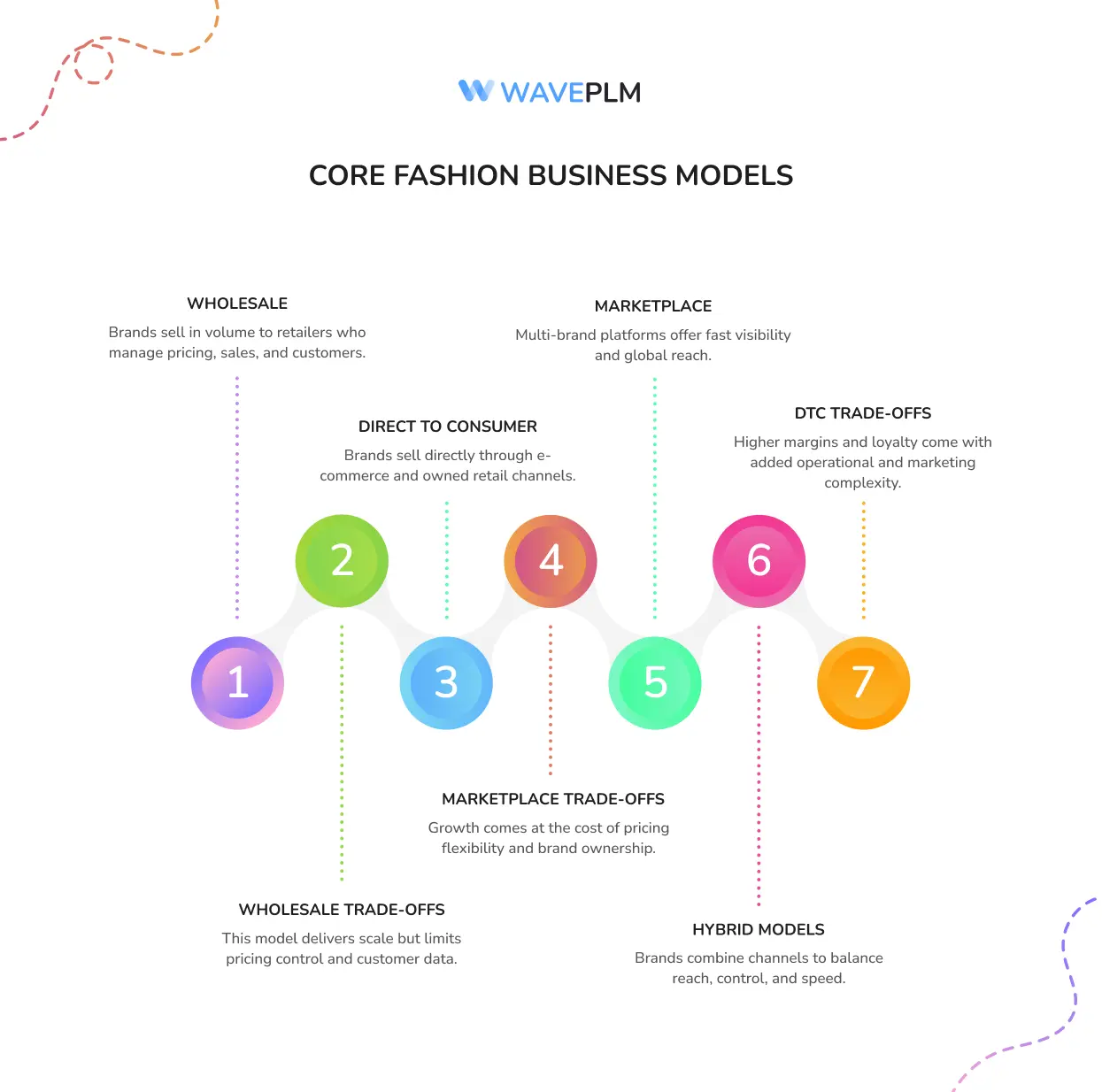
Most fashion brands still operate within a few core business models. Innovation often starts by adapting these foundations instead of replacing them completely.
Wholesale
Wholesale remains common across the global fashion industry. Brands sell large volumes to retailers who manage sales, pricing, and customer relationships.
This model offers scale and reach. It also limits control. Brands lose pricing power and direct customer data. Inventory risk shifts downstream but often returns through markdowns and unsold stock.
Direct to Consumer
Direct to consumer models connect brands directly with shoppers. E commerce plays a central role, supported by owned stores and digital channels.
This model improves margins and customer loyalty. It gives brands full control over storytelling and pricing. It also increases operational complexity, fulfillment costs, and marketing investment.
Marketplace
Marketplaces include multi brand platforms and third party marketplaces. They aggregate brands and attract large audiences in the global fashion market.
They support fast expansion and visibility. They also reduce brand ownership, data access, and pricing flexibility.
Many modern fashion brands combine these approaches. They build hybrid business models to balance reach, control, and speed.
Impact of Fast Fashion
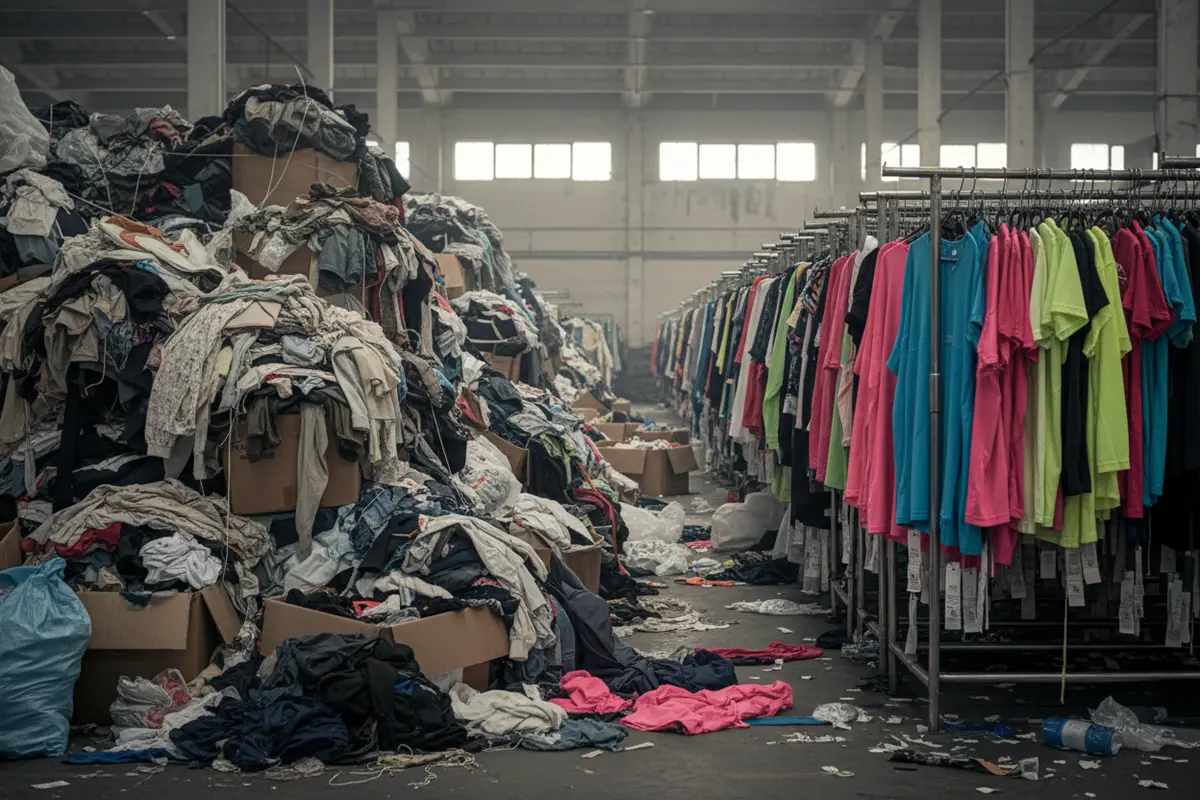
Fast fashion has become a defining force in the global fashion industry, but its rapid rise has brought significant environmental and social consequences. Characterized by the mass production of low-cost, trend-driven clothing, fast fashion relies on traditional business models that prioritize speed and volume over quality and sustainability. This approach has fueled a culture of constant consumption, with the global fashion industry now producing over 100 billion garments each year. In the United States alone, the average person discards 82 pounds of clothing annually, contributing to overflowing landfills and mounting waste management challenges.
The environmental impact of fast fashion is profound. The production of synthetic fibers like polyester and nylon demands vast amounts of energy and resources, driving up carbon emissions and accelerating climate change. Fabric dyeing and finishing processes release toxic chemicals into waterways, threatening ecosystems and public health. According to the Ellen MacArthur Foundation, if current trends continue, the fashion industry could be responsible for 26% of global carbon emissions by 2050—a staggering figure that underscores the urgent need for change.
Beyond environmental concerns, fast fashion also raises serious social issues. Many apparel brands depend on global supply chains that often exploit workers in developing countries, subjecting them to unsafe conditions and inadequate wages. The relentless push for newness and low prices perpetuates a disposable mindset, eroding appreciation for high quality clothing and the craftsmanship behind it.
In response, a growing number of fashion brands are embracing circular business models that challenge the status quo. Rental platforms like Rent the Runway and Le Tote allow customers to rent high quality clothing for special occasions, reducing the need for constant new purchases. Other companies, such as Patagonia, are investing in sustainable materials, repair services, and recycling initiatives to extend the life of existing products and minimize environmental impact. These innovative business models not only help reduce waste but also foster customer loyalty by aligning with the values of today’s conscious consumers.
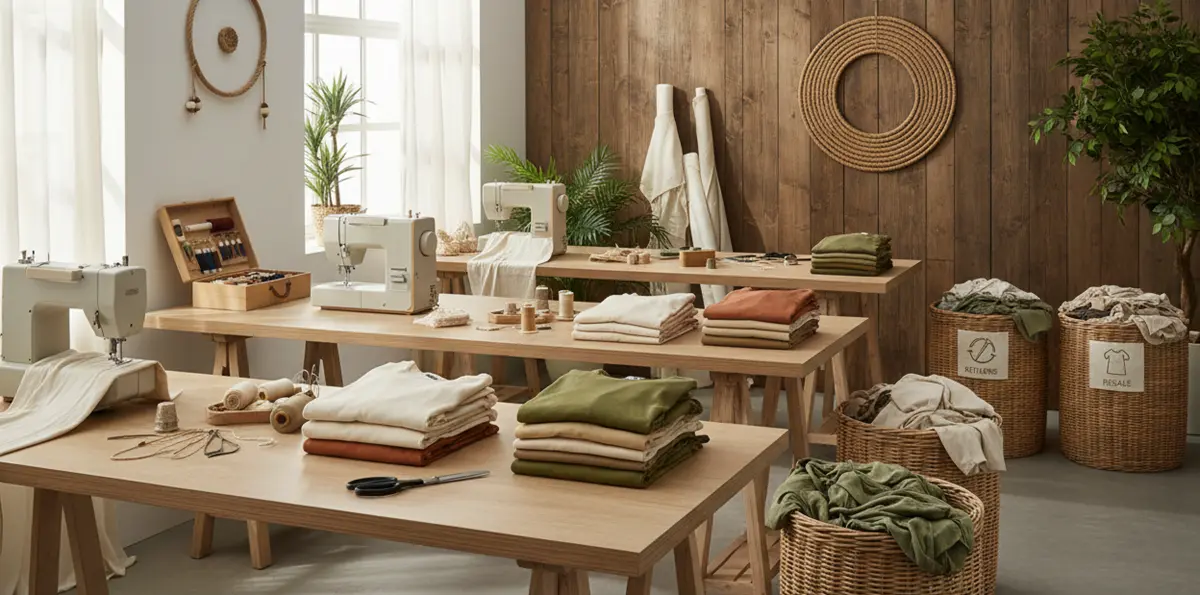
The shift toward sustainable fashion is being driven by a surge in consumer demand for responsible and eco-friendly options. Recent surveys show that more than half of shoppers now consider sustainability when making purchasing decisions, and many are willing to pay a premium for brands that prioritize environmental impact and ethical practices. Fashion companies are responding by leveraging technology to develop new business models, including subscription services and online marketplaces for second-hand clothing, which make sustainable choices more accessible than ever.
However, transforming the global fashion market into a truly thriving fashion industry will require more than just incremental changes. It demands a fundamental rethinking of business strategy, consumer preferences, and policy frameworks. Brands must move beyond traditional business models and adopt circular business model based approaches that prioritize reuse, repair, and recycling. By doing so, they can reduce carbon emissions, conserve resources, and build lasting customer loyalty.
Several companies, including Le Tote and ThredUp, are already leading the way with alternative business models that put sustainability and customer experience at the forefront. Their success demonstrates that a more responsible and innovative fashion industry is not only possible but essential for the future of global fashion. As the industry continues to evolve, those brands that embrace circular models and invest in sustainability initiatives will be best positioned to thrive in a rapidly changing market.
Innovative Fashion Business Models Gaining Momentum
The fashion industry now experiments with alternative business models that challenge the status quo and redefine growth. Brands are increasingly adopting the latest trends in modular fashion, sustainable leasing, and other innovative practices to remain competitive and relevant.
DTC First and Digital Native Brands
New brands often start digital. They launch direct to consumer before expanding into physical retail or wholesale.
They use data to test ideas, pricing, and fit. They respond to feedback quickly. Leveraging technology supports faster cycles, smarter planning, and lower risk.
On Demand and Made to Order
On demand production starts after a customer places an order. Brands avoid excess inventory and mass production.
Customers accept longer delivery times in exchange for high quality clothing and transparency. This approach reduces waste and improves margins.
Drop Based and Limited Releases
Drop models release small quantities at fixed moments. Scarcity drives demand and brand excitement. Risk stays low because volumes remain controlled.
This approach suits individual brands that value flexibility, storytelling, and community engagement.
Subscription Models and Membership
Subscription services create recurring revenue and predictable demand. Customers receive curated clothing on a regular schedule.
Subscription models increase customer loyalty and lifetime value. Brands forecast demand better and plan production more accurately.
Examples like Rent the Runway and Le Tote show how clothing rental and subscription services reshape fashion consumption.
Rental and Resale
Rental platforms allow customers to rent high quality clothing for a finite period, reducing waste and allowing customers to participate actively in the product experience. The rental fashion model, exemplified by leading services like Rent the Runway, allows customers to rent designer pieces, further promoting sustainability.
Large scale rental extends product life and reduces waste. User to user resale platforms let private owners monetize existing products and keep items in a usable state. The global apparel resale market was valued at $182.4 billion in 2022 and is growing rapidly. Resale and rental business models are gaining popularity and can significantly reduce greenhouse gas emissions, making a significant impact on sustainability outcomes. Notably, resale and rental platforms have reached billion-dollar valuations since 2019, despite the pandemic.
These circular models attract more users and support sustainable fashion goals across global fashion markets.
Circular and Take Back Models
Circular business models focus on reuse, repair, and recycling. They aim to close material loops instead of relying on constant new production.
Sustainable apparel business models focus on maximizing garment utilization through durability and emotional attachment. Repair services can extend the life of garments and reduce waste in the fashion industry. The circular economy in fashion aims to extend product life and maximize the value of resources consumed. Circular business models in fashion could be worth USD 700 billion by 2030, making up 23% of the global fashion market. These models can reduce greenhouse gas emissions, pollution, and biodiversity impacts. Circular business models in fashion include resale, rental, repair, and remaking.
Brands collect broken product or faulty or broken product. Repair services restore items to a usable state. Some brands resell refurbished products. Small brands often face challenges in implementing these circular and sustainable business models, but focusing on quality, durability, and supply chain management can help them compete in the eco-friendly market.
The Ellen MacArthur Foundation promotes circular economy principles across the global fashion industry. Circular business model based strategies reduce environmental impact and support planetary boundaries.
How Consumer Behavior Is Driving New Fashion Business Models
Today’s consumers play a much more active role in shaping fashion business strategies than ever before. Rather than simply purchasing what brands offer, consumers now directly influence how fashion companies design, produce, and deliver their products.
Modern shoppers are increasingly focused on self-expression without the pressure of long-term ownership. Many people want the freedom to experiment with different styles, trends, and identities without committing to permanently owning every item. Clothing rental and subscription services respond perfectly to this shift, offering flexible access to fashion while reducing the need for constant buying.
At the same time, consumers place growing importance on sustainable materials and visible sustainability initiatives. Shoppers want to know where their clothes come from, how they are made, and what impact they have on the environment. As a result, slow fashion is gaining attention as a thoughtful and responsible alternative to fast fashion, emphasizing quality, durability, and ethical production over speed and mass consumption.
Convenience is another key driver of changing consumer behavior. People want easy access, seamless experiences, and fast solutions. E-commerce, rental model platforms, and mobile experiences make fashion discovery simpler and more personalized, allowing consumers to browse, rent, or purchase clothing anytime and anywhere.
Together, these evolving behaviors are pushing fashion companies toward new business models that prioritize access, responsibility, and experience. Brands that successfully balance these elements are better positioned to meet modern consumer expectations and remain competitive in a rapidly changing fashion industry.
Operational Challenges Behind Innovative Models
While innovation creates new opportunities, it also adds complexity across the supply chain and internal teams.
Faster Cycles
Faster cycles mean shorter timelines and require strong coordination across design, sourcing, and production. When coordination fails, delays quickly reduce both relevance and margin.
Complex Data Flows
Complex data flows are another challenge. Subscription services, rental platforms, and resale models must track physical products across multiple life cycles. Disconnected systems often lead to errors, delays, and gaps in visibility.
Supplier Coordination
Supplier coordination becomes critical in circular models, which rely on repair services, logistics partners, and recycling providers. Without shared data and clear processes, coordination breaks down and costs rise.
Why Product Data Is the Backbone of Modern Fashion Models
Every modern fashion business model relies on accurate product data to function effectively. Without reliable data, even the most innovative ideas struggle to scale.
Product data connects design, sourcing, pricing, sustainability reporting, and logistics, creating a shared foundation across teams. This connection enables visibility across the entire value chain, helping brands make faster, better-informed decisions.
As fashion business models continue to multiply, traditional tools no longer work. Spreadsheets fail, email chains fail, and information becomes fragmented. To operate efficiently, brands need one source of truth that keeps product data consistent, accessible, and up to date across the organization.
How PLM Enables Innovative Fashion Business Models
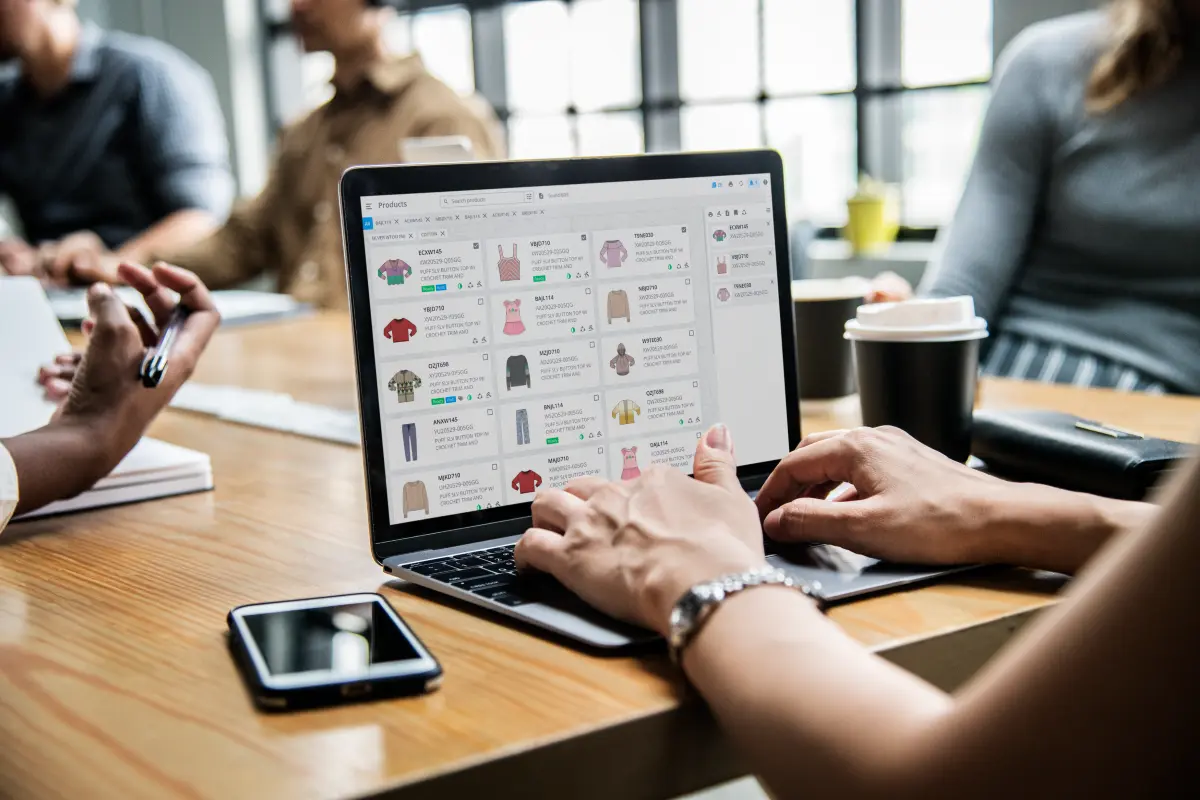
PLM systems support fashion brands across complex and constantly evolving operations.
Wave PLM centralises product data and workflows. Teams collaborate faster. Suppliers stay aligned. Decisions rely on real-time information. PLM supports circular economy strategies. Brands track materials, repair history, resale status, and product lifecycle data.
The table below shows how PLM supports different business models.
| Model | Challenge | PLM Support |
|---|---|---|
| Direct to consumer | Speed | Real time updates |
| Subscription services | Consistency | Version control |
| Rental model | Tracking | Product lifecycle data |
| Circular business models | Traceability | Material tracking |
PLM allows brands to scale innovation without chaos or loss of control.
Future Trends in Fashion Business Models
The global fashion market will continue to diversify and evolve.
Several companies invest heavily in circular models and rental platforms. More users choose access over ownership. This trend reshapes global fashion consumption.
Human stylists now work alongside data and algorithms. Technology augments creativity and personalization.
The fashion industry moves toward redefining growth. Success now balances profit, planet, and people in a constantly evolving market.
Conclusion
The fashion industry is at a clear turning point.
Innovative fashion business models are reshaping how brands operate and compete. They challenge traditional business models while unlocking new sources of value across the industry. Future trends in fashion increasingly focus on sustainable practices and technology integration, highlighting emerging business strategies that combine eco-friendliness with modern consumer demands.
Fashion brands that embrace circular economy principles, maintain strong product data, and adopt modern PLM systems position themselves for long-term success in a rapidly changing market.
To learn more, explore insights on circular fashion, pricing strategies, and supply chain optimization at blog.waveplm.com.



Leave a Reply