
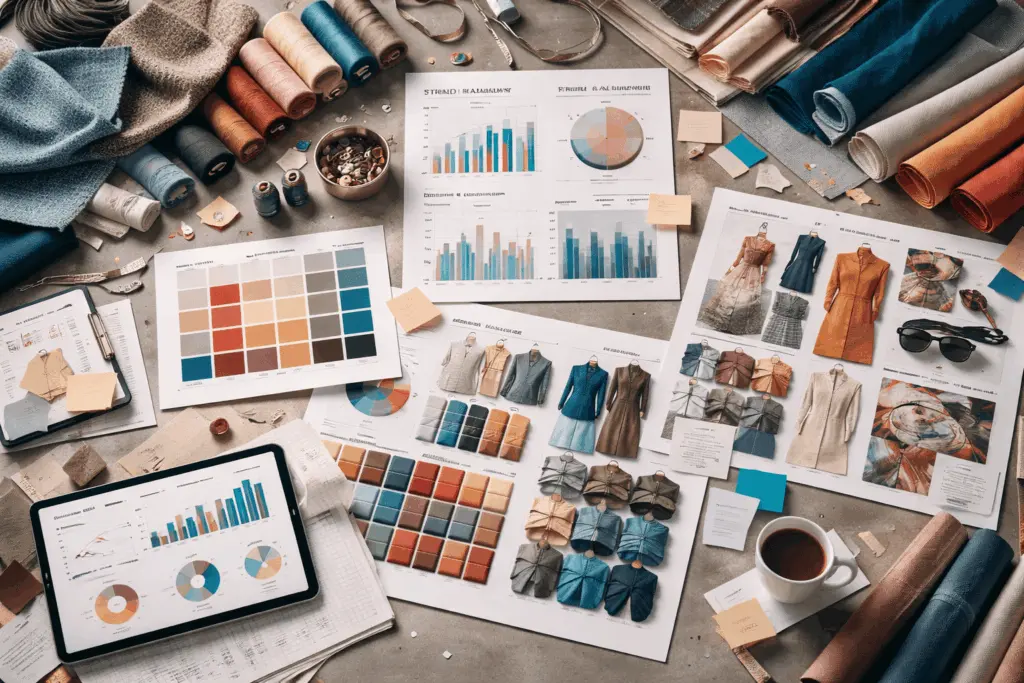
Market research in the fashion industry plays a central role in how brands reduce risk and make confident decisions. In a fast-moving market, guessing no longer works. Brands need structure, data, and repeatable methods to stay relevant and profitable.
This guide explains fashion market research in a practical way. Also, it shows how research supports real decisions across design, pricing, sourcing, and go-to-market. We explain why research fails when it stays disconnected from product and cost data.
Introduction to the Fashion Industry
The fashion industry is a dynamic and ever-evolving landscape, shaped by shifting consumer behavior, global influences, and rapid changes in style. As one of the most significant sectors of the global economy, the apparel industry alone is valued at over $1.5 trillion, encompassing everything from fast fashion to luxury brands and sustainable fashion initiatives. In such a competitive environment, fashion market research has become an essential tool for brands seeking valuable insights into emerging trends, consumer attitudes, and market trends.
By leveraging market research, fashion brands can better understand their target audience and anticipate what consumers want next. This enables them to create products that resonate with current preferences, adapt to changes in demand, and ultimately drive business growth. Whether navigating the fast-paced world of fast fashion or building the prestige of luxury brands, staying ahead of trends and industry shifts is critical. Research empowers brands to make informed decisions, minimize risk, and maintain relevance in a market where consumer expectations and industry conditions are always evolving.

What Is Market Research in the Fashion Industry?
Market research in the fashion industry refers to the process of collecting, analyzing, and applying data about consumers, competitors, products, prices, and market dynamics. Fashion brands use market research to understand demand before they invest in development and production.
Fashion market research answers seven basic questions that guide decision-making:
- Who is the target audience?
- What problems do consumers want solved?
- What motivates buying habits and spending habits?
- How large is the market size?
- Which market trends influence demand?
- How do competitors position similar products?
- What price levels match consumer preferences?
Unlike other industries, the fashion industry faces rapid change. Trends shift fast. Consumer attitudes evolve. Product cycles remain short. Market research provides a clear view of this dynamic environment.
Why Market Research Is Critical in Fashion
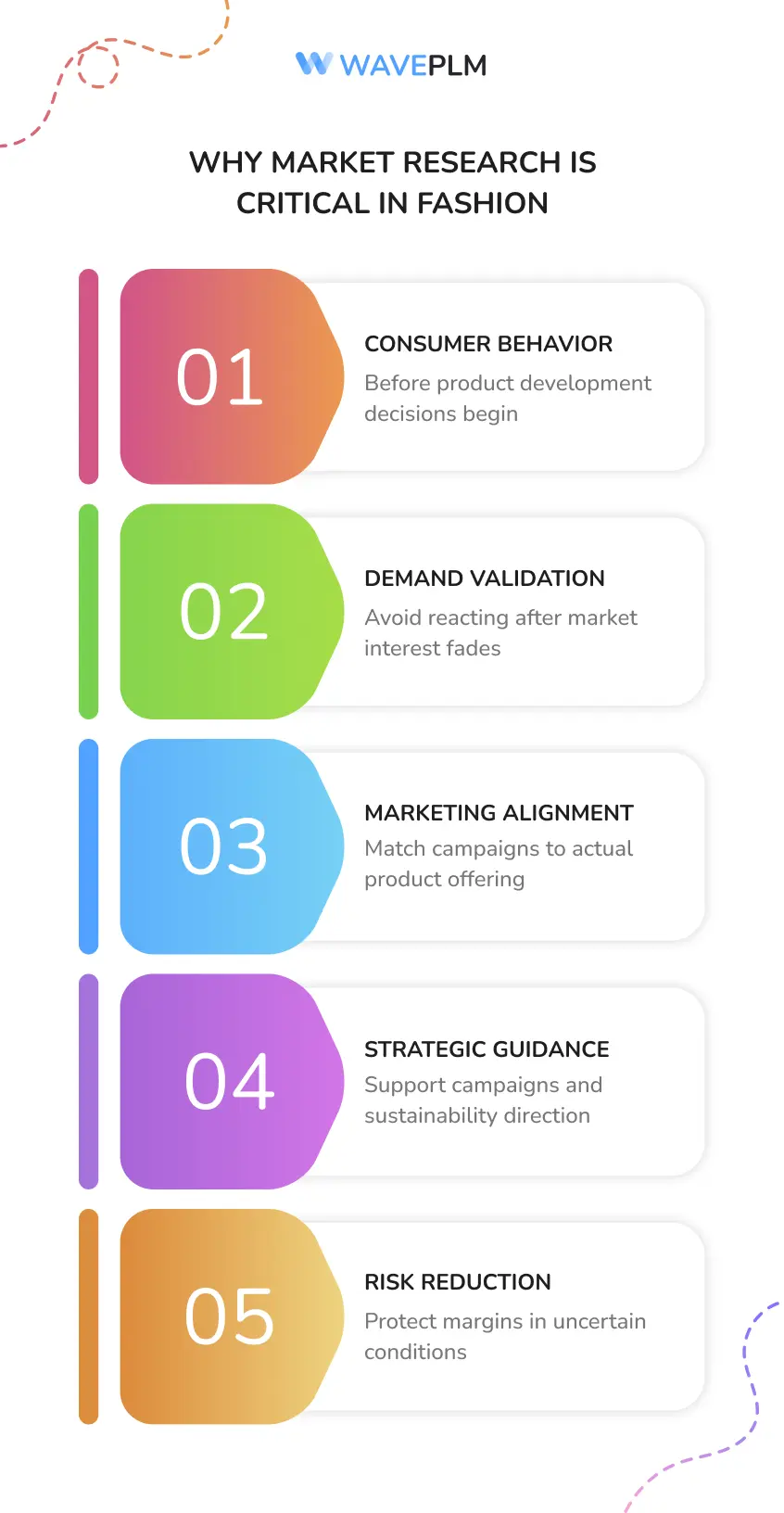
Market research is critical because fashion brands commit costs long before revenue appears. Fabric sourcing, sampling, and production require early investment. Mistakes show up later as markdowns or excess inventory.
Market research helps brands:
- Understand consumer behavior before development starts
- Validate demand instead of reacting to trends too late
- Align marketing strategies with product reality
- Guide and enhance strategic initiatives, such as marketing campaigns or sustainable development efforts
- Reduce risk in a volatile global economy
Understanding consumer preferences through market research is essential for developing effective marketing strategies and products.
Without fashion market research, companies often fall short. They chase emerging trends without context. They misread consumer preferences. They struggle to build customer loyalty. Research acts as an essential tool that turns uncertainty into informed decisions.
Types of Market Research Used in Fashion
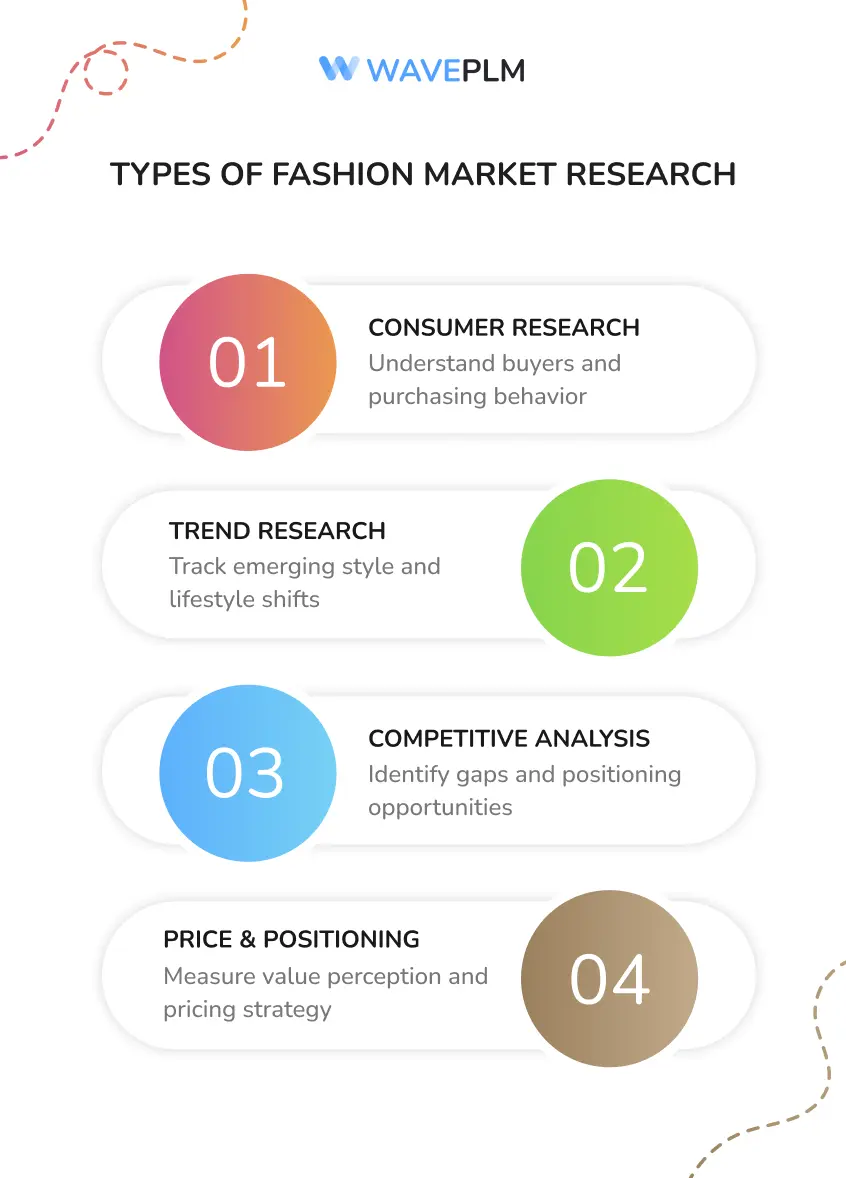
Fashion market research includes several methods. Each method answers different business questions. Strong fashion brands combine multiple approaches.
Consumer research
Consumer research focuses on understanding consumers, their motivations, and their buying habits. It looks at how people choose products, how they perceive value, and why they return or churn.
Common consumer research methods include:
- Surveys that measure satisfaction and demand
- Focus groups that explore consumer attitudes
- Interviews that reveal deeper insights
- Analysis of spending patterns and returns
This type of research helps brands gather insights that reflect real consumer behavior, not internal opinions.
Trend research
It explores emerging trends and future trends across style, materials, and lifestyles. It combines qualitative observation with quantitative data.
Trend research often includes:
- Trend analysis of runway and street fashion
- Monitoring digital behavior and search patterns
- Studying cultural shifts and sustainability signals
Researching trends works best when brands connect trends to demand and market size.
Competitive analysis
Competitive analysis examines competitors, assortments, and positioning. It highlights gaps, saturation, and opportunities.
Brands study:
- Product lines by category
- Pricing architecture and promotions
- Use of sustainable materials
This research supports differentiation and helps brands stay ahead.
Price and positioning research
Price and positioning research evaluates willingness to pay and perceived value. It supports pricing strategies across entry, core, and premium tiers.
This research prevents margin erosion and improves long-term growth.
Primary vs Secondary Research in Fashion
Fashion market research relies on both primary and secondary research. Each plays a distinct role.
Primary market research refers to the unique data that is gathered from first-hand sources. Data must be organized and filtered to remove any errors or irrelevant information after collection.
Secondary research is performed by sourcing data from existing, published sources. Social listening tools like Brandwatch and Sprout Social track consumer sentiment about brands and trends. Google Trends is a free tool that shows what’s trending in the market. Surveys and polls are effective tools for gathering quick feedback on product ideas and brand messaging.
Market reports from sources like Euromonitor and McKinsey provide insights into industry size and competitor analysis.
Combining primary and secondary research enhances the effectiveness of market research campaigns.
| Research type | Description | Example |
|---|---|---|
| Primary research | Data collected directly from consumers | Surveys, focus groups, wear tests |
| Secondary research | Existing data and reports | Industry reports, benchmarks |
Simply speaking, secondary research provides market context and market trends. Primary research validates insights with real customers.
Brands that combine both gain a competitive edge.
Common Data Sources in the Clothing Industry
Market research in the apparel industry draws from many data sources. No single report delivers all answers.
Key sources include:
- Sales data by product and category
- Customer reviews and feedback
- Digital marketing analytics
- Social listening and search behavior
- Industry reports and benchmarks
- Virtual shelf testing results
The data collected becomes valuable only when teams connect it to product decisions.
Fast Fashion Trends
Fast fashion trends have transformed the fashion industry, with consumers increasingly seeking affordable, on-trend, and even sustainable clothing options. In this way, fashion market research is crucial for identifying these emerging trends and understanding the ever-changing consumer preferences that drive the fast fashion segment. By utilizing data collected from surveys, focus groups, and digital channels, fashion brands gain valuable insights into what styles, materials, and price points are resonating with their target audience.
The rise of digital marketing and e-commerce has dramatically increased how quickly fast fashion brands can react to trends. By analyzing social media conversations and online shopping behavior in real time, brands can adjust product lines and marketing strategies almost instantly.
This agility helps brands stay competitive — and it also builds customer loyalty by consistently delivering what shoppers want. In the fast fashion market, using research to guide decisions is essential for driving growth, strengthening brand engagement, and capturing new opportunities as they emerge.
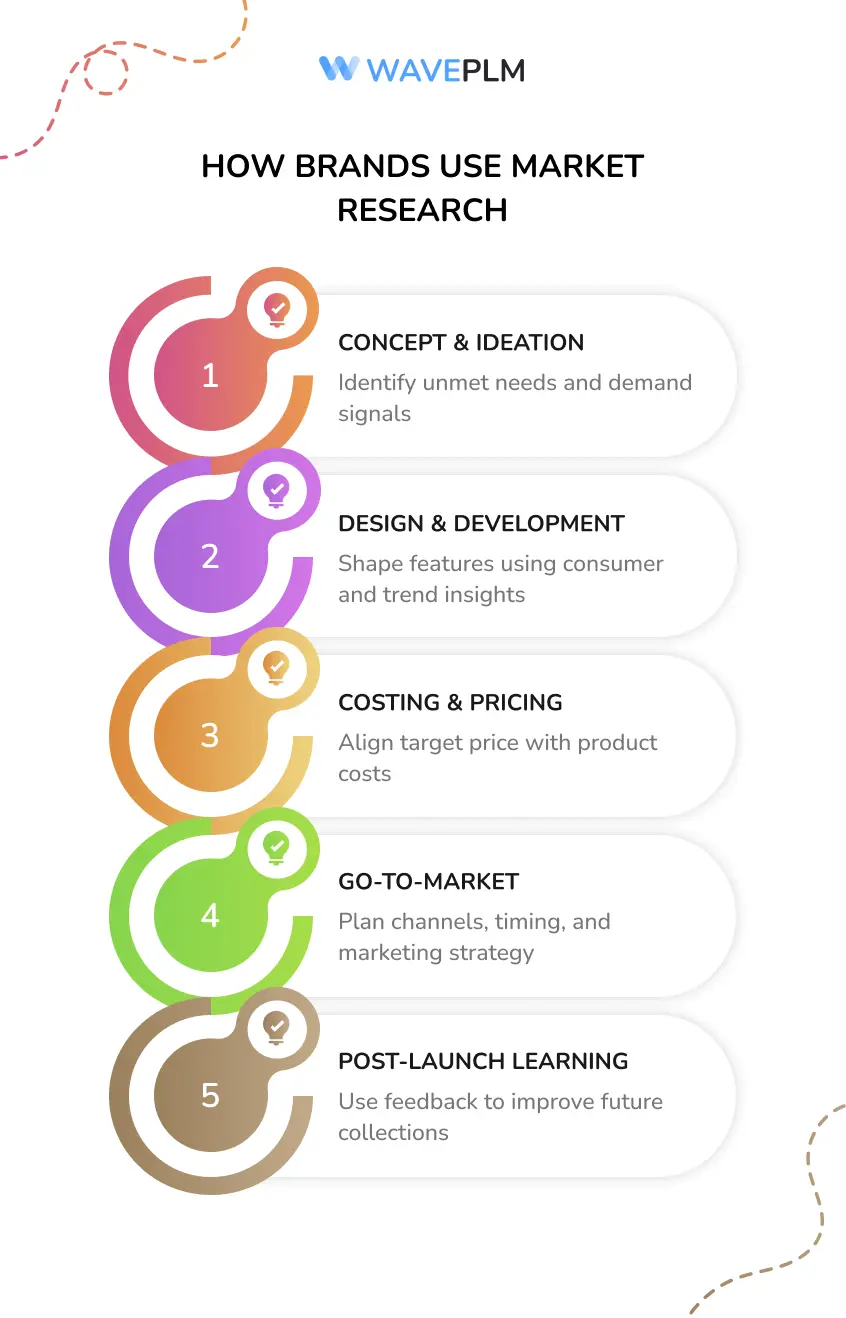
How Brands Use Market Research Across the Product Lifecycle
Market research supports every stage of the product lifecycle in a fashion business. It helps brands identify growth opportunities by analyzing market size, emerging trends, and areas for potential business expansion.
Concept and ideation
Research identifies unmet needs and new opportunities. Teams generate ideas based on demand signals, not assumptions.
Design and development
Consumer preferences influence fit, fabric, and features. Trend insights guide styling while respecting brand focus.
Costing and pricing
Price research aligns target prices with cost structures. Brands balance value and profitability.
Go-to-market
Market research shapes marketing strategies, launch timing, and channel mix.
Post-launch learning
Sales results and customer feedback generate insights that improve future collections.
This closed-loop process supports continuous improvement.
New Opportunities
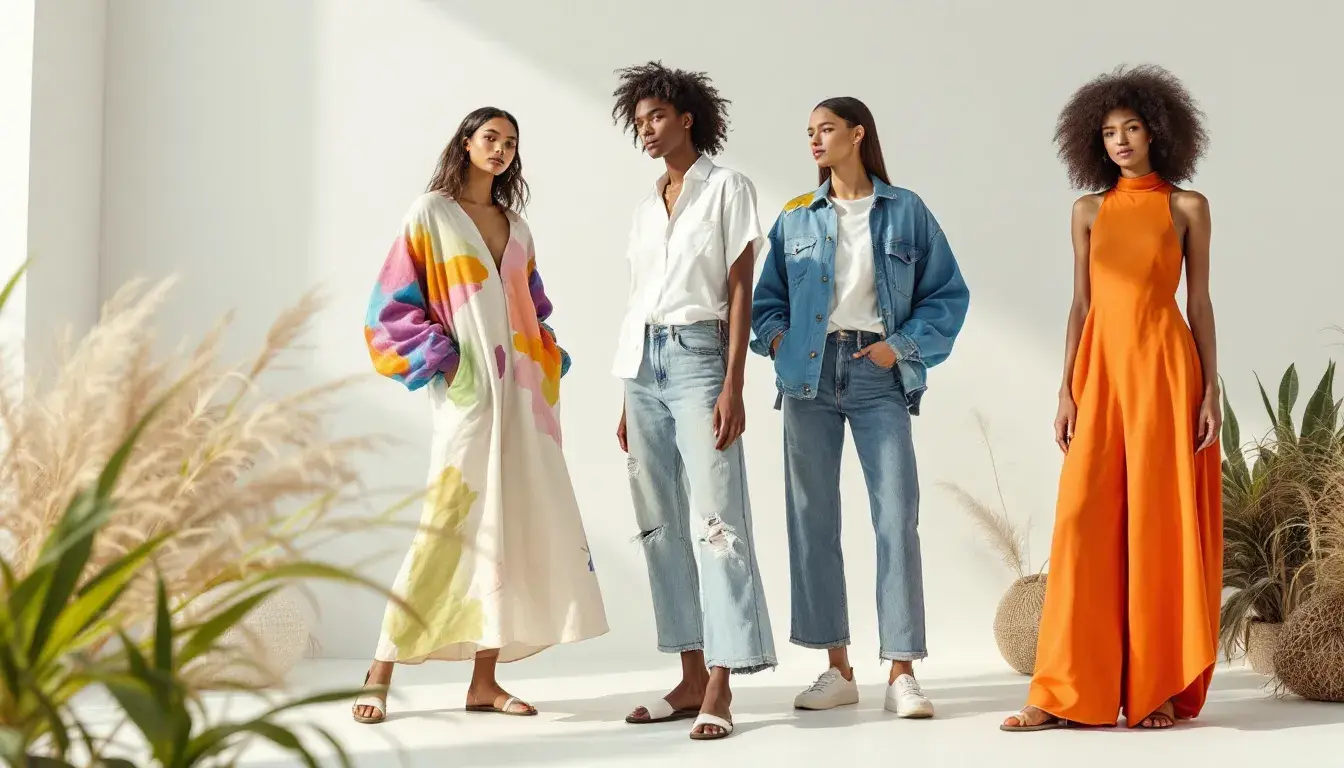
The fashion industry is constantly evolving, creating new opportunities for growth, innovation, and sustainability. Market research helps brands uncover those opportunities by offering clear insight into consumer behavior, emerging trends, and changing market dynamics.
By analyzing data and understanding what customers actually want, fashion brands can spot untapped segments, build more targeted digital marketing campaigns, and develop products that reflect both current trends and growing sustainability expectations.
The increasing focus on sustainable fashion, the expansion of e-commerce, and the adoption of advanced analytics and AI are opening up new avenues for brands to reach their audience and drive revenue. With the ability to gather and interpret data more effectively, brands can make data-driven decisions that enhance customer loyalty, improve product offerings, and support long-term business growth. Embracing these new opportunities allows fashion brands to stay ahead of industry trends, achieve their business goals, and contribute to a more sustainable and innovative fashion market.
Common Mistakes in Fashion Market Research
Many companies invest in research but fail to see results. Common mistakes include:
- Treating research as a one-off effort
- Relying only on trend reports
- Ignoring sustainability and supply constraints
- Keeping insights disconnected from product teams
Research loses value when it stays in presentations.
Why Market Research Fails Without Product and Cost Data
Market research fails when teams ignore product and cost realities. Insights without feasibility create frustration.
Brands must connect research to:
- Bill of materials
- Target margins
- Supplier constraints
- Sustainability goals
Without this connection, even valuable insights cannot drive growth.
How PLM Connects Market Research to Product Decisions
Product Lifecycle Management systems connect market research to execution. PLM turns insights into action.
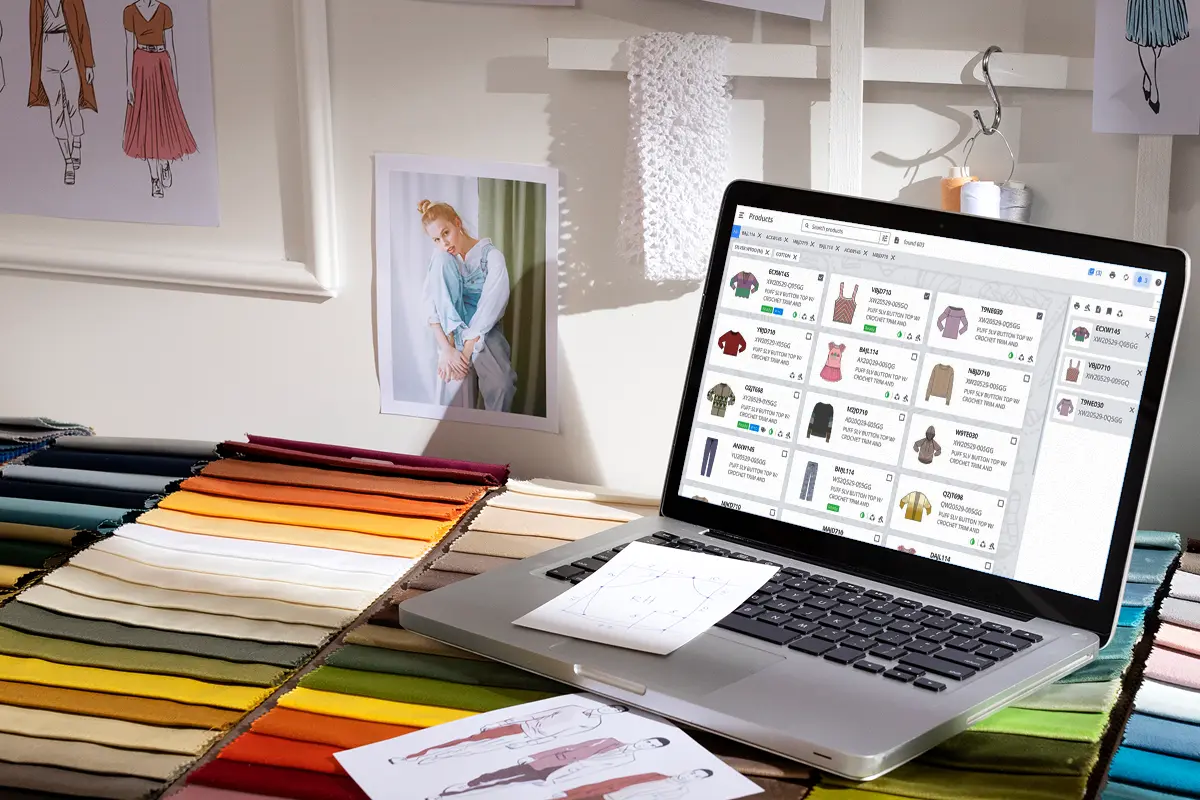
Wave PLM plays a critical role in this connection. It allows teams to attach fashion market research directly to product concepts, assortments, and cost structures. By integrating advanced analytics and CRM capabilities, PLM systems help brands personalize customer interactions, enhance engagement, and build loyalty.
With Wave PLM, brands can:
- Link consumer research to specific styles and accessories
- Align price positioning with real-time cost data
- Track decisions across seasons and markets
- Compare planned strategy with actual performance
Wave PLM ensures market research informs how teams create products, not just what they discuss.
Conclusion
Market research in the fashion industry helps brands understand consumers, anticipate demand, and navigate a constantly changing market. In short, it replaces guesswork with structured insight.
But research only delivers real value when it’s connected to product, cost, and sustainability data. Tools like Wave PLM make that integration possible — turning insight into action across the business.
To explore related topics, read our guides on benchmarking, product development, pricing strategies, and sustainability in fashion.




Leave a Reply