
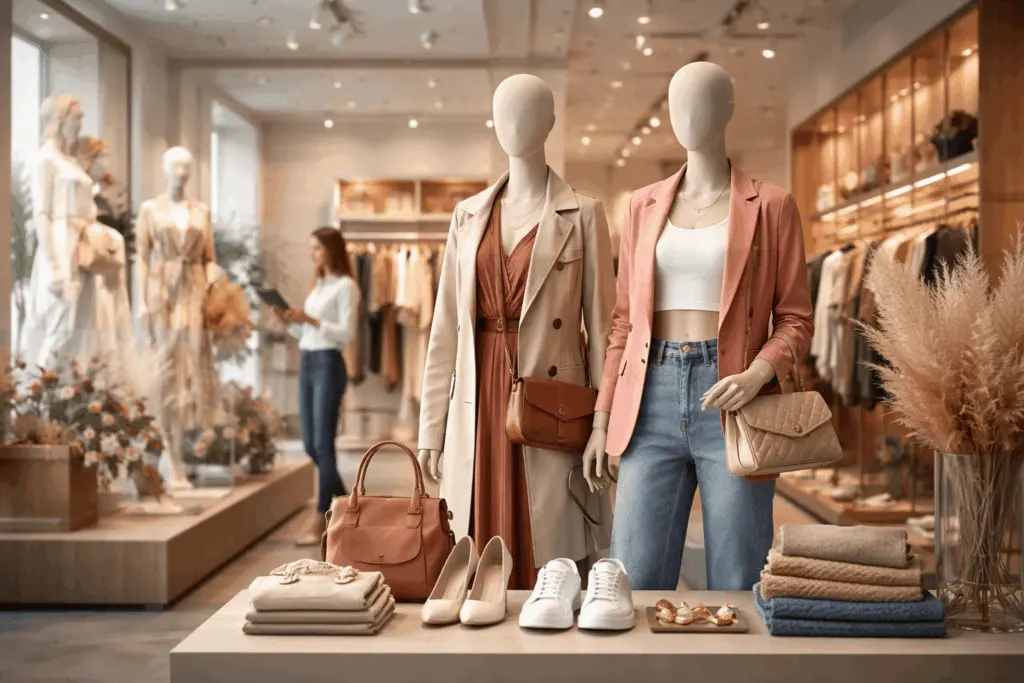
Fashion moves fast — and attention spans move even faster.
To stand out, brands often have just a few seconds to catch a shopper’s eye. In an industry shaped by retail stores, brand promotion, and both physical and digital merchandising, visibility isn’t optional — it’s the difference between being noticed and being ignored.
That’s exactly why visual merchandising matters. It helps fashion brands differentiate from competitors, strengthen brand identity, and build loyalty — while turning interest into sales.
In this complete guide, you’ll learn what visual merchandising is in fashion, how it works, and how modern brands use it to drive performance across channels.
You’ll also see how product data and PLM help visual merchandisers stay accurate and consistent across every retail store.
Simple Definition of Fashion Visual Merchandising
First, let’s answer the big question: what is visual merchandising in fashion?
Visual merchandising is the practice of presenting products in a way that grabs attention, tells a clear story, and ultimately drives sales. It is essential for fashion retail to highlight new arrivals and set the tone for the season.
It combines store layout, product displays, and visual details to guide shoppers through the space — while keeping your brand image consistent from entrance to checkout.
You might also hear the phrase fashion visual merchandising. In simple terms, it means the same thing.
At its best, fashion visual merchandising turns a retail store into a curated shopping journey.
Quick definition for featured snippets
What is visual merchandising in fashion?
It is the way fashion brands present merchandise displayed in stores and online to encourage customers to buy. Digital integration is now standard in visual merchandising, allowing technologies like AR for virtual try-ons in various store formats.
Why Visual Merchandising Matters in Fashion Retail
Next, let’s look at why visual merchandising matters in fashion retail.
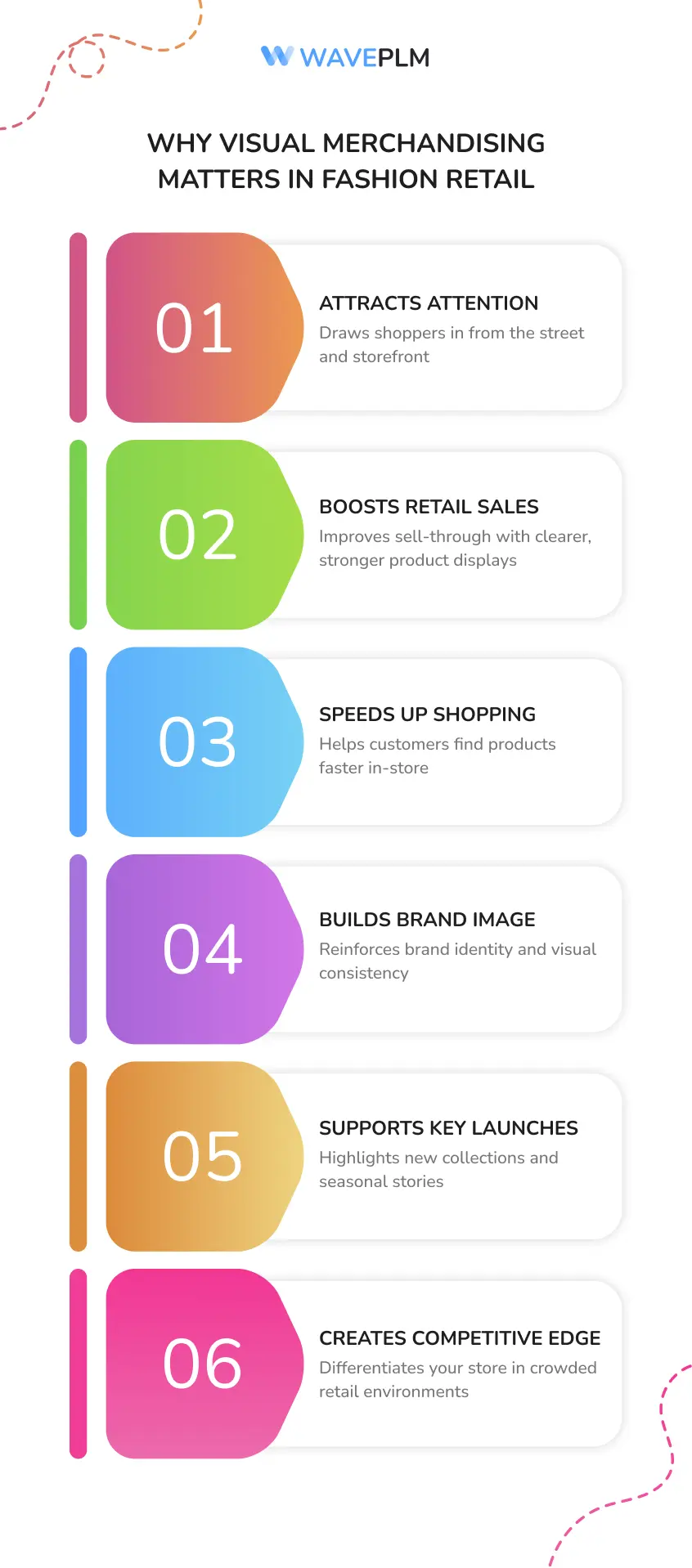
Fashion shoppers make decisions fast. That’s why strong visual merchandising is one of the quickest ways to capture attention early — and keep customers engaged.
It also shapes the customer experience from the moment someone walks in to the moment they check out. Done well, visual merchandising strengthens brand image, supports customer engagement, and helps retail stores perform better overall.
Here is what effective visual merchandising can do for apparel retailers:
- Help attract customers from the street
- Improve retail sales through better product displays
- Help shoppers find items faster in the store
- Build brand identity and brand image
- Support your retail brand during launches
- Give your team a competitive advantage
Visual merchandising also works as a marketing tool. For example, you can highlight promotions without heavy discounts or support current fashion trends with seasonal displays.
Key Elements of Visual Merchandising
Now, let’s break down the core elements of visual merchandising.
One of the most important factors is the physical environment. Store ambience, layout, and sensory details all shape how customers perceive your brand — and they can directly influence buying decisions.
Strong visual merchandising balances structure with storytelling. It creates a clear flow through the space, while still leaving room for creativity and brand expression. Lighting is especially powerful: it sets the mood, highlights key products, and guides attention where you want it.
Ultimately, the goal is simple — to design a store that feels intuitive, inviting, and easy to shop.
Store layout
To begin with, store layout controls how shoppers move through the space.
It shapes the retail environment, guides shop-floor flow, and plays a major role in driving sales. A strong layout supports a smoother shopping experience — and helps turn foot traffic into revenue.
A smart store layout answers one simple question: where should the shopper go next?
Common store layout options in retail include:
| Layout type | Best for | Why it works |
|---|---|---|
| Grid layout | Basics and high-volume zones | It makes navigation simple and fast |
| Free-flow layout | Premium fashion retail | It encourages browsing and discovery |
| Loop layout | Flagships and big retail businesses | It guides shoppers through the entire store |
| Boutique layout | Department stores and multi-brand spaces | It creates mini zones with focus |
For example, grocery stores often use grid layouts to group products and enhance shopping convenience, serving as an example of how different retail formats use specific layouts.
Tip: Place best sellers on the main path. That simple move can increase sales quickly.
Window displays
Next, the window displays are your first impression. They stop shoppers, spark curiosity, and set the mood before the store experience even begins.
Great window displays use:
- A clear theme
- A hero product
- A strong message
- A clean visual display
You can also use outdoor signage near window displays. That helps highlight promotions and key launches.
Color & storytelling
Color sets the mood the moment shoppers walk in. It also signals who the brand is for — and what kind of style experience they should expect.
You can build clear color stories like:
- Monochrome palettes for a premium, elevated feel
- Bold color blocking for energy and impact
- Neutral tones for clean, minimal branding
And color becomes even more powerful when it supports storytelling. Great visual merchandising doesn’t just show products — it creates lifestyle moments.
When shoppers can imagine themselves wearing the outfit, the connection feels personal. And that emotional pull is what often turns browsing into buying.
Product placement
Product placement can drive results without adding to your marketing spend.
It determines what shoppers notice first, what they reach for, and where they naturally pause — guiding them toward key display zones that lead to purchases.
Here are a few practical product placement tips:
- Place new arrivals near the entrance
- Group items by complete outfits, not just categories
- Keep high-margin products at eye level
- Use styled mannequins to show full looks
- Add accessories near checkout to encourage last-minute add-ons
Even small changes in placement can make a measurable difference in sales.
Lighting & signage
Finally, lighting and signage shape the overall store environment — and they make shopping feel easier and more confident.
Use bright, focused lighting to spotlight hero products and draw attention to key areas. Pair that with clear signage that explains your story, highlights promotions, and guides shoppers through the space.
Many brands also use digital screens and displays to bring content to life. These tools work well both in-store and across digital channels, helping keep the experience consistent.
Some retailers take it even further with interactive displays or installations, creating a more engaging environment that encourages customers to explore — and stay longer.

Visual Merchandising vs Merchandising vs Styling
Now, many teams mix up these terms. So, let’s clear it up.
| Term | Meaning | Main goal |
| Visual merchandising | How you present products in a retail store | Guide shoppers and increase sales |
| Merchandising | What products you sell and how you plan them | Build the right assortment |
| Styling | How you combine pieces into outfits | Make looks feel wearable |
Visual merchandising goes beyond styling. It also supports retail planning and day-to-day execution.
When teams stay aligned, the retail space feels consistent — and that consistency helps attract customers and build trust.
How Visual Merchandising Influences Customer Behavior
Next, let’s look at consumer behavior.
Shoppers follow cues. They respond to what feels clear, exciting, and easy to understand — often in just a few seconds.
That’s why fashion visual merchandising has such a direct impact on customer behavior, influencing what people notice, where they pause, and what they choose to buy.
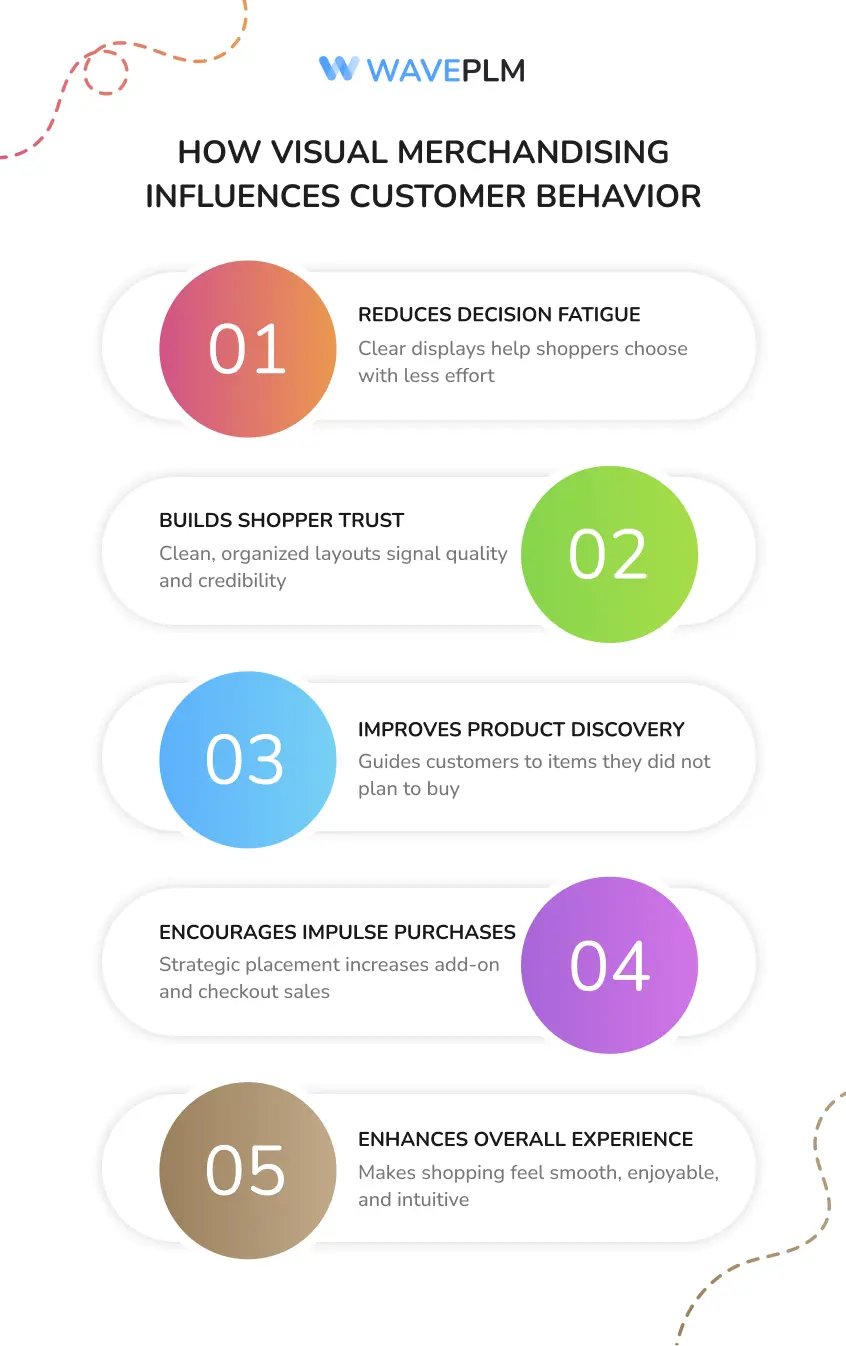
It reduces decision fatigue
First, too many choices can stop a sale. Clear product displays help shoppers decide faster.
It builds trust
Second, clean store displays feel professional. So, shoppers trust quality more.
It improves discovery
Third, smart product placement helps shoppers find items they did not plan to buy. That lifts basket size and retail sales.
It supports impulse buys
Fourth, small add-ons near checkout sell fast. For example, socks and accessories work well.
It creates a better experience
Finally, visual merchandising improves the customer experience. It makes shopping feel smooth.
That positive feeling can increase repeat visits.
Examples of Visual Merchandising in Fashion Stores
Now, let’s make this real. Here are examples you can copy.
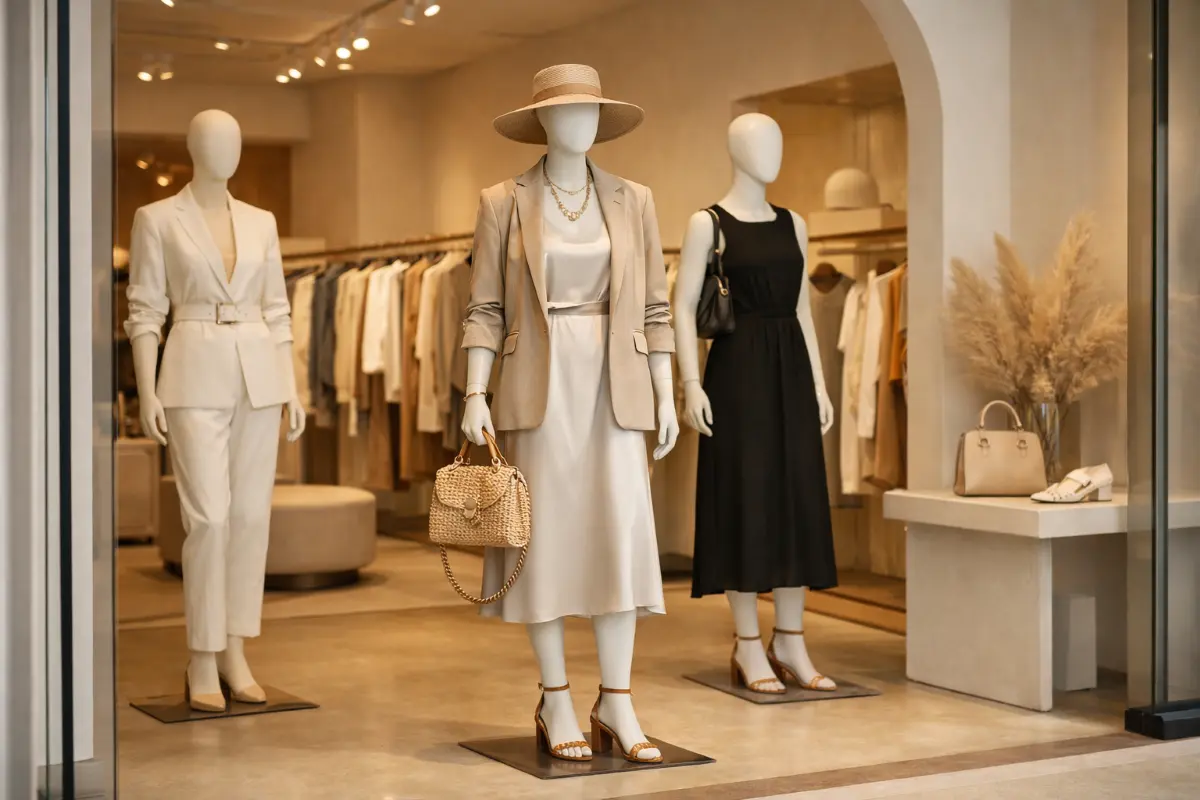
Example 1: A hero mannequin look
A mannequin can showcase one complete outfit — including shoes and accessories. This kind of hero look supports styled mannequins and helps shoppers make decisions faster.
Example 2: A capsule collection wall
A wall display features one small drop. It uses a clear color story and supports brand identity.
Example 3: A denim fit zone
A denim zone groups fits by label.
It uses clear signage like:
- Skinny
- Straight
- Wide leg
This helps shoppers navigate the shop floor.
Example 4: Seasonal window story
Seasonal displays work best when you pick one theme.
For example, a winter window display can include:
- Layered looks
- Warm lighting
- Props like scarves
You can also plan around a particular holiday. That makes your window displays feel timely.
Example 5: The accessory add-on table
A table near outerwear can show:
- Gloves
- Beanies
- Belts
This supports cross-selling and helps boost sales.
How Product Data Impacts Visual Merchandising Accuracy
Now let’s get into something a lot of brands overlook.
Visual merchandising is creative — but it also has to be accurate. When product data is messy or outdated, even the best displays start to break down.
This can cause:
- Wrong pricing on signage
- Missing sizes in store
- Incorrect color labels
- Confusing product placement
Product data includes:
- SKU
- color codes
- size range
- collection tags
- materials
When teams share accurate data, the entire store stays consistent. That supports good visual merchandising.
Visual merchandising accuracy checklist
Use this checklist before each launch.
| Checkpoint | What to confirm | Why it matters |
| SKU accuracy | Each item matches the correct SKU | It prevents wrong labels |
| Color accuracy | The display matches the real color | It reduces returns |
| Size availability | The store has a full size run | It protects conversion |
| Price accuracy | Signs match POS pricing | It builds trust |
| Collection tags | Items match the campaign | It keeps the story clear |
How PLM Supports Visual Merchandising (accurate SKUs, colors, collections)
Now let’s connect this to execution.
PLM helps brands manage product development — but its impact doesn’t stop there. It also supports store teams by keeping product information organized, current, and easy to trust.
If you want fashion visual merchandising to stay consistent across every location, you need reliable product details behind every display.
That’s where PLM helps: it supports visual merchandising with accurate SKUs, color information, and collection structure — so store execution stays aligned with the plan.
Accurate SKUs
First, stores rely on SKUs for labels and tracking. PLM keeps SKU data clean. So, teams display the right merchandise displayed in the right zone.
Accurate colors
Second, fashion sells color. A wrong color name can confuse staff and shoppers.
PLM stores approved color codes. This way, visual merchandisers build correct stories.
Accurate collections
Third, collections drive campaigns. PLM stores season and collection structure. So, stores launch on time with the right story.
Better omnichannel consistency
Finally, shoppers move between digital platforms and in store. PLM supports consistent product info across channels. That makes your retail brand feel reliable.
Visual Merchandising Planning Template (copy and use)
Now, use this simple template to plan your next campaign.
Campaign plan
- Campaign name:
- Dates:
- Goal:
- Target audience:
- Target market:
- Key products:
- Hero color story:
Display plan
- Window displays theme:
- Entrance product focus:
- Main store layout zones:
- Mannequin outfits:
- Interior displays plan:
- Digital screens content:
- Outdoor signage message:
Execution plan
- SKU list:
- Price signage check:
- Creating displays checklist:
- Store design updates:
- Sales assistant briefing notes:
Now, you might be wondering who makes all of this happen behind the scenes.
So, what does a visual merchandiser do in fashion?
Visual merchandisers plan and execute how products are presented in-store. They create displays that feel on-brand, easy to shop, and visually compelling — from the window to the shop floor.
Their work often includes:
- designing store layouts and customer flow
- building product displays and focal points
- managing window displays and seasonal storytelling
Most visual merchandisers work as part of a wider VM team and collaborate closely with retail management to make sure displays are not only creative, but also effective and consistent across locations.
A strong visual merchandising career typically requires:
- creative skills for styling and storytelling
- analytical skills to measure what’s working
- commercial awareness to stay aligned with trends and customer demand
Many visual merchandisers also visit stores regularly, helping improve execution, performance, and consistency across different regions.
Does visual merchandising pay well?
Yes, it can pay well. Pay depends on experience, brand size, and location. Senior roles often pay more.
What is the highest salary for visual merchandising?
Top salaries often go to senior leaders. They manage store design across many retail businesses, as well as lead strategy for the retail environment.
Visual Merchandising Tips and Techniques You Can Use Today
Finally, here are quick visual merchandising techniques that work.
Use these visual merchandising strategies to improve results fast:
- Keep displays clean and easy to scan
- Use window displays to tell one story
- Refresh seasonal displays during key launches
- Test lighting angles with bright lighting
- Add in store music to match your brand mood
- Train every sales assistant on product placement
These steps support great visual merchandising They also show the visual merchandising displays effect on real sales.
Now you have a clear answer to the question: what is visual merchandising in fashion?
Visual merchandising is how fashion brands present products to guide shoppers, shape the in-store experience, and drive sales. It brings together store layout, window displays, product placement, and storytelling to create a space that feels easy to shop — and hard to forget.
But great execution isn’t only creative. It also depends on accurate product data. When SKUs, colors, and collections stay consistent, store teams can build displays with confidence and keep every location aligned.
And when the store feels cohesive, inviting, and on-brand, customers stay longer, engage more, and buy more.
Next steps on blog.waveplm.com:
- Read our branding article to strengthen brand identity
- Explore distribution content to improve stock flow
- Discover more retail articles to grow fashion retail performance



Leave a Reply