
Wholesale buyers do not buy products. They buy confidence. Confidence comes from clear documents, accurate pricing, and a clean layout that shows all the details without friction.
That is why wholesale sell sheets and line sheets matter.
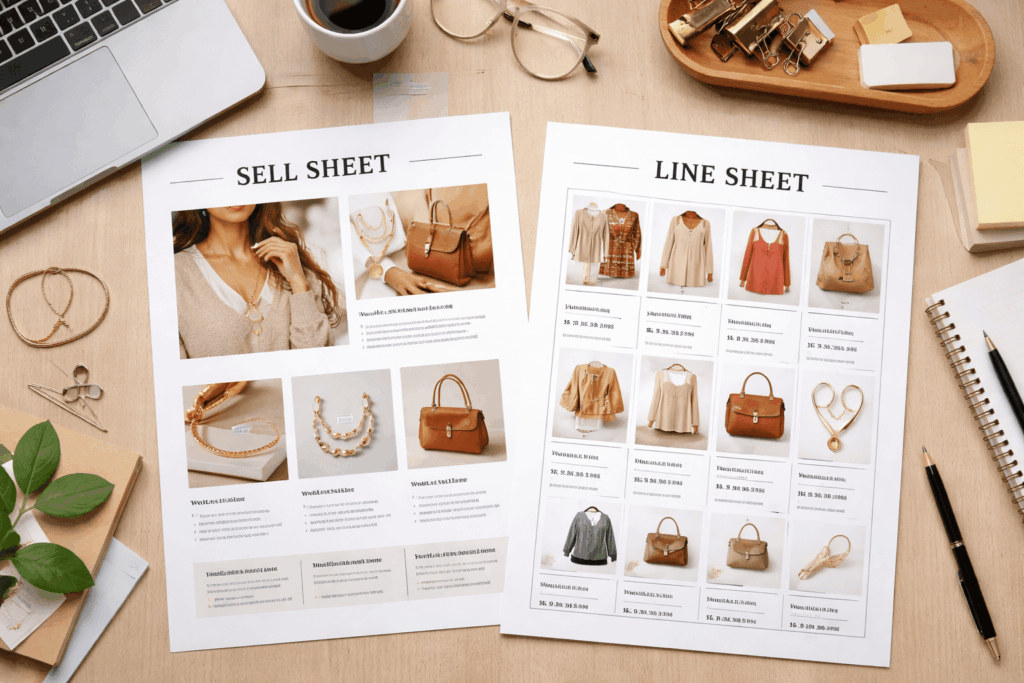
They look similar on the surface, yet they play different roles in the wholesale process. A sell sheet helps you sell one story. Line sheets help buyers order your full product line.
Line sheets are often the only representation of products that store owners see before deciding to place an order. In this guide, you will learn the difference, when to use each, and how to create documents that feel easy to review.
You will also get line sheet templates, linesheet templates, and editable templates you can adapt for your brand. Free tools and templates are available to help you create customized line sheets that fit your products and branding needs.
What Is a Wholesale Sell Sheet?
A wholesale sell sheet is a focused sales page for one item, one category, or one hero story. It helps you pitch a product to potential buyers who still decide if your brand fits their store. A sell sheet is not a full catalogue. It is a sales tool.
It highlights benefits, features, materials, and the reason your customers will want the item. A good sell sheet also includes wholesale price, delivery timing, and ordering information.
Why a sell sheet works
A buyer may meet you at a trade show or discover you online. They often need a quick introduction before they invest time in the full wholesale line.
A sell sheet gives them that introduction. It also helps your sales team tell a consistent story.
Where you use sell sheets
- trade show meetings and trade events
- first outreach to potential buyers
- follow-up after a showroom appointment
- marketing campaigns for launches
You can print sell sheets or send them in pdf format.
Many brands keep them as pdf files for fast email sharing.
What Is a Line Sheet?
Line sheets are the backbone of wholesale ordering. They represent your brand, so they should clearly and professionally showcase both your identity and your full product range.
A line sheet presents your assortment in a structured, easy-to-scan format. Buyers use it to review styles, compare pricing, and place orders — and it’s just as valuable for reorders, because it captures the key details they need to buy again.
You may also hear the term line item sheet. It typically refers to a more SKU-level version of a line sheet, listing each style and SKU alongside product details, wholesale pricing, and ordering information.
The best line sheets prioritize clarity. The layout should be clean and straightforward, guiding buyers through your assortment without distractions. That usually means:
- high-quality images
- simple, consistent columns
- clear labeling across every page
Most line sheets land between 5–15 pages, depending on the size of your collection.
Today, line sheets are often built in tools like Canva or Adobe InDesign, or generated through wholesale platforms such as JOOR.
What line sheets include
Line sheets usually include:
- product images or product photos (high-quality product photos are often featured against a plain white background)
- style name and SKU (product information should include the product name, a unique SKU, and brief, fact-based descriptions)
- materials and sizes
- colorways and variants
- wholesale price and suggested retail pricing
- minimum order requirements
- ordering information and contact details
Line sheet templates are available in various formats, including Word, PDF, and InDesign, making it easy to create and update line sheets.
Line sheets often live as pdf documents, especially when you send them to retailers.
Some fashion businesses also share line sheets through online marketplaces, though pdf format still stays the most common.
Key Differences
| Category | Wholesale sell sheets | Line sheets |
|---|---|---|
| Goal | Create desire and explain value | Enable ordering and buying |
| Scope | One product or a small set | Full product line or a category |
| Best time | Launch, marketing, outreach | Buying meetings, reorders |
| Copy | Benefit-led and persuasive | Data-led and concise |
| Visual style | Lifestyle + storytelling | Product images + grid layout |
| Buyer action | “I want to learn more” | “I want to place an order” |
| Output | pdf or printed page | pdf format, catalog page, or order form |
When to Use a Sell Sheet (Launch, Storytelling, Marketing)
Use a sell sheet when you need to capture attention and create a lasting impression. A sell sheet shines when your product is new, your story is strong, or your brand needs a clear point of view.
Use sell sheets for launches
A launch needs context. A sell sheet tells the story, highlights features, and shows the idea behind the product. It also helps potential buyers understand the best seller in the line.
Use sell sheets for storytelling
Storytelling helps fashion and jewelry brands stand out. A sell sheet can show materials, craftsmanship, and what makes the product line different.
Use sell sheets in marketing
Sell sheets work across marketing emails, social outreach, and retail meetings. They help your sales team stay aligned and keep the message consistent everywhere.
Use sell sheets for new retailers
When retailers meet you for the first time, they need a clear, polished introduction. A sell sheet delivers that first impression — and line sheets give them the path to place an order.
When to Use a Line Sheet (Buying, Ordering, Reorders)
Line sheets belong in every buying conversation. The purpose of a line sheet is to present your wholesale product line to stores and facilitate selling.
Line sheets are often used in the context of trade shows, serving as a reminder of products for store owners. If a buyer asks for pricing, delivery, and minimum order terms, you need line sheets.
Line sheets also work as your seasonal catalog.
Use line sheets for buying meetings
Buyers review dozens of brands. Line sheets must help them scan, compare, and choose fast.
That is why line sheet design matters.
Use line sheets for orders
Line sheets reduce mistakes. They keep SKU, wholesale price, and product details in one place. They can also link to an order form or include an order form section.
Use line sheets for reorders
Reorders depend on speed. Line sheets that include reorder status, delivery windows, and all the details help retailers reorder without emails.
Use line sheets across channels
Many brands sell through showrooms, online meetings, and online marketplaces. Line sheets still act as the universal ordering sheet.
What to Include in Each Document
Both documents should look professional. The layout of a line sheet should be visually appealing, designed with clean layouts and high-quality images to showcase your products effectively.
Both documents should also feel easy to read.
The difference is the intent. A sell sheet sells. Line sheets organize. Line sheets should contain limited information focused on helping potential buyers place orders.
Wholesale sell sheet checklist
Include these important details:
- brand’s logo
- product name and short headline
- high quality images or one strong hero image
- 3 to 6 benefit bullets
- quick introduction to the story
- materials, size, and key product details
- wholesale price and MSRP
- minimum order and terms
- delivery date range
- contact details and contact options
Keep the page clean and keep the copy short, yet make it vivid.
Line sheet checklist
Each style row should include:
- product images or product photos
- style name
- SKU or style number
- color options and codes
- sizes and packs
- materials
- wholesale price
- retail pricing guidance
- minimum order
- delivery date or window
- ordering information
- contact details
Line sheets also benefit from a cover page. The cover page sets the season, wholesale line name, and contact information. A cover page also improves the lasting impression of your catalogue.
Line Sheet Templates and Sell Sheet Templates You Can Copy
Templates save time and create consistency across your business. Below are practical line sheet templates, sell sheet templates, and editable templates you can reuse.
Template 1: Cover page for line sheets
Use this cover page structure:
- brand’s logo
- season and date
- wholesale line name
- website
- contact name and contact details
- quick introduction to the product line
This cover page makes your line sheets feel polished.
Template 2: Simple line sheet layout
This is a clean line sheet design:
- header with brand and season
- grid layout with 7 to 10 columns
- clear pricing columns
- notes section for ordering information
This template works for fashion businesses and jewelry brands.
Template 3: Category-based line sheets
If you have a large product line, split line sheets by category:
- tops
- bottoms
- outerwear
- accessories
- jewelry
This layout helps buyers navigate quickly.
Template 4: Sell sheet layout
Use this sell sheet template:
- hero image
- headline and point of difference
- feature bullets
- product details and materials
- wholesale price and MSRP
- minimum order
- ordering information
- contact details
Template 5: Order form add-on
Add this section at the end of line sheets:
- SKU
- color
- size
- units
- wholesale price
- totals
This section turns line sheets into an order form.
Template 6: Fashion line sheet templates
Fashion line sheet templates often include:
- collection name
- color story
- fit notes
- delivery drops
These fashion line sheet templates work well for seasonal fashion line launches. You can also create a set of fashion line sheet templates for each season. That makes creating line sheets faster every year.
Example Line Sheet
Here are some examples and line sheet examples you can use as inspiration for your own templates.
| Image | Style | SKU | Materials | Colors | Sizes | Wholesale price | MSRP | Minimum order | Delivery |
|---|---|---|---|---|---|---|---|---|---|
| (image) | Harbor Tee | HT-101 | Cotton | White, Navy | XS–XL | 18 | 45 | 6 | Mar 10–20 |
| (image) | Coast Pant | CP-220 | Twill | Sand, Black | 24–34 | 42 | 98 | 4 | Mar 10–20 |
| (image) | Drift Jacket | DJ-410 | Nylon | Olive | S–XXL | 78 | 165 | 2 | Apr 1–15 |
In this table, products are laid out in a clean, simple, and strategic way, making it easy for buyers to compare styles, prices, and order details.
Line sheet examples vary by industry. Jewelry line sheets highlight key product details and create an eye-catching display to appeal to a broad selection of buyers. Line sheets for electronics are more detailed, showcasing features like functionality, speed, and dimensions. Hospitality product line sheets cover a broad range of items and need to set the right tone for buyers.
This example line sheet shows how a buyer scans your line. It also shows why high quality images and consistent pricing columns matter.
What Should a Line Sheet Look Like?
Line sheets should look like a clean catalog page. They should feel structured and consistent across every page.
Here is what buyers expect:
- a cover page at the start
- clear product images and product details
- consistent layout and spacing
- pricing that is easy to compare
- ordering information in the footer
If line sheets look messy, buyers assume operations look messy too. That hurts sales.
How to Make a Line Sheet
Many fashion businesses ask how to make a line sheet. The answer stays simple. You need clean data, good product photos, and the right templates.
Here is a practical process for creating line sheets:
- Start with a cover page and contact details.
- Choose a consistent line sheet design and grid layout.
- Add product images and product details for each style.
- Add wholesale price and retail pricing guidance.
- Add minimum order and ordering information.
- Export in pdf format and also keep an editable version.
This process supports both wholesale line sheets and retail meetings. It also keeps your catalog consistent.
Line Sheet Design Tips That Improve Sales
Great line sheet design makes buying easier. It also reduces questions and back-and-forth.
Use these tips:
- Use high quality images for every style.
- Keep your column order consistent.
- Use clear labels for materials and sizes.
- Group the product line by category.
- Add a cover page for each season.
- Keep contact details visible on each page.
- Export in pdf format so retailers can share it internally.
Line sheets act as product catalogs. They should feel as reliable as your product.
Why Templates Matter for Wholesale
Templates aren’t just about how things look — they’re about how your wholesale works.
When your team uses templates, fewer mistakes slip through. And because everyone follows the same structure, you can move faster — from building line sheets to closing orders.
That’s why line sheet templates, sell sheet templates, and editable templates matter. They keep everything consistent season after season and help your business scale without chaos.
How Product Data Impacts Wholesale Success
Wholesale success depends on accurate data. When product details change, your sheets need to update instantly. When pricing shifts, your line sheets should update just as fast. And when delivery dates move, your line sheets can’t lag behind.
Bad data causes:
- wrong wholesale price on orders
- missing SKUs
- incorrect delivery date notes
- confusion for buyers and retailers
- slow approvals and lost momentum
Good data creates confidence and supports reorders.
Data points that must stay consistent
- SKU and style number
- materials
- sizes and colors
- wholesale price and retail pricing
- minimum order and pack sizes
- delivery date windows
- ordering information
- contact details
When you keep data consistent, line sheets stay reliable. That reliability helps potential buyers trust your brand.
How Wave PLM Supports Both: Consistent Data + Fast Updates
Wave PLM helps brands manage product data in one place.
That single source of truth feeds your sell sheets and line sheets — so everything stays consistent. And when a new season hits, you can generate updated line sheets faster, without starting from scratch.
How Wave PLM helps with wholesale sell sheets
- keeps product details accurate
- helps you reuse approved copy
- supports fast updates when features or materials change
How Wave PLM helps with line sheets
- keeps pricing consistent
- keeps the product line organized
- speeds up updates across every page
- supports wholesale line sheets and retail-ready product catalogs
Wave PLM helps you move faster without sacrificing accuracy.
That means your sales team can work more efficiently — and retailers can place orders with confidence, knowing the details are always up to date.
Quick FAQ
What is the difference between a line sheet and a sell sheet?
A sell sheet sells one story. Line sheets organize the full product line for ordering.
Can I use line sheets as product catalogs?
Yes. Line sheets often act as product catalogs in the wholesale process.
Should I use pdf format?
Yes. Pdf format works well for buyers, retailers, and internal sharing. You can also keep editable templates for updates.
Final Takeaway
Wholesale sell sheets are built to spark interest. Line sheets are built to drive orders.
Use both — and use the right templates for each.
To make your sheets work, focus on the essentials:
- Keep product details and pricing consistent
- Use high-quality images
- Add a cover page
- Include contact details and clear ordering information
- Export everything as a PDF
And if you want faster updates and cleaner, more reliable data, Wave PLM supports the entire workflow — from product info to finished sheets.
That means fewer mistakes, smoother wholesale operations, and more sales.





Leave a Reply