
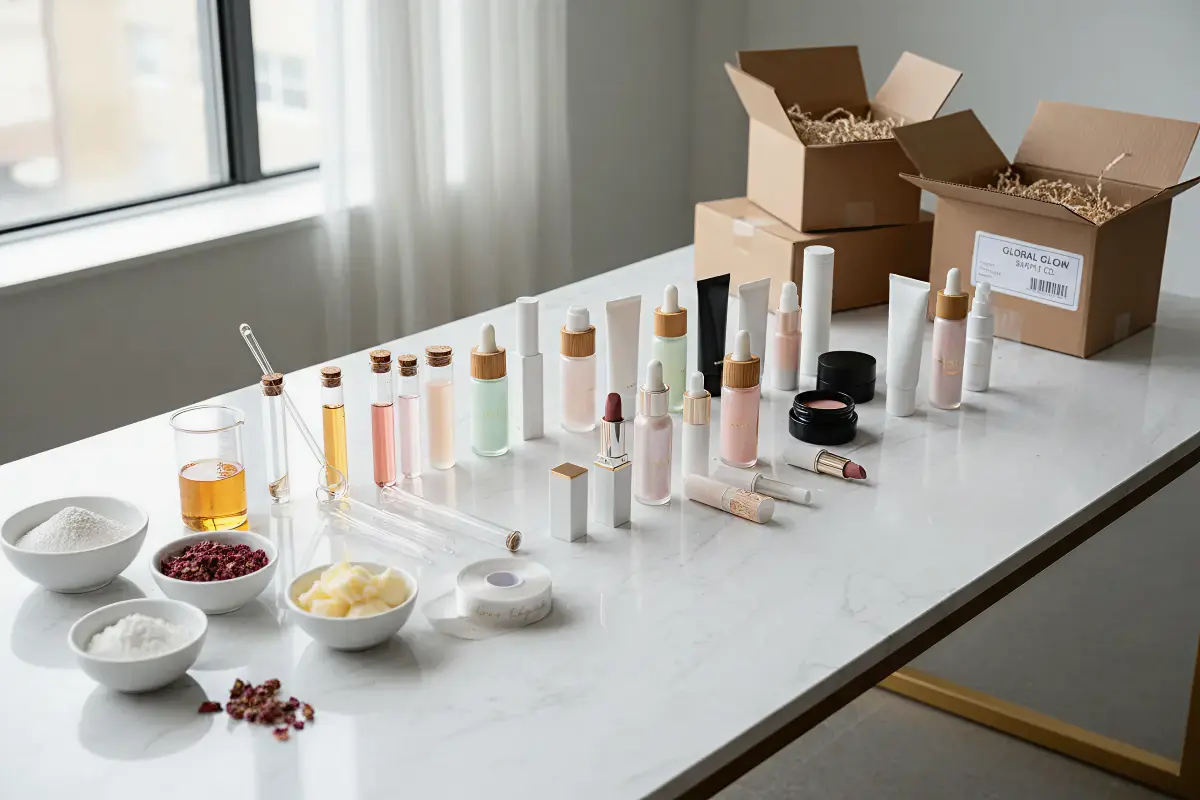
The beauty supply chain looks simple at first glance. Products move from concept to shelf. Many brands expect it to work like other supply chains.
In reality, the beauty supply chain involves constant change, strict rules, and intense consumer expectations. Beauty brands manage formulas, raw materials, packaging, testing, and global launches at the same time. Each step affects cost control, product safety, and customer satisfaction.
Unlike other supply chains, beauty supply must adapt to micro trends, demand volatility, and rising costs. One disruption can trigger stock shortages, excess inventory, or price increases.
This guide explains why the beauty supply chain feels complex. It also shows how beauty brands can simplify supply chain management while maintaining high quality standards.
How the Beauty Supply Chain Differs From Fashion and Apparel
Fashion supply chains focus on fabric, sizes, and seasonal collections. Supply chains in fashion still face pressure, but materials stay stable.
The beauty industry operates differently. Beauty products rely on formulas, raw ingredients, and temperature sensitive products. A single formula change can affect regulatory compliance and product safety.
Fashion brands manage colors and fits. Beauty brands manage chemistry, ingredient discovery, and supplier source validation.
A single SKU in the cosmetics industry may require:
- Multiple raw materials from certified suppliers
- Contract manufacturing across manufacturing facilities
- Sustainable packaging and sustainability packaging updates
- Regulatory compliance for key markets
- Quality control and stability testing
These layers create supply chain bottlenecks that do not exist in apparel. The makeup supply chain also moves faster due to consumer demand driven by social media and direct to consumer launches.
Formula Ownership and Version Control Challenges
Formulas sit at the center of the beauty supply chain. Many brands rely on contract manufacturing partners to manage formulas.
This model creates challenges for supply chain teams. Labs update formulas to address ingredient shortages or sustainability regulations. These updates often reach teams too late.
Poor version control leads to:
- Incorrect ingredient lists on packaging
- Regulatory delays across the global supply chain
- Quality control risks
- Higher costs from rework and waste
Supply chain management requires clear ownership and visibility. Without centralized data, beauty brands struggle to maintain high quality standards while scaling.

Ingredient Traceability and Compliance Pressure
Ingredient traceability drives modern supply chain management in personal care and beauty products.
Regulators expect proof of ethical sourcing, product safety, and environmental impact. Consumers expect greater transparency and clean beauty commitments.
Beauty supply chains must answer critical questions fast:
- Which raw materials come from approved supplier source lists?
- Which products fail sustainability regulations?
- Which SKUs face compliance risk in key markets?
Manual systems limit supply chain visibility. They slow response to supply chain disruptions and increase risk.
Ingredient traceability also supports sustainable supply chain goals. Brands that track raw ingredients reduce waste and protect consumer trust.

Packaging as a Major Supply Chain Bottleneck
Packaging creates some of the most common supply chain bottlenecks in the beauty industry.
Beauty packaging includes primary containers, secondary boxes, labels, inserts, and applicators. Each part may come from different suppliers with different lead times.
Packaging errors impact:
- Regulatory compliance
- Customer experience
- Omnichannel fulfillment timelines
Late artwork approvals or incorrect claims cause delays. These issues increase rising costs and reduce supply chain agility.
Sustainable packaging adds another layer. Eco friendly materials often require new suppliers and longer lead times.
Without centralized chain management, packaging quickly becomes a blocker.

Regulatory Complexity Across Global Markets
The global supply chain for beauty faces intense regulatory pressure.
Rules vary by region:
- The EU enforces strict ingredient bans
- Asia requires market-specific testing
- Some regions restrict sustainability packaging claims
Beauty brands must manage these differences while launching products quickly. Supply chain teams often work separately from regulatory teams.
This separation creates friction and late-stage rework. Centralized data improves supply chain visibility and ensures efficiency across markets.
Why Data Silos Break Supply Chains in Beauty
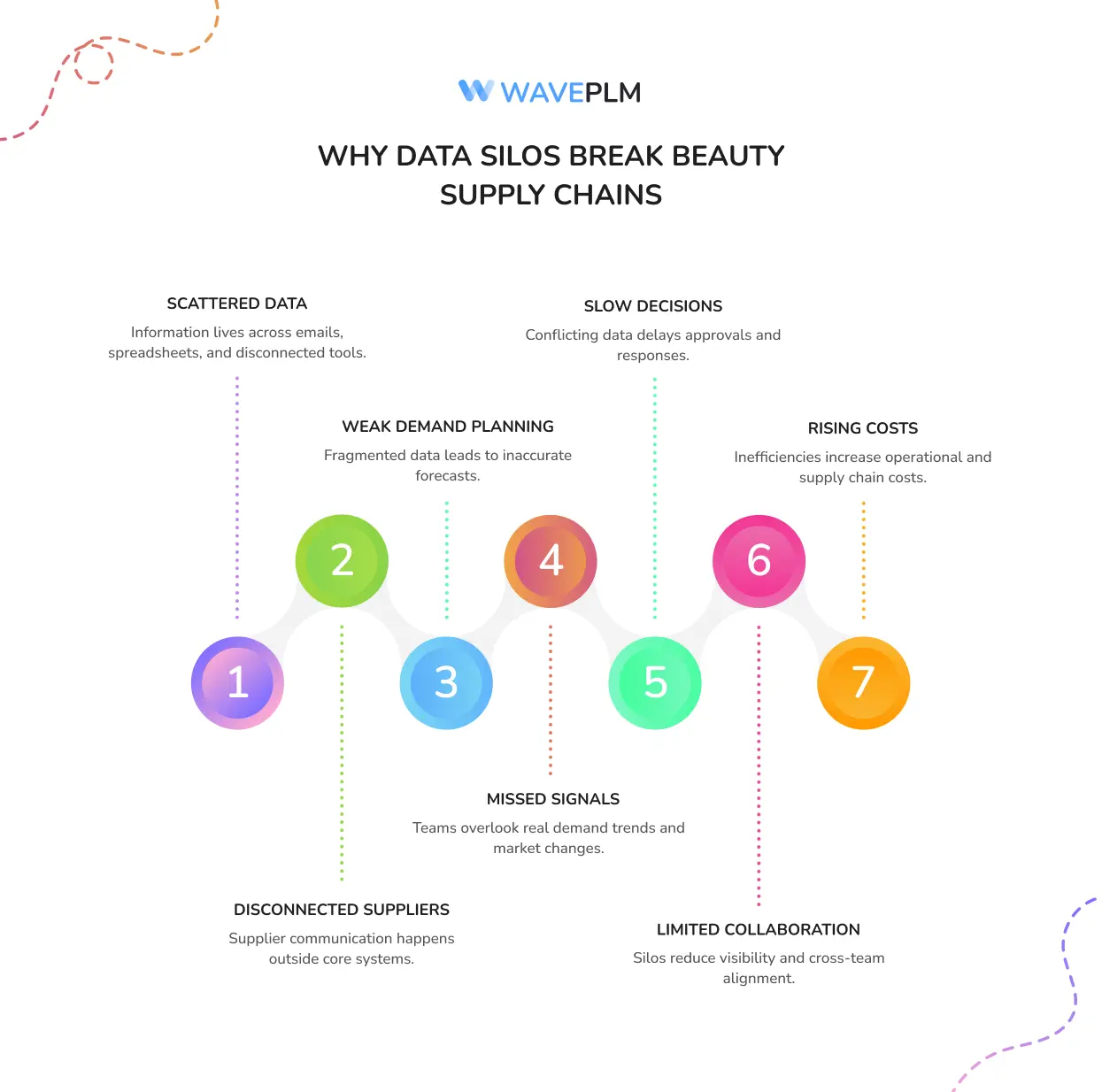
Many supply chains fail due to data silos. Beauty supply chains feel this problem more strongly.
Teams store data across emails, spreadsheets, and disconnected tools. Supplier communication happens outside core systems.
These silos cause:
- Poor demand planning
- Missed forecast demand signals
- Delayed decisions
- Reduced supplier collaboration
When data conflicts, teams lose time. Supply chain agility drops. Costs rise.
Demand Forecasting Challenges in the Beauty Industry
Demand forecasting plays a critical role in beauty supply chain management.
Consumer behavior changes fast. Micro trends create spikes in consumer demand. Promotions and influencers amplify demand volatility.
Many brands rely on historical data alone. This approach fails during rapid market trends.
Modern beauty brands use data driven forecasting and predictive analytics. These tools help accurately forecast demand and reduce excess inventory.
Ai driven demand forecasting improves inventory management and supports cost control.
Inventory Management and Omnichannel Fulfillment
Beauty brands sell through retail, direct to consumer, and marketplaces. Omnichannel fulfillment adds complexity to supply chains.
Poor inventory management leads to stock shortages in one channel and excess inventory in another.
Supply chain visibility across channels allows brands to forecast demand, balance stock, and improve customer satisfaction.
Third party logistics partners also require accurate data to ensure efficiency.
Sustainability, Ethics, and Environmental Impact
Sustainability now shapes the beauty supply chain.
Consumers expect ethical sourcing, reduced carbon footprint, and eco friendly materials. Sustainability regulations increase pressure on supply chain management.
Beauty brands must track:
- Certified suppliers
- Raw materials origin
- Environmental impact metrics
A sustainable supply chain reduces long term risk and supports long term resilience.
How Centralized Product Data Improves Supply Chain Visibility
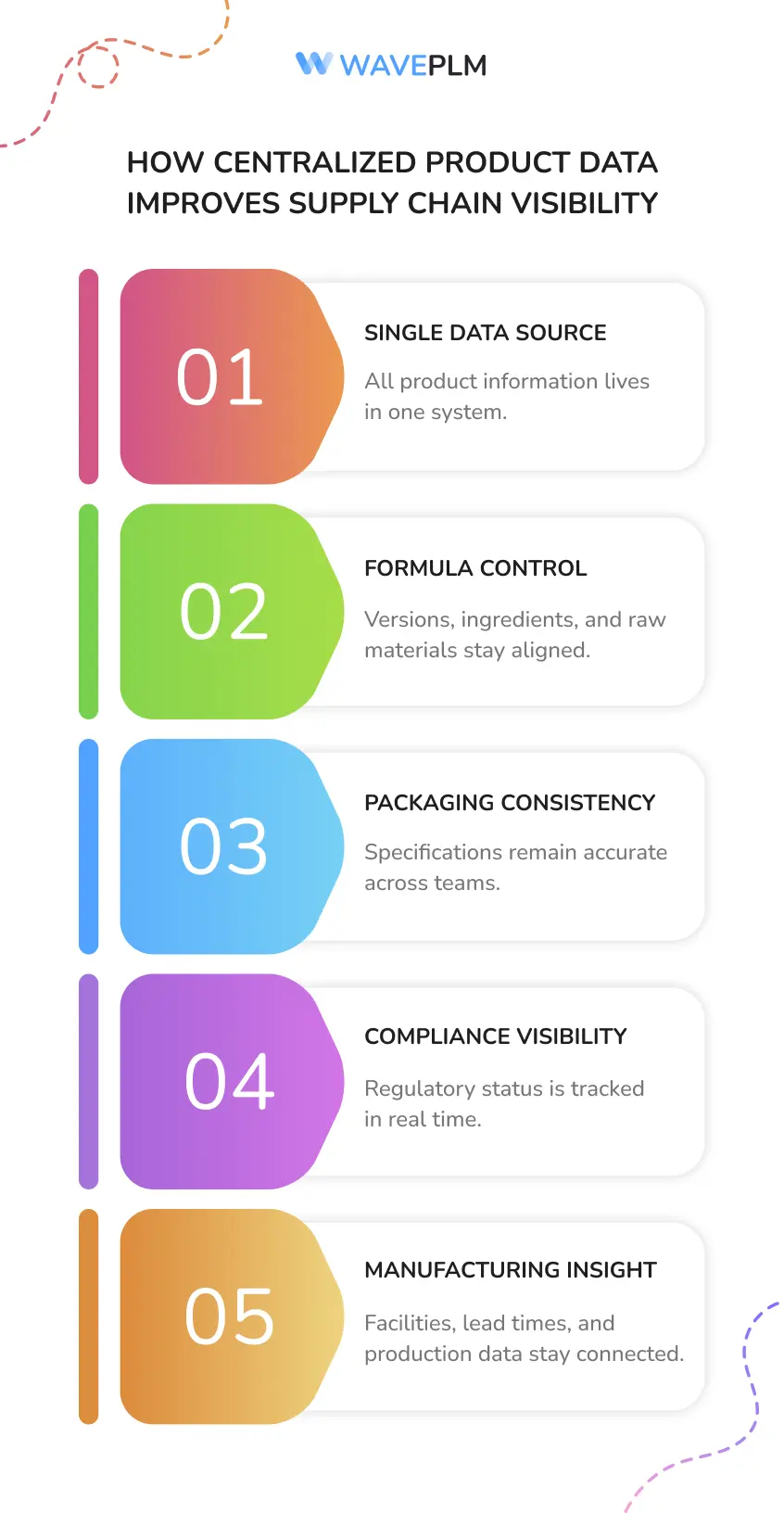
Centralized product data transforms chain management.
All product information lives in one system:
- Formulas and versions
- Raw ingredients and raw materials
- Packaging specifications
- Regulatory compliance status
- Manufacturing facilities and lead times
This approach improves real time collaboration across supply chain teams. It strengthens supplier collaboration and supports faster decisions.
How PLM Supports Modern Beauty Supply Chains
Product Lifecycle Management plays a critical role in resilient supply chains.
PLM connects supply chains from concept to launch. It supports demand planning, supplier communication, and quality control.
With PLM, beauty brands can:
- Reduce supply chain bottlenecks
- Improve demand forecasting
- Support sustainable packaging initiatives
- Control costs without sacrificing quality
A senior vice president of operations often relies on PLM to align teams and manage growth.
Table: Key Challenges and Solutions in the Beauty Supply Chain
|
Challenge |
Impact |
Solution |
|---|---|---|
|
Supply chain disruptions |
Delays and higher costs |
Better visibility |
|
Demand volatility |
Stock shortages |
Predictive analytics |
|
Packaging delays |
Missed launches |
Centralized data |
|
Regulatory changes |
Compliance risk |
Real time updates |
|
Rising costs |
Margin pressure |
Cost control tools |
Common Questions About Beauty Supply Chains
What are the 5 C’s of supply chain management?
The 5 C’s include consistency, collaboration, communication, coordination, and cost control. These principles support resilient supply chains.
How can I start my own beauty supply store?
Start by sourcing beauty products from certified suppliers. Focus on quality control, regulatory compliance, and inventory management.
What are popular beauty supply brands?
Many brands succeed by mastering supply chain management, ethical sourcing, and customer experience.
What are the 5 stages of supply chain?
The stages include planning, sourcing, manufacturing, distribution, and returns.
Conclusion
The beauty supply chain feels complex because it combines fast demand shifts, strict regulations, and global operations.
Supply chains in beauty face more pressure than most industries. Brands that invest in visibility, data analytics, and collaboration gain an advantage.
Centralized systems and PLM help beauty brands manage supply chain disruptions, reduce waste, and maintain high quality standards.
For a deeper look at long term resilience, explore our article on building resilient supply chains.





Leave a Reply