
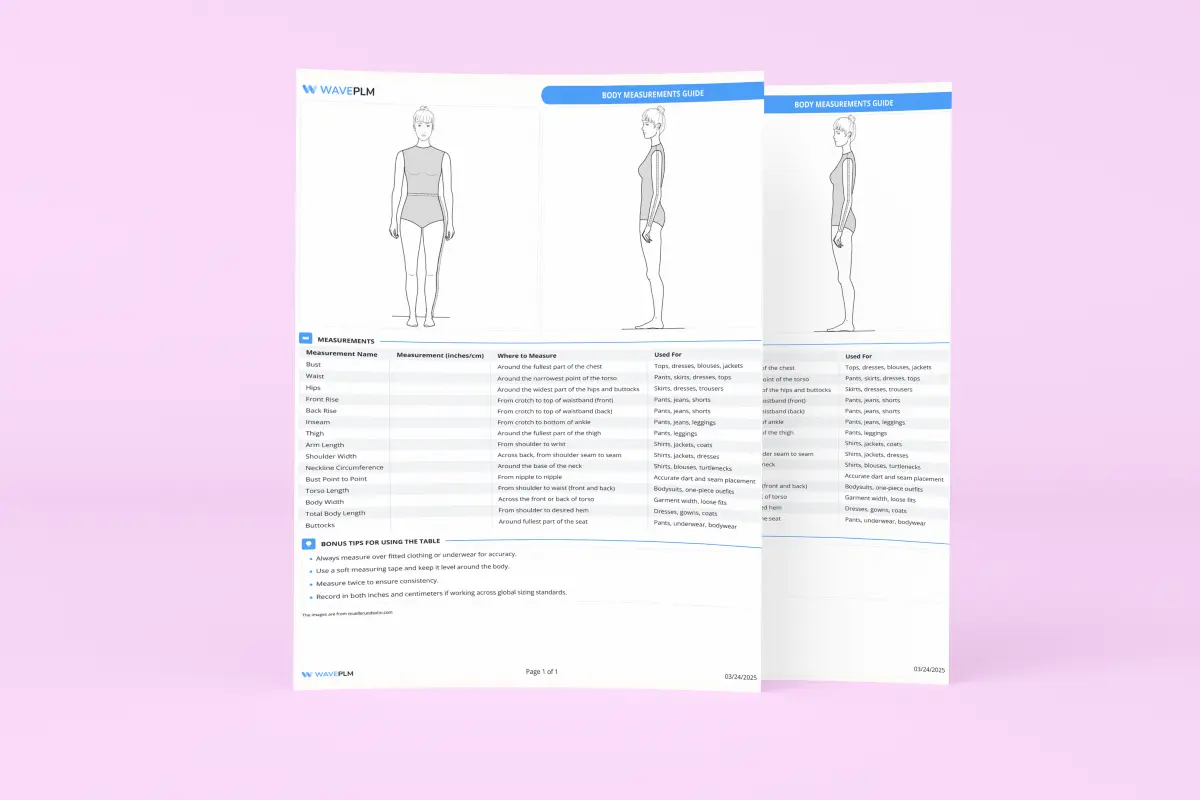
Quick answer: To take accurate body measurements for clothing, use a flexible tape measure over fitted clothing and record nine core numbers — bust/chest, waist, hips, shoulder width, sleeve length, inseam, thigh, neck, and full length. Keep the tape parallel to the floor, don’t pull tight, and stand relaxed. Re-measure every 3–6 months because body shape changes over time.
Custom clothing starts with one thing—accurate body measurements. Knowing how to take body measurements helps you get the right fit, whether you’re sewing at home or designing for a brand. If you want your garments to look and feel right, you need to measure right.
In this guide, you’ll learn how to take measurements for clothes, how to use a tape measure correctly, and how to read a body measurements chart. We’ll explain how to measure the waist, hips, bust, and other areas, along with tips for both men and women. Let’s get into it.
Why are accurate body measurements important?
Good fit depends on good data. Whether you’re tailoring a dress or building a digital pattern in PLM software, you need real, precise numbers.
Knowing what are the measurements that matter can help:
- Reduce returns and refits
- Improve customer satisfaction
- Build accurate sizing charts
- Design better patterns
For brands and tailors, taking body measurements is a step you cannot skip.
What do you need to take body measurements?
To take accurate body measurements, gather these tools:
| Tool | Purpose |
|---|---|
| Tape measure | The core tool for all measurements |
| Mirror | Helps check tape alignment |
| Notebook or app | Record every number |
| Helper (optional) | Useful for hard-to-reach spots |
| Fitted clothing | Helps get exact outlines of the body |
How do you take body measurements step by step?
Let’s go step by step. Wear fitted clothing or underwear. Stand tall and breathe normally. Always wrap the tape around the circumference measured and keep it parallel to the floor.
1. Bust Measurement
How to take it:
Wrap the tape over the fullest part of the bust. Keep the tape flat and level with the floor.
Tip: This is not your bra size. It’s the full chest circumference, measured over the bust.
2. Waist Measurement
How to take it:
Find your natural waistline — the narrowest part between ribs and hips, near the belly button.
Tip: Don’t suck in your stomach. You need a natural, relaxed position.
3. Hip Measurement
How to take it:
Measure the widest part of your hips and buttocks. This ensures pants and skirts fit properly.
Tip: Keep your feet together while measuring.
4. Shoulder Width
How to take it:
Measure straight across from shoulder tip to shoulder tip. This defines sleeve drop and shoulder seams.
5. Sleeve Length
How to take it:
Bend your arm slightly. Start from the shoulder point down to your wrist bone.
6. Inseam
How to take it:
Measure from the top of the inner thigh to the ankle. Use this for trousers, jeans, and jumpsuits.
7. Thigh Circumference
How to take it:
Wrap the tape around the widest part of the thigh. Keep the tape snug but not tight.
Which body measurements matter most for womenswear?
When making custom womenswear, these measurements matter most:
| Measurement Area | Purpose |
|---|---|
| Bust | For tops, dresses, jackets |
| Waist | For shaping the garment |
| Hips | For skirts, pants, dresses |
| Shoulder | For necklines and sleeves |
| Sleeve Length | For blouses and jackets |
| Inseam | For pants and shorts |
| Full Length | For gowns and jumpsuits |
What is the standard body measurements chart for women?
Use this body measurements chart as a reference. But remember, these are only estimates. Always take your own measurements.
| Size | Bust (in) | Waist (in) | Hips (in) |
|---|---|---|---|
| XS | 31–32 | 24–25 | 34–35 |
| S | 33–34 | 26–27 | 36–37 |
| M | 35–36 | 28–29 | 38–39 |
| L | 37–39 | 30–32 | 40–42 |
| XL | 40–42 | 33–35 | 43–45 |
What measurements do you need to make a dress?
A good-fitting dress needs more than bust, waist, and hips. Here’s a full list:
| Measurement | Why It Matters |
|---|---|
| Bust | Ensures chest fit |
| Waist | Shapes the torso |
| Hips | Balances skirt flare |
| Shoulder | Aligns bodice |
| Armhole | Prevents tight sleeves |
| Sleeve Length | For sleeve fit |
| Full Length | Controls final length |
These measurements shape how the dress moves and fits on the body.
What body measurements do you need for menswear?
Creating menswear? Use this guide for accurate results:
| Measurement | How to Measure |
|---|---|
| Chest | Measured around the fullest part of chest |
| Waist | Measured at the natural waistline |
| Hips | Around the widest point of the seat |
| Neck | Around the base of the neck |
| Inseam | From crotch to ankle |
| Sleeve Length | From shoulder to wrist |
| Shoulder Width | Shoulder to shoulder |
How do you measure your body without help?
Sometimes you don’t have help. Here’s how to measure yourself:
- Use a full-length mirror
- Use clips to hold the tape when needed
- Take your time, and double-check
- Write down everything as you go
If you’re designing for someone else, ask them to stand straight and relaxed. Avoid tight or baggy clothes. Use a tape measure, not a ruler or string.
How do you take body measurements step by step?
Total time: ~10 minutes · Tools: flexible tape measure, mirror, notebook, fitted clothing.
- Measure the bust or chest. Wrap the tape around the fullest part of the bust, keeping it level with the floor. Don’t compress — this is full circumference, not bra size.
- Measure the natural waist. Find the narrowest point between ribs and hips, near the belly button. Don’t suck in.
- Measure the hips. Wrap the tape around the widest part of the hips and seat with feet together.
- Measure shoulder width. Tape goes straight across from one shoulder tip to the other.
- Measure sleeve length. Bend the arm slightly. From the shoulder point, follow the outside of the arm to the wrist bone.
- Measure the inseam. From the top of the inner thigh down to the ankle.
- Measure thigh circumference. Around the widest part of the thigh — snug, not tight.
- Measure the neck (menswear). Around the base of the neck where a collar sits.
- Record everything immediately. Note inches or centimetres consistently — never mix units in one chart.
What are the best tips for accurate body measurements?
- Always measure over fitted clothing or undergarments
- Never pull the tape too tight or leave it too loose
- Keep the tape parallel to the floor
- Re-measure every few months. Your body shape may change
- Use consistent units: inches in the United States, centimeters in many other countries
What are the most common body measurement mistakes?
| Mistake | Why It’s a Problem |
|---|---|
| Sucking in stomach | Gives false waist measurements |
| Using rigid tape | Can’t wrap around body curves |
| Guessing sizes | Leads to poor garment fit |
| Wearing baggy clothes | Distorts measurements |
| Not checking mirror | Tape may be slanted |
Free Download: Printable Body Measurements Chart
Want to keep track of your sizes? Use this printable chart to log your measurements for future custom orders.
📥 Download Your Free Body Measurements Chart
Body measurement terms — quick definitions
- Bust / chest
- Full circumference of the torso at the fullest point of the bust or pectorals.
- Natural waist
- The narrowest point of the torso, between the bottom rib and the top of the hip.
- Hip
- The widest circumference around the hips and seat, usually 7–9 inches below the waist.
- Inseam
- The length from the top of the inner thigh (crotch seam) down to the ankle bone.
- Sleeve length
- From the shoulder point along a slightly bent arm to the wrist bone.
Frequently asked questions about body measurements
What are the most important body measurements for clothing?
The seven most important body measurements for clothing are bust or chest, waist, hips, shoulder width, sleeve length, inseam, and full length. For menswear, add neck. For close-fitting garments, also record thigh and armhole. These nine measurements cover almost every standard clothing pattern.
How do you measure your bust correctly?
Wrap a flexible tape measure horizontally around the fullest part of the bust, keeping it level with the floor. Wear an unpadded bra or fitted top. Breathe normally — don’t expand or compress the chest. The number is your full bust circumference, which is different from your bra cup size.
What is the difference between waist size and pant size?
Your natural waist is the narrowest part of your torso, near the belly button. Pant size is usually measured lower, where pants actually sit on your hips. For tailored garments use the natural waist; for jeans and casual pants use the low-waist measurement. Most size charts use the natural waist by default.
How often should you re-measure your body?
Re-measure every 3 to 6 months, and always before ordering custom clothing. Body shape changes with weight, age, fitness, and pregnancy. Brands and pattern-makers should request fresh measurements at every order rather than relying on numbers from a previous season.
Can you take accurate body measurements alone?
Yes. Use a full-length mirror to check that the tape is level and not twisted. Use small clips or tape to anchor one end of the measure when wrapping circumferences. Take each measurement twice and record the average. For shoulder width and sleeve length, ask a second person if possible — they’re hardest to do solo accurately.
What units should you use for body measurements?
Use inches if you’re producing or buying clothing for the United States or United Kingdom, and centimetres for the EU, Asia, and most pattern-making software. Stick to one unit across the whole chart — mixing inches and centimetres is the most common cause of fit errors in custom clothing.
What’s the most common mistake when taking body measurements?
The most common mistake is pulling the tape too tight or letting it sag. The tape should sit flush against the body without compressing it, and stay parallel to the floor for all circumference measurements (bust, waist, hips, thigh). Sucking in the stomach is the second most common error.
Key takeaways: getting body measurements right
Taking body measurements is essential for creating well-fitted clothing. Whether you’re designing, tailoring, or sewing, these numbers guide your decisions. By knowing how to measure body measurements, using a tape measure, and following our tips, you’ll avoid poor fits and wasted time. Don’t guess—measure.
Create fashion that fits real people.



Leave a Reply