
Walk into any store and you will see rows of standard sizes hanging in perfect order. Yet many ladies leave without buying clothes because nothing feels quite right. The length feels off. The neckline does not flatter their shape. The sleeves sit awkwardly. The fit disappoints.
Now imagine finding your favorite dress online and having the ability to customize every detail. That is the promise of a custom dress. Custom options are available not only for dresses but also for skirts, offering ladies even more versatility and personalized style choices.
Over the past decade, custom clothing has moved from niche luxury to growing global demand. Brands across the world now create custom clothing dresses at reasonable prices. What once required a local tailor and multiple visits can now happen online, often for the first time, through a simple website experience.
This article explains how a custom dress works, how brands make custom dresses at scale, and how technology like Wave PLM supports this transformation in fashion.
What Is a Custom Dress?
A custom dress is a garment created for one specific customer. Instead of choosing between fixed sizes in a store, customers measure their body and customize the design before the dress is sewn. The same customization process also applies to skirts, allowing for personalized fit and style in both dresses and skirts.
The result feels different from standard clothes. A custom made dress or skirt adapts to your shape instead of forcing you to adapt to it. Whether you are petite, tall, or somewhere in between, the goal is simple: a perfect fit.
Most custom clothing dresses follow a guided process. Customers select a base style and then customize features such as:
- Neckline shape
- Sleeve length
- Dress length
- Fabric or material
- Added details like pockets
The dress is then custom made according to those choices. Many women describe the experience as amazing because the garment fits like a glove. Customers are often impressed by the quality, craftsmanship, and perfect fit of their custom made garments.
Custom vs Made-to-Measure vs Bespoke
These terms often sound similar, but they describe different levels of service.
| Feature | Custom Dress | Made-to-Measure | Bespoke |
|---|---|---|---|
| Pattern | Adjusted digital pattern | Standard block resized | Pattern created from scratch |
| Fit Level | Personalized measurements | Adjusted standard sizes | Fully handcrafted fit |
| Scalability | High with technology | Moderate | Limited |
| Price Range | Accessible to premium | Mid to high | Luxury |
A custom dress usually starts from a base pattern. Technology adjusts that pattern using customer measurements. The dress is then custom made and sewn according to selected options.
Made-to-measure focuses mainly on resizing existing sizes. Bespoke relies on a master tailor and multiple fittings. While bespoke garments are often handmade, custom clothing combines personalization with scalable systems.
For many brands, the custom model offers the best balance between quality, price, and efficiency.
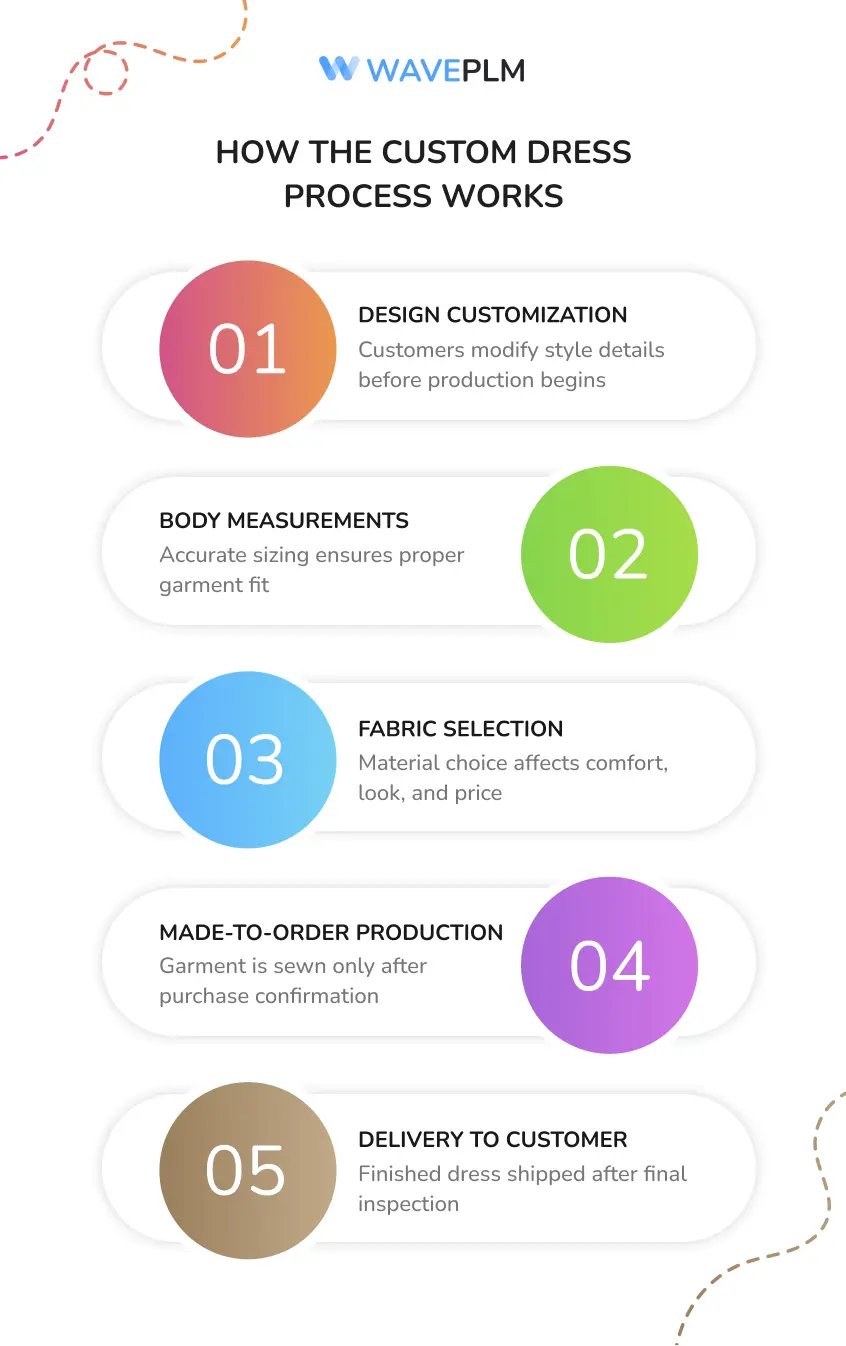
Why Custom Clothing Dresses Are Growing in Popularity
The rise of custom clothing dresses reflects deeper changes in fashion and consumer behavior. Many customers have reported receiving compliments on their eShakti dresses, highlighting the positive impact of custom fit and style. Brands love to hear from their customers and value feedback, as it helps them improve and grow.
1. Fit Frustration and Body Diversity
Standard sizes rarely serve everyone. A dress that fits at the waist may pull at the bust. The length may not suit petite or tall women. Custom clothing solves this issue by allowing customers to measure and adjust before purchasing.
Better fit leads to fewer worries about alterations later.
2. Online Shopping Evolution
Buying clothes online used to feel risky. Customers could not try the dress before it shipped. Today, advanced size guides and measurement tools reduce uncertainty. Brands like eshakti helped introduce large-scale online customization and showed that customers would embrace the ability to customize.
The eshakti model demonstrated that custom made fashion could operate at scale with global shipping and reliable delivery.
3. Sustainability Awareness
Mass production creates excess inventory. Unsold clothes often end up discounted or discarded. Custom made production begins only after a dress is purchased. This approach supports sustainability and reduces waste.
4. Personal Style Expression
Fashion reflects identity. Women want a dress that matches their vision, not just current trends. Customization allows them to create a statement piece that feels uniquely theirs.
From classic silhouettes to modern styles, customization helps customers bring their ideas to life.
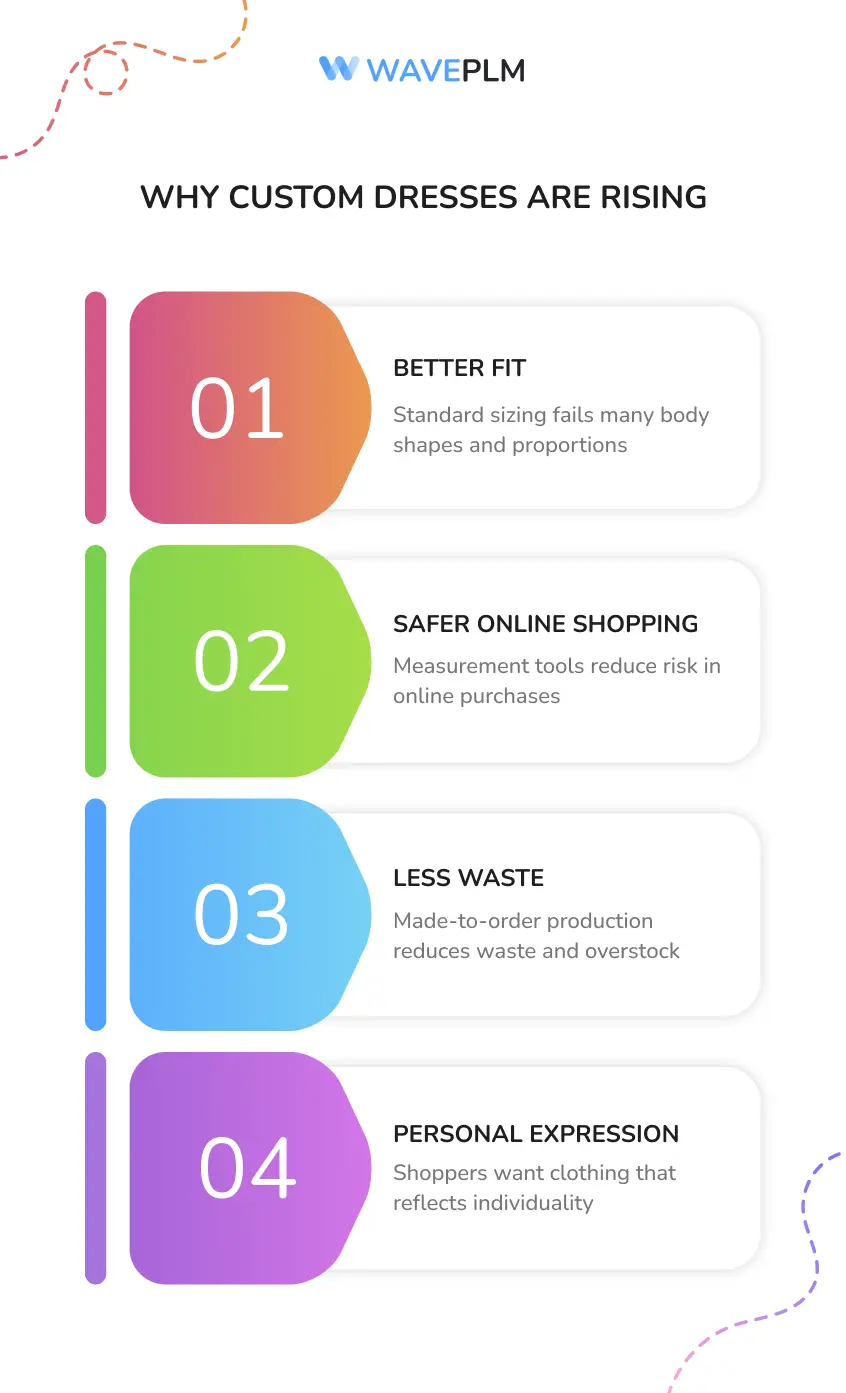
How the Custom Dress Process Works
Behind every custom dress lies a clear structure. While the experience feels personal, brands rely on organized systems. The custom process can also apply to other items like shoes, which can be tailored for both fit and style, offering personalized options similar to custom clothing dresses.
Before making a decision, it’s advisable to review designers’ portfolios to ensure consistency and suitability for your specific needs.
1. Design Selection
Customers start with a base dress design. This could be a classic A-line, a wrap style, or a modern shift.
They then customize key features:
- Round or V neckline
- Short or long sleeves
- Adjustable length
- Optional pockets
This stage allows customers to shape the garment before it is sewn.
2. Measurement Collection
Accurate measurements define success. Customers measure bust, waist, hips, and desired length. Many platforms provide visual advice and tutorials.
Sample measurement template:
| Measurement | Input (inch/cm) |
| Bust | |
| Waist | |
| Hips | |
| Shoulder Width | |
| Dress Length |
Some brands allow standard sizes plus custom adjustments. Others require full measurement input.
3. Fabric and Material Choice
Fabric influences drape, comfort, and cost. Cotton creates breathable everyday dresses. Silk elevates evening styles. Stretch fabric improves flexibility and fit.
Clear material descriptions and transparent price breakdowns help customers understand the total cost before purchasing.
4. Production and Sewing
Once the order is confirmed, the dress moves to production. The updated pattern guides cutting and sewing. Skilled teams ensure the garment meets quality standards. Of course, custom garments typically require months for production and are more expensive than off-the-rack options. But custom-made garments use higher-quality materials and construction techniques than mass-produced options.
Because the dress is custom made, production begins only after the order. This step protects inventory and supports sustainability.
5. Shipping and Delivery
After final inspection, the dress ships to the customer. Reliable shipping timelines build trust and create a good experience. Many customers share compliments after receiving a dress that fits perfectly.
Benefits of Custom Dresses
For Customers
- Perfect fit tailored to personal measurements
- Greater ability to customize style and details
- Confidence when wearing a garment that reflects personal vision
- Reduced need for tailor adjustments after delivery
Many women describe their first time ordering a custom dress as transformative. Instead of settling for what is available in store, they create what they truly want to wear.
For Brands
- Reduced inventory waste
- Data-driven insights into sizes and fit trends
- Higher perceived quality
- Stronger customer loyalty
Brands offering custom clothing often maintain reasonable prices by using structured digital systems instead of traditional bespoke methods.
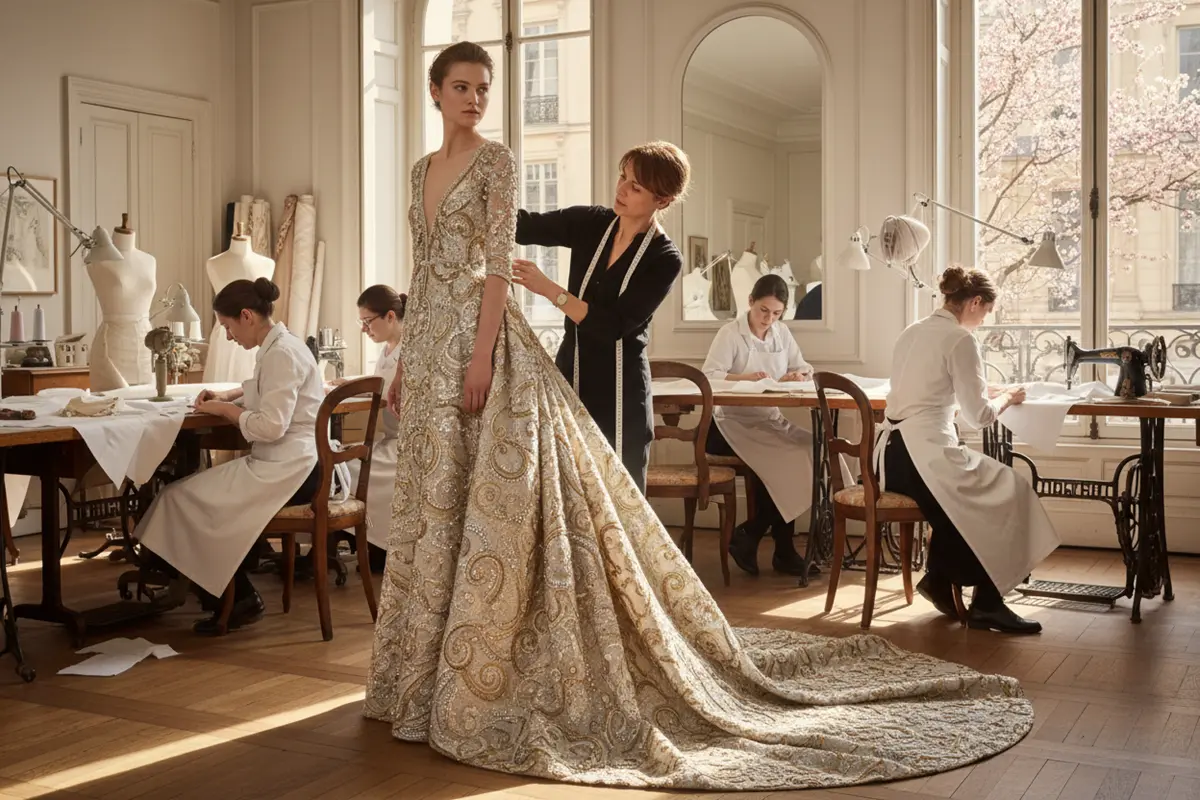
Challenges of Making Custom Dresses at Scale
Scaling custom clothing introduces complexity.
Each custom dress may differ in neckline, sleeves, fabric, or length. Managing these variations without errors requires precise coordination.
Common challenges include:
- Pattern management across many versions
- Maintaining consistent quality
- Controlling price while meeting demand
- Ensuring timely delivery and smooth shipping
Without structured systems, small adjustments can lead to costly mistakes.
How Technology Supports Custom Dress Production
Modern fashion brands rely on digital tools to create scalable custom made models.
3D design software helps teams visualize a dress before cutting fabric. Automated systems adjust patterns instantly. Data analytics track which styles and sizes customers prefer.
Online platforms guide customers step by step, from measurement to checkout. This structured service reduces worries and builds confidence.
Technology also supports transparency. Customers can estimate timelines and understand the cost before confirming their order.
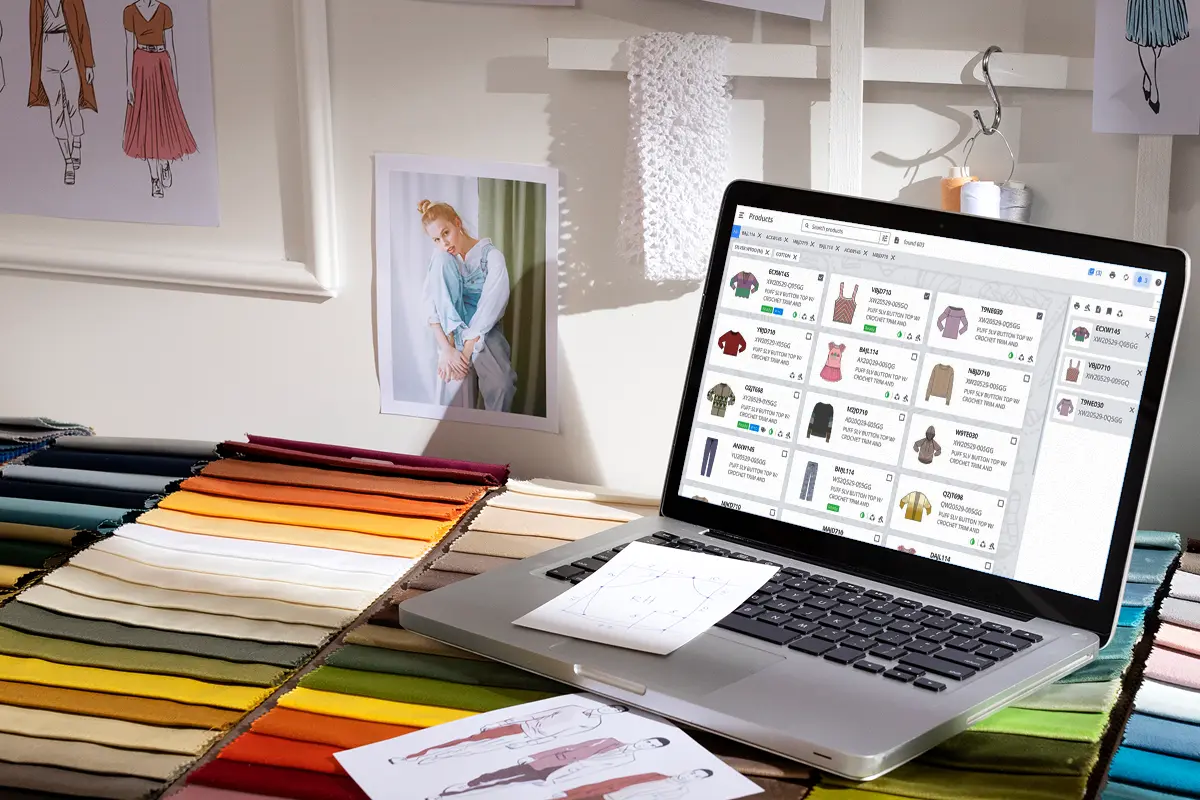
How PLM Enables Scalable Custom Clothing Workflows
When a company decides to make custom dresses, operational clarity becomes essential.
Imagine managing hundreds of variations of one dress. Different fabric options. Adjusted length for petite or tall customers. Multiple neckline and sleeve combinations. Each custom made order changes measurements, material usage, and production planning.
Wave PLM helps fashion teams manage this complexity.
Instead of tracking changes manually, teams use Wave PLM to:
- Centralize dress and style data
- Manage fabric and bill of materials accurately
- Track measurement logic for improved fit
- Coordinate with suppliers and tailor partners
- Maintain consistent quality across every garment
This structured approach protects both price control and production speed. It also ensures that every dress purchased online reflects the original design vision.
Customers may never see the system behind their favorite dress. They only feel the result: impeccable fit, thoughtful details, and a garment that complements their shape.
Wave PLM enables brands to deliver that experience at scale while supporting sustainability and long-term growth.
If you want to learn more about structured fashion development, explore our guide to fashion product development.
Conclusion
The custom dress represents a powerful shift in modern fashion. Women across the world want clothes that fit their life, body, and personal style.
Custom made models allow brands to meet that demand without sacrificing quality or efficiency. With the right systems in place, companies can create scalable custom clothing that feels personal, accessible, and reliable.
From the first measurement to final delivery, customization transforms the experience of buying clothes. Instead of adapting to standard sizes, customers create a dress that fits them perfectly.
That shift defines the future of fashion.
FAQ: Custom Dress Production
Are custom dresses more expensive?
Price depends on fabric, design, and production scale. Many brands now offer custom made dresses at reasonable prices thanks to digital systems.
How do I measure correctly?
Follow brand-specific measurement guides. To start, you can check the general one in our blog. Use a flexible tape measure and double-check each number before submitting.
How long does shipping take?
Production usually takes one to three weeks. Shipping timelines vary by location.
Is custom clothing sustainable?
Yes. Because the garment is produced after it is purchased, brands reduce excess stock and waste.
We hope this guide helps you understand how custom dresses work and why they continue to reshape the fashion world.



Leave a Reply