
Introduction
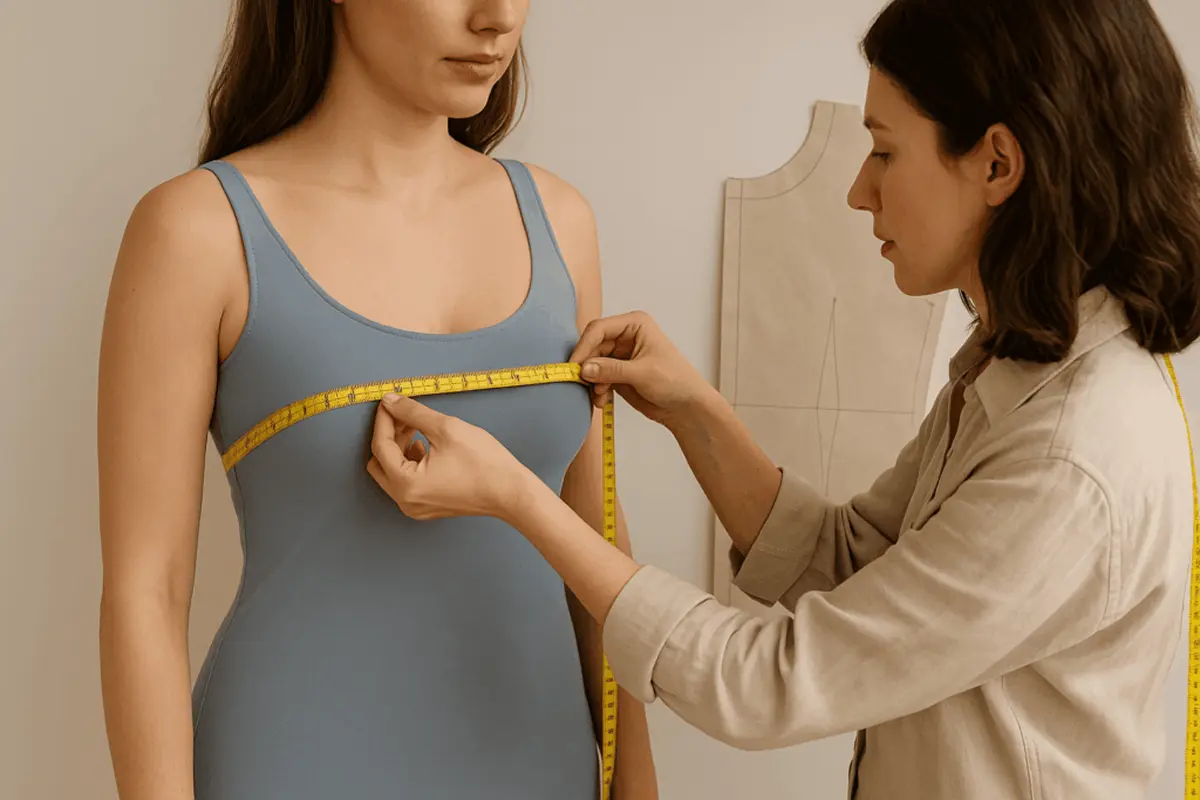
To get a perfect fit, you need the right bust point measurement. The bust point, also called the bust apex, is the highest point of the breast. Knowing how to measure this area correctly helps create better-fitting clothes and supports smart pattern size decisions.
In this guide, we’ll explain how to take bust measurements like apex to apex and shoulder to apex, why these bust adjustments matter, and how to use PLM tools to manage bust data efficiently.
Bust point measurement — including apex to apex measurement, shoulder to apex measurement, and full bust adjustment — is the foundation of great garment fit. Measure with a soft tape while wearing a fitted bra. Use Wave PLM to store, share, and track your fit data digitally so nothing gets lost between design and production.
What Is the Bust Point and Why Does It Matter for Fit?
The bust point is the fullest part of the bust. It’s a key reference when measuring or drafting patterns for dresses, bras, and bodices.
How Do You Measure the Bust Point?
Use a tape to measure from the shoulder down to the nipple (apex). This distance is your shoulder to apex measurement.
The bust point helps place darts, align cups, and set correct strap positions. Ignoring the bust point can cause tight bust areas or sagging tops.
Which Bust Measurements Do You Really Need to Know?
|
Description |
Why It Matters |
|
|---|---|---|
|
Bust Point |
Fullest part of the breast (nipple area) |
Reference for darts, curves, and cups |
|
Apex to Apex |
Horizontal distance from one bust point to the other |
Used in bra and bodice shaping |
|
Shoulder to Apex |
Vertical length from shoulder seam to bust apex |
Aligns neckline, bust shaping, and straps |
|
High Bust Measurement |
Tape around the chest just under the arms |
Needed for accurate bust adjustment |
|
Full Bust |
Measure around the fullest part of the bust |
Base for bust circumference and cup sizing |
|
Bust Circumference |
Tape around the bust at nipple level |
Helps determine correct pattern size |
How Do You Measure Apex to Apex?
Apex to apex measurement is the horizontal distance between the two bust apex points. This measures how far apart the breasts are and affects how darts and cups are placed.
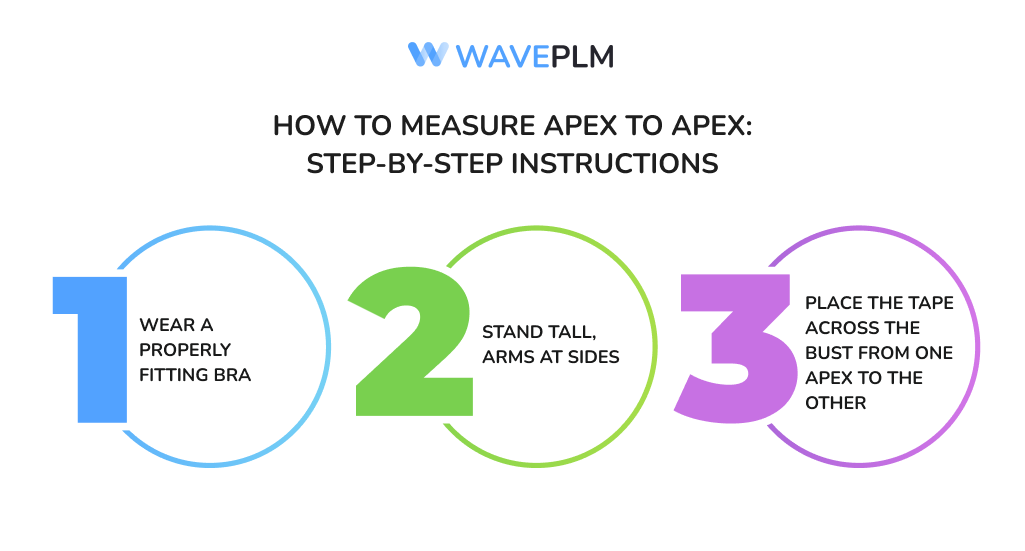
Step-by-Step Instructions
How to measure apex to apex — the horizontal distance between the two bust apex points.
Wear a properly fitting bra
Put on a well-fitting, non-padded bra so the apex points are clearly defined and your measurements will be repeatable.
Stand tall with arms at your sides
Stand upright in a relaxed posture. Keep your arms down so the tape can run straight across the bust without obstruction.
Place the tape from one bust apex to the other
Lay the soft measuring tape horizontally across the bust, with one end on the left apex (nipple) and the other on the right. This horizontal distance is your apex to apex measurement.
Record and cross-check
Note the measurement in centimetres. Measure twice and average the two readings. A typical range is 15–23 cm; wider spacing usually requires wider darts and extra shaping.
This distance is crucial for bust shaping and symmetry. Patterns must match this value for a natural look.
How Do You Measure Shoulder to Apex?
Shoulder to apex measurement helps determine the vertical position of the bust.
Follow These Steps:
How to measure shoulder to apex — the vertical distance from the shoulder seam to the bust apex.
Stand straight in a structured bra
Wear a supportive, non-padded bra and stand with your back straight and shoulders relaxed.
Locate the shoulder seam midpoint
Find the centre point of the shoulder seam — roughly halfway between the neck and the edge of the shoulder.
Measure down to the apex
Hold the tape at the shoulder seam midpoint and run it straight down to the bust apex (nipple). This vertical distance is your shoulder to apex measurement. Typical range: 23–30 cm.
This measurement ensures bust shaping begins at the correct height. Too short or too long? You’ll need a bust adjustment.
What Bust Variations Require a Full Bust Adjustment?
|
Bust Type |
Apex to Apex |
Shoulder to Apex |
Bust Adjustment Needed? |
|
Close-set bust |
15–17 cm |
23–25 cm |
Narrower dart and closer shaping |
|
Standard bust |
18–20 cm |
25–27 cm |
Typical patterns work fine |
|
Wide-set bust |
21–23+ cm |
27–30 cm |
Wider darts and extra shaping needed |
If you feel your top is tight across the chest or gaping at the neckline, you may need a full bust adjustment.
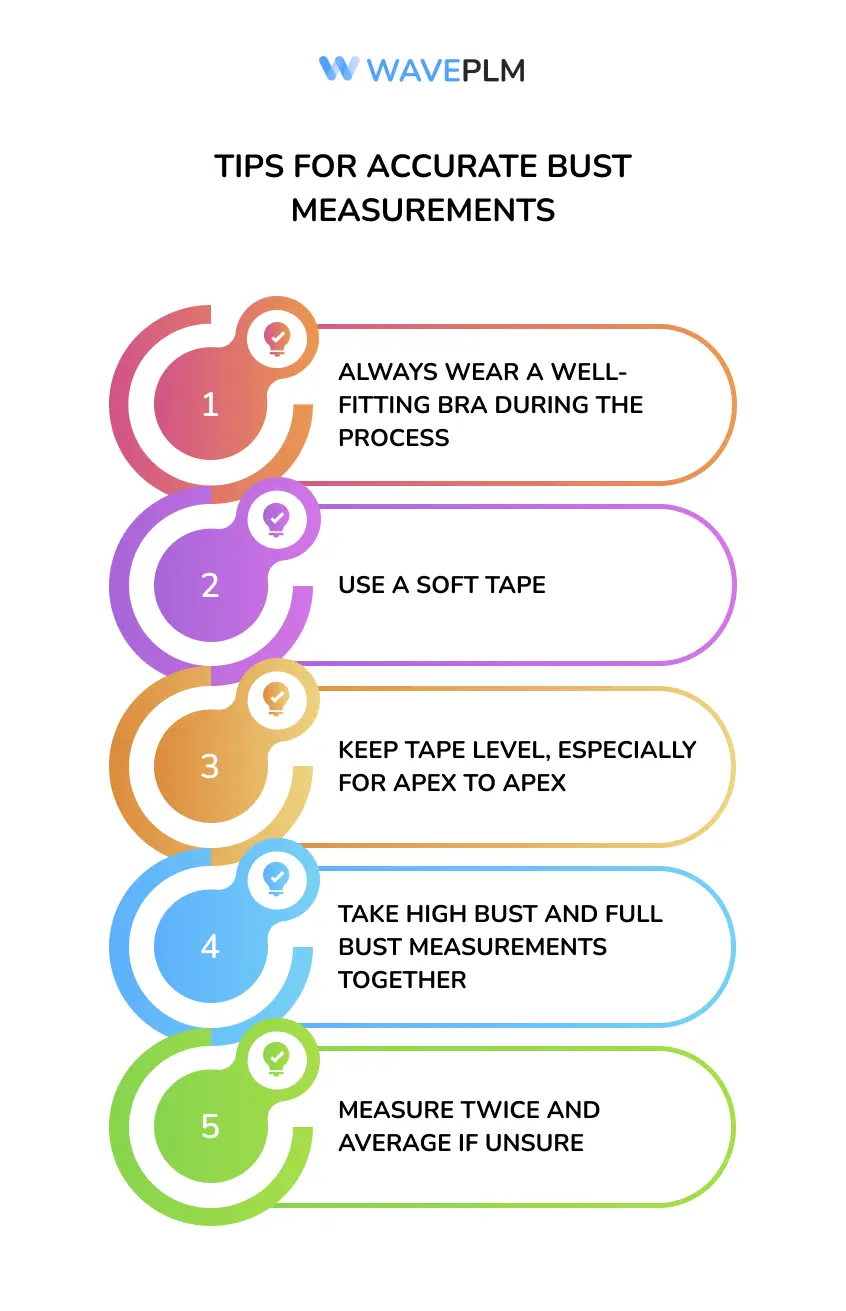
What Are the Best Tips for Accurate Bust Point Measurement?
- Always wear a well-fitting bra during the process.
- Use a soft tape.
- Keep tape level, especially for apex to apex.
- Take high bust and full bust measurements together.
- Measure twice and average if unsure.
Even a difference of just a bit can affect bust area shaping.
How Does PLM Software Help Manage Bust Point Measurement Data?
Digital fashion tools like Wave PLM make bust point measurement easier to manage. Bust data like shoulder to apex and apex to apex can be saved, updated, and shared across teams — explore the Fashion PLM Software Guide to see how fit data fits into the broader product development workflow.
Key Wave PLM Features for Fit Teams
|
Feature |
Benefit |
|
Digital Spec Sheets |
Store bust point and related data centrally |
|
Pattern Blocks |
Adjust pattern size and bust shaping with real data |
|
3D Fit Visualization |
Simulate bust area fit based on apex and bust circumference |
|
Measurement Templates |
Standardize bust, waist, and chest inputs |
|
Fit Revision Logs |
Track bust adjustments and pattern edits |
With PLM, bust adjustments don’t get lost in emails or old PDFs.
What Should a Bust Measurement Template Include?
|
Measurement Name |
Value (cm) |
Notes |
|
Apex to Apex |
18.5 |
Medium size block |
|
Shoulder to Apex |
25.0 |
Based on full bust 92 cm |
|
High Bust Measurement |
88.0 |
Needed for bust adjustment comparison |
|
Bust Circumference |
92.0 |
Taken at the fullest part of bust |
|
Natural Waist |
74.0 |
Helps adjust bodice and skirt length |
Use these values to compare with your patterns and adjust as needed.
When Should You Remeasure Your Bust Point?
- After pregnancy or weight change
- When switching bra styles
- When working with different pattern blocks
- Every 6–12 months for active wearers
Bust location can shift over time—remeasuring keeps your fit accurate.
Bust Measurement Glossary
| Term | Definition |
|---|---|
| Bust Point | The fullest, highest point of the breast (the apex); primary reference for darts, cups, and straps. |
| Apex to Apex | The horizontal distance between the left and right bust apex points; governs dart width and cup spacing. |
| Shoulder to Apex | The vertical distance from the shoulder seam midpoint down to the bust apex; positions bust shaping on the bodice. |
| Full Bust Measurement | Circumference of the chest taken at the fullest part; the baseline for pattern size and cup sizing. |
| High Bust Measurement | Circumference measured just under the arms and above the full bust; used to assess the need for a full bust adjustment. |
| Full Bust Adjustment (FBA) | A pattern alteration that adds fabric in the bust area when the full bust is larger than the drafted size. |
| Bust Circumference | Tape measurement taken around the bust at nipple level; helps determine correct pattern size. |
What is the bust point measurement?
The bust point measurement refers to the location and dimensions of the fullest part of the breast — the apex. Key measurements include the full bust circumference, apex to apex (horizontal distance between bust points), and shoulder to apex (vertical distance from shoulder seam to the apex). Together these determine dart placement, cup shaping, and overall bodice fit.
What is a full bust adjustment (FBA) and when do I need one?
A full bust adjustment (FBA) is a pattern alteration made when your full bust measurement is significantly larger than the size the pattern was drafted for. Signs you need an FBA include pulling or tightness across the chest, gaping at the neckline or armhole, and darts that do not point to your bust apex. An FBA adds extra fabric in the bust area while keeping the rest of the pattern unchanged.
What is the typical apex to apex measurement?
The typical apex to apex measurement ranges from 15 cm (close-set bust) to 23+ cm (wide-set bust), with a standard range of 18–20 cm. The distance determines how far apart darts or cups are placed in a pattern. Always measure your own apex to apex rather than relying on size charts, as individual variation is significant.
How does Wave PLM help manage bust point measurement data?
Wave PLM stores all bust-related measurements — apex to apex, shoulder to apex, high bust, and full bust — in digital spec sheets that are accessible to the entire product team. This means pattern makers, fit technicians, and buyers all work from the same data, reducing fit errors and speeding up the bust adjustment approval process.
How often should I remeasure my bust point?
You should remeasure your bust point every 6–12 months if you are an active garment-maker or consumer, and immediately after significant body changes such as pregnancy, weight change, or switching bra styles. Bust position can shift over time, so keeping measurements current ensures pattern blocks and spec sheets remain accurate.
Ready to Perfect Your Bust Point Measurement?
If you want your garments to fit well, the bust point can’t be a guess. Whether you’re working with darts, seams, or cups, accurate bust measurements define the outcome — and brands that digitise their fit data consistently reduce sample rounds and speed up approvals.
So take your time. Grab your tape. Mark the highest point of the bust. Measure from shoulder to apex. Check the apex to apex line. Compare with your high bust. Then let Wave PLM keep track of it all — storing every bust point measurement in digital spec sheets your whole team can access, update, and use to build better-fitting products faster.
🚀 Manage All Your Fit Data in One Place
Wave PLM gives fashion brands a central hub for bust point measurements, spec sheets, pattern blocks, and fit revision logs. No more lost spreadsheets, version conflicts, or measurement errors between design and factory — just clean, accurate fit data from first sample to final approval.
→ Explore Wave PLM and start managing your measurements digitally
Perfect fit starts with the right point. And that point is the bust point.




Leave a Reply