

The boundary between fashion and technology has never been thinner. Fashion wearable technology — garments and accessories embedded with sensors, data chips, and connected materials — is rapidly moving from niche novelty to mainstream product category. Sportswear brands track athletic performance. Luxury labels embed NFC chips for authentication. Medical-grade fashion wearables monitor the wearer’s heart rate, temperature, and hydration levels throughout the day.
For fashion brands and manufacturers, this convergence creates opportunity and complexity in equal measure. Designing a garment has always required managing hundreds of components, materials, and supplier relationships. Designing a smart garment adds firmware, sensors, battery systems, regulatory compliance, and software updates to that same process. Understanding how wearables and fashion interact — from the design studio to the supply chain — is becoming essential knowledge for any brand that wants to compete in the decade ahead.
Table of Contents
- What Is Fashion Wearable Technology?
- Key Categories of Fashion Wearables
- The Market for Wearables and Fashion
- How Fashion Brands Are Using Wearable Technology
- Smart Fabrics and E-Textiles
- Production Challenges for Fashion Wearable Technology
- How PLM Supports Wearable Fashion Development
- The Future of Fashion and Wearable Technology
- Conclusion
What Is Fashion Wearable Technology?
Fashion wearable technology refers to clothing, accessories, and footwear that incorporate electronic components, sensors, or connected materials designed to collect data, respond to the environment, or provide new functions beyond traditional textile utility. It sits at the intersection of apparel design and consumer electronics — combining aesthetic judgment with hardware engineering.
The category is broad. It includes a fitness-tracking sports bra just as much as a couture dress with embedded LED lighting. What unites these products is that the technology is not just attached to the body — it is integrated into the garment or accessory itself, becoming inseparable from the fashion object.
Fashion wearable technology is any garment, footwear, or accessory in which electronic or digital components form an intentional part of the product’s design, function, or value — rather than being worn separately or clipped on as an afterthought.
This distinction matters for production and product development. A Bluetooth speaker clipped to a jacket is not fashion wearable technology. A jacket with audio transducers woven into the fabric is. The integration creates fundamentally different design and manufacturing requirements — and that difference is where brands often underestimate complexity.
It is also worth noting what fashion wearables are not. Traditional wearables — fitness bands, smartwatches, wireless earbuds — are consumer electronics that happen to be worn on the body. Fashion wearable technology flips the equation: the fashion object comes first, and the technology serves or enhances it. Branding, aesthetics, and silhouette still lead; the electronics follow.
Key Categories of Fashion Wearables
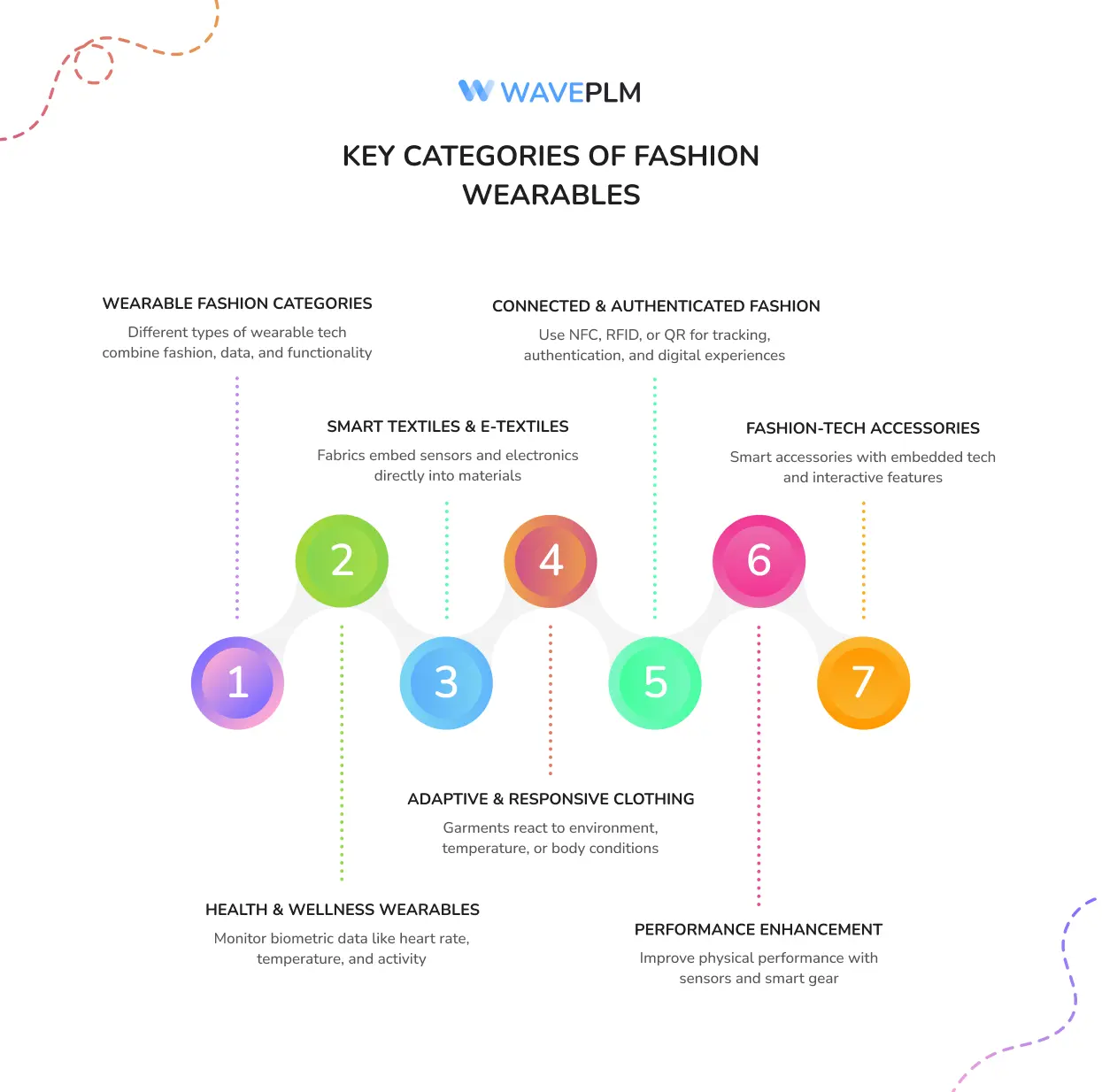
The fashion wearable technology market covers several distinct product types. Each has different technical requirements, target markets, and production complexities.
Health & Wellness Wearables
Garments and accessories that monitor biometric data: heart rate, body temperature, respiratory rate, hydration, UV exposure. Common in sportswear, medical-adjacent apparel, and maternal care clothing.
Smart Textiles & E-Textiles
Fabrics in which conductive fibres, pressure sensors, or temperature-reactive materials are directly woven or printed into the textile substrate. The electronics become the fabric itself.
Adaptive & Responsive Clothing
Garments that change in response to environmental conditions or wearer data — thermoregulating fabrics, photochromic dyes, moisture-activated ventilation panels, and haptic feedback clothing.
Connected & Authenticated Fashion
Apparel and accessories embedded with NFC, RFID, or QR technology for authentication, provenance tracking, and direct-to-consumer digital experiences. Particularly relevant for luxury brands and resale markets.
Performance Enhancement
Athletic wearables designed to enhance physical performance — compression garments with embedded muscle activity sensors, footwear with gait analysis chips, helmets with impact monitoring.
Fashion-Forward Tech Accessories
Smart jewellery, connected handbags, tech-enabled sunglasses, and footwear with embedded displays or lighting. The technology provides a luxury differentiator or interactive element for the consumer.
The Market for Wearables and Fashion
The global market for wearables and fashion technology is growing consistently and shows no signs of slowing. The intersection of these two industries now commands significant investment from sportswear giants, luxury conglomerates, and technology companies alike.
$186B
projected global wearable technology market by 2030
14%
estimated annual growth rate for smart clothing
72%
of Gen Z consumers interested in health-tracking apparel
3x
faster growth in e-textiles vs. consumer electronics wearables
Several macro trends are accelerating the adoption of fashion wearable technology. The wellness economy has made health data tracking a mainstream consumer expectation, not just a niche for athletes. Meanwhile, sustainability goals are pushing brands toward responsive textiles that reduce waste by adapting to conditions rather than requiring separate seasonal purchases. Digital authentication is becoming critical for luxury goods as the secondhand market grows. And personalisation technology is giving brands new ways to offer individual experiences at scale.
For fashion brand managers and product developers, this market context creates a clear strategic question: when and how to integrate wearable technology into product lines, and how to manage the resulting complexity without losing the brand’s design identity.
“The brands succeeding in fashion wearable technology are not the ones who hired the most engineers — they are the ones who kept the fashion vision in command and let the technology serve it.”
How Fashion Brands Are Using Wearable Technology
The ways in which brands integrate fashion wearables into their product strategy vary enormously depending on brand tier, target consumer, and technical ambition. Understanding the spectrum of current applications helps teams position their own development roadmap.
Sportswear and Performance Brands
Sportswear leaders have been the earliest and most consistent adopters of fashion wearable technology. Embedded sensors in compression shorts and sports bras track muscle fatigue, recovery, and movement quality. Smart footwear analyses running gait and pressure distribution. Connected sports jerseys sync performance data to athlete management platforms during training sessions. These products serve a dual function: they generate data that genuinely improves athletic performance, and they reinforce the brand’s positioning as a technology leader in the sports category.

Luxury and Premium Brands
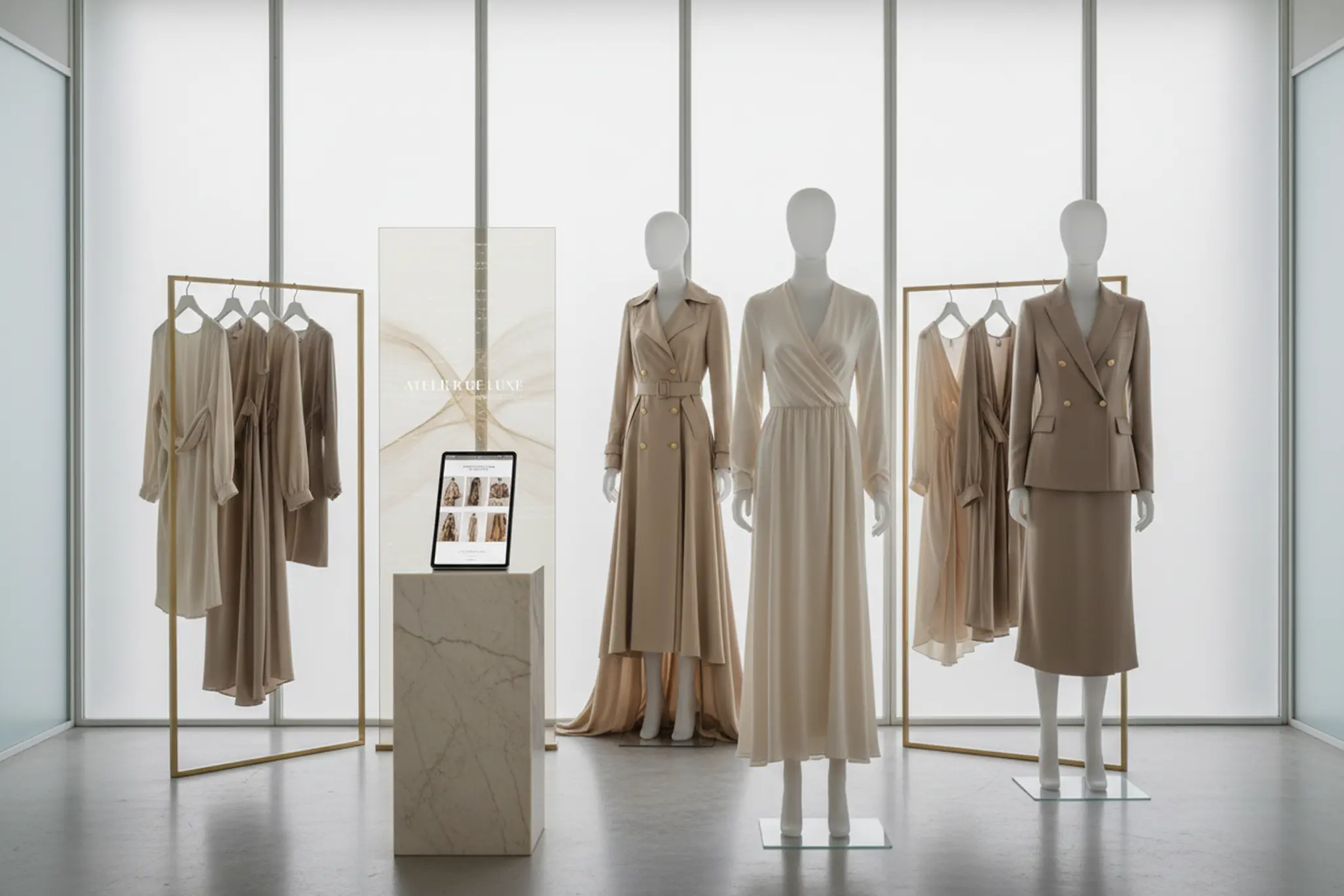
In the luxury sector, wearables and fashion intersect most prominently in authentication and provenance. NFC chips embedded in handbag linings or sewn into garment tags allow consumers to verify authenticity with a smartphone scan, access the product’s full supply chain story, and register ownership in a digital ledger. This technology directly combats counterfeiting while also creating a digital relationship between the brand and the consumer — something luxury brands have historically struggled to achieve.
Some luxury houses have also experimented with couture technology pieces — garments with embedded LED arrays, photosensitive materials, or haptic elements. These function primarily as brand statement pieces and runway spectaculars rather than commercial lines, but they drive media attention and establish the brand’s identity as a creative innovator.
Mainstream and Mass Market
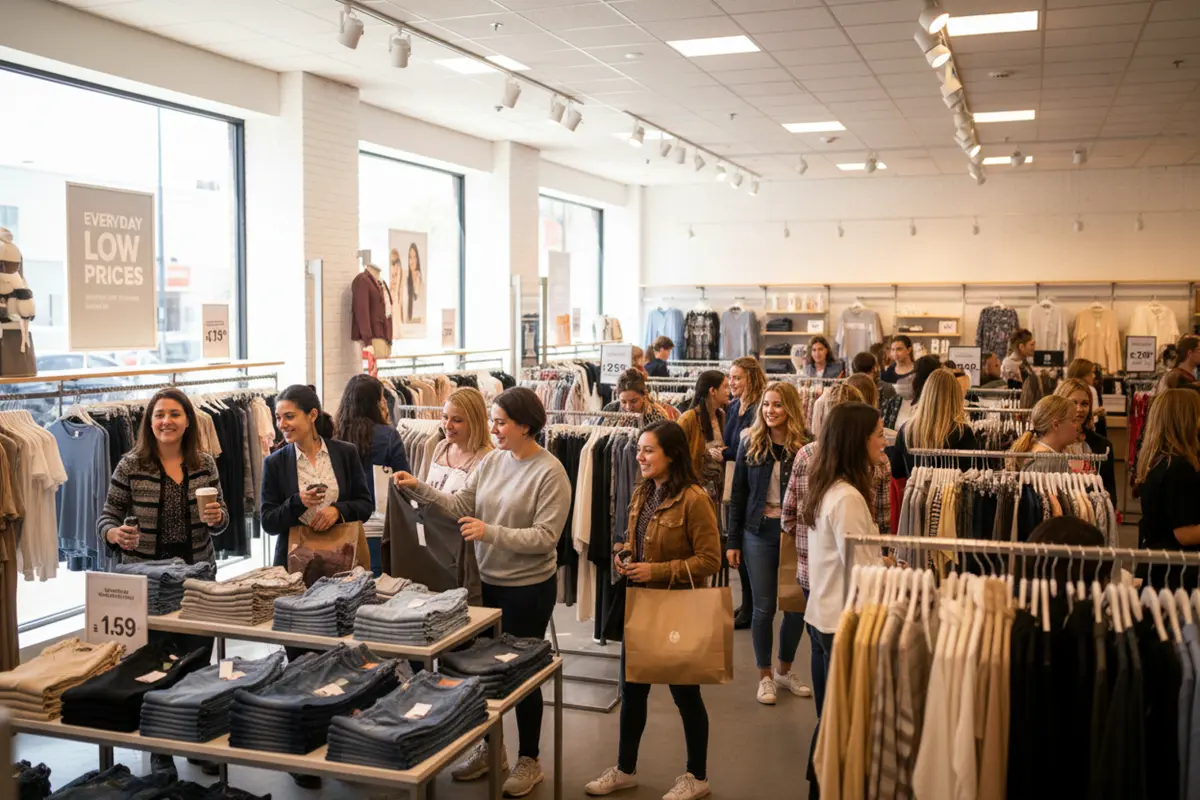
In the mass market, the most commercially viable forms of fashion wearable technology are the subtlest ones. UV-protective activewear with real-time sun exposure monitoring, thermoregulating base layers, antimicrobial smart fabrics, and posture-correcting undergarments represent practical, accessible technology that consumers can adopt without significant behaviour change. These products also require less complex supply chains than sensor-heavy connected garments, making them achievable for mid-market brands with standard manufacturing relationships.
Smart Fabrics and E-Textiles: The Core Material Innovation
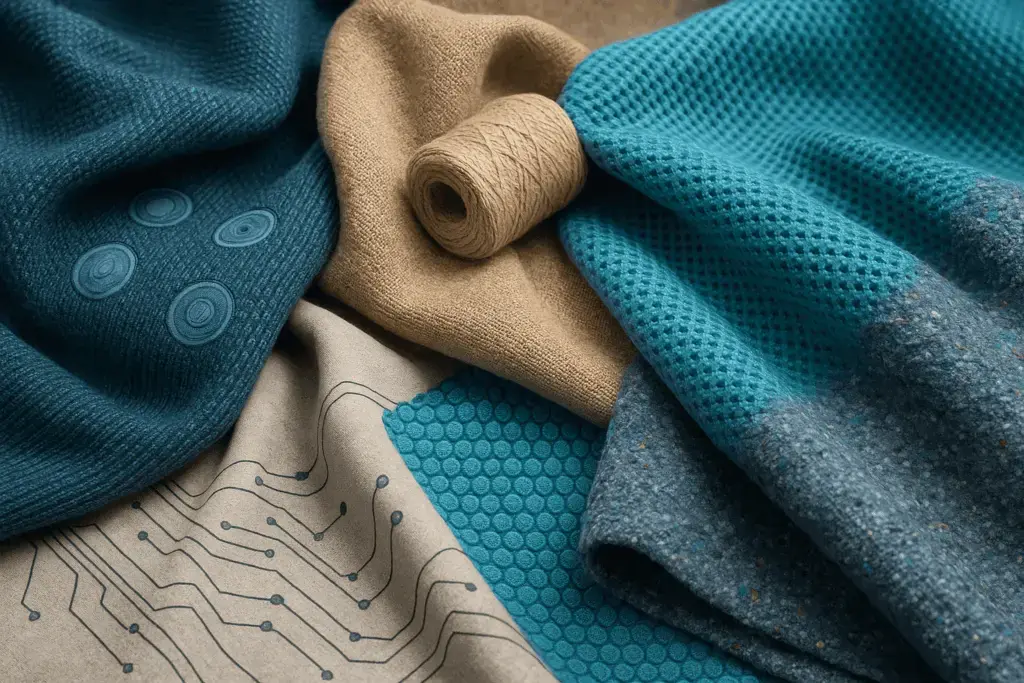
At the heart of most fashion wearable technology development sits a fundamental materials challenge. Traditional electronics are rigid, brittle, and heat-generating — none of which is compatible with comfortable wearable fashion. The field of e-textiles and smart fabrics addresses this directly, developing flexible, washable, and body-conforming materials that can perform electronic functions.
Several material innovations are currently reshaping what is possible in fashion wearables. Conductive yarns woven with silver or carbon fibres allow garments to carry electrical signals without visible wiring. Piezoelectric fabrics generate small electrical charges from movement, enabling garments that harvest energy from the wearer’s activity. Phase-change materials embedded in fibre cores store and release heat, creating genuinely thermoregulating textiles. Chromic dyes change colour in response to temperature, light, or electrical signals — enabling garments that visually adapt to their environment.
The washing challenge remains one of the most significant practical barriers in the industry. Electronic components embedded in garments must survive repeated washing cycles — a requirement that eliminates most conventional electronics and demands purpose-built encapsulation, waterproofing, and connector design. Brands that have solved this problem gain a significant competitive advantage, since washability is non-negotiable for mainstream consumer adoption.
For product development teams, smart fabrics introduce a new category of supplier relationships and material testing requirements. The standard fabric swatch and physical sample approval process is not sufficient for materials that carry electrical functions. Testing must validate both the textile performance and the electronic performance — including resistance, signal integrity, and durability through washing, stretching, and UV exposure cycles.
This connects directly to the broader product development workflow discussed in our article on design development in fashion — where managing material specifications and supplier sign-off becomes even more complex when those materials have embedded technical requirements.
Production Challenges for Fashion Wearable Technology
Developing and manufacturing fashion wearable technology products introduces challenges that conventional fashion production never encounters. Teams that approach these products with a standard apparel development process quickly discover that the timelines, supplier networks, and approval workflows must be substantially rebuilt.
| Challenge Area | Conventional Apparel | Fashion Wearable Technology |
|---|---|---|
| Material sourcing | Fabric mills, trim suppliers, standard commodity materials | Conductive fabric specialists, sensor manufacturers, battery suppliers, chip vendors — often in separate supply chains |
| Bill of materials | Fabrics, threads, zippers, labels, packaging | All of the above plus electronic components, firmware versions, certified connectors, encapsulation materials |
| Regulatory compliance | Chemical composition, labelling, country-of-origin | All of the above plus CE/FCC/radio frequency certification, medical device regulations (where applicable), battery transport restrictions |
| Sample approval | Visual, fit, and tactile assessment; wash testing | All of the above plus electronic function testing, waterproofing validation, EMF compliance testing, user interface review |
| Factory requirements | Standard CMT or full-package garment factories | Factories with electronics integration capability or partnerships between apparel factories and EMS providers |
| Product updates | Seasonal collections; physical product is final at sale | Firmware updates possible (and sometimes required) post-sale; software lifecycle outlasts physical product |
The supply chain complexity of wearables and fashion products often catches brands off-guard. Managing two parallel supply chains — one for the apparel components, one for the electronics — requires coordination infrastructure that most fashion companies have not built. This is explored in depth in our piece on clothing supply chain issues and the fashion value chain.
Brand management becomes more complex too, because the product experience now includes a software or app layer that must be consistently maintained and aligned with the brand’s quality promise. A luxury smart garment with a poorly designed companion app contradicts the brand’s core value proposition. Our article on brand management in fashion covers how brands maintain consistency across an increasingly complex product ecosystem.
Managing Complexity with PLM
The bill of materials for a single fashion wearable product can include fifty or more components spanning two entirely different industries. Without a structured system for managing this information, product development teams lose visibility and introduce costly errors.
A well-structured BOM is the foundation. Understanding how to build and manage a BOM table in fashion production becomes especially important when electronics are added to the component list — each chip, sensor, and firmware version needs to be tracked with the same rigour as fabrics and trims.
Wave PLM’s platform supports this expanded product complexity, giving fashion brands a single environment in which apparel specifications, electronic component details, supplier information, and compliance documentation can all be managed together — rather than split between separate fashion and electronics tools that rarely talk to each other.

How PLM Supports Wearable Fashion Development
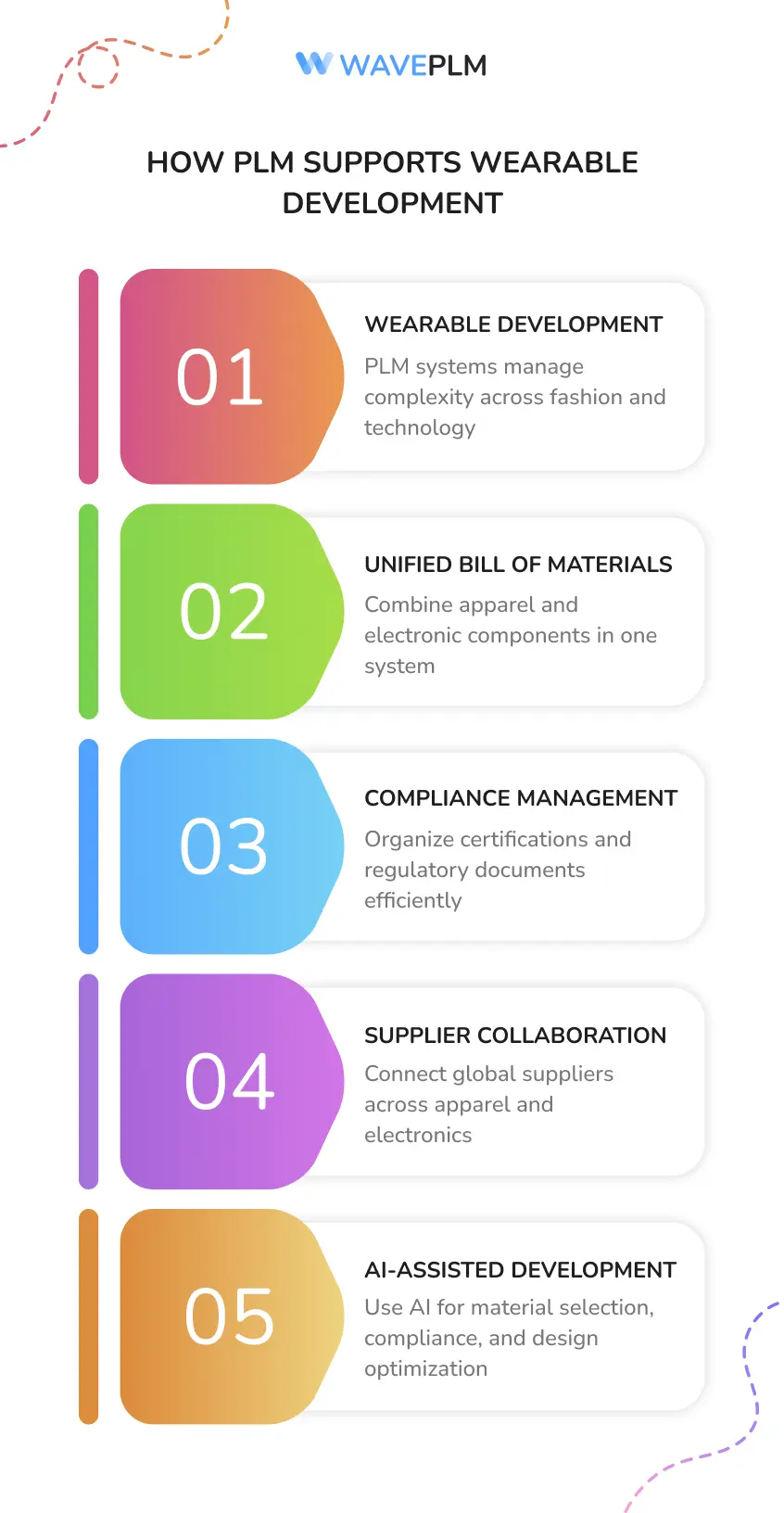
Product Lifecycle Management (PLM) software plays a critical role in making fashion wearable technology development manageable. Without it, the dual complexity of apparel and electronics typically results in scattered data, delayed approvals, and expensive late-stage corrections.
There are several specific areas where PLM adds the most value in a wearables development context.
Unified Bill of Materials
The BOM for a smart garment must capture both the apparel components (fabrics, trims, labels) and the electronic components (sensors, chips, batteries, connectors). In most organisations without PLM, these two BOMs live in separate systems — often maintained by entirely separate teams. This creates version control problems, delays cost calculations, and makes it difficult to assess the impact of a component change on the overall product.
A fashion PLM that supports multi-component product structures allows the full smart garment BOM to be managed in one place, with clear relationships between the apparel and electronic elements. Changes to a component automatically propagate to cost calculations and supplier communications.
Compliance Documentation Management
Regulatory compliance for fashion wearables spans multiple certification bodies and product categories. Keeping compliance documentation organised and linked to specific product versions is a major administrative burden if managed manually. PLM systems that support document management allow compliance certificates to be attached directly to the relevant product version and component — making audit preparation and regulatory submissions substantially faster.
Supplier Collaboration
Fashion wearable technology development typically involves a larger and more diverse supplier base than conventional apparel. Coordinating spec approvals, sample feedback, and production schedules across apparel suppliers and electronics manufacturers — often in different countries and time zones — creates significant communication overhead. A PLM connector approach, as explored in our guide to PLM integration, allows brands to extend their PLM workflow to include these diverse supplier relationships without requiring each supplier to adopt a new tool.
AI-Assisted Development
As brands invest in fashion wearable technology, the role of AI in the development process is growing in parallel. AI tools are now capable of assisting with smart fabric material selection, predicting regulatory compliance risks, and optimising sensor placement for comfort and accuracy. Our coverage of AI in the apparel industry maps out how these tools are integrating into production workflows — a trend that is particularly relevant for wearable development teams.
The Future of Fashion and Wearable Technology
The trajectory of fashion and wearable technology points toward deeper integration, higher miniaturisation, and more seamless consumer experiences. Several developments on the near-term horizon will shape how brands approach this category over the next five years.
Biometric Data and Personalisation
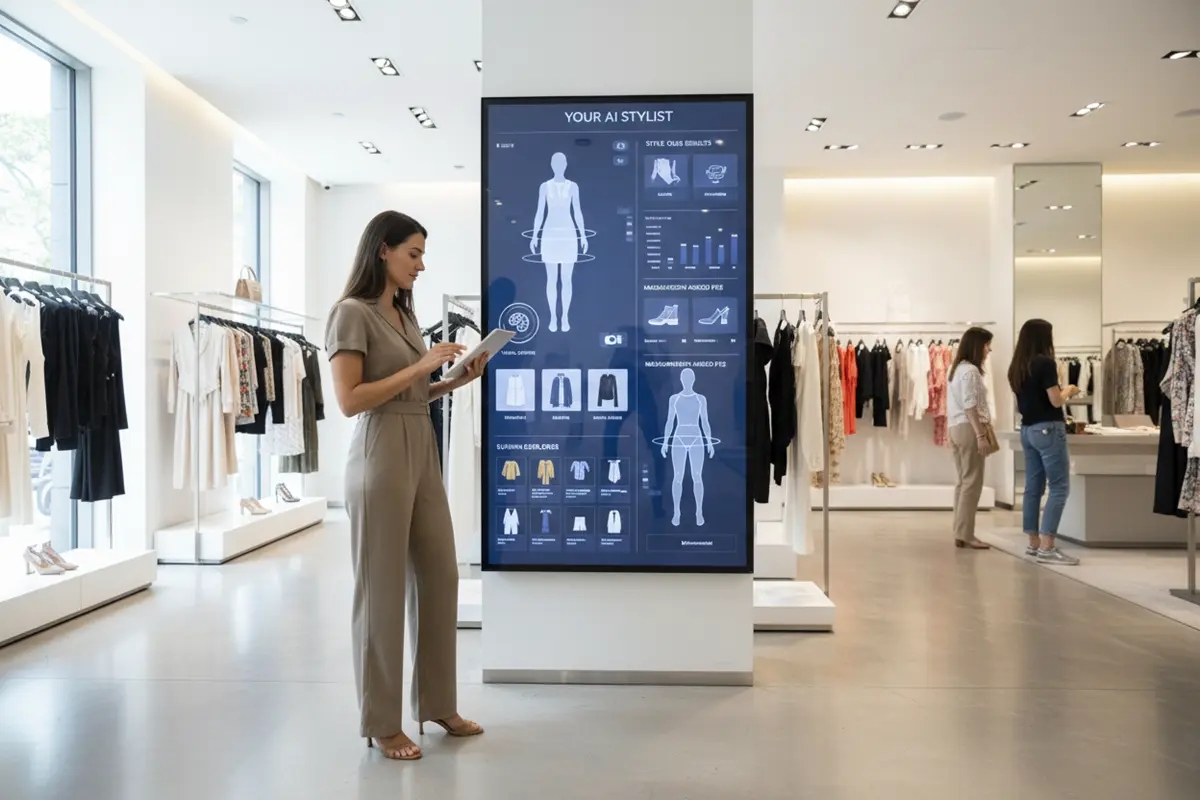
As sensors become smaller and more power-efficient, the range of biometric data that fashion wearables can capture is expanding rapidly. Beyond heart rate and steps, next-generation smart garments are being developed to monitor blood glucose levels, cortisol (a stress biomarker), hydration through sweat analysis, and even early markers of illness through body temperature patterns. Brands that own this data and can use it to personalise the product experience — recommending specific garment combinations, adjusting fit recommendations, or triggering adaptive material responses — will have a significant consumer loyalty advantage.
Sustainable Smart Materials
The sustainability challenge in fashion wearable technology is acute. Electronic components are difficult to recycle, particularly when embedded in textiles. Battery disposal creates additional environmental concerns. The industry is actively developing biodegradable electronics, plant-based conductive materials, and modular smart garment architectures that allow the electronic component to be removed and repaired separately from the textile — extending both the garment’s and the component’s useful life.
Closed-Loop Fashion Systems
Smart garments with embedded product passports are already enabling new resale and rental business models. As wearables and fashion converge further, the embedded technology in a garment will carry its full lifecycle history — ownership records, wear data, care instructions, and end-of-life disassembly instructions — all accessible via a simple scan. This creates genuine circular economy infrastructure for fashion, something that has been difficult to implement with passive garments.
Integration with Digital Fashion
The boundary between physical fashion wearables and digital fashion is beginning to blur. Garments with embedded displays or dynamic colour-changing materials become canvases for digital expressions — personalised or updated remotely through a connected app. Physical fashion items are already being sold with paired digital twins for use in virtual environments. As these two markets mature together, fashion wearable technology will become the physical anchor for a broader digital-physical fashion experience.

Conclusion
Fashion and wearable technology are no longer separate industries moving on parallel tracks. They are converging into a single product category that demands creative direction, engineering capability, supply chain sophistication, and regulatory expertise simultaneously. Brands that navigate this convergence successfully will build product experiences that no purely traditional or purely technical competitor can replicate.
The keys to that success are consistent across brand tier and product type. Keep the fashion vision in command. Invest early in the supply chain relationships and tools needed to manage electronic and apparel components together. Use data rigorously — both to develop better products and to deliver better consumer experiences. And build the internal processes to manage a product that does not stop changing when it leaves the factory.
For fashion brands thinking through how to manage this complexity in practice, the infrastructure question is as important as the design question. Understanding your full value chain, structuring your BOM for complex products, and leveraging AI tools in your apparel workflow are all steps that pay dividends well before your first smart garment ships.
Managing a Wearable Tech Fashion Line?
Wave PLM helps fashion brands manage complex product development — including wearables with electronic components — in one connected platform. From BOM to supplier collaboration to compliance documentation. Explore Wave PLM →



Leave a Reply