
Introduction
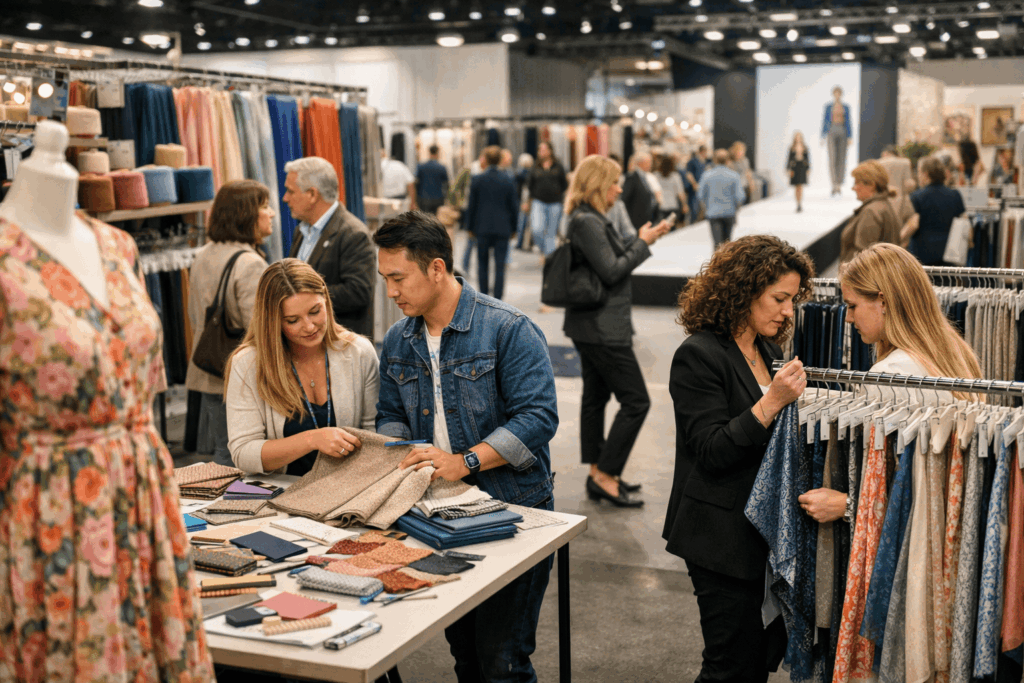
Every season, thousands of fashion designers, brand managers, and sourcing directors travel to major cities for one reason: to discover the future of fabric. A textile trade show is one of the most powerful events a fashion business can attend. Mills, suppliers, distributors, and brands gather in one focused environment. Innovation, negotiation, and trend discovery happen all at once.
For brands building collections on tight timelines, fabric and textile trade shows are not optional networking events. They are a core part of the fashion supply chain. Trade fairs accelerate sourcing decisions dramatically. Evaluating new finishes, textures, and sustainable materials in one place beats months of back-and-forth emails with mills across multiple continents.
This guide covers what a textile trade show is and which events matter most. You will also learn what to prepare before attending and how to turn show floor discoveries into structured product development.
Introduction to the Sewn Products Industry
The sewn products industry is a cornerstone of global textiles. It covers everything from apparel and accessories to home textiles. Textile professionals, fashion brands, and industry leaders all collaborate to bring innovative fabrics and collections to market. This dynamic sector moves fast and rewards those who stay connected.
Sustainable fabrics are now a top priority. Consumer demand is rising. Regulatory pressure is growing. International suppliers and key industry players are driving rapid change in how materials are sourced and developed.
The sewn products industry runs on coordination. Suppliers, manufacturers, and brands must work in sync across complex, multi-country supply chains. This makes networking and knowledge-sharing at trade shows essential — not just useful. Businesses that connect with global leaders and track the latest innovations are best placed to shape the future of fashion, fabrics, and textiles.
What Is a Textile Trade Show?
A textile trade show (also called a fabric trade fair or fabric trade show) is a business-to-business exhibition where fabric mills, material suppliers, yarn producers, and accessory manufacturers present their latest collections to fashion brands and manufacturers.
Unlike consumer-facing fashion events, these shows are strictly trade. Attendance is typically reserved for verified industry professionals: designers, merchandisers, technical developers, and sourcing managers. The goal is not to sell finished garments — it is to find the raw materials and components that will eventually become them.
Textile trade fairs are held on seasonal schedules, typically twice a year, aligned with the fashion calendar for Spring/Summer and Autumn/Winter collections. Some fairs focus on specific sectors such as denim, luxury, sportswear, or sustainable textiles, while others serve a broader audience.
Types of Trade Shows
Trade shows are a vital part of the textile industry ecosystem, offering unparalleled opportunities for industry stakeholders, textile professionals, and fashion professionals to connect, network, and stay ahead of the latest trends. These events come in various forms, each tailored to specific product categories and decision makers.
Textile trade shows focus on raw materials, innovative fabrics, and sustainable solutions, making them the ultimate destination for those seeking to discover the next big thing in textiles. Apparel trade shows cater to finished garments and ready-to-wear collections, providing direct access to industry experts and new markets. Accessories trade shows highlight the latest in trims, fasteners, and embellishments, rounding out the full spectrum of soft goods.
Premier events like Texworld New York and specialized shows such as Advanced Textiles Expo offer a curated selection of materials and solutions, enabling attendees to explore the latest developments and make informed business decisions. On the show floor, buyers and exhibitors can connect with key players, discover trend presentations, and gain insights into the future of the industry. Whether you’re looking to expand your network, source innovative materials, or explore new markets, trade shows are the go-to platform for staying informed and competitive in the textile industry.
Why Textile Trade Shows Matter for Fashion Brands
Attending a fabric trade show is one of the most efficient ways a brand can move through the sourcing phase of design development in fashion. Here is what makes them irreplaceable:
Trend intelligence in real time.
Trade fairs present fabric trends one to two seasons ahead of retail. Trend forecasting agencies often preview their direction at major shows, and mill collections reflect upcoming aesthetics before any trend report has been published.
Access to qualified suppliers.
Every exhibiting mill has already passed a basic qualification to participate. This speeds up supplier vetting compared to cold outreach.
Material evaluation in person.
You cannot fully assess fabric from a swatch card. At a fabric trade show, you can touch, drape, and test materials across hundreds of suppliers in a single venue. This tactile evaluation is difficult to replicate digitally.
Negotiation and relationship building.
The most valuable meetings at trade fairs are not at booths — they happen in the aisles, at side events, and over dinner. Relationships built at fabric and textile trade shows often define sourcing partnerships for years. Trade shows serve as a central hub where designers, manufacturers, and buyers—including retailers—can engage with the entire industry’s value chain. They are also strategic opportunities for brands to connect with new retail partners and elevate their wholesale business.
Competitive intelligence.
You will see what your competitors are likely sourcing. Understanding which materials are receiving high traffic helps you avoid trends that will become oversaturated.
The World’s Most Important Fabric and Textile Trade Fairs
Première Vision Paris
Première Vision is the most prestigious fabric trade fair in the world. Held twice a year in Paris, it presents fabrics, yarns, leathers, designs, and manufacturing capabilities under one roof. For luxury and contemporary brands, PV Paris sets the seasonal direction.
Key sections include Weaving, Leather, Yarn, Designs & Manufacturing, and Smart Creation (focused on sustainability and innovation). The show attracts over 50,000 visitors from more than 100 countries.
Best for: Womenswear, menswear, luxury, contemporary, and sustainable fabric sourcing.
Texworld Paris
Texworld is a large-scale fabric trade show in Paris targeting mid-market and mass-market brands alongside designers looking for accessible sourcing options. It runs in parallel with Apparel Sourcing Paris, which extends coverage into garment manufacturing.
Texworld is known for its broad international exhibitor base, particularly from Asia and Turkey, making it excellent for sourcing at competitive price points.
Best for: Mid-market brands, private label sourcing, cost-effective fabric development.
Texworld USA (New York)
Texworld USA brings the same format to New York, making it accessible for American brands without the cost of a Paris trip. Texworld New York is held biannually in New York City. The event connects global textile manufacturers, fabric sourcing companies, and sustainable fabric suppliers with buyers from across the U.S. market. It features a wide range of companies as exhibitors and participants, showcasing products, technological innovations, and sourcing options. It runs alongside Apparel Sourcing USA and Home Textiles Sourcing, covering the full material and production supply chain in a single event.
Best for: US-based brands, brands with North American manufacturing focus.
Munich Fabric Start
Munich Fabric Start is a leading textile trade show in Europe, known for its strong sustainability credentials, curated exhibitor selection, and focused atmosphere. The show is smaller than Première Vision but frequently cited as more focused and productive for buyers who know what they need.
The Bluezone hall within the same event is one of the world’s top destinations for denim fabric sourcing.
Best for: European brands, sustainable textile sourcing, denim, sportswear.
Intertextile Shanghai
Intertextile Shanghai Apparel Fabrics is the largest fabric trade fair in Asia and one of the biggest globally by exhibitor count. It covers apparel fabrics and accessories and runs twice a year in Shanghai.
For brands manufacturing in Asia, attending this show is essential. It also provides access to China’s textile innovation ecosystem, which is advancing rapidly in performance fabrics and sustainable production.
Best for: Brands with Asian manufacturing partners, performance wear, volume sourcing.
Denim by PV
Dedicated entirely to denim, this fabric trade fair is part of the Première Vision group and focuses on denim fabrics, finishes, and innovation. As denim remains a high-volume category for most fashion brands, Denim by PV provides focused access to the most innovative mills in this segment.
Best for: Denim brands, casual wear, streetwear.
Heimtextil Frankfurt
Heimtextil is the world’s leading trade fair for home and contract textiles. While not an apparel trade show, it is essential for brands that span apparel and interiors, or for those sourcing technical textiles and fabric innovations that cross categories.
Best for: Home textiles, interior design, technical and performance fabrics.
Choosing the Right Trade Show
Selecting the right trade show is a strategic decision. The wrong choice wastes budget and time. The right one can open new supplier relationships and shape your business direction for seasons to come.
Start by evaluating the event’s focus. Does it specialize in innovative fabrics, sustainable solutions, or a specific segment like women’s apparel or performance wear? Next, consider who attends. The mix of suppliers, buyers, and brands in the room determines the quality of your conversations. Location and size matter too. Larger shows offer broader exposure. Niche events deliver more targeted networking.
Two examples illustrate this well. A brand breaking into women’s apparel might prioritize Coterie, known for its contemporary fashion focus. A company hunting for cutting-edge materials could get more from Texworld Los Angeles, renowned for fabric innovation. Matching the show to your goals — not just your calendar — is what separates productive trips from expensive ones.
How to Prepare for a Textile Trade Show
Attending a fabric trade show without preparation is a fast way to waste a significant travel budget. The brands that extract real value treat each show as a structured sourcing event, not a browsing session. Effective pre-show planning is crucial to maximize your trade show experience and achieve your business goals.
Step 1 — Define your material brief before you arrive. Know what you are looking for: fiber content, fabric weight range, construction, color direction, certifications (GOTS, OEKO-TEX, Bluesign), and price target. Without this brief, you will spend time being impressed by beautiful fabrics that do not fit your collection.
Step 2 — Create tangible KPIs to benchmark success. Creating clear, measurable KPIs before the show helps you evaluate whether your objectives were met and if the event was a worthwhile investment.
Step 3 — Research exhibitors in advance. Every major textile trade show publishes its exhibitor list online before the event opens. Creating a shortlist of exhibitors, mapping out priorities, and booking appointments with key mills before you travel will maximize your efficiency.
Step 4 — Bring your tech pack references. If you are sourcing fabrics to develop specific styles, bring your BOM (bill of materials) references. This helps mill representatives understand exactly what you need and reduces back-and-forth after the show.
Step 5 — Plan your days by hall and category. Fabric and textile trade shows are large. Walking every aisle without a plan leads to exhaustion and poor notes. Map your route by category: first morning for key appointments, afternoons for discovery.
Step 6 — Document everything systematically. Collect swatches, business cards, and pricing sheets in a consistent format. You will forget 70% of what you saw by day three if you rely on memory alone.
Trade Show Networking Strategies
Networking is at the heart of every successful trade show experience in the textile industry. Building strong relationships with industry stakeholders and key industry players can open doors to new opportunities, insights, and collaborations. To maximize your impact, it’s essential to approach networking with a clear strategy.
Begin with thorough pre-show research to identify exhibitors, trend presentations, and seminars that align with your business goals. Reach out to potential partners and schedule meetings in advance to ensure meaningful in-person engagement. On the show floor, actively participate in networking events, receptions, and educational sessions to connect with industry experts and stay informed about the latest trends.
Don’t overlook the power of digital tools—B2B marketplaces and social media platforms can help you extend your reach, maintain connections, and continue conversations long after the event ends. By combining targeted outreach, active participation, and digital engagement, you can build a robust network, stay ahead of industry trends, and drive growth for your textile business.
Digital B2B Catalogs and Marketplaces
The rise of digital B2B catalogs and marketplaces is transforming how the textile industry sources materials, connects with suppliers, and discovers innovative fabrics. These online platforms provide a curated selection of sustainable solutions, performance-driven materials, and the latest trends, making it easier than ever for buyers and suppliers to connect and conduct business efficiently.
By leveraging digital marketplaces, businesses gain direct access to industry experts and a global network of suppliers, enabling them to stay ahead in a rapidly evolving market. Platforms like JOOR and Advanced Textiles Expo offer streamlined sourcing solutions, allowing users to explore new materials, compare options, and make informed decisions from anywhere in the world.
Digital B2B catalogs also enhance transparency and accessibility, reducing costs and increasing efficiency for textile professionals and industry stakeholders. Whether you’re searching for innovative fabrics, sustainable materials, or new market opportunities, these platforms are essential tools for staying competitive and connected in the modern textile industry.
After the Show: From Swatches to Samples
The work does not end when the show closes. In fact, the real challenge begins once you return: converting a bag full of swatches, pricing sheets, and supplier contacts into an organized sourcing pipeline. Post-show follow-up is essential to maintain momentum and convert new connections into valuable business partnerships.
This is where many brands lose value. The material brief and fabric decisions made at the show must be fed back into the product development process quickly and accurately. For example, delays in this handoff push back sampling timelines and compress production windows. Effective post-show processes not only keep your sourcing organized but also help drive future sales by leveraging new contacts and opportunities made at the textile trade show.
A structured approach includes:
- Uploading swatch images and supplier contacts to your development system immediately after the show
- Assigning materials to specific styles in your seasonal plan
- Requesting lab dips and strike-offs within the first week
- Tracking approval status across materials in one place
For teams managing multiple collections, this is the point where PLM software becomes essential. A fashion PLM system centralizes all material data — fabric codes, supplier contacts, compliance documents, colorways, and approval status — in a single platform. Every team member sees the same information, eliminating the version control problems that occur when sourcing teams use spreadsheets and email.
Sustainability at Fabric Trade Shows
Sustainability is no longer a niche section at a textile trade fair — it has become a primary lens through which buyers evaluate everything they see. Major shows now dedicate significant floor space and programming to sustainable textiles, with exhibitors showcasing innovations in recycled fibers, biodegradable treatments, low-water dyeing processes, and regenerative agriculture-linked materials.
Certifications to look for at any fabric trade show include:
- GOTS (Global Organic Textile Standard) — certified organic fiber and processing
- OEKO-TEX Standard 100 — tested for harmful substances
- Bluesign — certified resource-efficient and responsible manufacturing
- GRS (Global Recycled Standard) — certified recycled content
- Cradle to Cradle — circular design certification
Many textile trade shows also offer education through workshops and educational sessions on topics such as sustainability and technology.
As brands face increasing pressure from regulation and consumer expectation, the sourcing decisions made at fabric and textile trade shows are now sustainability decisions as well. The materials you commit to at the fair will define your brand’s environmental footprint for that season.
This is also connected to the broader challenge of managing a fashion supply chain responsibly — from fiber origin through to consumer delivery.
Trade Shows and Market Research in Fashion
Textile trade fairs are among the most valuable tools available for fashion market research. When you walk the halls of Première Vision or Munich Fabric Start, you are observing the direction the entire industry is moving in — fiber preferences, color stories, texture innovation, and finishing technology.
Trade shows also showcase upcoming colors, textures, and silhouettes before they become mainstream. Fashion and interior designers attend textile trade shows to seek inspiration and specific materials for their projects. Ready-to-wear collections for women are a key focus area for market research at these events.
Smart brands build this observation into a formal market research in fashion process. This means sending the same person across multiple shows within a season, maintaining trend journals across years, and comparing your findings against your actual sell-through data from previous collections. Over time, this builds institutional knowledge about which fabric trends translate into commercial success and which remain aspirational.
Key Questions to Ask at a Fabric Trade Show
When visiting mill booths, come prepared with specific questions that help you evaluate whether a supplier is the right fit:
- What is the minimum order quantity (MOQ) for this fabric?
- What lead time should I expect from order to delivery?
- Which certifications does this fabric or your mill hold?
- Can you provide fabric swatches and price per meter for a sample order?
- What finishing options are available (washing, coating, printing)?
- Do you work with brands at my volume level, and do you have references?
- How do you handle quality control and what is your claims process?
These conversations are also the foundation of supplier relationships that extend far beyond any single trade show. Mills that answer these questions clearly, confidently, and with documentation are typically strong sourcing partners.
Conclusion
A textile trade show is far more than an exhibition. It is a seasonal intelligence event, a sourcing engine, and a relationship-building platform rolled into one. For fashion brands serious about product quality and supply chain resilience, attending the right fabric and textile trade fairs is a competitive advantage — not an optional expense.
The brands that use trade shows most effectively are not necessarily the largest. And these ones are the most prepared. They arrive with clear briefs, ask the right questions, document rigorously, and have systems in place to translate show discoveries into production-ready material decisions.
Whether you are attending Première Vision for the first time or optimizing your approach to Intertextile Shanghai, the principles are the same: prepare before, engage intentionally during, and follow up systematically after.
If you want to explore how PLM software can support your sourcing workflow after each textile trade fair, explore Wave PLM’s features or book a free demo.


Leave a Reply