

Fabric lead times from overseas mills typically run 8 to 24 weeks. That means the fabric for your Fall collection needs to be confirmed before your Spring samples are even finished. For a growing apparel brand, fabric sourcing is not a task you do once at the start of a season — it is an ongoing operational system that has to run in parallel with design, sampling, and production planning.
This guide is written for brands that are past the “where do I find fabric?” stage. If you are managing multiple styles across more than one factory, dealing with supplier MOQs, and trying to keep lead times from derailing your calendar, this is the operational framework you need.
What Is Fabric Sourcing for Apparel Brands?
Fabric sourcing is the process of identifying, evaluating, purchasing, and managing the textiles your brand uses across its product line. At small scale, it might mean visiting a local fabric market or ordering swatches from a few online mills. At mid-market scale — 10 to 200 employees, multiple seasons, dozens of active styles — it becomes a structured workflow with supplier relationships, commitment tracking, and quality approval gates.
The sourcing process covers more than just finding a fabric. It includes drafting material specifications (fiber content, weight, width, construction), requesting and approving swatches, negotiating MOQs and pricing, placing purchase orders timed to production deadlines, managing deliveries across factories, and tracking fabric liability — how much material you have committed to buy vs. how much your confirmed orders actually need.
For brands sourcing into the industrial fabric categories — performance textiles, technical fabrics, woven composites — the evaluation and approval process is substantially more complex and adds time to every sourcing cycle.
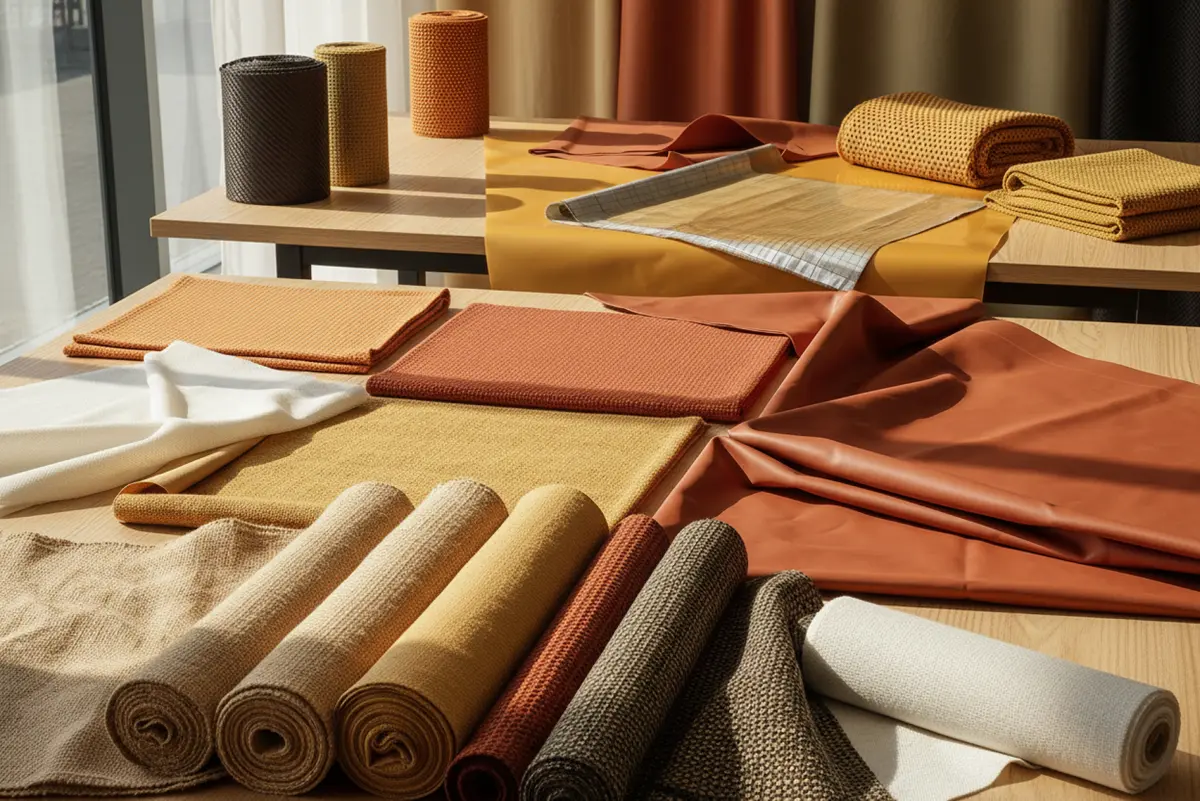
What Are the Main Types of Fabric Suppliers?
Understanding which supplier type to use for which situation is one of the most practical skills in apparel sourcing. The three main types differ significantly in price, MOQ, lead time, and risk profile.
| Supplier Type | Who They Are | Typical MOQ | Lead Time | Best For |
|---|---|---|---|---|
| Fabric mill | The manufacturer — weaves or knits the fabric from yarn | 500–3,000 m per colorway | 12–20 weeks (custom) / 4–8 weeks (stock) | Core fabrics at volume, custom constructions, repeat orders |
| Agent or trader | Intermediary who buys from mills and resells in smaller quantities | 100–500 m | 4–10 weeks | Mid-volume orders, brands without direct mill relationships |
| Stock fabric / jobber | Sells existing inventory — no custom options | 10–100 m | 1–2 weeks | Small runs, quick-turn styles, proto and sample yardage |
Most growing brands run a hybrid model: direct mill relationships for hero fabrics and high-volume basics, agents for mid-tier programs, and stock suppliers for samples and fill-in styles. The goal is to match supplier type to order volume — using stock fabric for a 5,000-unit order is expensive, and ordering from a mill for a 50-unit test run is impossible.
How Do MOQs Work and How Do You Negotiate Them?
Minimum order quantities (MOQs) are the smallest amount of fabric a supplier will sell per order or per colorway. MOQs exist because setting up a loom or dyeing a batch below a certain quantity is economically unviable for the supplier. They are not arbitrary — they reflect real production economics.
For a growing brand, MOQs create two distinct problems.
Problem 1: Upfront financial commitment. Ordering 1,500 meters when your confirmed order needs only 800 meters means carrying 700 meters of fabric liability at risk. If the style underperforms or is canceled, that fabric has to be written off, sold to a jobber at a loss, or repurposed into another style.
Problem 2: Colorway proliferation. A style offered in four colors requires four separate MOQ commitments. A collection with fifteen fabrics in three colors each requires forty-five fabric commitments — most of which need to be placed before you have firm buyer orders.
Negotiating MOQs down requires relationship and volume. The most effective tactics:
- Consolidate volume across styles — can the same fabric work across three styles instead of one?
- Commit to repeat orders in exchange for lower MOQs on smaller initial runs
- Build a track record with a supplier over multiple seasons before asking for exceptions
Wave PLM note: In Wave PLM, every fabric in your BOM is linked to a supplier record with MOQ, price, and lead time. When the same fabric is used across multiple styles, the system aggregates your total requirement automatically — so your sourcing team can see consolidated volume for any material across the entire season and negotiate from actual numbers, not estimates.
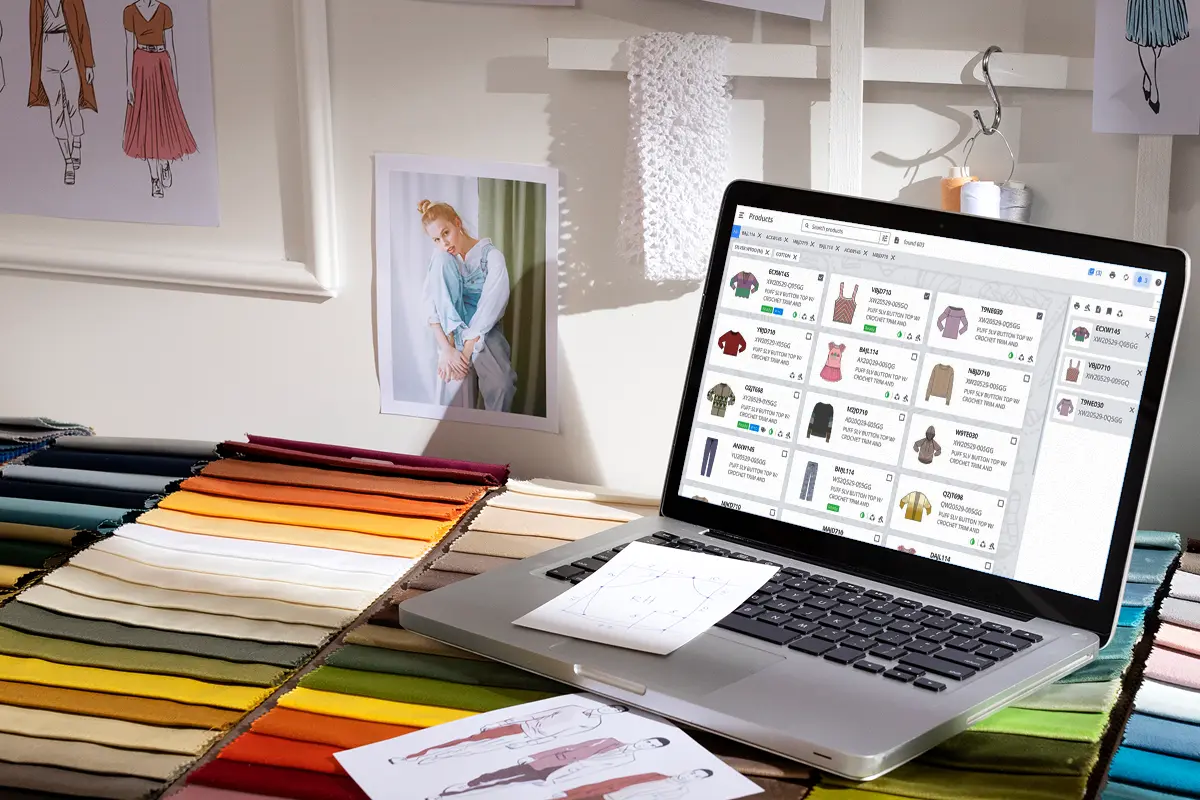
How Do Lead Times Affect Your Production Calendar?
Lead time is the time between placing a fabric order and receiving the material at the factory door ready to cut. It is the most frequently underestimated variable in apparel production planning, and the most common cause of calendar compression.
The math is unforgiving. If your factory needs 8 weeks to produce a style once fabric arrives, and your fabric needs 16 weeks to produce and ship, you need to place the fabric order 24 weeks before your target ship date. For a brand shipping Fall product in August, that means fabric commitments need to be placed by late February — typically before even the Spring collection has shipped.
| Fabric Source | Typical Lead Time | Key Risk |
|---|---|---|
| Mill in China or Vietnam (custom) | 14–20 weeks | CNY or Golden Week closures add 2–4 weeks if not planned |
| Mill in Italy or Portugal (custom) | 12–16 weeks | August closures; longer transit time to Asia factories |
| Agent (stock from existing mill inventory) | 4–10 weeks | Color or quantity may not be available; no guarantee on repeat |
| Domestic stock supplier | 1–3 weeks | Limited selection; no customization; price premium |
Brands that treat fabric sourcing as a reactive task — starting supplier conversations after the design is approved — routinely hit lead time walls that force expensive choices: air freight (typically 5–10x the cost of sea freight), switching to available stock fabric that is not quite right, or pushing the production window so late that the retail window shrinks.
The fix is treating fabric sourcing as a parallel track, not a sequential one. Sourcing begins at concept approval, runs alongside design development, and is confirmed before the proto sample is ordered — not after. This is the workflow that reduces time to market without compromising quality.
How to Build a Repeatable Fabric Sourcing Workflow
A repeatable sourcing workflow eliminates the reactive scramble and makes your lead times predictable. The steps below reflect how mid-market apparel brands structure sourcing as an operational system rather than a one-off task per collection.
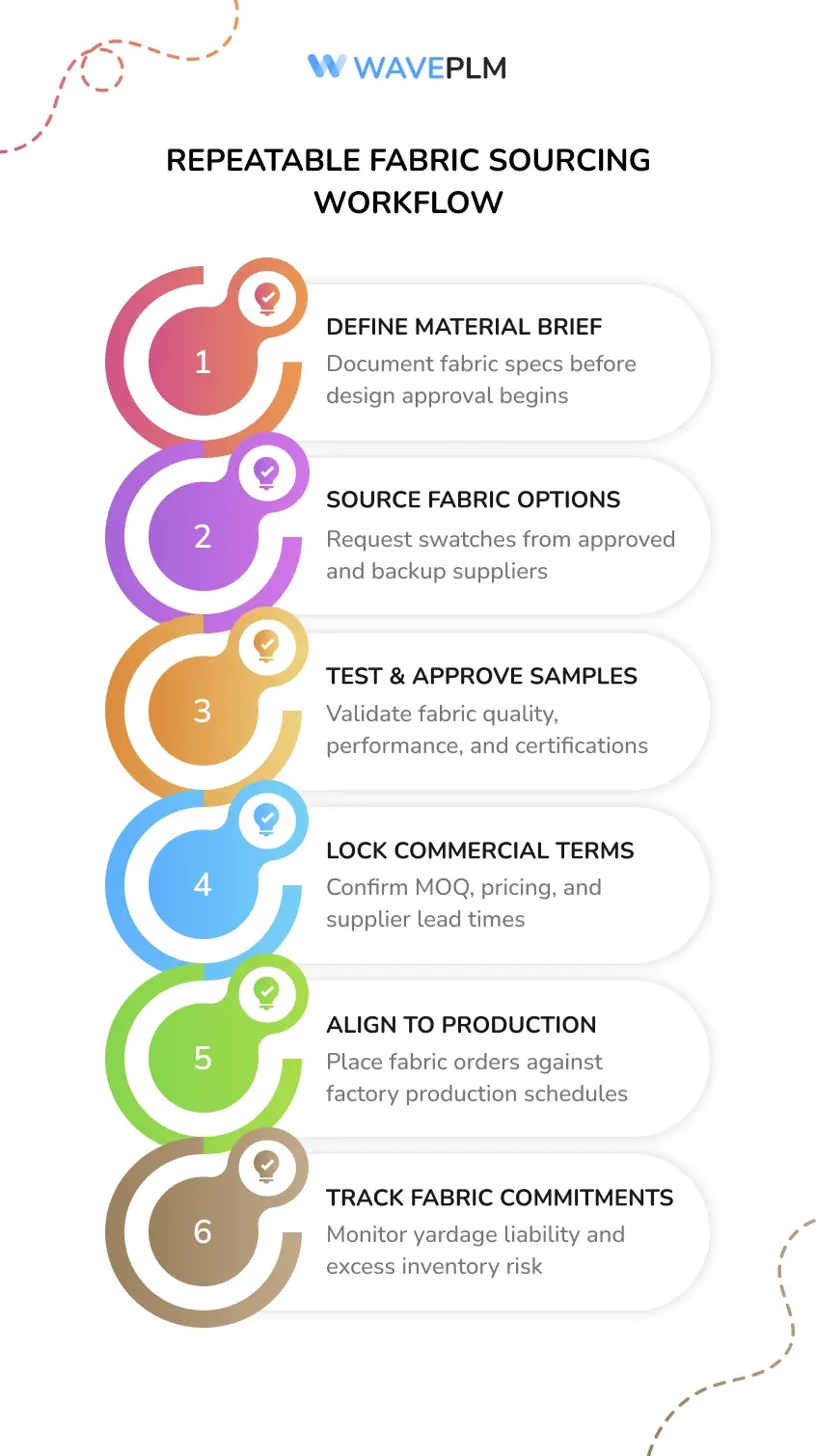
Step 1 — Define the material brief before design finalization. For each style, document the required fiber content, weight range, construction type, performance requirements (stretch, drape, hand feel), and target price per meter. This brief goes to sourcing simultaneously with the design concept — not after sketch approval.
Step 2 — Identify candidate fabrics and request swatches. Pull from your existing approved supplier library first. Reusing a fabric you have already developed with a supplier eliminates the lead time for testing and approval — often saving 6–10 weeks. For new fabrics, request swatches from two to three sources so you have backup options if your first choice does not pass testing.
Step 3 — Evaluate and approve samples. Test swatches against your spec: color accuracy against lab dip, weight (GSM), width, shrinkage, and any performance certifications required. Document the approved swatch with supplier, colorway reference, and the date of approval — this becomes the standard the bulk shipment is measured against. The spec sheet at this stage should capture fabric references so the factory works from the same approved standard.
Step 4 — Confirm MOQ, price, and lead time. Once a fabric is approved, lock in the commercial terms before moving to production confirmation. Fabric price at this stage feeds directly into your garment cost sheet — any change to agreed price after this point requires a cost revision.
Step 5 — Place the purchase order against your production calendar. Work backward from your factory cut date. If the factory needs fabric by Week X, place the fabric order by Week X minus the supplier lead time, with a buffer of at least one week for customs clearance and inland delivery.
Step 6 — Track commitments and liability. Once fabric orders are placed, track your committed yardage against confirmed production orders. If a style’s order quantity drops, you may be holding more fabric than you need. Knowing your fabric liability in real time lets you take action — moving excess to another style, renegotiating with the supplier, or adjusting the order — before the fabric arrives and the problem becomes a write-off.
How Does PLM Track Fabric Sourcing Across Styles and Seasons?
As a brand’s product line grows, managing fabric sourcing in spreadsheets and email threads creates version control problems that compound quickly:
- Which colorway was approved?
- Which supplier had the better price — the March email or the April quote?
- Which styles use the same base fabric and could share a consolidated order?
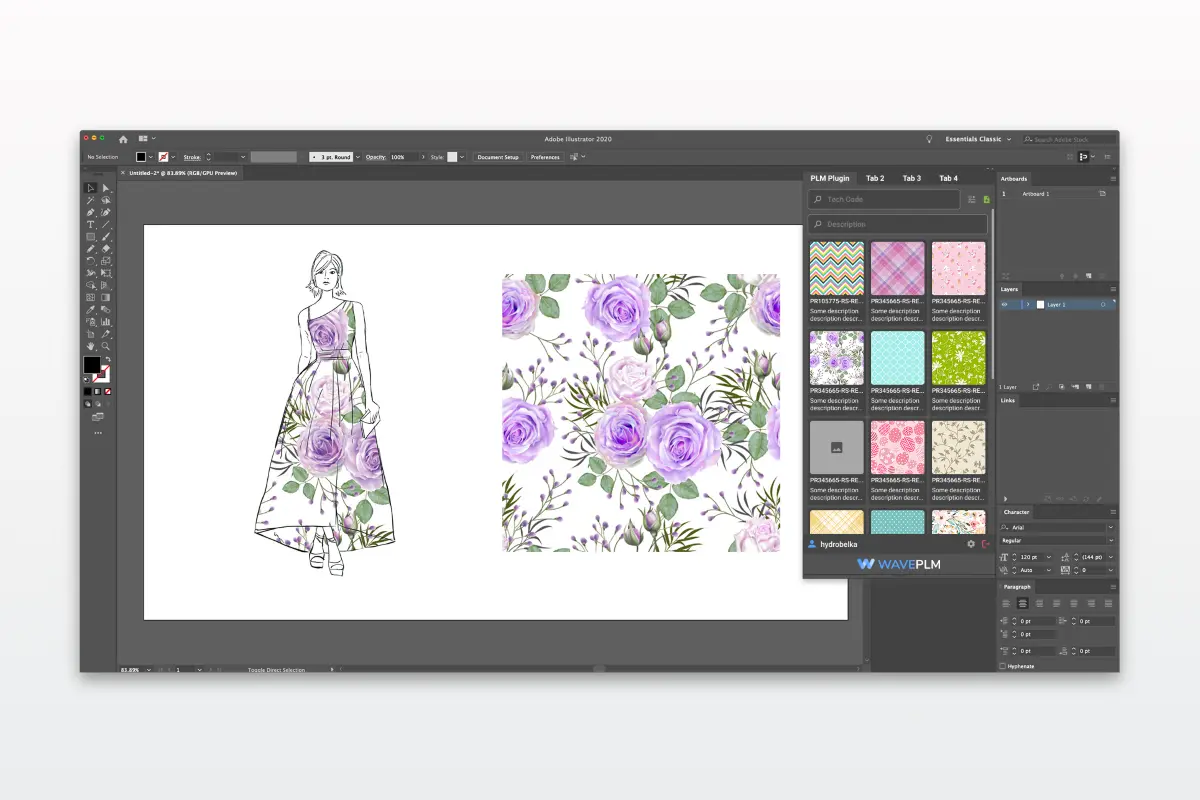
PLM software solves this by connecting fabric records to the styles that use them. In Wave PLM, every fabric in your material library carries its supplier, price, MOQ, lead time, and approval status. When a designer assigns that fabric to a style BOM, the sourcing data travels with it — no copy-paste, no separate tracking sheet.
The operational benefits for a sourcing team managing a multi-season product line are concrete:
- Reuse without rework. Any fabric approved in a previous season is immediately available to reuse — supplier relationship, price history, and quality documentation already attached.
- Consolidated volume for negotiation. When the same fabric appears across multiple styles, PLM aggregates total yardage automatically, giving your team the real number for MOQ negotiation.
- Live liability tracking. When a style is canceled or its quantity changes, the impact on fabric commitment is visible immediately — not discovered when the fabric arrives.
For brands working with multiple factories, PLM also solves the problem of fabric split-shipping: when the same approved fabric needs to be delivered to two different factories in different countries, the sourcing record tracks both commitments from a single source of truth. This matters most in automated supply chain tracking workflows where visibility across factory locations is critical.
If your team is spending significant time each season reconciling fabric commitments against production orders, book a Wave PLM demo to see how connected fabric sourcing works in practice.
What Are the Biggest Risks in Fabric Sourcing?
Fabric sourcing is where most production delays originate. The risks are predictable, which means they are also preventable — once you know where to look.
Approved swatch vs. bulk shipment discrepancy. The most common quality surprise in production: the fabric you approved in swatch form arrives in bulk with different hand feel, width, or shade. Preventing this requires a bulk fabric inspection before the fabric is cut — a step many brands skip to save time and then regret. Your spec should define the acceptable tolerance for each attribute, and the factory should confirm receipt against those tolerances before cutting begins.
MOQ commitment without confirmed orders. Brands routinely commit to fabric MOQs based on projected sell-through before buyer or retail orders are confirmed. When the order falls short of projection, the excess fabric becomes liability. The discipline of separating speculative commitments from confirmed-order commitments — and tracking them separately — is the difference between controlled risk and uncontrolled write-offs.
Single-source dependency. Relying on one supplier for a core fabric in your collection means a factory closure, a quality failure, or an unexpected MOQ change can stop production. Building a qualified backup supplier for your highest-volume fabrics — even if you never use them — is cheap insurance against a supply disruption that would otherwise delay a season.
Lead time optimism. Sourcing teams are chronically optimistic about lead times because suppliers quote best-case timelines. A 14-week lead time assumes no factory delays, no port congestion, and no customs holds. Planning as if best-case lead times are guaranteed — rather than building one to two week buffers throughout the calendar — is how brands end up air-freighting fabric at the end of the season.
Frequently Asked Questions
What is fabric sourcing?
Fabric sourcing is the process of identifying, evaluating, and purchasing textiles for garment production. It covers supplier selection, swatch evaluation, MOQ negotiation, lead time management, and ongoing supplier relationship management across seasons.
What are typical MOQs for fabric suppliers?
MOQs vary by supplier type. Fabric mills typically require 500–3,000 meters per colorway. Agents and traders can work with 100–500 meters but charge a markup of 10–20% above mill pricing. Stock fabric providers can sell as little as 10–50 meters at retail-adjacent prices, with no customization available.
How long does fabric sourcing take?
Fabric lead times range from 8 to 24 weeks depending on supplier location and whether the fabric is in stock or made to order. Stock fabrics from agents can ship in 2–4 weeks. Custom-woven or custom-dyed fabrics from overseas mills typically require 12–20 weeks from order placement to factory delivery.
How does PLM software help with fabric sourcing?
PLM software centralizes fabric records across all styles and seasons. When a fabric is approved for one style, the same record — with supplier, price, MOQ, and lead time — is available to reuse across other styles. PLM also aggregates total yardage requirements across the season for MOQ negotiation, and tracks committed fabric against confirmed production orders so sourcing teams know their liability in real time.



Leave a Reply