

Search “supplier portal software” and you find SAP Ariba, Coupa, and GEP SMART at the top. These are enterprise procurement platforms. They process thousands of vendor invoices per month for Fortune 500 companies. If you run an apparel brand with 30–80 active styles per season, those tools solve a different problem than the one you have.
This guide explains what a supplier portal actually is. It covers what apparel brands specifically need from vendor collaboration software. It also explains why the most effective solution for a fashion brand usually comes from PLM rather than procurement software.
What Is a Supplier Portal?
A supplier portal is a secure digital platform. It connects a brand with its external vendors — factories, fabric mills, trim suppliers, agents, and logistics partners. Through it, they exchange documents, communicate about specifications, and track order status. Specifically, no one has to rely on scattered email threads to find current information.
The core purpose is to replace fragmented communication with a shared workspace. As a result, everyone sees the same current information. For example, instead of a purchase order sent as an email attachment and updated manually, the portal maintains a live version. All authorized parties can access it at any time.
What Generic Procurement Portals Handle
In a standard procurement context, supplier portals focus on financial documents. Specifically, they handle purchase orders, invoices, payment confirmations, compliance certificates, and banking details. Suppliers log in to acknowledge POs and submit invoices. The brand uses the portal to track spend and audit supplier compliance.
For an apparel brand, however, the document types are different. The collaboration is more iterative. That is why generic procurement portals often feel like a poor fit for fashion companies.
What Do Apparel Brands Actually Use Supplier Portals For?
A mid-market apparel brand typically works with 20 to 50 active vendors per season. These include cut-and-sew factories, fabric mills, trim and label suppliers, logistics agents, and testing labs. The communication with each partner is not primarily about invoices. Instead, it is about product specifications that change constantly during the development cycle.
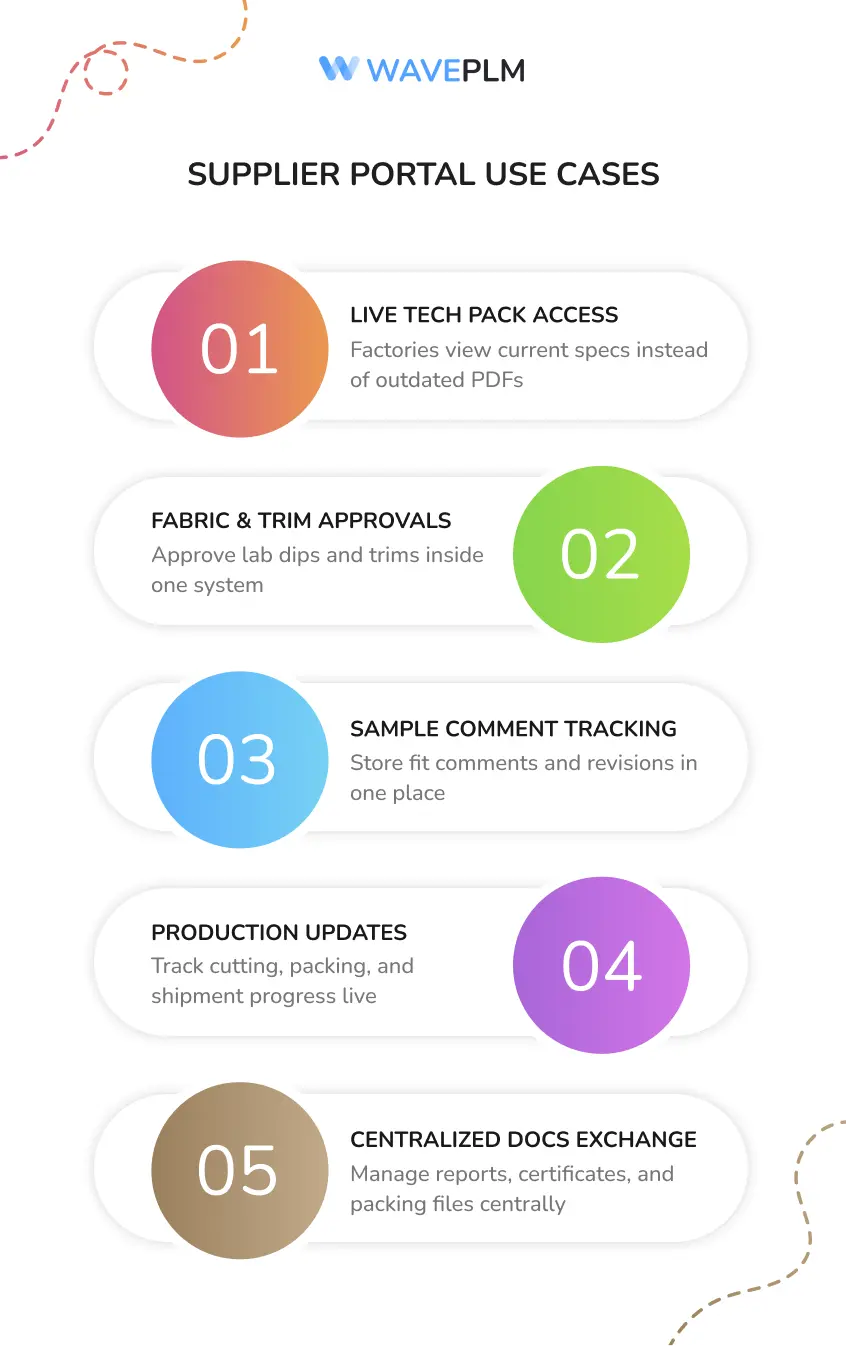
The Five Core Use Cases
First, tech pack distribution. The factory needs the current tech pack to produce a sample. If the designer updated the seam allowance on Tuesday and the factory downloaded the PDF on Monday, the sample comes back wrong. A supplier portal gives the factory access to the live tech pack — not an emailed snapshot.
Second, fabric and trim approval. When a fabric mill sends a lab dip, the brand needs to review it, comment, approve or reject, and record the decision. This loop currently happens in email for most brands. As a result, approval status sits in inboxes — not attached to the product record where it belongs.
Third, sample tracking and comments. Sample review comments must be specific. “The sleeve is too long” is not enough. The comment should read: “Sleeve length at CB seam measures 63cm; spec is 61cm, please reduce.” Managing this in email means the comment history scatters across multiple threads and gets lost.
Fourth, production milestone tracking. The brand needs to know when bulk fabric has arrived, when cutting starts, when packing is complete, and when the shipment leaves port. Without a portal, someone on the operations team requests this status by email or phone and enters it manually into a tracker.
Fifth, document exchange. Test reports, compliance certificates, packing lists, and inspection reports all require exchange and association with specific purchase orders. Tracking them as email attachments makes audits slow and painful.
How Is an Apparel Supplier Portal Different from Generic Procurement Software?
The distinction matters because it determines which tool actually solves your problem. The table below compares the two categories on the dimensions that matter most for an apparel brand.
| Procurement Supplier Portal (SAP Ariba, Coupa) | PLM Supplier Portal (Wave PLM) | |
|---|---|---|
| Primary document type | Purchase orders, invoices, payment terms | Tech packs, BOMs, spec sheets, sample comments |
| Primary workflow | Financial: procure-to-pay, supplier onboarding, compliance | Product development: design → sample → approval → production |
| Who uses it most | Finance and procurement teams | Design, product development, sourcing, and production teams |
| Versioning | PO and contract versioning | Tech pack and spec versioning tied to development stage |
| Supplier adoption barrier | High — complex interface, enterprise login requirements | Lower — factories access specific product records directly |
| Suitable company size | Enterprise (500+ employees, $100M+ spend) | SMB and mid-market (10–500 employees) |
| Cost | $50,000–$500,000+/year | Fraction of the cost, scales with team size |
Procurement portals are not wrong for apparel brands. They solve the financial layer of supplier management, not the product development layer. A brand at scale will eventually need both. However, the PLM supplier collaboration layer is almost always the higher-priority gap. Product errors cost more than payment processing inefficiency.
What Features Should an Apparel Brand Look for in a Supplier Portal?
The features below generate real productivity gains. Not just on paper — but in the day-to-day cycle of getting samples made and collections produced.
Spec and Sample Management
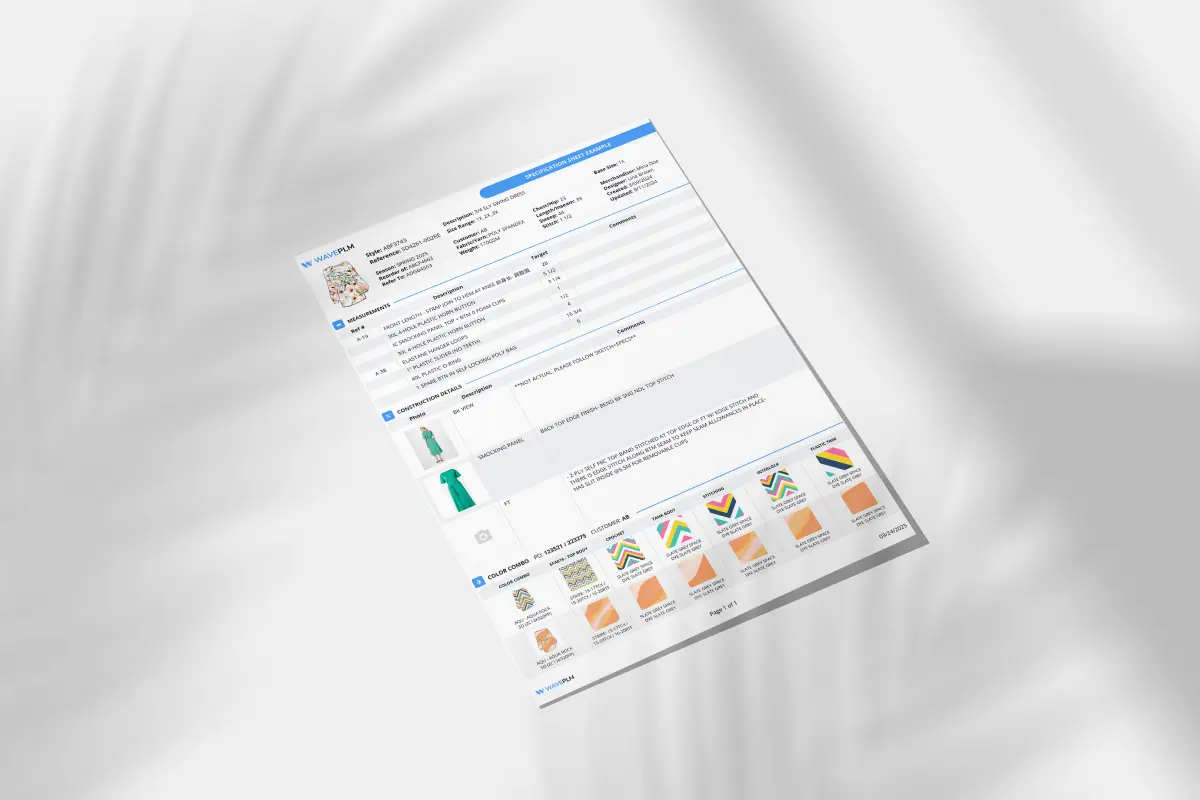
Versioned tech pack access. The portal should show factories which version is current and flag when a new version releases. It should also log which version was active when each sample was made. This is the single highest-value feature for reducing sample rounds.
Inline commenting on specs and measurements. Sample comments should attach to specific measurement rows in the spec sheet. That way, there is no ambiguity about which spec the comment addresses. In addition, it creates a clear revision history that both sides can refer back to.
Material approval workflow. Lab dips, strike-offs, and physical trim approvals should log in the portal with an approved/rejected status, the reviewer’s name, and a date. This creates an audit trail that protects both sides in a quality dispute. Your spec sheet workflow should feed directly into this process.
Supply Chain Visibility
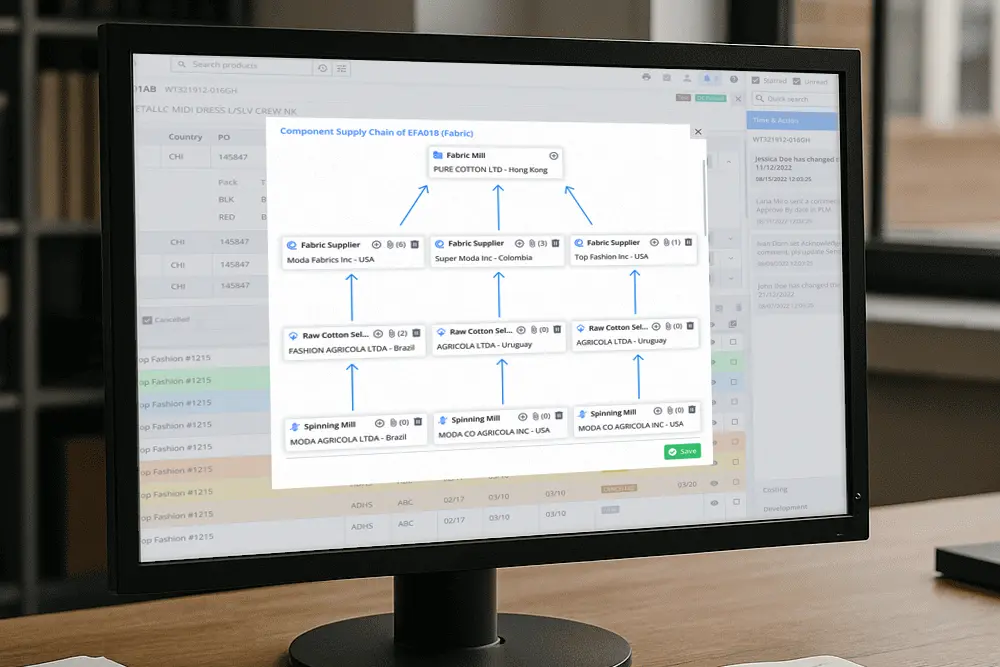
BOM visibility for sourcing partners. Fabric mills and trim suppliers should see the materials in the bill of materials for the styles they supply. They should also see the target price, required quantity, and delivery date. This eliminates a full email round trip to communicate order requirements.
Production milestone tracking. Factories should update production status directly in the portal — fabric received, cutting started, sewing complete, QC passed, shipment booked. As a result, the operations team sees progress without having to ask. This connects directly to multi-factory coordination.
Role-based access by supplier type. A fabric mill should see material records. A factory should see tech packs and sample comments. A logistics agent should see shipping documents. Specifically, no supplier should see pricing, capacity, or relationship details belonging to another supplier. Role-based access controls this automatically.

How Does Vendor Collaboration Work Inside a PLM System?
In Wave PLM, vendor collaboration is part of the product record — not a separate communication layer. This distinction matters in practice. Communication inside the product record stays attached to the product permanently. In contrast, communication via email exists only in someone’s inbox.
Real-Time Access for Factories
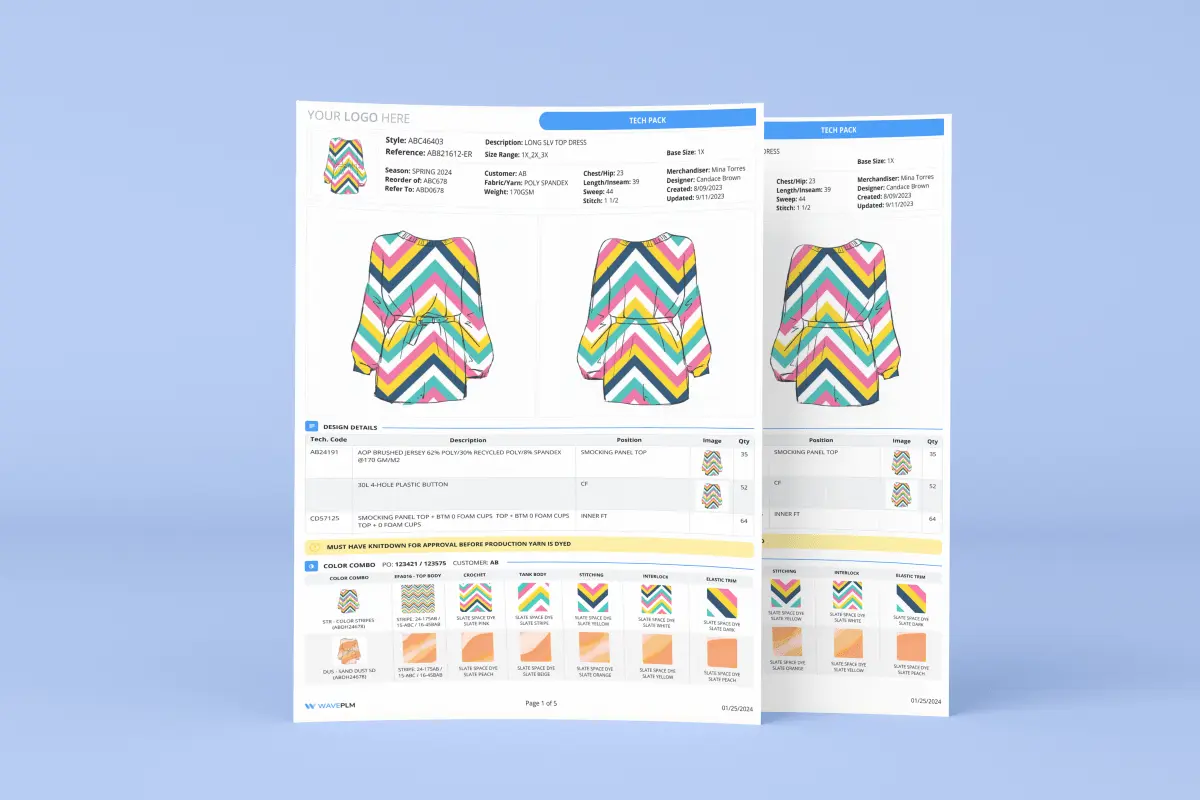
When a factory receives a style assignment in Wave PLM, they get access to the tech pack and BOM for that style. As the product develops, they see spec updates in real time. When the brand’s team adds a comment or uploads a revised construction detail, the factory sees a notification. There is no PDF attachment. There is no version mismatch.
Sample rounds work the same way. The factory submits a sample report or uploads photos. The brand team then reviews and adds comments to specific spec rows. The factory sees the comments and can ask clarifying questions. All of this happens inside the context of that specific style, that specific sample round, that specific version of the spec.
Sourcing and Costing in the Same System
When a brand reviews its fabric sourcing workflow for a new season, the material approval history from previous seasons is already in the system. It attaches to the styles that used those fabrics. Full decision history is accessible in seconds — not buried in email threads.
For costing, the connection is equally direct. When a factory updates a CMT quote or a fabric supplier confirms pricing, that data flows into the garment cost sheet automatically. The cost the brand works with is always current because the spec and BOM live in the same system.
When Does an Apparel Brand Need a Supplier Portal?
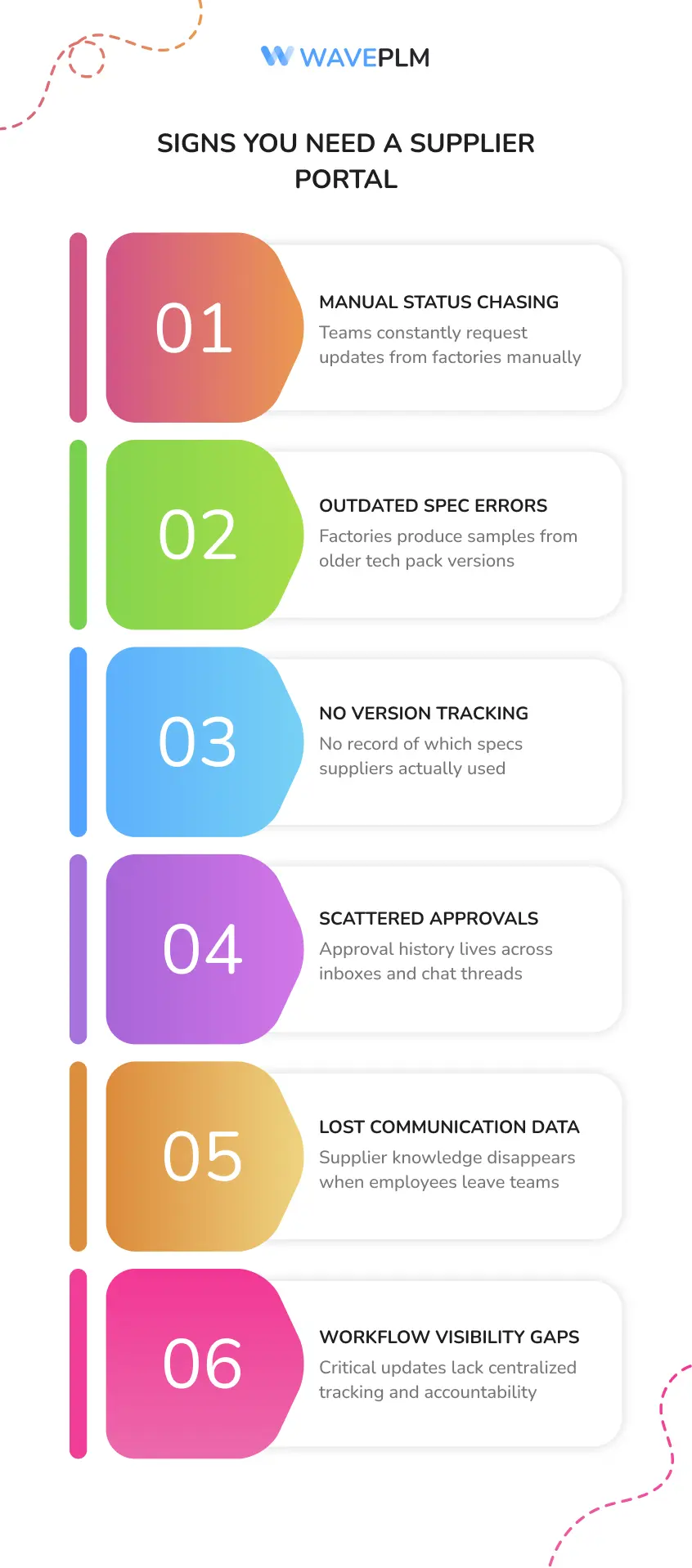
Not every brand needs dedicated supplier portal software on day one. The following signals, however, indicate that your current approach — email, WhatsApp, and shared Google Drive folders — has reached its limit.
- You spend significant time each week chasing status updates from factories that should be visible without asking.
- Samples come back wrong because the factory worked from an outdated spec — one that was correct when you sent it but has since changed.
- You have no reliable record of which tech pack version a factory used when they made a particular sample.
- Material approvals exist in someone’s email inbox rather than in the product record.
- When a team member leaves, the supplier communication history for their styles leaves with them.
These are not organizational failures. They are the predictable result of using communication tools for coordination that requires structured, versioned record-keeping. A supplier portal designed for apparel does not just fix the communication — it replaces it with a workflow that surfaces the right information automatically.
If your team recognizes more than one of these signals, book a Wave PLM demo to see how supplier collaboration works inside a PLM built for apparel brands — not enterprise procurement teams.
Frequently Asked Questions
What is a supplier portal?
A supplier portal is a secure digital platform where a brand and its vendors — factories, fabric mills, trim suppliers, and agents — exchange documents, track order status, and communicate about product specifications. It replaces email threads with a shared, versioned workspace where all parties see current information.
What is the difference between a supplier portal and a vendor portal?
Supplier portal and vendor portal refer to the same concept. The industry uses both terms interchangeably. Some organizations use vendor to mean product suppliers and supplier to mean service providers. In practice, however, the platform functionality is identical in either case.
Do small apparel brands need a supplier portal?
Small brands with one or two factory relationships and fewer than ten active styles per season can usually manage through email. A supplier portal becomes valuable when a brand manages 20 or more active styles across multiple factories and fabric suppliers — specifically when email version confusion starts causing production errors.
How is a PLM supplier portal different from procurement software like SAP Ariba?
Procurement software handles financial workflows: purchase orders, invoices, payment terms, and compliance. A PLM supplier portal, in contrast, handles product development workflows: sharing tech packs, approving fabric swatches, tracking sample status, and confirming specs. Most small and mid-market apparel brands need the PLM layer first — because product errors cost more than payment processing inefficiency.





Leave a Reply