

Fashion brands sell far more than clothing. They sell identity, aspiration, and emotion. Brand management in fashion helps companies control how customers see their products and values.
Every decision in the fashion industry shapes perception. Design, pricing, marketing, and retail experiences all influence how consumers view brands.
Strong brand management connects creativity with business strategy. It aligns product development, marketing campaigns, and customer experience across the entire fashion business.
This guide explains how fashion brand management works and why it plays a critical role in the fashion industry.
Introduction to the Fashion Industry
The fashion industry is a vibrant and ever-changing landscape that shapes global trends and influences consumer behavior around the world. Combining creativity, business strategy, and emerging technologies, the fashion industry offers a wealth of career opportunities for industry professionals. Whether you’re interested in fashion brand management, marketing, or merchandising, success in this field requires a deep understanding of consumer behavior, market research, and effective brand strategies.
As a major player in the global economy, the fashion industry is constantly evolving in response to new trends, technological advancements, and shifting consumer demands. Social media platforms and digital marketing have become essential tools for reaching audiences and building brand awareness, while e-commerce platforms have transformed the way fashion brands connect with consumers and drive sales.
This dynamic environment provides a solid foundation for career growth, allowing professionals to develop their skills and adapt to the latest industry trends. With creativity and research at its core, the fashion industry continues to offer exciting and challenging opportunities for those ready to make their mark.

What Is Brand Management in Fashion?
Brand management in fashion focuses on shaping perception in the market. It guides how brands communicate identity, values, and positioning.
Fashion brand managers work to build a strong brand identity and protect it across various channels. They ensure that collections, campaigns, and retail experiences reflect the same message.
Fashion and brand management combine creative thinking with business strategy. Brand managers rely on market research, competitor analysis, and fully understand consumer behavior, market positioning, and strategic branding elements. Creative approaches are essential not only for design but also for developing campaigns and maintaining brand uniqueness.
Key strategies are essential approaches that guide brand positioning and customer relationship management in fashion brand management.
These elements help fashion companies define a clear brand positioning.
| Key Element | Role in Fashion Brand Management |
|---|---|
| Brand identity | Defines the personality and visual language of brands |
| Brand positioning | Determines where brands compete in the market |
| Target audience | Guides design, pricing, and marketing decisions |
| Consistency | Maintains recognition across products and marketing |
A strong brand identity helps brands stand out in a crowded market. Fashion brands must communicate a unique identity that consumers recognize instantly.
Management skills, including organizational and leadership abilities, are crucial for effective brand oversight.
Brand managers protect brand standards across digital channels, stores, and e commerce platforms.
Project management skills and effective communication skills are essential for fashion brand managers to oversee various aspects of the brand and collaborate with diverse teams.

Why Brand Management Is Critical in the Fashion Industry
The fashion industry depends heavily on perception. Two fashion products may look similar, yet consumers pay very different prices.
Brand management explains that difference. A luxury brand like Louis Vuitton builds perceived value through storytelling, heritage, and craftsmanship.
Successful fashion brands use brand strategies that align product design, marketing strategy, and pricing. Fashion marketers craft compelling narratives through various channels to elevate a brand’s presence in the competitive fashion industry.
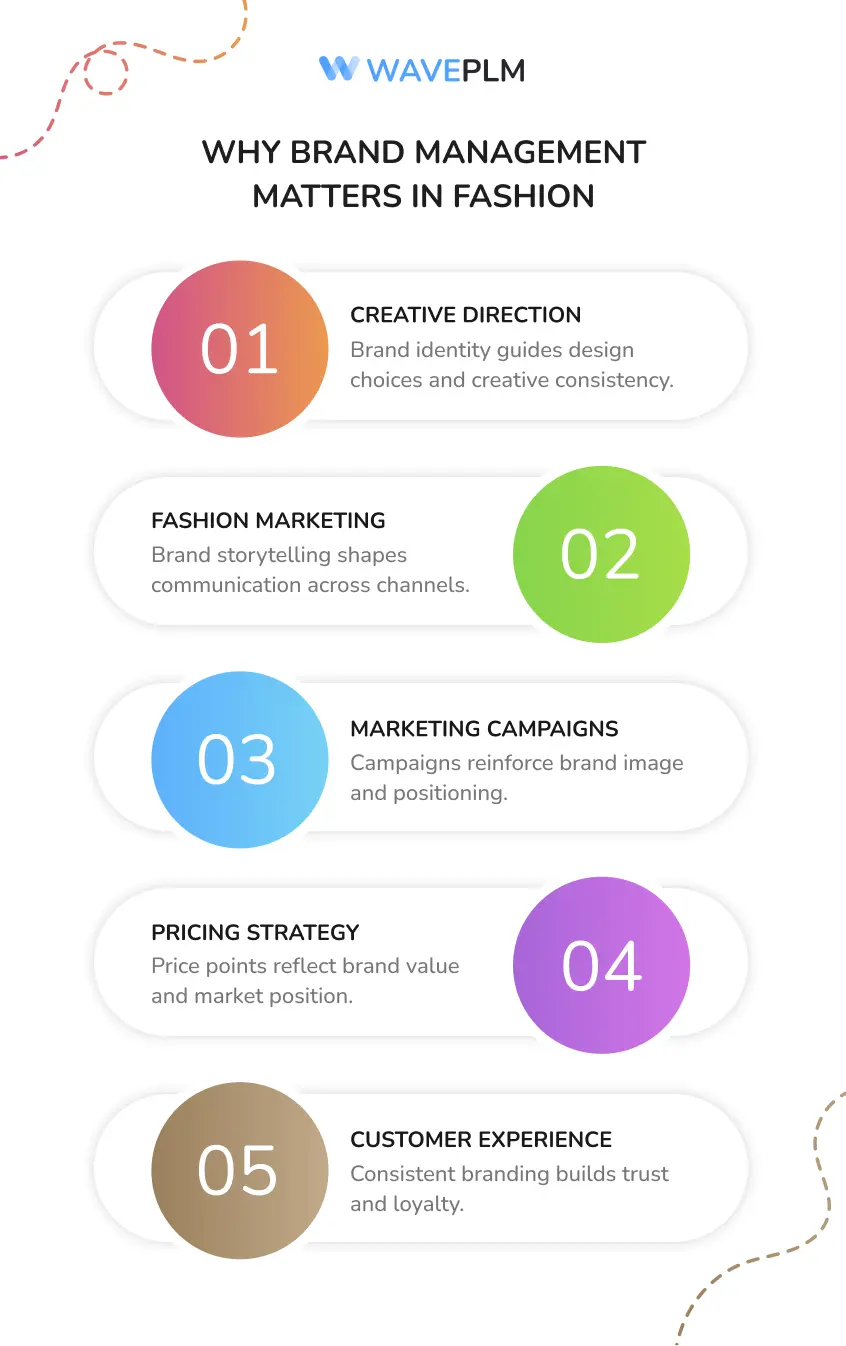
Brand management influences many areas of a fashion organization:
- product design and creativity
- fashion marketing and storytelling. Fashion marketing is a specialized branch that promotes clothing, accessories, and fashion brands to specific audiences.
- marketing campaigns
- pricing strategy
- customer experience
Strong brand management also influences pricing strategies. Luxury and premium brands rely on carefully defined price points to reinforce their identity and perceived value.
In the fashion industry, brand value often determines profitability. Companies with strong brand identity gain customer trust and long‑term loyalty.
The Role of a Brand Manager
Brand managers play a critical role in the fashion industry, acting as the driving force behind a brand’s identity, positioning, and overall strategy. Their responsibilities span from developing compelling brand strategies to ensuring that every aspect of the brand—from visual merchandising and marketing collateral to social media presence—reflects a cohesive and recognizable image.
To succeed, brand managers must combine strong business skills with creativity and a deep knowledge of the fashion market. They conduct thorough market research and analyze consumer behavior to identify trends, anticipate shifts in the industry, and stay ahead of competitors. Whether working with a luxury brand or a fast-fashion retailer, brand managers are responsible for shaping the brand’s voice and ensuring consistency across all digital channels and e-commerce platforms.
In today’s digital-first world, brand managers must also be adept at leveraging social media platforms and digital marketing to build brand awareness and drive engagement. Their ability to adapt to new technologies and trends is essential for maintaining a strong brand identity and achieving long-term business success in the competitive fashion industry.

Core Elements of Fashion Brand Management
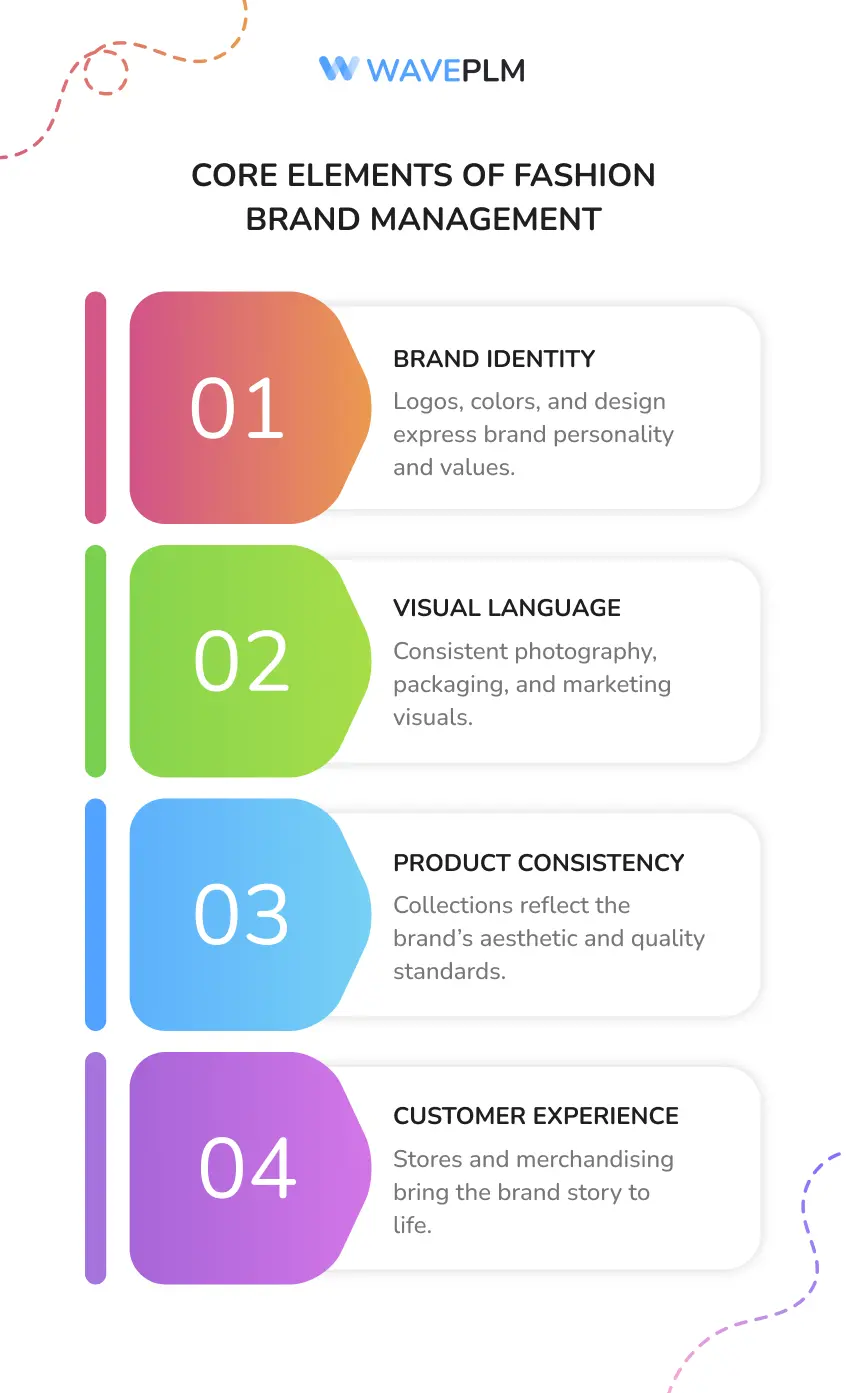
Fashion brand management depends on several core components. Each element contributes to the overall perception of brands.
Analyzing and adapting to current trends is a core element of fashion brand management, as it helps brands stay relevant and competitive in a rapidly changing market.
Fashion brands must adapt to evolving trends while maintaining their core identity.
Brand Identity
Brand identity defines how brands communicate personality and values.
Fashion brands build identity through logos, colors, typography, and product design. These elements form the visual language of the brand.
A strong brand identity creates emotional connection with consumers.
Visual Language
Visual language includes photography style, packaging, and marketing collateral. Consistency across social media platforms and digital marketing channels strengthens recognition.
Fashion marketing teams maintain strict brand standards to protect visual consistency.
Product Consistency
Products represent the strongest expression of brand identity. Collections must reflect the aesthetic direction of brands.
Luxury brand management requires consistent materials, silhouettes, and craftsmanship across seasons.
Customer Experience
Customer experience plays a critical role in fashion brand management.
Retail spaces, shop windows, and visual merchandising translate brand identity into physical storytelling.
Visual merchandising is one of the most visible expressions of brand management, translating brand identity into in-store storytelling.
Retail managers and brand managers often collaborate to ensure stores reflect the same strategy as marketing campaigns.
Brand Management and Product Development
Brand management strongly influences product development. Design teams must understand brand positioning before they create collections.
Fashion brand managers guide design teams to maintain brand identity throughout development. Brand managers also often collaborate with the buying team to manage purchasing decisions and inventory strategies, ensuring brand alignment and product availability.
Product teams often follow a structured process that protects brand standards.
| Development Stage | Brand Management Focus |
|---|---|
| Concept creation | Ensure ideas reflect brand positioning |
| Material sourcing | Maintain quality and ethical practices |
| Prototype review | Confirm alignment with brand identity |
| Production approval | Protect product consistency |
Brand management extends into the product development process, ensuring that every design reflects the brand’s positioning and quality standards.
This collaboration between design and brand managers creates a solid foundation for successful collections.
Knowledge of budgeting and financial analysis is crucial for brand managers in the fashion industry.

How Digital Technology Supports Fashion Brand Management
Technology now plays an equally important role in fashion brand management. Digital transformation allows fashion companies to manage products and marketing across global markets.
Digital tools help brands stay ahead of trends and consumer expectations.
Fashion companies rely on several systems to support brand strategies.
| Technology | Benefit for Brand Management |
| Product lifecycle platforms | Maintain consistent product data |
| Digital asset systems | Organize marketing collateral |
| Big data analytics | Track consumer behavior and trends |
| Collaboration tools | Align teams across various channels |
Modern fashion brands increasingly rely on digital tools to maintain consistency across design, sourcing, and marketing.
Emerging technologies also help brands monitor trends and adapt marketing strategy quickly.
Digital marketing and social media platforms allow brands to reach consumers through multiple digital channels.
E commerce platforms also play a growing role in brand visibility and market expansion.

E-Commerce and Online Sales
E-commerce and online sales have fundamentally transformed the fashion industry, opening up new opportunities for fashion brands to reach consumers and expand their market presence. By utilizing e-commerce platforms, digital marketing, and social media, fashion brands can create engaging online experiences that resonate with today’s digitally savvy consumers.
A strong online presence allows brands to connect with customers through various digital channels, from interactive shopping experiences to targeted social media campaigns and influencer partnerships. These strategies not only drive sales but also help build lasting brand awareness and loyalty. As mobile commerce and social media continue to grow, fashion brands must stay agile, adapting their digital marketing efforts to meet evolving consumer expectations and industry trends.
Navigating the world of e-commerce requires a deep understanding of both technology and consumer behavior. Brands that successfully integrate their online and offline strategies are better positioned to thrive in the fast-paced fashion market, ensuring their products and messaging reach consumers wherever they are.

Luxury vs Mass Market Brand Management
Different segments of the fashion industry require different brand strategies.
Luxury brands, premium brands, and fast fashion companies manage identity in different ways.
| Segment | Strategy | Market Focus |
| Luxury brand | Exclusivity and craftsmanship | Heritage and storytelling |
| Premium brands | Quality and accessibility | Balanced pricing and design |
| Fast fashion | Speed and trends | High‑volume production |
Luxury brand management focuses heavily on scarcity and prestige. Luxury brands limit distribution and maintain strict brand standards.
Fashion shows, exclusive collaborations, and storytelling help luxury brands maintain their unique identity.
Luxury brands rely on strict control of distribution, product quality, and storytelling to maintain exclusivity.

Brand Management Across the Fashion Supply Chain
Brand reputation extends beyond marketing and design. Supply chain decisions influence how consumers see fashion brands.
Customers increasingly expect transparency and ethical practices.
Fashion companies must monitor sourcing, manufacturing, and logistics carefully.
Important supply chain factors include:
- ethical labor practices
- sustainable materials
- production transparency
- product quality control
Brand reputation can be influenced by supply chain transparency, sourcing practices, and production standards.
Fashion companies that prioritize ethical practices build stronger trust with consumers.

Ethical Practices in the Fashion Industry
Ethical practices have become a cornerstone of success in the modern fashion industry. Today’s consumers are more informed and socially conscious, demanding greater transparency and accountability from the brands they support. Fashion brands that prioritize ethical practices—such as sustainability, fair labor, and environmentally-friendly production—can build stronger trust and credibility with their target audience.
By adopting sustainable materials, supporting fair trade, and implementing responsible production methods, fashion brands not only reduce their environmental impact but also demonstrate a genuine commitment to social responsibility. Social media has amplified consumer voices, making it essential for brands to communicate their ethical initiatives clearly and authentically.
In a market where reputation is everything, ethical practices are no longer optional—they are a key differentiator. Brands that embrace these values can create a unique and compelling brand experience, attract loyal consumers, and maintain a competitive edge in the ever-evolving fashion industry.

Common Brand Management Mistakes Fashion Brands Make
Even established brands sometimes weaken their identity.
These mistakes often appear when companies expand quickly or follow short‑term trends.
Inconsistent Collections
Collections that shift direction confuse consumers and weaken brand identity.
Pricing Mismatch
Price must align with perceived value. A luxury brand must maintain premium materials and storytelling.
Weak Storytelling
Fashion marketing depends on narrative. Brands without a clear story struggle to connect with their target audience.
Lack of Data Visibility
Without big data insights, brand managers cannot understand consumer behavior or market trends.
Fashion companies that combine creativity with analytics stay ahead in the market.
Conclusion
Brand management in fashion connects creativity, marketing strategy, and business operations.
Design teams create fashion products that reflect brand identity. Marketing teams communicate the brand story through digital marketing, social media, and fashion shows.
Brand managers coordinate these efforts to maintain a strong brand identity across various channels.
In the competitive fashion industry, strong brand management helps companies build recognition, loyalty, and long‑term market success.
For fashion professionals, learning brand management opens career opportunities across marketing, retail management, and strategy roles within the global fashion business.
Pursuing internships and educational opportunities that align with your career goals can provide valuable networking opportunities and open doors in the fashion industry. Fashion branding education can also include online courses, which help demonstrate passion for the industry and build relevant skills.





Leave a Reply