

This fashion stylist guide explains how stylists shape fashion, influence brands, and help people develop a strong personal style. Fashion styling affects far more than clothing choices. It influences marketing, retail displays, photography, and the way clients build their wardrobe.
Many people think a stylist only helps celebrities dress for red carpet events. In reality, the role goes much deeper. A fashion stylist helps clients understand their body shape, refine their wardrobe, and create outfits that make them feel confident.
This article works as a practical stylist guide for students, aspiring professionals, and brands that want to understand how styling supports the modern fashion industry.
What Is a Fashion Stylist?
A fashion stylist selects clothes, accessories, and outfits to communicate a clear visual message. In the fashion industry, stylists help translate a creative idea into a complete look.
Stylists work across many environments. Some work with fashion magazine editorials. Others collaborate with brands, photographers, or personal clients.
A fashion stylist often helps with:
- photoshoots
- runway presentations
- product campaigns
- retail displays
- celebrity appearances
At the same time, many stylists also work as a personal stylist. In this role, they guide clients through their wardrobe and help them shop smarter.
A personal stylist studies the client’s body shape, lifestyle, and preferences. Then they suggest clothing combinations that create confidence and comfort in everyday life. Many stylists have a background in image consulting, which allows them to offer expert, personalized fashion advice.
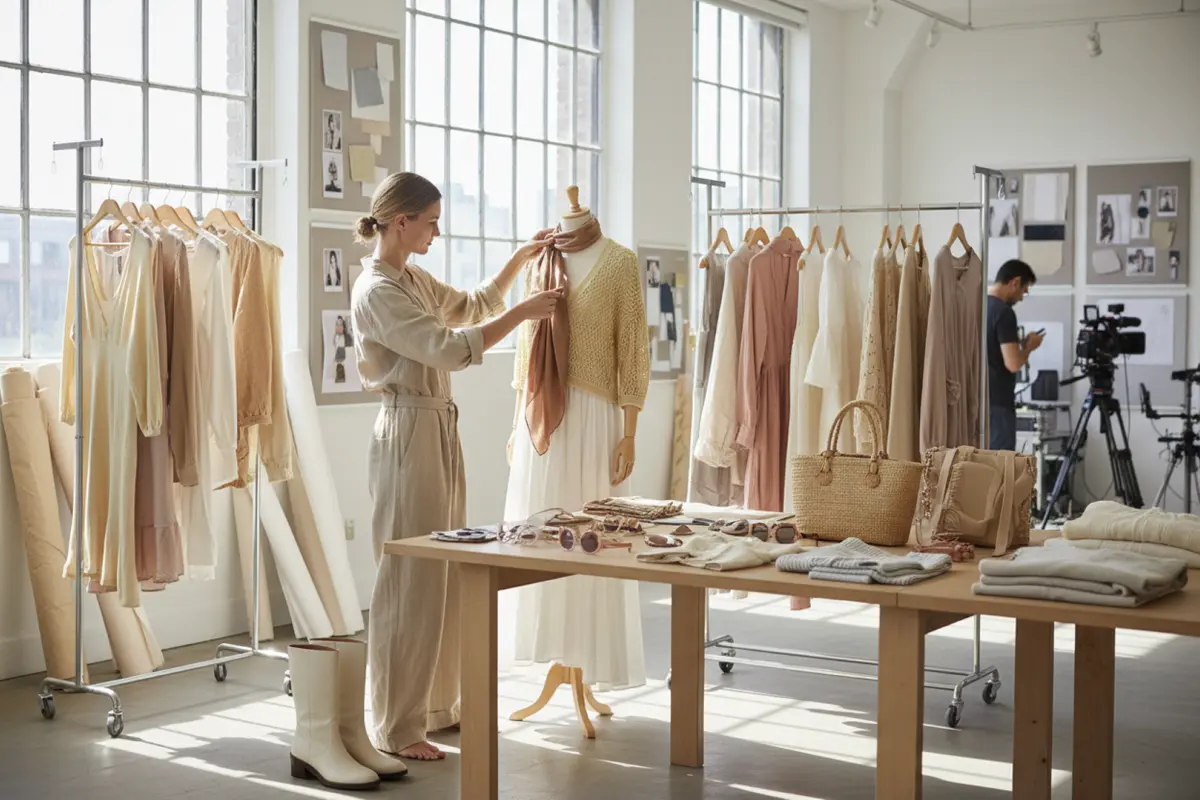
Why Styling Matters in the Fashion Industry
Fashion relies heavily on storytelling. Clothes alone rarely communicate the full message. Styling adds context, emotion, and inspiration.
For example, a blazer, jeans, and shoes may look ordinary on a hanger. However, when a stylist combines all the pieces into a strong outfit, the look suddenly feels intentional. Stylists often ‘pull’ together clothing, accessories, and details, carefully sourcing and combining each element to create a cohesive and polished appearance.
Stylists influence how people perceive brands. Because of this, fashion styling plays a powerful role in the fashion industry.
A great stylist understands how to balance trends, brand identity, and real lifestyle needs. That balance helps clients and consumers feel confident about what they wear.
Benefits of Hiring a Stylist
Hiring a personal stylist can transform not just your wardrobe, but your entire approach to fashion and daily life. A great stylist brings expertise in personal styling, helping you discover a sense of style that feels authentic and empowering. With a fashion stylist’s guidance, you’ll learn how to shop smarter, choosing clothes that truly suit your lifestyle and body shape. This means less time spent agonizing over what to wear every day and more confidence in every outfit you put together.
Whether you’re preparing for a new job, a special event, or simply want to refresh your look, a personal stylist can help you create a wardrobe that works for you. By investing in personal styling, you’ll overcome decision fatigue and develop a clear, functional wardrobe that makes getting dressed effortless. Clients often find that working with a stylist not only elevates their fashion sense but also boosts their confidence in all areas of life. Ultimately, hiring a stylist is about feeling prepared, stylish, and confident—no matter what your day brings.
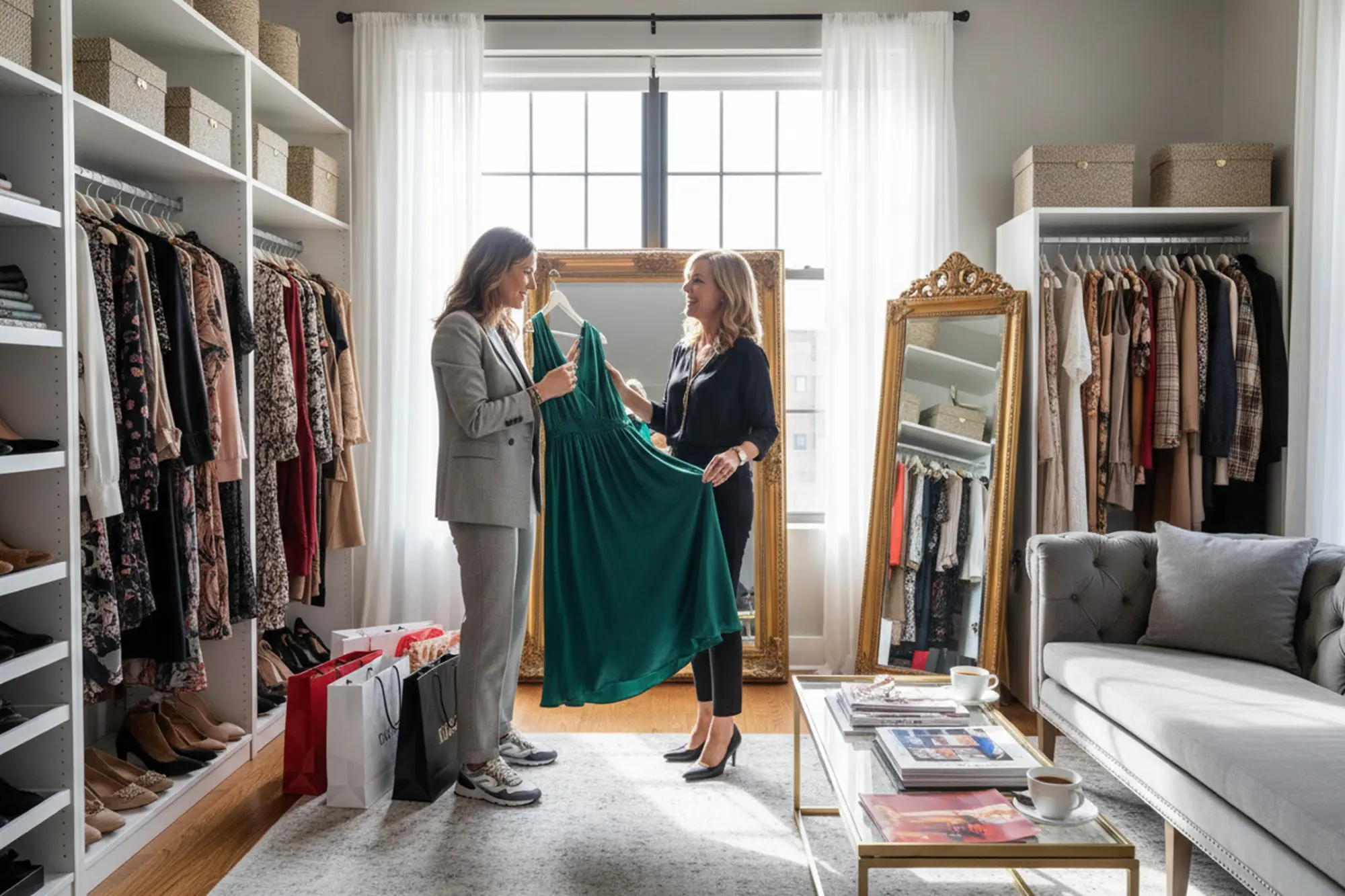
Signs You Need a Stylist
If you’re staring at a full closet but still feel like you have nothing to wear, it might be time to consider working with a personal stylist. Many people experience frustration when their wardrobe doesn’t reflect their current lifestyle or body shape, or when they struggle to keep up with ever-changing fashion trends. If you find yourself overwhelmed by choices, lacking inspiration, or unsure how to create outfits that make you feel confident, a great stylist can make all the difference.
A personal stylist brings expertise in identifying your unique style and curating a wardrobe that flatters your body and fits your daily routine. They offer practical advice on how to shop smarter, ensuring every new piece adds value to your closet. Whether you want to update your look, need help dressing for a new phase in life, or simply crave more confidence in your fashion choices, recognizing these signs is the first step toward becoming the best version of yourself. With the right stylist, you’ll find inspiration, clarity, and a renewed sense of confidence every time you get dressed.
Different Types of Fashion Stylists
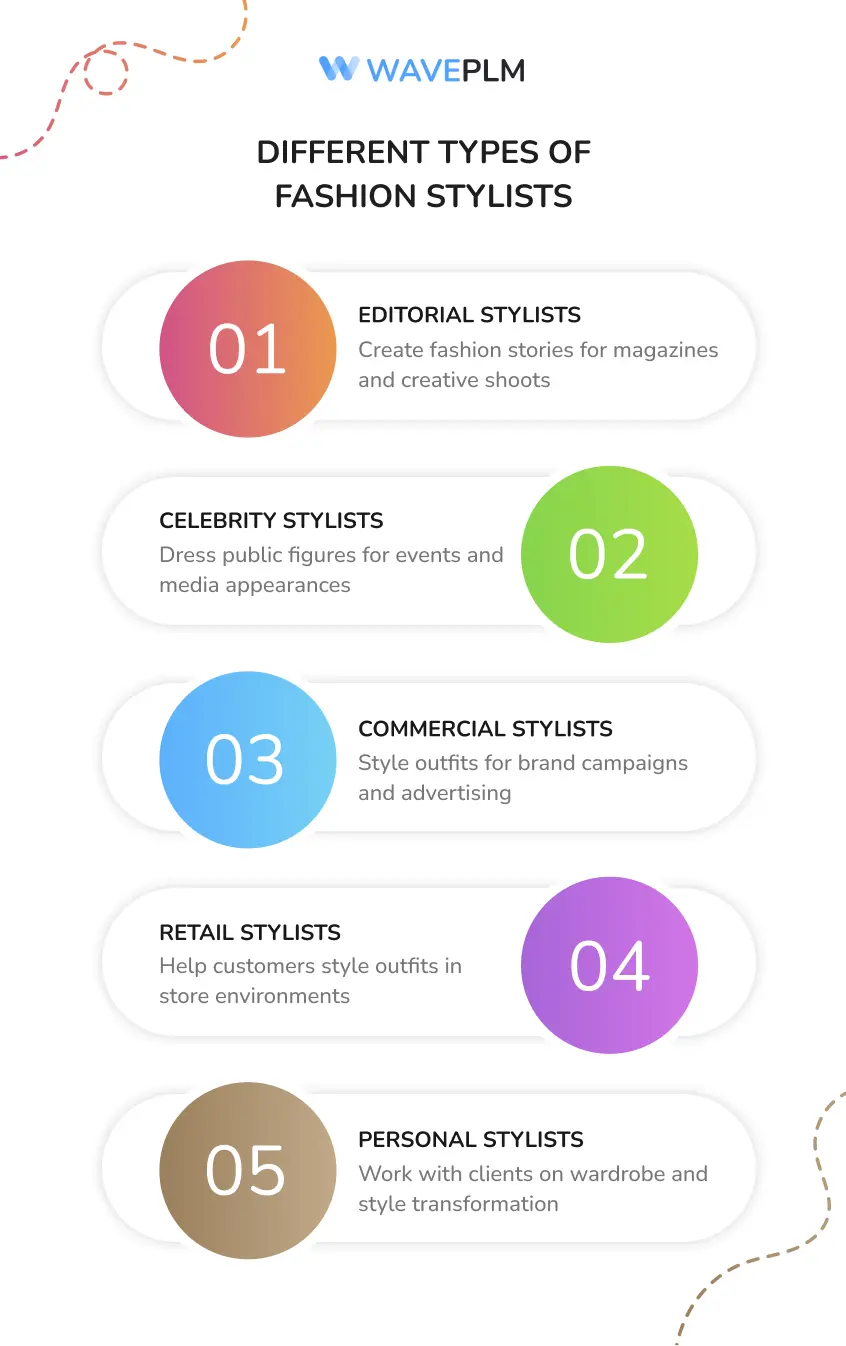
Many stylists specialize in different areas. Each type of stylist focuses on a different environment within the fashion world.
Editorial Stylists
Editorial stylists work with a fashion magazine or online fashion publication. Their work appears in editorial photography, trend stories, and creative fashion shoots.
Editorial fashion styling often pushes creative boundaries. The goal focuses on inspiration rather than direct sales.
Celebrity Stylists
Celebrity stylists dress celebrities for interviews, premieres, and red carpet events. These stylists work closely with brands and designers.
A strong celebrity outfit can influence trends around the world. Many stylists build their reputation through high-visibility celebrity styling.
Commercial Stylists
Commercial stylists support brand campaigns and advertising photography. Their focus stays on product clarity and visual storytelling.
Brands rely on stylists to create outfits that highlight clothing while still looking aspirational.
Retail Stylists
Retail stylists help customers understand how to wear clothing in real life. They may work inside a store or collaborate with visual merchandising teams.
Retail stylists also help shoppers build outfits using pieces already available in the store.
Personal Stylists
A personal stylist works directly with individual clients. This role focuses on personal styling and wardrobe transformation.
Many clients hire a personal stylist when they start a new job, go through a life transition, or want to refresh their closet. Women, in particular, often seek personal styling to address impulse shopping habits that result in a cluttered wardrobe.
Personal stylists help clients evaluate their own wardrobe, remove items that no longer fit their lifestyle, and build outfits from the remaining clothes. A wardrobe filled with clothes that don’t fit or serve your current lifestyle can lead to frustration and decision fatigue, so letting go of clothes that no longer serve you is essential for a functional wardrobe.
Fashion Stylist Roles Overview
| Styling Role | Focus Area | Example Work |
|---|---|---|
| Editorial stylist | Fashion magazine shoots | Creative fashion photography |
| Celebrity stylist | Celebrities and red carpet events | Award shows and premieres |
| Commercial stylist | Brand campaigns | Product advertising |
| Retail stylist | In-store styling | Outfit suggestions for shoppers |
| Personal stylist | Individual clients | Wardrobe planning |
This structure shows how the stylist career can develop across different sectors of the fashion industry.
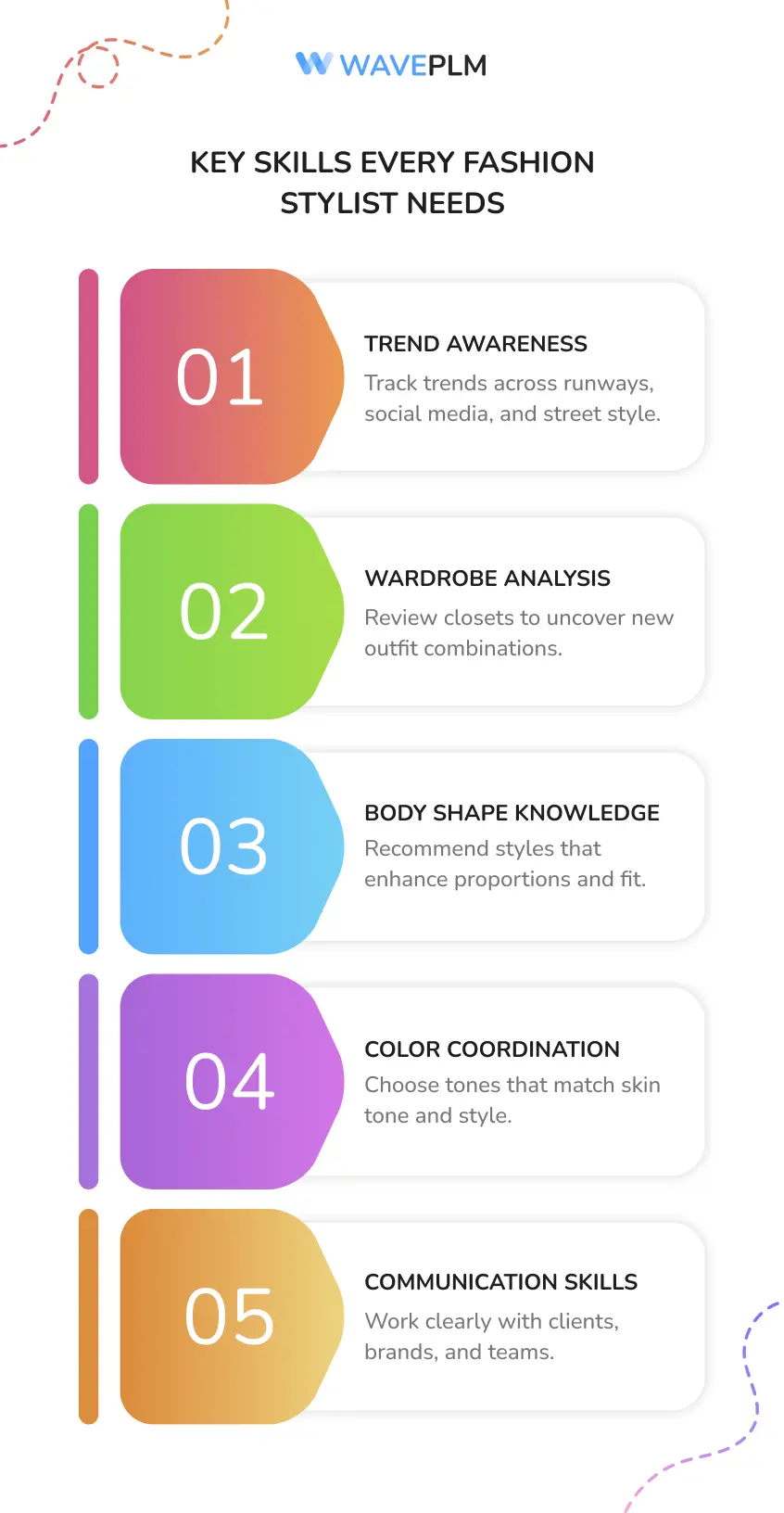
Key Skills Every Fashion Stylist Needs
A successful stylist combines creativity with practical knowledge. Having access to helpful tools, tips, and industry insights is essential for stylists to stay current and support their clients effectively. Styling requires an understanding of trends, clothing construction, and client psychology.
Trend Awareness
Fashion changes quickly. Stylists follow fashion trends across runways, social media, and street style.
They identify which trends matter and which trends will fall quickly.
Wardrobe Analysis
A personal stylist often begins with a closet review. During this process, the stylist studies all the pieces in the wardrobe.
This helps clients discover outfits they never considered before.
Body Shape Knowledge
Understanding body shape helps a stylist recommend flattering clothing.
For example, a blazer may create structure, while high-waisted jeans can balance body proportions.
Color Coordination
Color plays a major role in styling. Stylists choose tones that complement skin tone and personal style.
Communication Skills
Stylists work with photographers, brands, and many clients. Clear communication helps every project move smoothly.
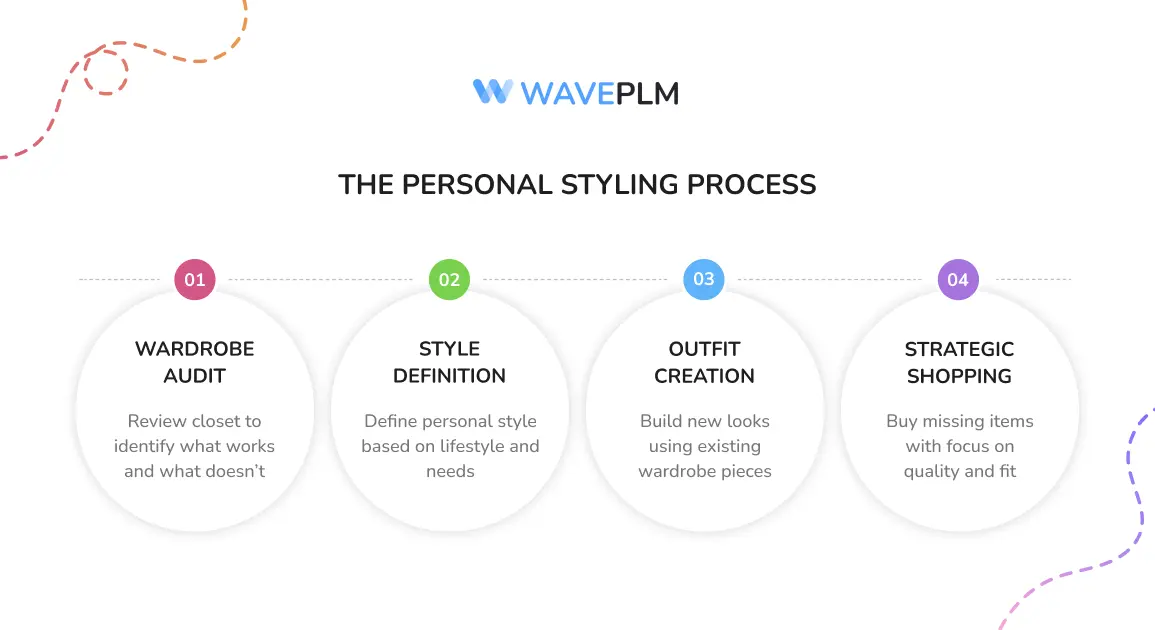
The Personal Styling Process
Personal styling follows a structured process. This process helps clients simplify their wardrobe and reduce decision fatigue.
Step 1: Wardrobe Audit
The personal stylist reviews the client’s closet. They identify clothing that fits, clothing that needs tailoring, and clothing that no longer serves the client.
Many people discover they already have a full closet but still struggle to create outfits.
Step 2: Style Definition
Next, the stylist helps the client define their style direction. This includes lifestyle needs, work environment, and social activities.
Step 3: Outfit Creation
Stylists start putting outfits together using clothes already in the wardrobe. This step often creates more options without additional shopping.
Step 4: Strategic Shopping
Finally, the stylist helps the client shop for missing items. Clients also learn how to spend wisely on quality pieces that will last and elevate their wardrobe. Personal shoppers sometimes support this stage. Personal shopping services involve the stylist finding pieces that flatter the client’s shape and fit their budget.
Clients learn how to shop smarter and avoid impulse purchases.
Quick Checklist for Working With a Personal Stylist
| Step | What Happens | Result |
| Closet review | Evaluate clothing | Organized wardrobe |
| Style direction | Define personal taste | Clear identity |
| Outfit building | Combine pieces | More outfit options |
| Shopping session | Add key items | Balanced wardrobe |
This quick checklist helps clients understand the value of working with a personal stylist.
Styling and Fashion Marketing
Styling plays a major role in fashion marketing. The way a garment appears in photography often determines how customers perceive its quality and appeal.
Stylists work with creative teams to create visual campaigns that represent brand identity.
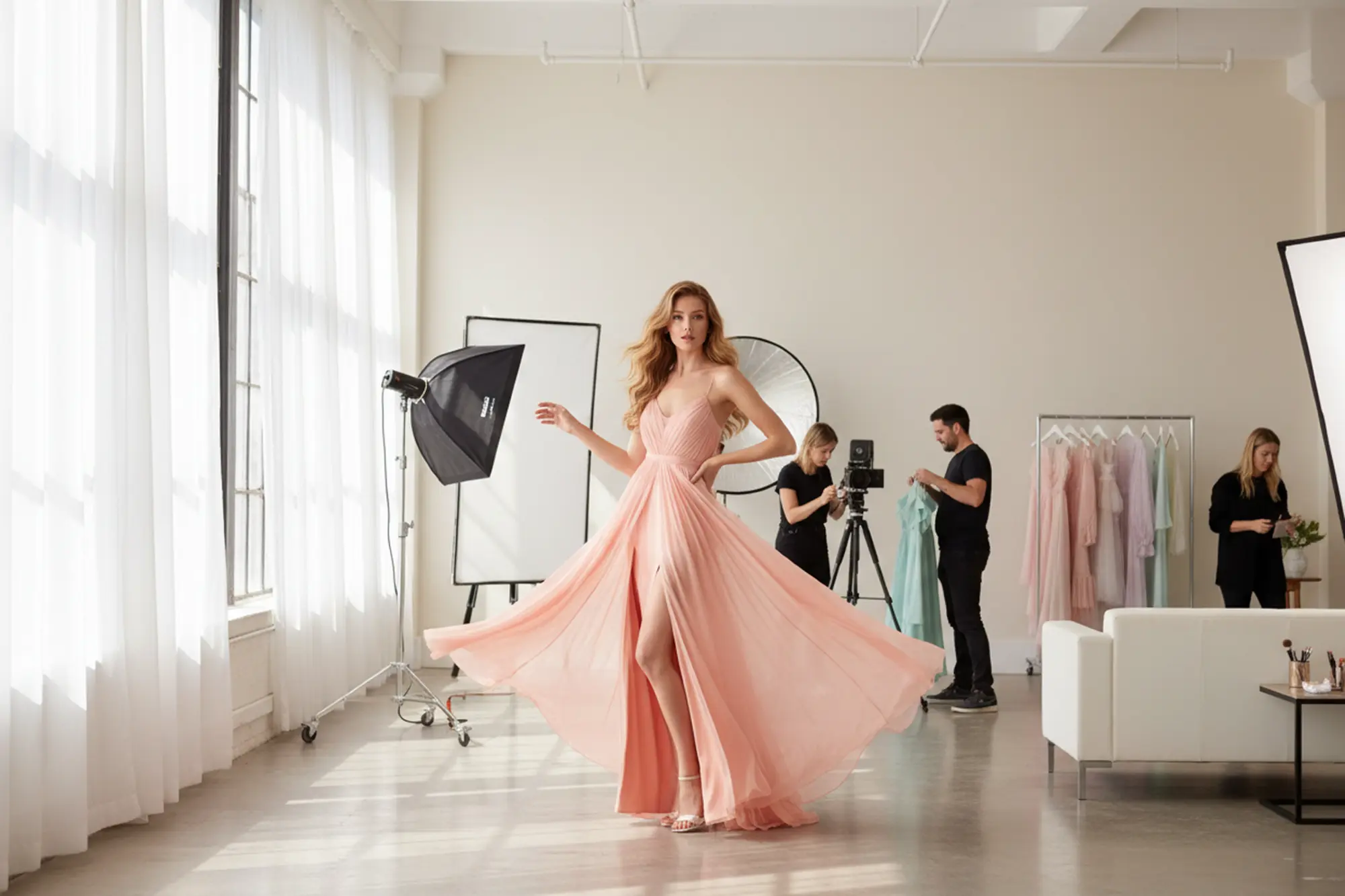
Campaign Photoshoots
Stylists build outfits that support campaign storytelling. They adjust clothing, accessories, and jewellery to create balanced looks.
Social Media Styling
Social media requires visually strong outfits. Stylists combine clothing, shoes, and accessories to create images that attract attention online.
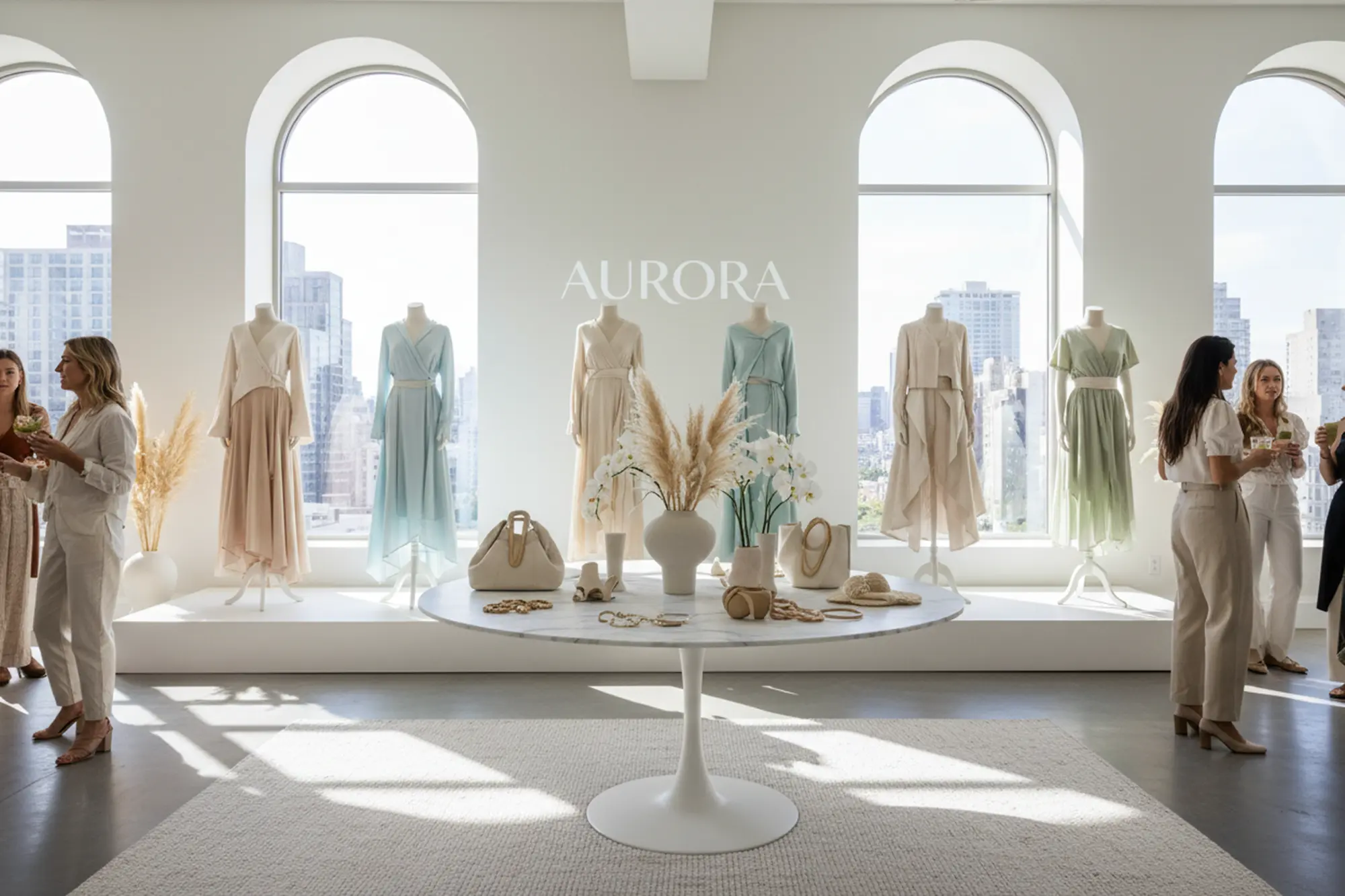
Product Launch Styling
When brands release new collections, stylists help define the visual narrative of the launch.
How Technology Is Changing Fashion Styling
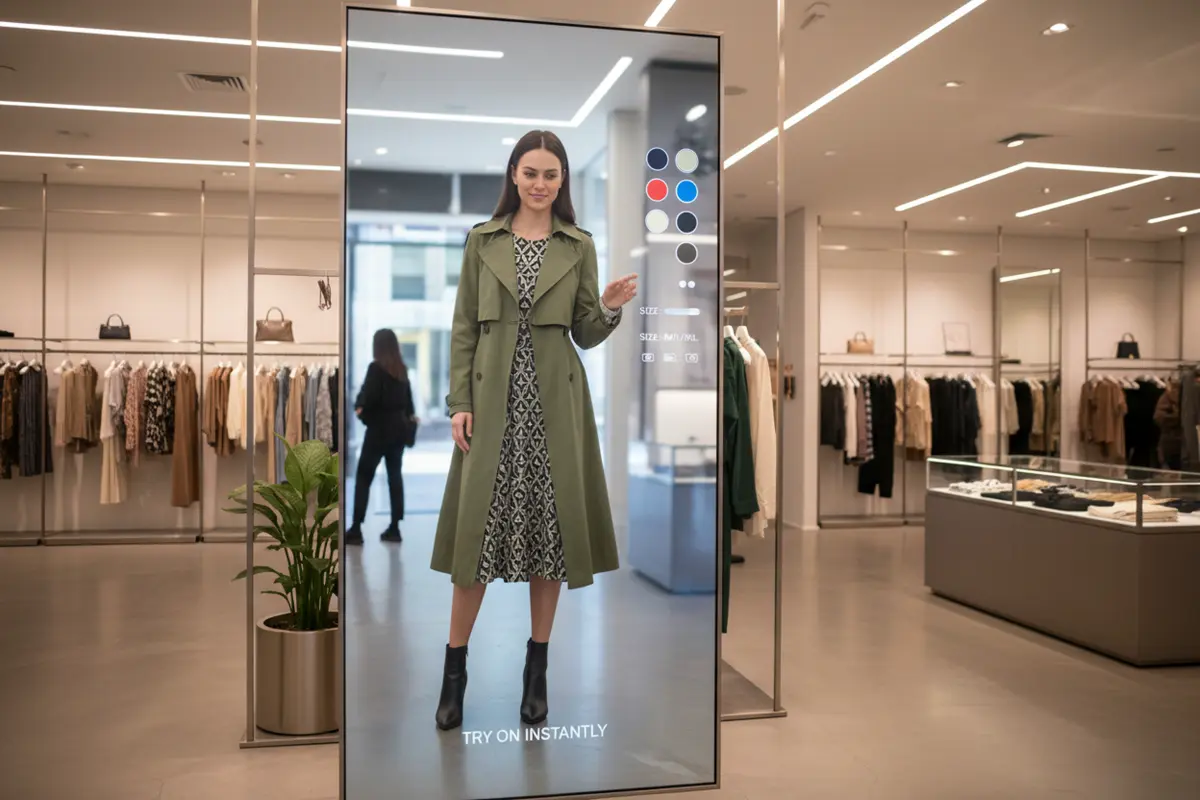
Digital tools now influence styling workflows across the industry.
Stylists use technology to organize inspiration boards, plan outfits, and collaborate with brands.
Fashion technology also allows stylists to manage digital wardrobes, coordinate campaigns, and streamline the styling process.
These tools improve efficiency and help professionals manage many clients across multiple projects.
Building a Client Base
For any personal stylist, building a strong client base is essential for a thriving career in the fashion industry. Showcasing your expertise through social media, a personal blog, or contributions to a fashion magazine can help you reach new audiences and establish yourself as a great stylist. Sharing your personal style and fashion insights not only demonstrates your skills but also attracts clients who resonate with your approach.
Networking is another key strategy. Connecting with other professionals in the industry—such as image consultants and personal shoppers—can lead to valuable referrals and collaborative opportunities. Offering specialized services like closet audits or personalized shopping experiences can set you apart from other stylists, appealing to clients who want a tailored approach to fashion. By focusing on building relationships and consistently demonstrating your expertise, you’ll grow your business and enjoy a rewarding career as a personal stylist.
Overcoming Styling Challenges
Every personal stylist faces unique challenges when working with clients. One of the most common hurdles is helping clients overcome decision fatigue and build confidence in their fashion choices. Listening carefully to your clients’ needs, understanding their body shape, and considering their lifestyle are crucial steps in providing effective personal styling solutions. By offering personalized advice and practical guidance, you can help clients break through style barriers and feel more confident in their everyday outfits.
Staying current with trends and developments in the fashion industry is another important aspect of overcoming challenges. Attending industry events, reading fashion magazines, and connecting with other professionals ensures you remain inspired and informed. This ongoing learning allows you to offer clients the latest advice and keep their wardrobes fresh and relevant. Ultimately, overcoming styling challenges is about combining empathy, expertise, and a passion for fashion to help every client look and feel their best.
Measuring Success
Success as a personal stylist goes beyond just building a business—it’s about making a real impact on your clients’ lives. One of the most important ways to measure success is through client satisfaction. Gathering feedback and testimonials helps you understand what’s working and where you can improve, ensuring you deliver the best possible personal styling experience.
Tracking the growth of your client base and monitoring your business revenue are also key indicators of progress. Setting clear goals and regularly reviewing your achievements keeps you focused and motivated as your career develops. Perhaps most rewarding is seeing your clients feel more confident and comfortable in their clothes, knowing your expertise has helped them embrace their personal style. By focusing on these measures, you’ll build a successful, fulfilling career as a stylist and help your clients achieve their fashion and lifestyle goals.
Building a Career as a Fashion Stylist
Many stylists begin their career through internships or assistant roles.
Working with established professionals allows new stylists to learn industry workflows, client communication, and brand collaboration.
Stylists often build portfolios through editorial projects, fashion blogs, and creative photography collaborations.
Understanding the importance of tailoring is crucial for any stylist guide. Finding a local tailor can help make mid-range pieces look high-end, and a tailored garment often looks better than an expensive, ill-fitting one. Paying attention to the fit of wardrobe staples, especially pants such as jeans, tailored trousers, and leather pants, is essential. The right hem on pants can make legs look longer, and small tweaks like raising a hem or taking in a waist can completely change a garment’s appearance.
Over time, stylists develop expertise and attract more clients.
Some professionals focus on personal styling, while others work with celebrities, brands, or fashion media.
Conclusion
Styling plays a central role in the fashion world. A stylist shapes how clothing appears, how brands communicate, and how clients experience their wardrobe.
Whether working with celebrities, brands, or private clients, a stylist focuses on creating outfits that make people feel confident and express their best version.
This fashion stylist guide shows that styling combines creativity, strategy, and personal understanding. For aspiring professionals, styling offers a dynamic career that connects fashion, lifestyle, and visual storytelling.





Leave a Reply