

So what is a colorway, exactly? A colorway is the specific combination of colors applied to one version of a garment — including the base fabric, trim, thread, print, and hardware. While “color” describes a single hue, a colorway defines the complete color identity of a style. A jacket design, for instance, might ship in four colorways: Navy/White, Black/Red, Olive/Tan, and Cream/Gold. Each of those is a distinct product with its own SKU, specification sheet, and sourcing requirements.
For fashion brands, colorways are not just a creative decision. They are an operational multiplier. Every additional colorway per style creates a new thread of approvals, fabric orders, and production documents. Understanding what is a colorway — and how to manage them at scale — is essential for any brand producing more than a handful of styles per season.
What Is a Colorway in Fashion?
The Cambridge Dictionary defines colorway as the range of colors applied to clothing or fabric — specifically, “a combination of colors or one particular color in which clothing is made.” In American English the term is spelled colorway. In British English it appears as colourway. Both spellings refer to the same concept.
In apparel specifically, a colorway includes every color decision tied to one version of a style. This means the body fabric shade, any contrast panel, the lining, thread, zipper tape, label, and all color placements within printed fabrics. For instance, a floral print can appear on a blue ground and a red ground. Those are two separate colorways of the same print — each needing its own dye approval and production documentation.
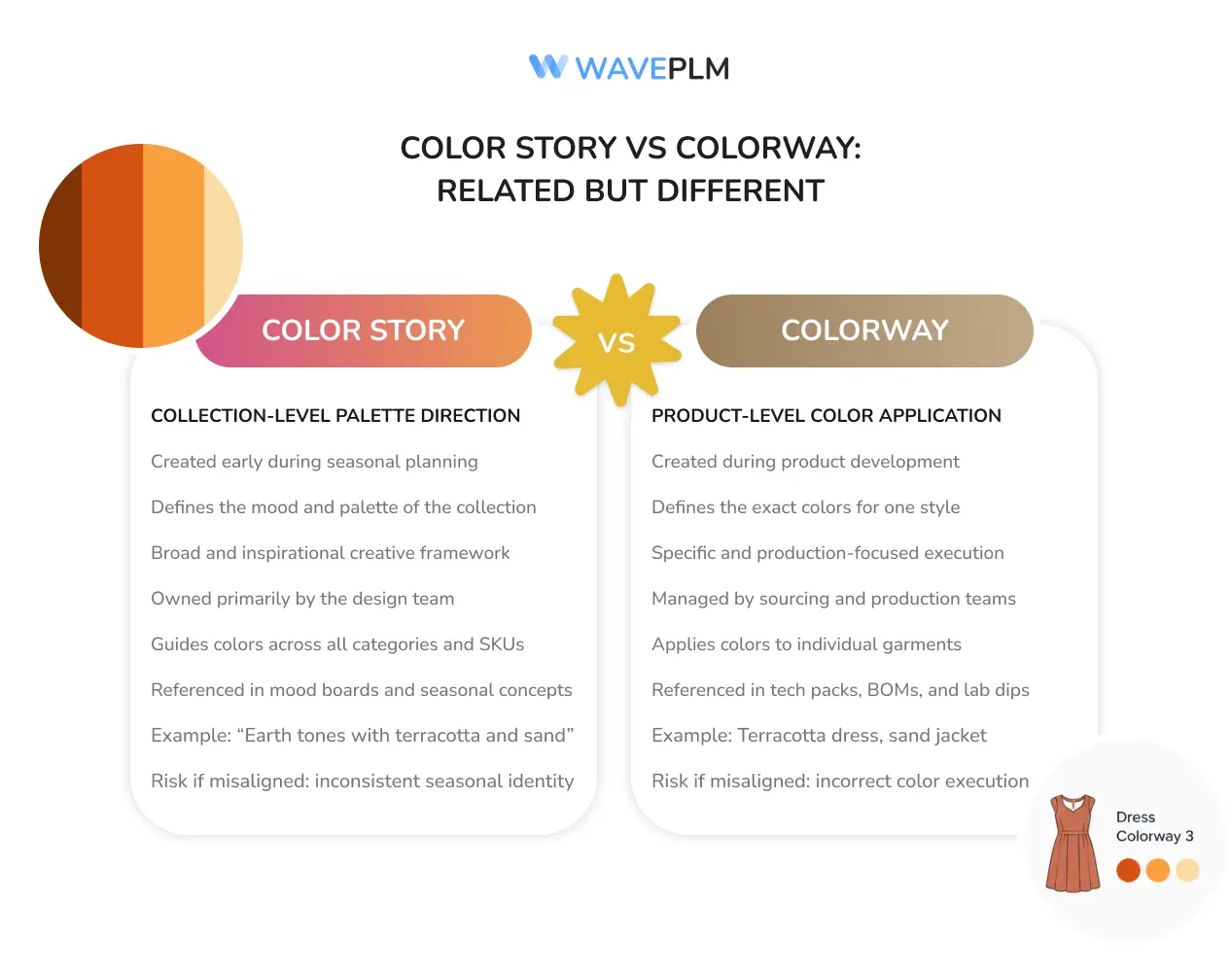
Additionally, it is important to distinguish a colorway from a color story. A color story is the seasonal palette — the curated set of 8–12 colors chosen as creative direction for an entire collection. A colorway, by contrast, is the product-level execution: the specific application of those palette colors to a single style. In short, the color story guides creative decisions, while colorways define what actually goes into production.
Our finding: Wave PLM customers frequently discover that a collection of 40 styles, each averaging four colorways, generates over 160 individual product records. Every one requires its own approval chain and BOM variant. Managing this in spreadsheets leads to missed labdips, production errors, and delayed shipments.

Why Do Apparel Brands Create Multiple Colorways Per Style?
Most brands offer each style in two to six colorways per season. The primary driver is commercial: retailers and wholesale buyers want variety within a single silhouette. Broader colorway offerings, therefore, increase the likelihood of full sell-through.
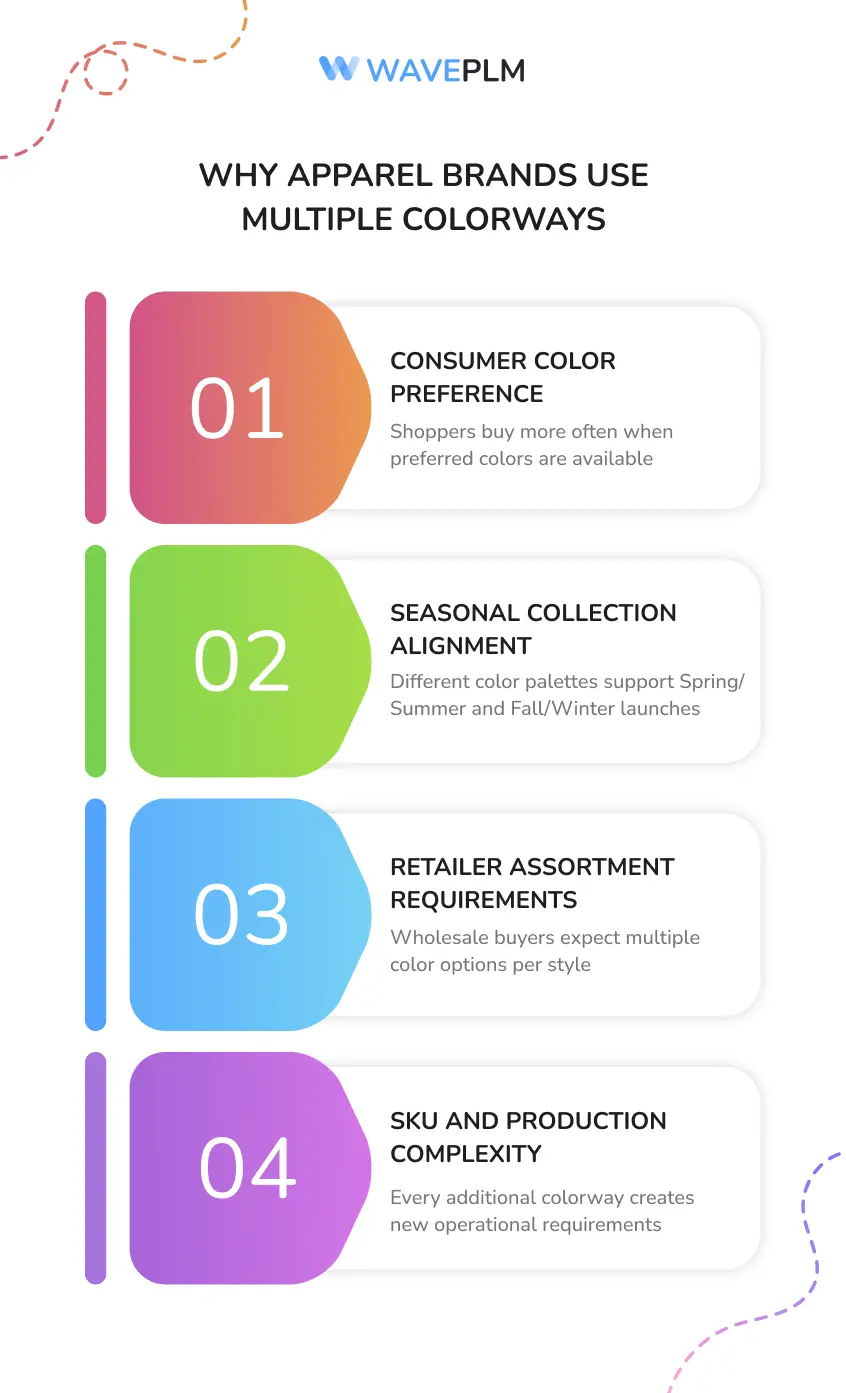
Specifically, there are three main business reasons behind multi-colorway strategies. First, consumer demand — shoppers convert more often when they find their preferred color in a silhouette they like. Second, seasonal alignment — Spring/Summer collections carry brighter, lighter colorways, while Fall/Winter runs deeper, muted tones. Third, retailer requirements. Department store buyers frequently commit to a style only if it comes in at least three colorways. This reduces the risk of an entire SKU underperforming.
Industry data: According to McKinsey’s State of Fashion report (2024), SKU proliferation is one of the top operational challenges for mid-market apparel brands, with the average number of active SKUs per brand growing approximately 30% over the previous five years. Colorway expansion is a significant contributor to this trend.
Consequently, a brand launching 50 styles per season with an average of four colorways per style manages 200 distinct product records from a production standpoint. Each requires its own fabric dye lot, labdip submission, and quality reference standard.
How Does a Colorway Affect Sourcing and Production?
Each colorway triggers a chain of sourcing and production steps. These steps are often underestimated at the planning stage. Specifically, colorways create meaningful workload in three areas.
First, every new fabric color requires a labdip — a small dyed swatch a mill submits for approval against the target Pantone standard. Mills typically need two to four rounds before the color passes approval. Each round adds five to ten business days to the development calendar. Delays at this stage cascade directly into late bulk fabric production and missed shipment windows.
Second, once the designer approves the fabric color, the bill of materials must reflect the confirmed dye lot, matching thread, colorway-specific trim, and any print-related components unique to that version. Third, quality control at the point of production requires a separate color reference per colorway. An inspector passing a Navy/White jacket cannot use the Black/Red approval as a standard — the two colorways are different products.
Furthermore, fabric sourcing for multiple colorways of the same style often requires separate minimum order quantity (MOQ) commitments per color. This puts real pressure on a small brand’s cash flow, particularly when suppliers do not allow colorway consolidation within a single purchase order.
What Does Colorway Management Look Like in Practice?
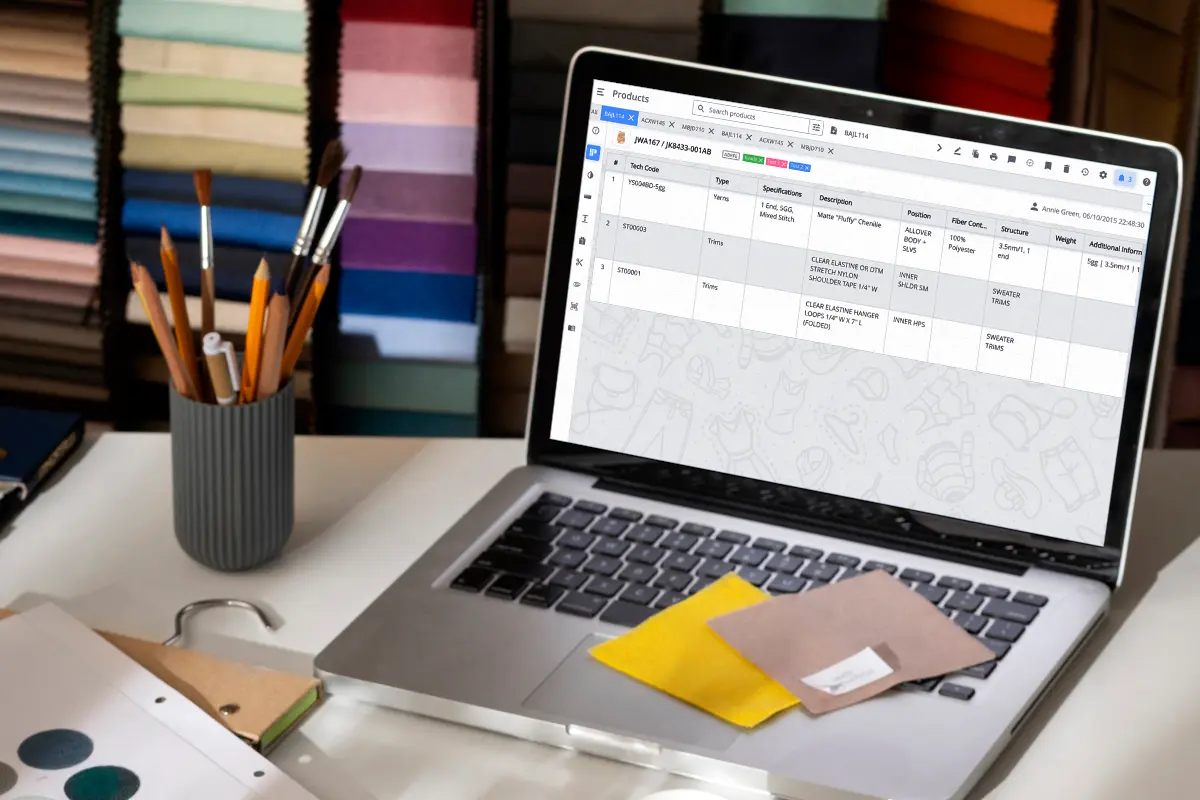
Brands managing collections in spreadsheets handle colorways manually — one row per style per colorway, with separate tabs for labdips, spec versions, and supplier communication. This works at small scale. However, it breaks down rapidly as a collection grows beyond 20 to 30 styles.
The most common failure points in manual colorway management include version conflicts in spec sheets, labdip approvals buried in email threads, and fabric orders placed before colorway approvals are finalized. Each of these issues adds sampling rounds, delays the calendar, or results in production errors that reach the end customer.
| Task | Manual (Spreadsheet + Email) | PLM System |
|---|---|---|
| Track labdip status per colorway | Email threads, manual spreadsheet update | Approval workflow with live status dashboard |
| Maintain BOM per colorway | Duplicate rows, frequent version conflicts | Colorway-level BOM variants linked to parent style |
| Share color spec with supplier | PDF exported per colorway, emailed manually | Supplier portal access, always the current version |
| Add a new colorway mid-season | Copy-paste row, high risk of missed fields | Clone style record, auto-populate shared attributes |
| QC reference per colorway | Separate document per color, distributed manually | Inspection checklist auto-generated per colorway |
How Does PLM Software Handle Colorways?
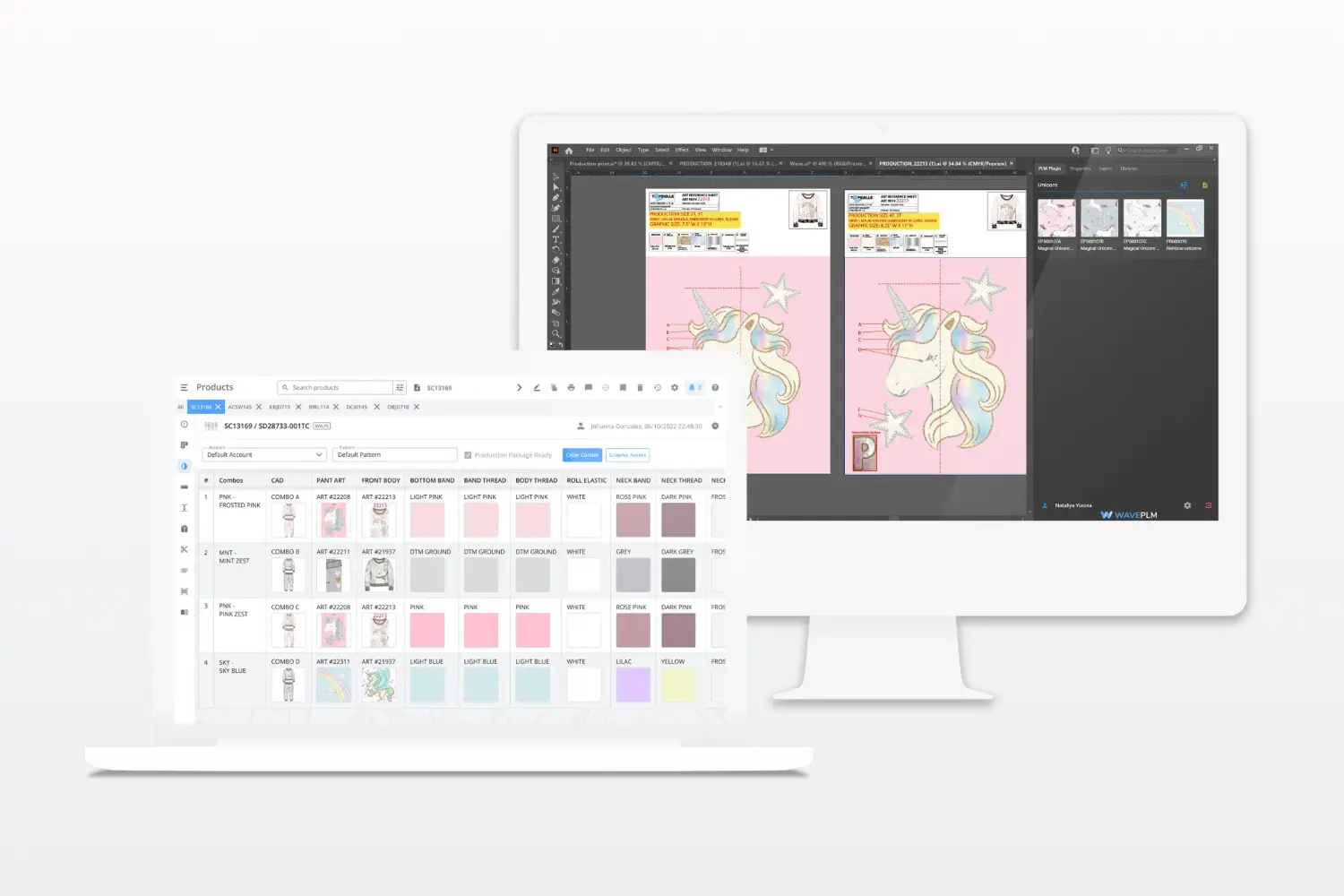
A fashion PLM system treats each colorway as a child record of the parent style. The style’s shared attributes — silhouette, construction, base measurements — live at the parent level. Color-specific data (labdip status, colorway BOM lines, Pantone reference) live at the colorway level. This structure eliminates duplication without losing color-level detail.
In practice, PLM manages colorways across four key areas. For labdip tracking, each colorway carries its own approval workflow. The mill submits a swatch, the designer approves or requests a correction, and the system timestamps every round. This creates a full audit trail without email searches. For BOM management, color-specific components link to the colorway record rather than copying across multiple style files. A BOM update on the parent style, therefore, propagates automatically to all colorway variants.
In the supplier portal, the factory accesses the approved colorway spec directly. This eliminates the risk of production against an outdated email attachment. Finally, for quality control, inspection checklists generate per colorway with the correct Pantone reference and approved labdip image. Inspectors across different factories, as a result, all work from the same standard.
Our finding: Brands that centralize colorway management in Wave PLM reduce labdip correction rounds by an average of one round per colorway — saving five to ten business days per style per season.
For brands managing 100 or more colorways per season, this improvement compounds significantly. Moreover, when a buyer requests a new colorway after launch, the team can clone an existing record. They update the color-specific fields and generate a supplier-ready spec in minutes rather than hours.
What Is the Difference Between a Colorway and a Color Story?
These two terms are related but operate at different levels of the design process. A color mood board and color story are developed at the collection level — typically in the earliest stage of seasonal planning. They define the palette direction for an entire season. A typical example: “dusty earth tones anchored by terracotta and sage, with a pop of burnt orange.” This creative framework subsequently guides all colorway decisions across every style.
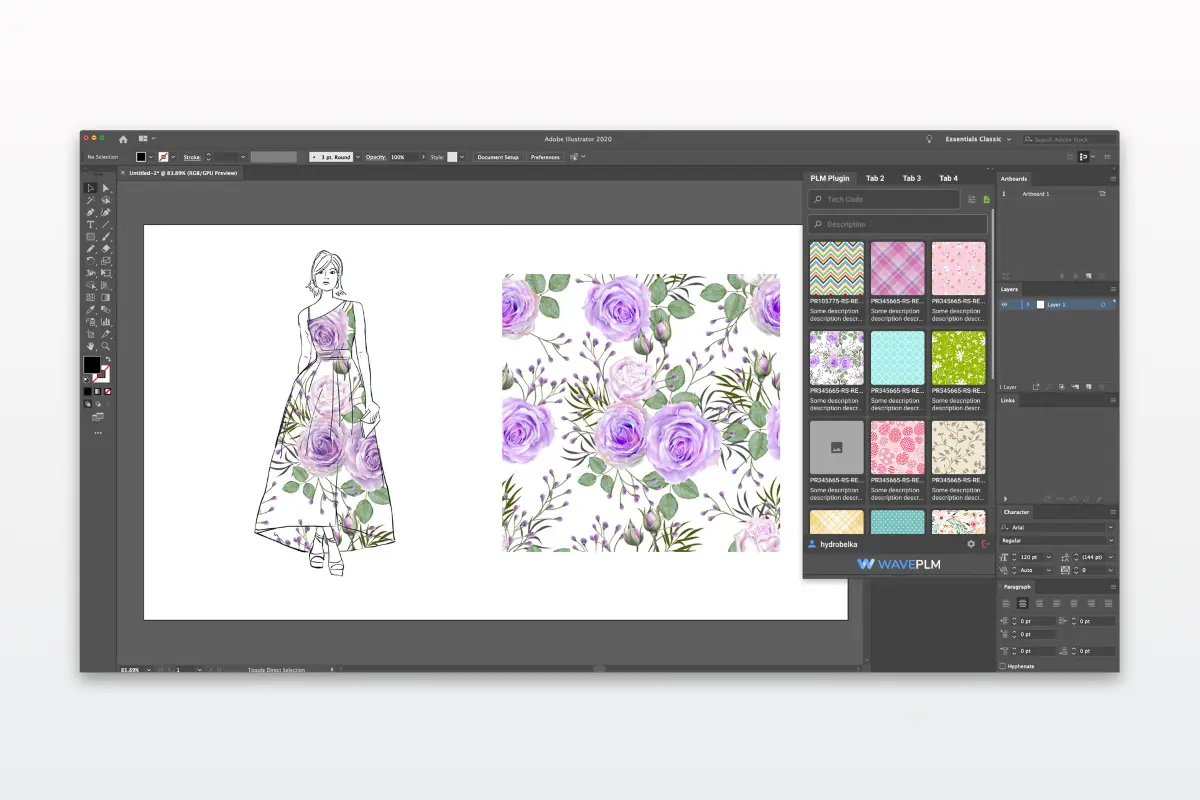
A colorway, by contrast, is the product-level translation of that color story. The terracotta from the color story may appear as the body color of a linen shirt. Similarly, it can serve as the accent color on a jacket collar, or as the print ground on a dress. Those are three separate colorways across three different styles — all rooted in the same seasonal palette.
In other words, the color story is a creative planning tool, while colorways are production documents. Designers own the color story. Production and sourcing teams, on the other hand, own colorway management. In brands where these responsibilities overlap without clear ownership, the creative palette often drifts between the design studio and the factory — resulting in colorways that look different from the original brief.
Frequently Asked Questions
What is a colorway in fashion?
A colorway in fashion is the specific combination of colors — fabric, trim, thread, hardware, and print — applied to one version of a garment. Each colorway represents a distinct product requiring its own sourcing, approval workflow, and production documentation. Therefore, a single style typically ships in two to six colorways per season.
What is the difference between a colorway and a color?
A color is a single hue, such as navy or olive. A colorway, however, is the complete color package for one product version — base color, accent colors, lining, thread, and any print color combination. For example, a jacket in “Navy/White” is one colorway: navy is the body, white is the contrast panel.
What is the difference between a colorway and a color story?
A color story is the seasonal palette — the curated set of 8–12 colors chosen as creative direction for an entire collection. A colorway, in contrast, is the product-level application of that palette to a specific style. The color story is a design brief; the colorway is a production document with its own BOM, labdip approval chain, and quality reference.
How many colorways should a fashion brand offer per style?
Most small to mid-market brands offer two to four colorways per style per season. Wholesale brands may go up to six to meet retailer minimum assortment requirements. Each additional colorway increases SKU count and sourcing complexity. The decision should therefore balance commercial demand against the brand’s operational capacity to manage approvals, BOMs, and QC documentation per color.
What is a labdip and how does it relate to colorways?
A labdip is a small dyed fabric swatch a mill submits for approval before bulk production begins. Each colorway requires at least one labdip, and multiple correction rounds are common. Notably, labdip approval is one of the most time-sensitive steps in colorway management — delays push back the entire fabric production and delivery schedule.
How does PLM software help with colorway management?
A PLM system links each colorway as a child record under its parent style. It stores labdip status, colorway-specific BOM lines, and supplier-ready specs in one place. As a result, this eliminates duplicate spreadsheet files, creates a clear approval audit trail, and allows suppliers to access the correct colorway documentation directly — reducing errors and cutting development time.
Is “colourway” the same as “colorway”?
“Colourway” is the British English spelling; “colorway” is the American English spelling. Both describe the same concept: the specific color combination applied to one version of a product. Cambridge Dictionary defines it as the color combination applied to a specific product or garment.
Managing colorways efficiently is one of the clearest indicators of operational maturity in an apparel brand. As collections scale, the gap between brands that manage colorways systematically and those relying on email and spreadsheets grows wider — in development time, error rates, and supplier relationships.
If your team spends hours hunting for the correct labdip approval or copying spec rows across color variants, that time is a direct cost on your development calendar. Wave PLM centralizes colorway records, approval workflows, and supplier communication in one system — so your team focuses on building the collection, not managing files.
Book a Wave PLM demo to see colorway management in action.




Leave a Reply