

Activewear PLM software is a product lifecycle management platform built for fitness, yoga, and athletic apparel brands. It handles tight-fit spec tolerance, performance fabric compliance, and the high-velocity calendar of brands that launch four to six collections a year. If your team manages moisture-wicking fabrics, compression panels, or UPF-rated textiles, a generic PLM will leave critical gaps in your workflow.
This guide explains what separates activewear-specific PLM from traditional fashion PLM. Additionally, it covers what to look for in a platform. Specifically, you will see how growing brands use activewear PLM software to stay on schedule across multiple drops without creating chaos in their spec library.
Table of Contents
- What Makes Activewear PLM Different from General Fashion PLM?
- How Does PLM Handle Performance Fabric Compliance?
- Managing Multi-Season Drops with PLM: What Does That Look Like?
- Tech Pack and BOM Complexity in Activewear: Why Standard Templates Fall Short
- How Do Activewear Brands Use PLM for Vendor Collaboration and Quality Control?
- What Should Activewear Brands Look for in Activewear PLM Software?
- Frequently Asked Questions
What Makes Activewear PLM Different from General Fashion PLM?
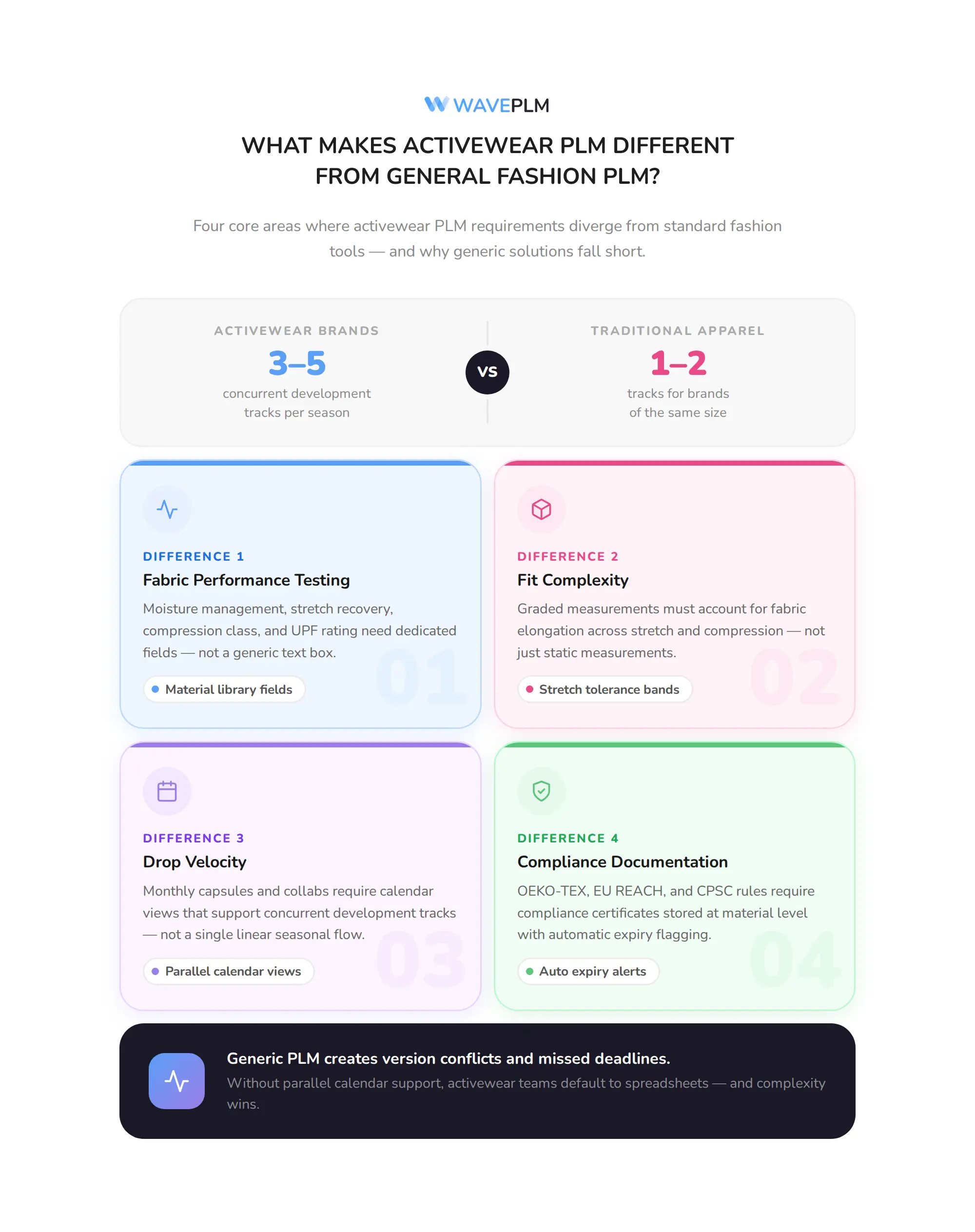
Activewear brands operate on a fundamentally different product cadence than traditional apparel. Their technical specifications are also far more complex. For example, a single legging may require dimensional stability testing, colorfastness to perspiration, and pilling resistance data. Notably, standard PLM tools designed for woven basics don’t include these testing fields out of the box.
There are four core areas where activewear PLM software diverges from general fashion PLM:
- Fabric performance testing attributes: Moisture management, stretch recovery, compression class, and UPF rating all need dedicated fields in the material library — not a generic text box.
- Fit complexity: Activewear relies on precise graded measurements across stretch and compression. Consequently, fit tolerance bands must account for fabric elongation, not just static measurements.
- Drop velocity: Many activewear brands release capsules or collabs monthly. As a result, PLM needs calendar views that support concurrent development tracks rather than a single linear seasonal flow.
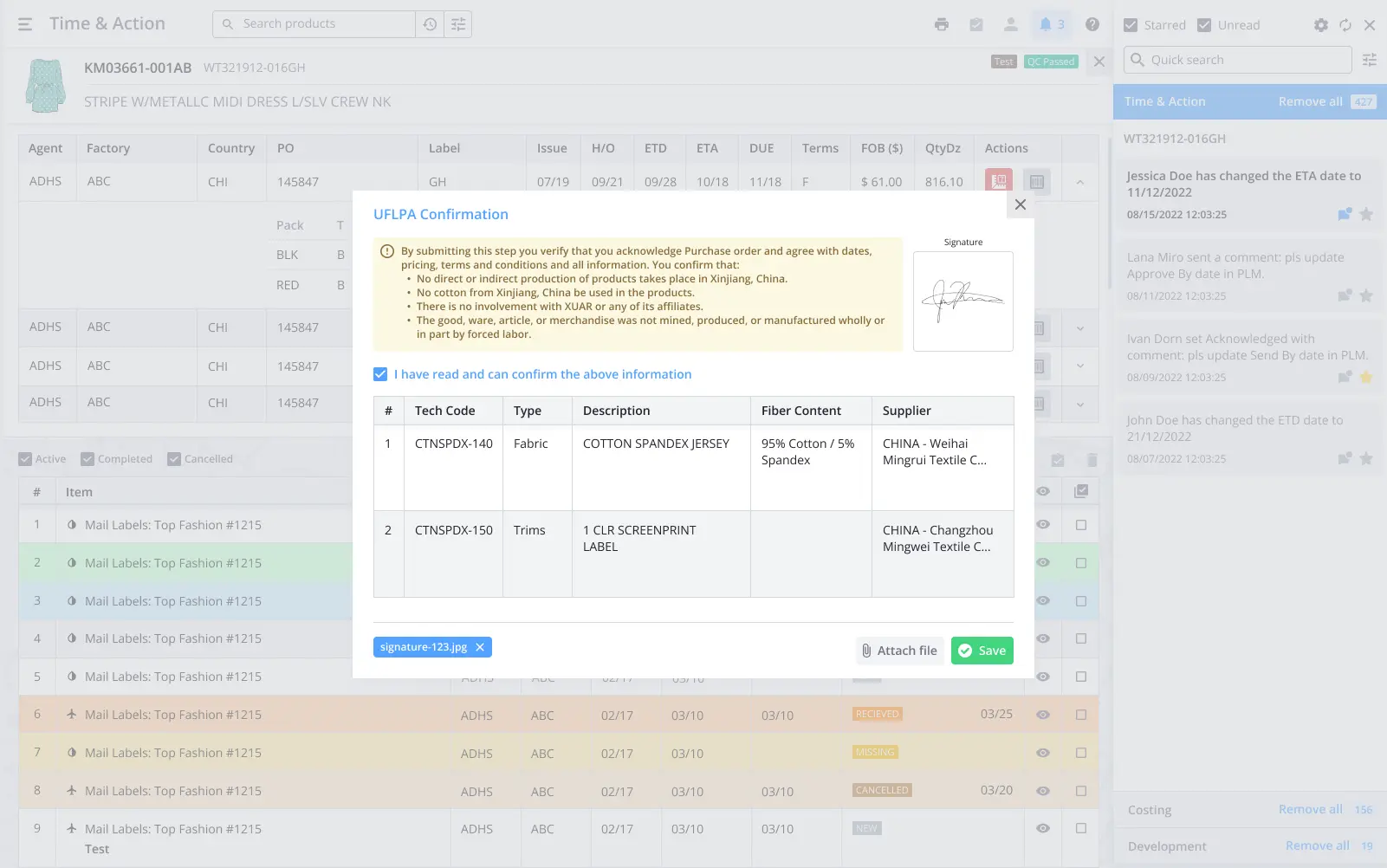
- Compliance documentation: Performance fabrics are subject to OEKO-TEX Standard 100, EU REACH, and CPSC rules for children’s activewear. Furthermore, PLM should store compliance certificates at the material level and flag expiry dates automatically.
Our finding: Wave PLM customers in the activewear segment report managing 3–5 concurrent development tracks per season. That compares to 1–2 tracks for traditional apparel brands of the same size. Without activewear PLM software that supports parallel calendars, teams default to spreadsheets — creating version conflicts and missed deadlines.
How Does PLM Handle Performance Fabric Compliance?
Performance fabric compliance is one of the most time-consuming aspects of activewear product development. Specifically, this is where activewear PLM software delivers some of its clearest ROI. PLM centralizes compliance documentation at the material level. That means no more storing certificates loosely in emails or shared drives.
Specifically, in a well-configured PLM system, each material in the library carries:
- Supplier certification files (OEKO-TEX certificate, REACH test report, GOTS if applicable)
- Certificate expiry dates with automatic alerts to sourcing and compliance teams
- Test result data: GSM, stretch percentage, pilling grade, colorfastness rating
- Approved supplier list per material, with associated MOQ and lead time
Furthermore, when a fabric is linked to multiple SKUs across different drops, a single compliance update propagates across all affected tech packs. This eliminates the manual “find and replace” work that causes compliance gaps in spreadsheet-managed brands.
Industry data: According to OEKO-TEX (2024), over 11,000 brands and retailers worldwide hold or require OEKO-TEX Standard 100 certification. That number has grown 14% year over year as retailers tighten requirements. For activewear brands selling into major retail channels, having compliance documentation centralized in PLM is increasingly a vendor prerequisite.
For brands selling into the EU, REACH compliance demands material-level traceability. You need to know which chemicals are present in each substrate and keep restricted substances (SVHCs) below threshold limits. Activewear PLM software that integrates REACH tracking at the BOM level makes this audit-ready by default. For a deeper look at how fabric data connects to production, see our guide on fabric sourcing for apparel brands.
Managing Multi-Season Drops with PLM: What Does That Look Like?
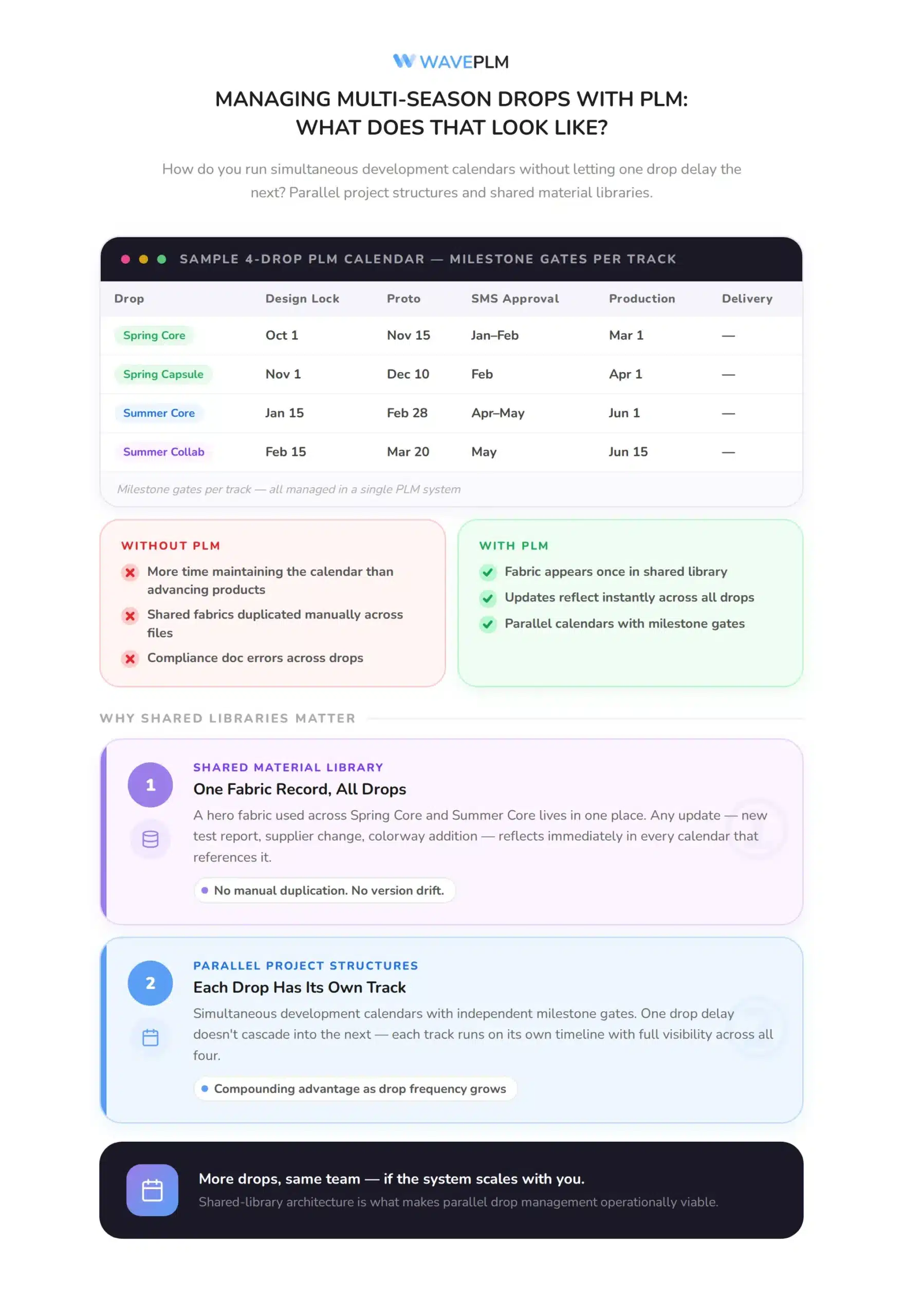
Activewear brands moving beyond two seasons a year face a specific operational challenge. The question is: how do you manage simultaneous development calendars without letting one drop delay the next? That is precisely the problem that activewear PLM software solves. Specifically, it does this through parallel project structures and shared material libraries.
In practice, a mid-size activewear brand running four drops per year might structure their PLM calendar as follows:
| Drop | Design Lock | Proto Sample | SMS Approval | Production | Delivery |
|---|---|---|---|---|---|
| Spring Core | Oct 1 | Nov 15 | Dec 20 | Jan–Feb | Mar 1 |
| Spring Capsule | Nov 1 | Dec 10 | Jan 15 | Feb | Apr 1 |
| Summer Core | Jan 15 | Feb 28 | Mar 20 | Apr–May | Jun 1 |
| Summer Collab | Feb 15 | Mar 20 | Apr 10 | May | Jun 15 |
Without PLM, managing four overlapping tracks in a spreadsheet becomes unmanageable quickly. Product managers spend more time maintaining the calendar than advancing the products. Moreover, shared fabrics between drops — for example, a hero fabric used in both Spring Core and Summer Core — require manual duplication of compliance documents across both files. This is a common source of errors.
In PLM, the fabric appears once in the shared library. Both drop projects reference the same material record. Any update — a new test report, a supplier change, a colorway addition — immediately reflects in both calendars. In other words, this shared-library architecture is what makes activewear PLM software a compounding operational advantage as drop frequency increases.
For context on how this fits into the broader workflow, our fashion product development process guide covers the full 6-stage operational model from concept to delivery.
Tech Pack and BOM Complexity in Activewear: Why Standard Templates Fall Short
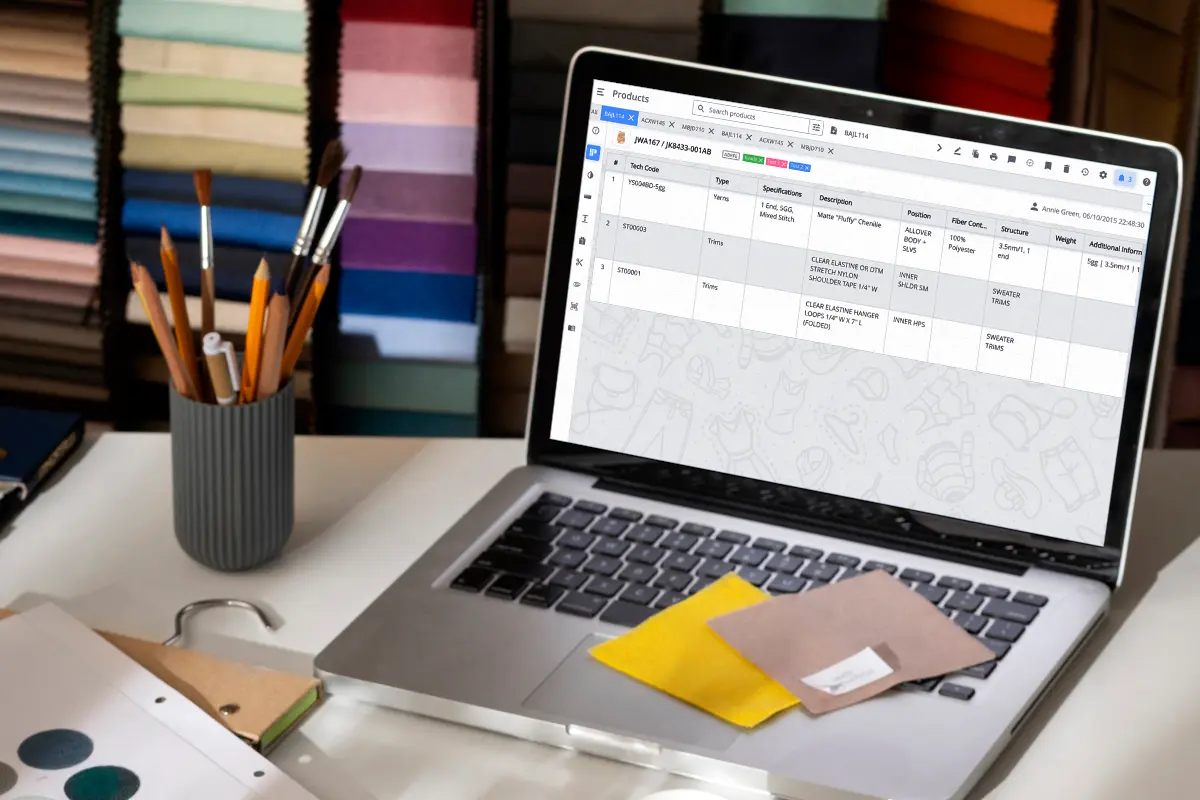
A tech pack for a performance running short is structurally more complex than one for a cotton t-shirt. In contrast, standard PLM templates designed for wovens or knit basics simply don’t reflect that complexity. Specifically, activewear tech packs typically require:
- Multi-layer BOM: A compression legging may include a main fabric, power mesh panel, waistband elastic, flatlock seam thread, and silicone gripper. Each component has separate supplier sourcing and compliance requirements. For more on structuring complex BOMs, see our multi-level BOM in fashion guide.
- Stretch measurement callouts: Tech packs must specify both relaxed and extended measurements. Tolerance bands should be expressed as percentages, not absolute mm values.
- Seam construction detail: Flatlock, coverstitch, and bonded seam specifications each affect performance during high-intensity movement. These need dedicated callout fields, not a generic construction notes area.
- Performance test requirements: The tech pack should specify which tests the factory must run before SMS approval. Common examples include pilling resistance, moisture wicking, and color retention after washing.
Activewear PLM software that ships with configurable tech pack templates saves the product development team hours of custom formatting per style. Furthermore, it creates a consistent documentation standard across all suppliers. This directly reduces the back-and-forth that typically inflates sample rounds.
As a reference point, brands using structured PLM tech pack templates report reducing sample rounds by one to two iterations on average. That is meaningful time and cost savings across a multi-drop annual calendar.
How Do Activewear Brands Use PLM for Vendor Collaboration and Quality Control?
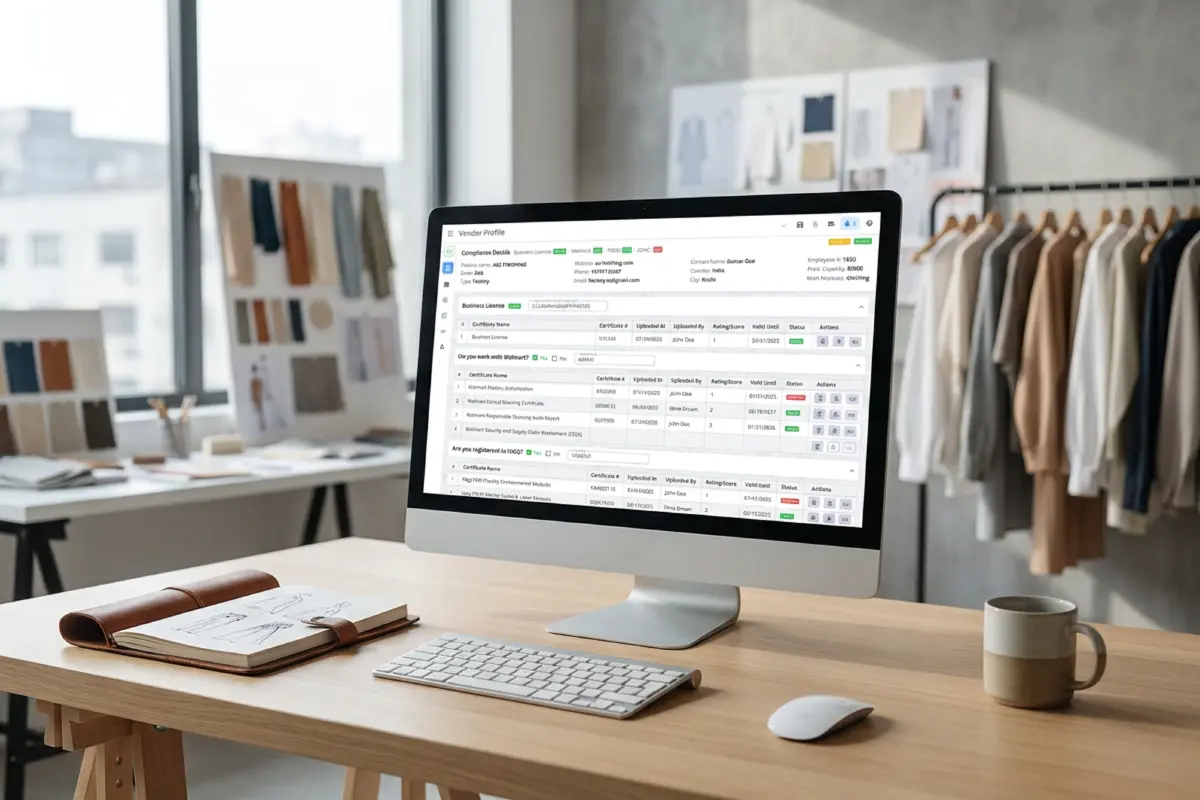
Vendor collaboration is a critical — and often underestimated — challenge in activewear. Performance fabrics typically come from a small number of specialized mills in Taiwan, South Korea, or Portugal. The production factories working with these materials have specific capabilities — bonded seams, sublimation printing, heat transfer application — that must be matched to the right style. Therefore, PLM handles this by linking approved vendor lists to specific material and process requirements at the style level.
For quality control, activewear PLM software connects the inspection process directly to the tech pack. When an AQL inspection is scheduled, the inspector references PLM-defined quality standards. For example, these include dimensional tolerances, seam strength requirements, and colorfastness specs. This direct linkage reduces interpretation errors and speeds up both inline and final inspection cycles. For a deeper overview, see our AQL inspection guide for apparel brands.
Additionally, vendor onboarding in PLM creates a clean handover. The factory receives the tech pack, BOM, compliance requirements, and approved material substitution list in one place. Consequently, supplier queries before first sample drop significantly. For brands working with new factories on a seasonal basis, our vendor onboarding guide covers the full process in detail.
Our finding: Wave PLM customers running activewear lines report that centralizing AQL spec and factory communication in PLM reduces pre-production query volume from factories by 30–40%. This is especially notable for first-time styles with complex seam or performance fabric requirements.
What Should Activewear Brands Look for in Activewear PLM Software?
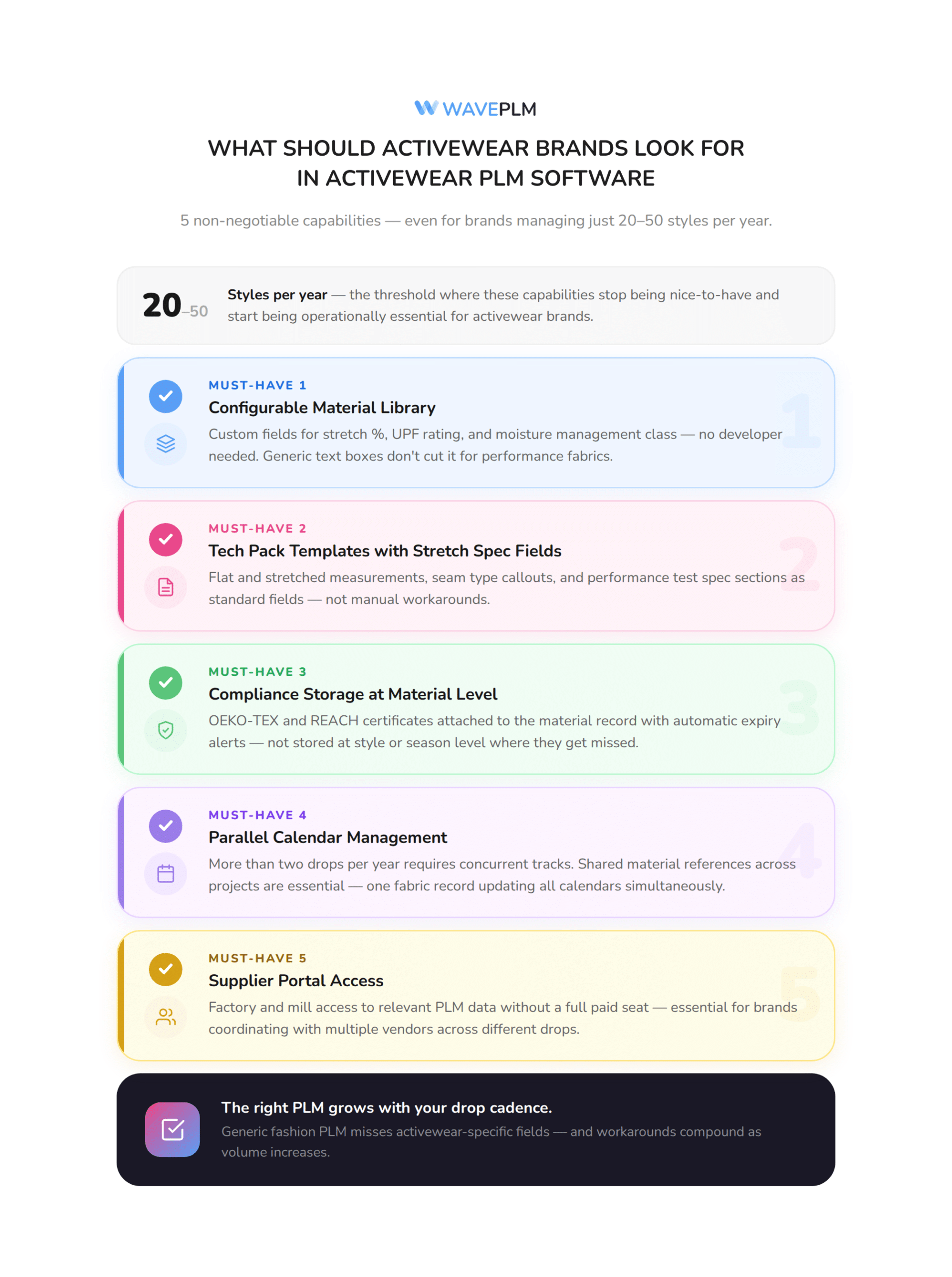
Not every activewear brand needs enterprise-grade activewear PLM software. However, even brands managing 20–50 styles per year benefit from a platform with certain non-negotiable capabilities. Here is what to prioritize:
- Configurable material library: You need custom fields for performance attributes — stretch percentage, UPF rating, moisture management class — without developer support.
- Tech pack templates with stretch spec fields: A good baseline activewear template should include flat and stretched measurements, seam type callouts, and performance test spec sections as standard fields.
- Compliance document storage at material level: OEKO-TEX and REACH certificates should attach to the material record with expiry date alerts. They should not be stored at the style or season level.
- Parallel calendar management: If you run more than two drops per year, the PLM calendar must support concurrent tracks. Shared material references across projects are essential.
- Supplier portal access: Factory and mill access to relevant PLM data — without a full paid seat — is essential for brands coordinating with multiple vendors across different drops.
For a broader evaluation framework, our guide to the best fashion PLM software for small brands covers how to assess platforms across price, implementation complexity, and core feature set. Similarly, our garment costing guide explains how PLM connects performance fabric sourcing to final product cost.
Wave PLM is built for exactly this segment: SMB and mid-market apparel brands (10–200 styles) that need the operational discipline of enterprise PLM without the 12-month implementation timeline. Book a demo to see how it handles performance fabric compliance and multi-drop calendar management.
Frequently Asked Questions
What is activewear PLM software?
Activewear PLM software is a product lifecycle management platform configured specifically for fitness, yoga, and athletic apparel brands. It includes dedicated fields for performance fabric testing data (stretch recovery, moisture management, UPF rating), compliance documentation (OEKO-TEX, REACH), and calendar management for brands running multiple seasonal drops per year. Generic PLM or traditional fashion tools do not typically provide these features out of the box.
How is activewear PLM different from general fashion PLM?
General fashion PLM is designed primarily for woven and knit basics with two seasonal collections per year. In contrast, activewear PLM adds performance fabric compliance tracking, stretch-spec tech pack templates, multi-track seasonal calendars, and QC fields tied to performance testing standards. The core architecture is similar. However, activewear-specific configuration dramatically reduces manual workarounds for teams managing compression fabrics, bonded seams, and high-frequency drops.
Can small activewear brands afford PLM software?
Yes. Modern cloud-based activewear PLM software is available at price points suited to brands managing 20–200 styles per year. Unlike legacy enterprise systems that required six-figure licensing and 12-month implementations, SMB-focused platforms like Wave PLM are designed to go live in weeks. Pricing scales with team size rather than requiring a full enterprise contract.
What compliance standards do activewear brands need to track in PLM?
The most common compliance standards for activewear include OEKO-TEX Standard 100 (restricted substances), EU REACH (chemical safety for brands selling in Europe), and CPSC requirements for children’s activewear. In addition, many retailers now require bluesign or GRS certification for recycled materials. PLM should store all certificates at the material level with expiry date alerts.
How many sample rounds do activewear brands typically run?
Activewear brands typically run three to five sample rounds per new style. That compares to two to three for basics — due to fit complexity and performance testing requirements. Consequently, PLM reduces sample rounds by ensuring the factory receives complete, accurate tech packs from the first submission. This minimizes back-and-forth caused by missing spec details.
Does PLM help with activewear fabric sourcing?
Yes. PLM centralizes the approved material library, linking each fabric to its approved suppliers, MOQ, lead time, compliance certificates, and performance test results. When the same performance fabric appears across multiple drops or SKUs, the shared material record eliminates duplicate sourcing work. It also ensures every product references the most current supplier and compliance data.




Leave a Reply