
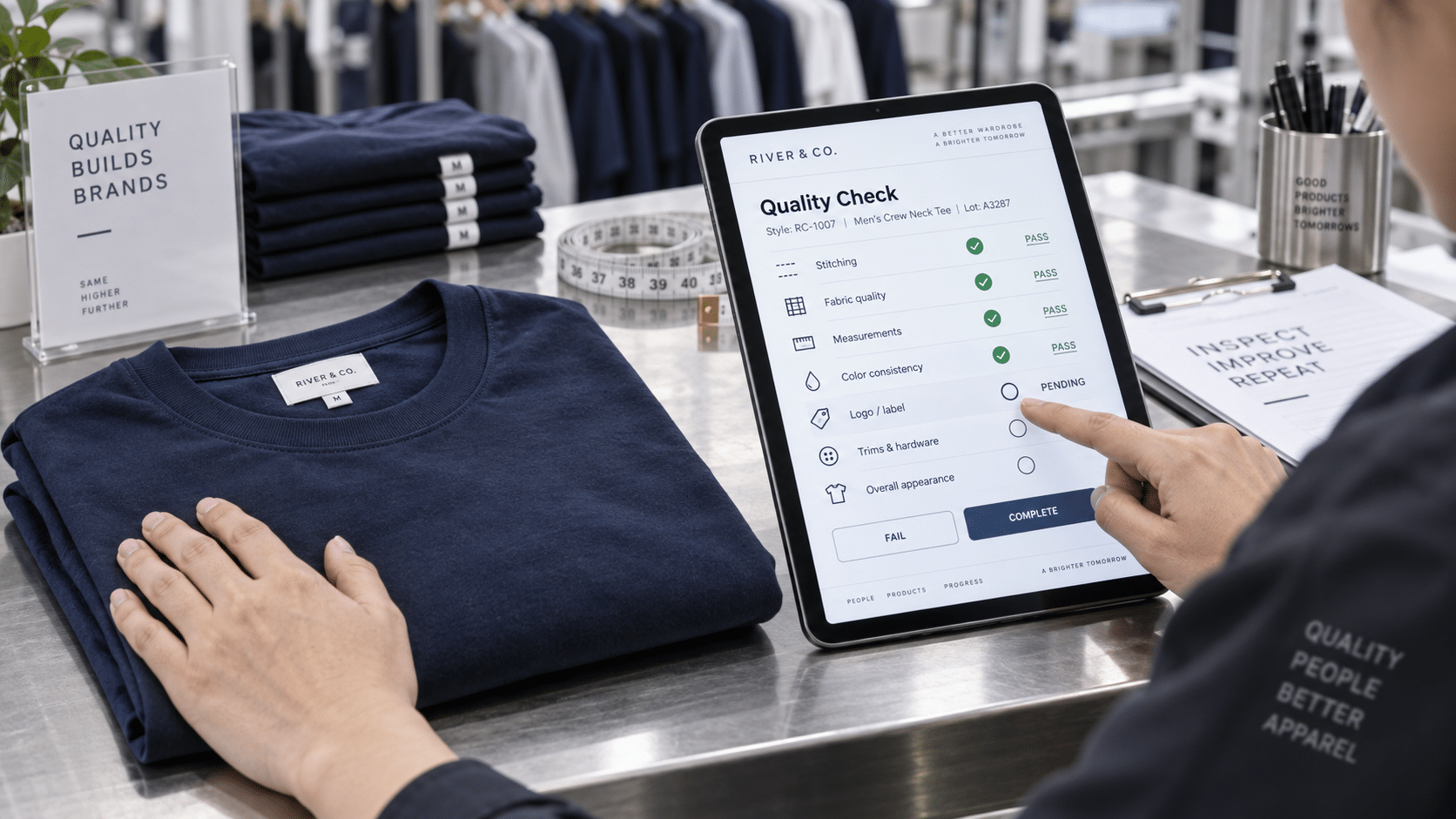
Quality control management software is a system that logs inspections, captures defects, and enforces pass or fail decisions at every stage of production. It replaces paper checklists and scattered spreadsheets with one shared record. Most apparel brands already run quality control in some form. Far fewer run it in a system built for garment production specifically. Instead, defect notes live in an inspector’s notebook, a phone photo thread, or a spreadsheet only one person knows how to update. That gap is expensive. Apparel factories lose an average of 14% of sales to the cost of poor quality, according to a study of 61 manufacturers. This guide covers what quality control management software should actually do for an apparel brand. It also explains how the software differs from an AQL inspection checklist, and what to check before choosing one.
Industry data: A study of 61 Indian apparel manufacturers found the average cost of quality equaled 14.05% of annual sales, ranging from 3% to 33% depending on the factory. Prevention spending averaged just 0.26% of sales. Meanwhile, internal and external failure costs combined ran close to 10% (Fibre2Fashion).
What Is Quality Control Management Software?
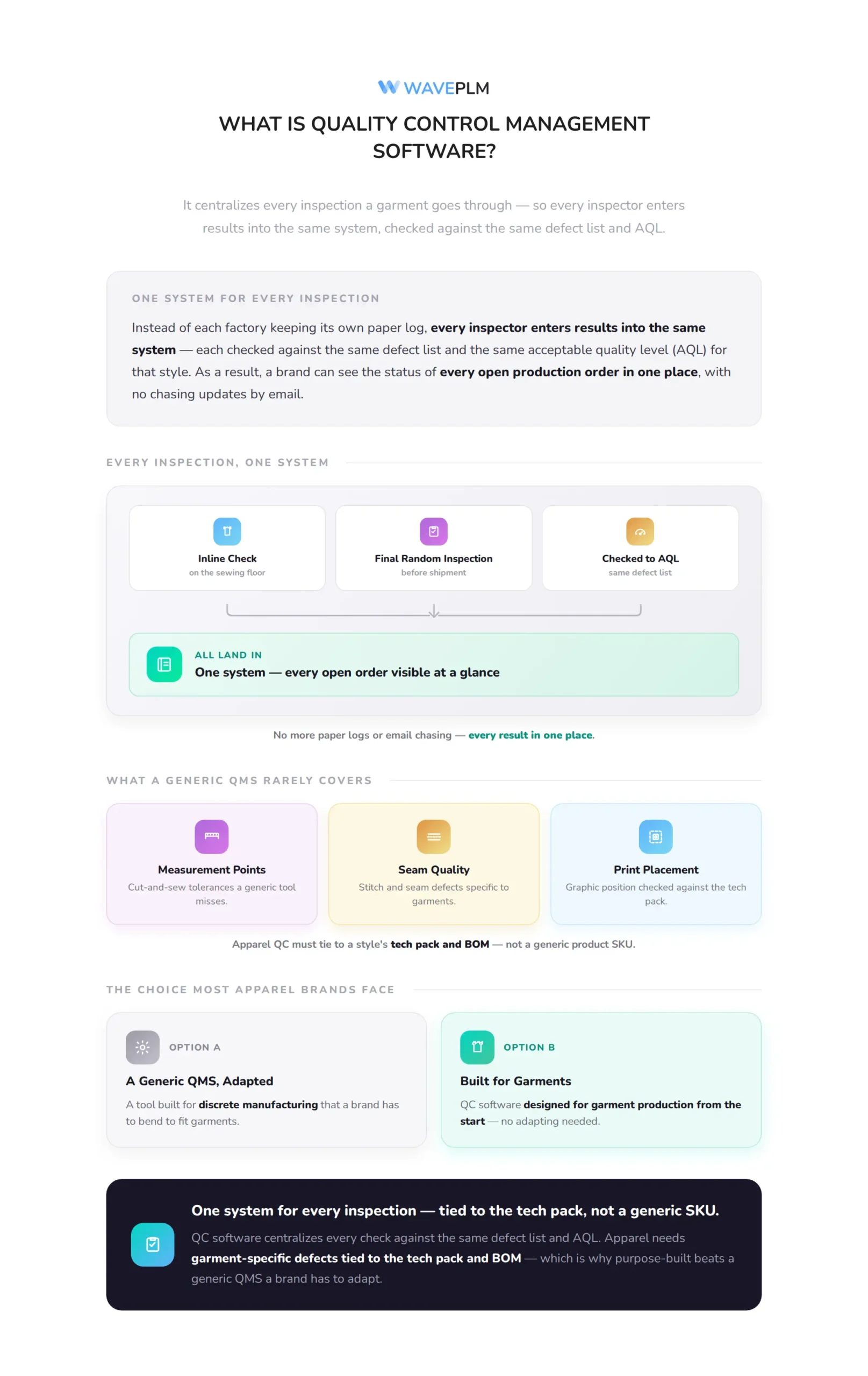
Quality control management software centralizes every inspection a garment goes through. That includes an inline check on the sewing floor and a final random inspection before a shipment leaves the factory. Instead of each factory keeping its own paper log, every inspector enters results into the same system. Each result gets checked against the same defect list and the same acceptable quality level, or AQL, for that style. As a result, a brand can see the status of every open production order in one place. There is no need to chase an update by email.
The category overlaps with general quality management system, or QMS, software. However, apparel adds requirements a generic tool rarely covers well. A garment inspection needs defect categories specific to cut-and-sew production, such as measurement points, seam quality, and print placement. It also needs to tie directly to a style’s tech pack and bill of materials, not a generic product SKU. Consequently, most apparel brands end up choosing between two options. One is a QMS tool built for discrete manufacturing that they have to adapt. The other is quality control management software designed for garment production from the start.
Why Do So Many Apparel Brands Still Run Quality Control From Spreadsheets?
Spreadsheets work well enough at a small scale. A brand running one or two factories can track defect notes in a shared file without much friction, since one person usually owns the whole process. That setup breaks down quickly once a brand adds a third or fourth factory. It also breaks down once more than one person needs to enter results at the same time from different locations.
Similarly, a spreadsheet has no memory of its own history. It shows this week’s inspection results, not whether a factory’s defect rate has been climbing for three seasons straight. Without that trend visible, a brand often notices a quality problem only after a customer return spike. By then, the underlying issue could have been caught on the sewing floor months earlier. Our vendor onboarding guide covers how a factory gets approved in the first place. Quality control software, in contrast, covers what happens to that factory’s performance after the first order ships.
What Should Quality Control Management Software Actually Do for an Apparel Brand?
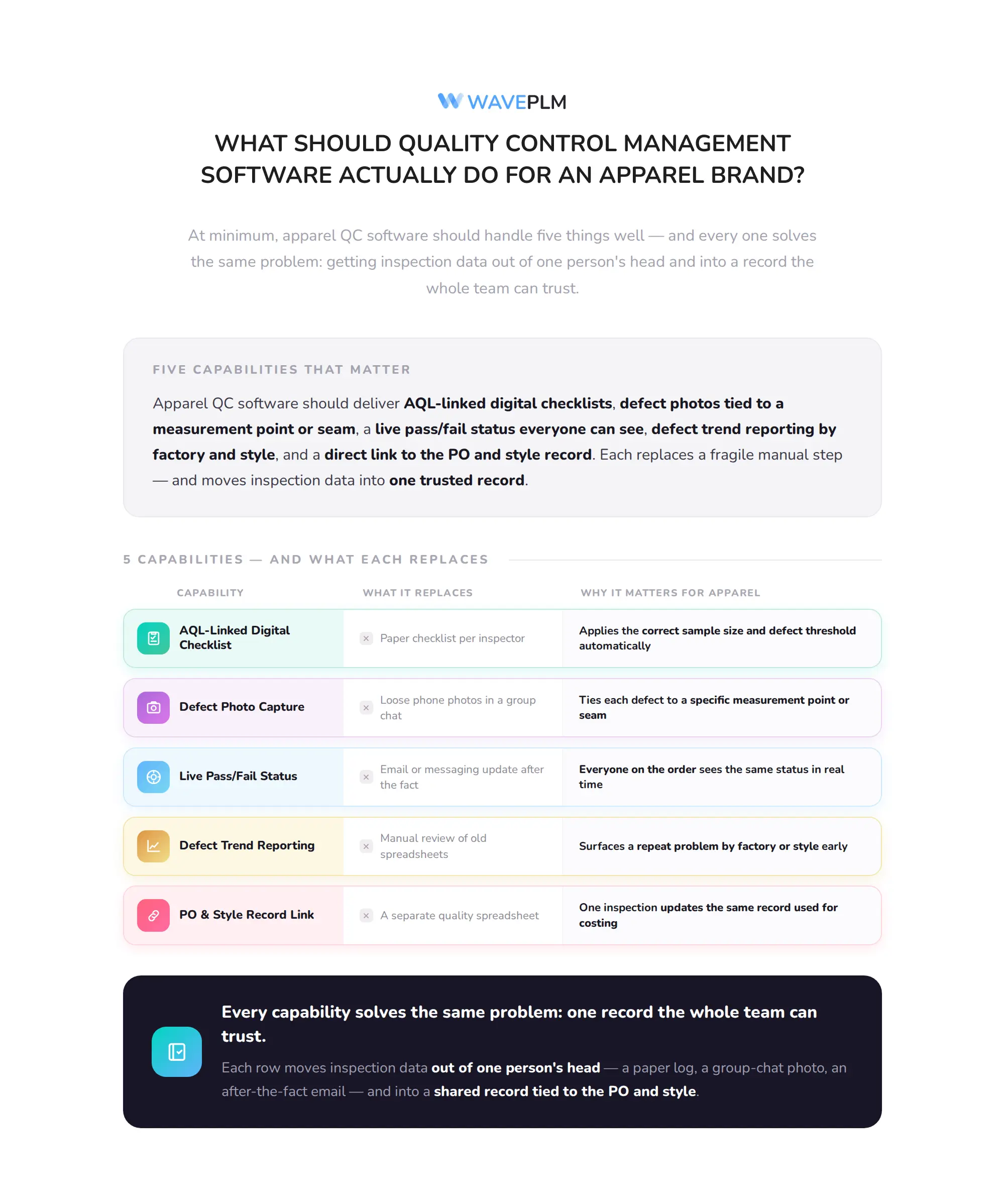
At minimum, quality control management software for apparel should handle five things well. First, digital inspection checklists that apply the correct AQL level automatically, based on the style and the inspection stage. Second, defect photo capture tied to a specific measurement point or seam, rather than a loose image attached after the fact. Third, a live pass or fail status visible to everyone involved in the order, not only the inspector on-site. Fourth, defect trend reporting broken down by factory, style, and defect type. That way a repeat problem becomes visible before it repeats a third time. Fifth, a direct link to the purchase order and style record, so an inspection result updates the same record a brand already uses for costing and delivery tracking.
The table below breaks down what quality control management software needs to replace, and why each capability matters for apparel specifically. Notably, every row solves the same underlying problem: getting inspection data out of one person’s head and into a record the whole team can trust.
| Capability | What it replaces | Why it matters for apparel |
|---|---|---|
| AQL-linked digital checklist | Paper checklist per inspector | Applies the correct sample size and defect threshold automatically |
| Defect photo capture | Loose phone photos in a group chat | Ties each defect to a specific measurement point or seam |
| Live pass/fail status | Email or messaging update after the fact | Everyone on the order sees the same status in real time |
| Defect trend reporting | Manual review of old spreadsheets | Surfaces a repeat problem by factory or style early |
| PO and style record link | A separate quality spreadsheet | One inspection updates the same record used for costing |
How Is Quality Control Software Different From an AQL Inspection Checklist?
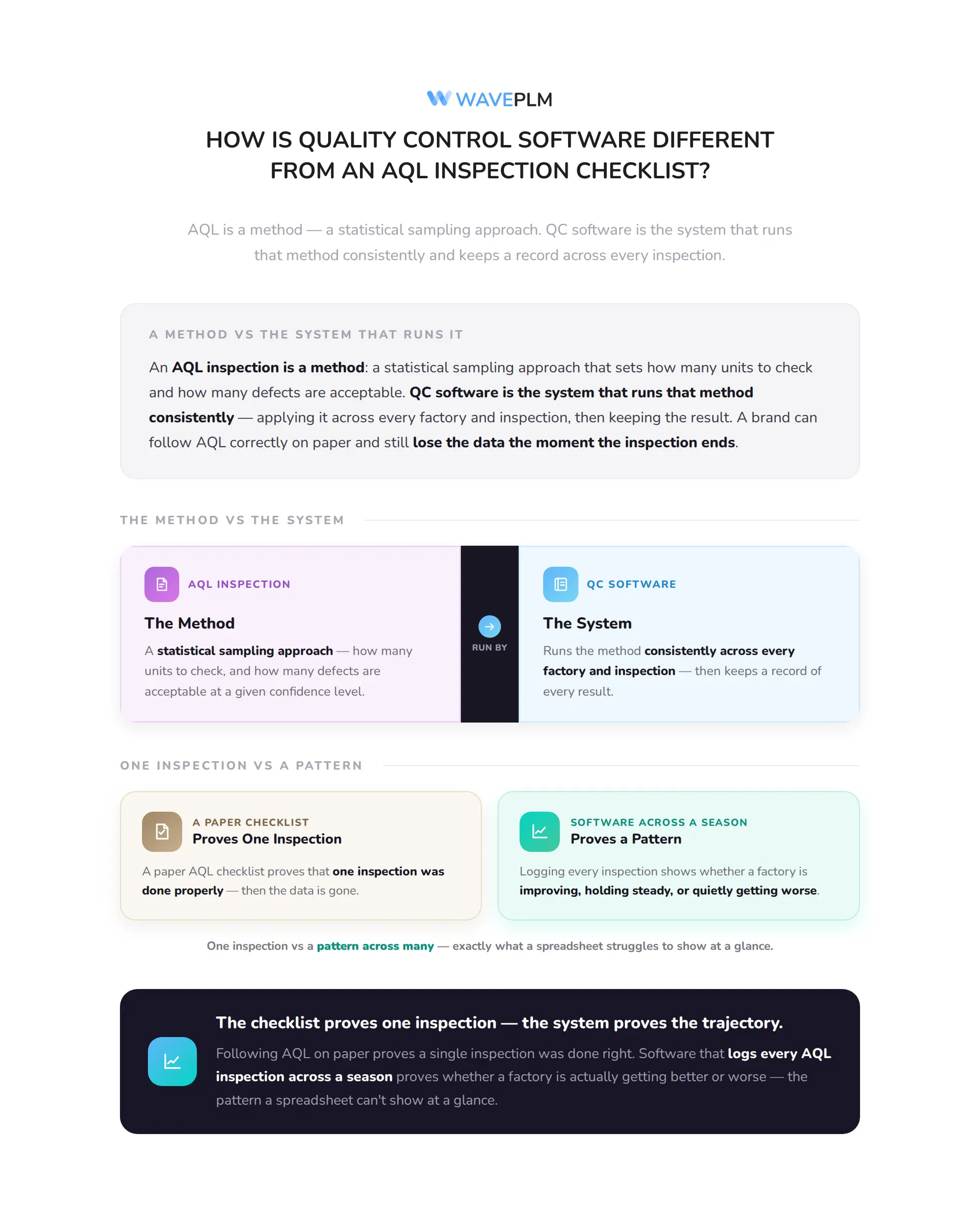
An AQL inspection is a method. It is a statistical sampling approach that sets how many units to check and how many defects are acceptable at a given confidence level. Our AQL inspection guide covers how to set those thresholds by product type. Quality control management software, on the other hand, is the system that runs that method consistently. It applies it across every factory and every inspection, then keeps a record of the result.
In practice, a brand can follow AQL correctly on paper and still lose the data the moment the inspection ends. A paper AQL checklist proves that one inspection was done properly. Software that logs every AQL inspection across a season proves something different: whether a factory is actually improving, holding steady, or quietly getting worse. That distinction between one inspection and a pattern across many inspections is exactly what a spreadsheet struggles to show at a glance.
How Much Does Poor Quality Actually Cost an Apparel Brand?
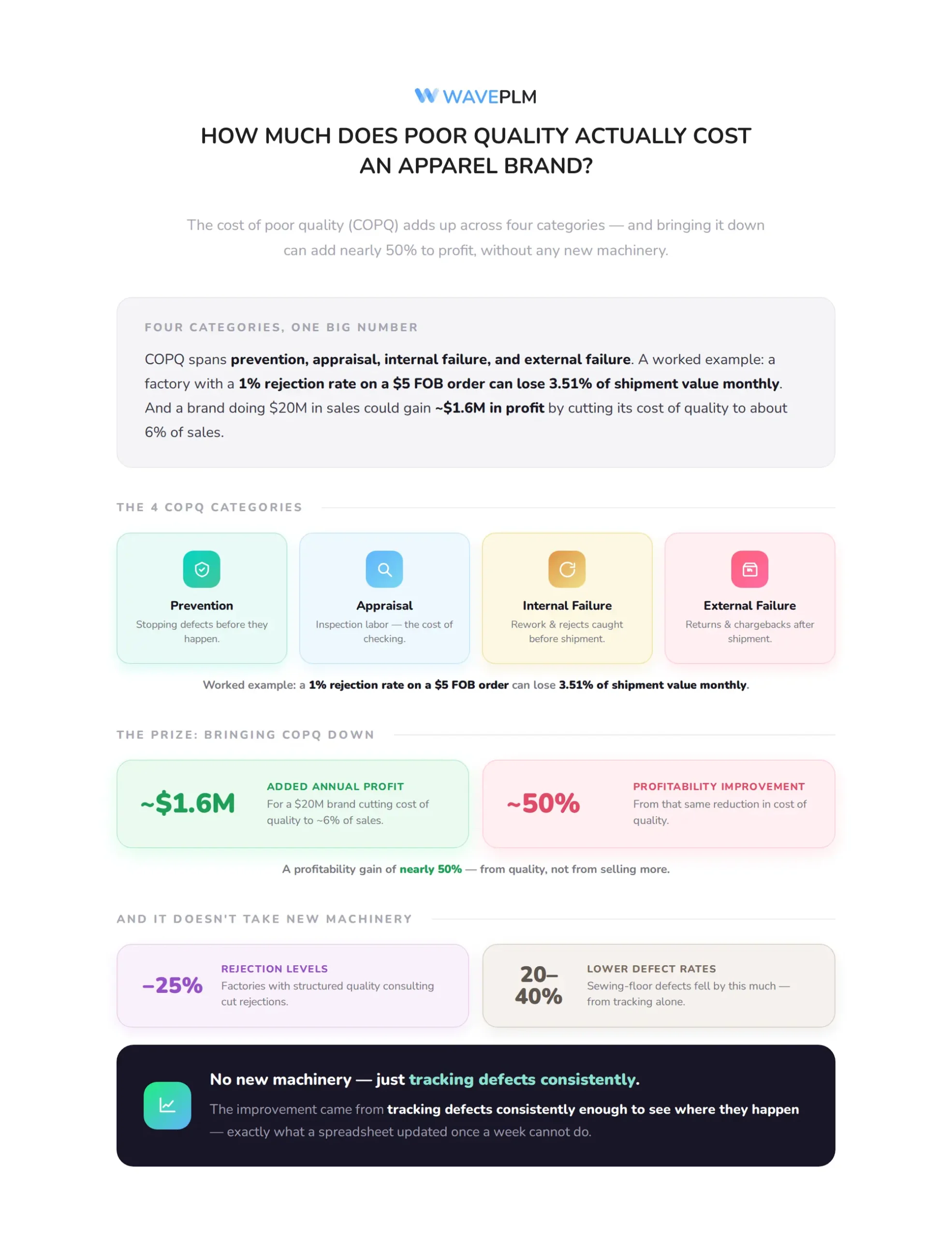
The cost of poor quality, sometimes shortened to COPQ, adds up across four categories. These are prevention, appraisal (inspection labor), internal failure (rework and rejects caught before shipment), and external failure (returns and chargebacks after shipment). A worked example from Online Clothing Study shows how quickly this adds up in practice. A factory with a 1% rejection rate on a $5 FOB order can lose 3.51% of shipment value monthly. That factory was staffed by an 11-person QA team. That figure combines appraisal, internal failure, and rejection costs together.
Industry data: Across the same 61-manufacturer study, a brand doing $20 million in annual sales could gain roughly $1.6 million in additional profit. That gain comes from bringing its cost of quality down from the study average to about 6% of sales, a profitability improvement of nearly 50% (Fibre2Fashion).
Notably, the same research found that factories receiving structured quality consulting cut rejection levels by 25%. Those same factories also reduced average sewing-floor defect rates by 20 to 40%. None of that improvement required new machinery. Instead, it came from tracking defects consistently enough to see where they were actually happening. That is precisely what a spreadsheet updated once a week cannot do.
What Should a Brand Look for When Evaluating Quality Control Software?
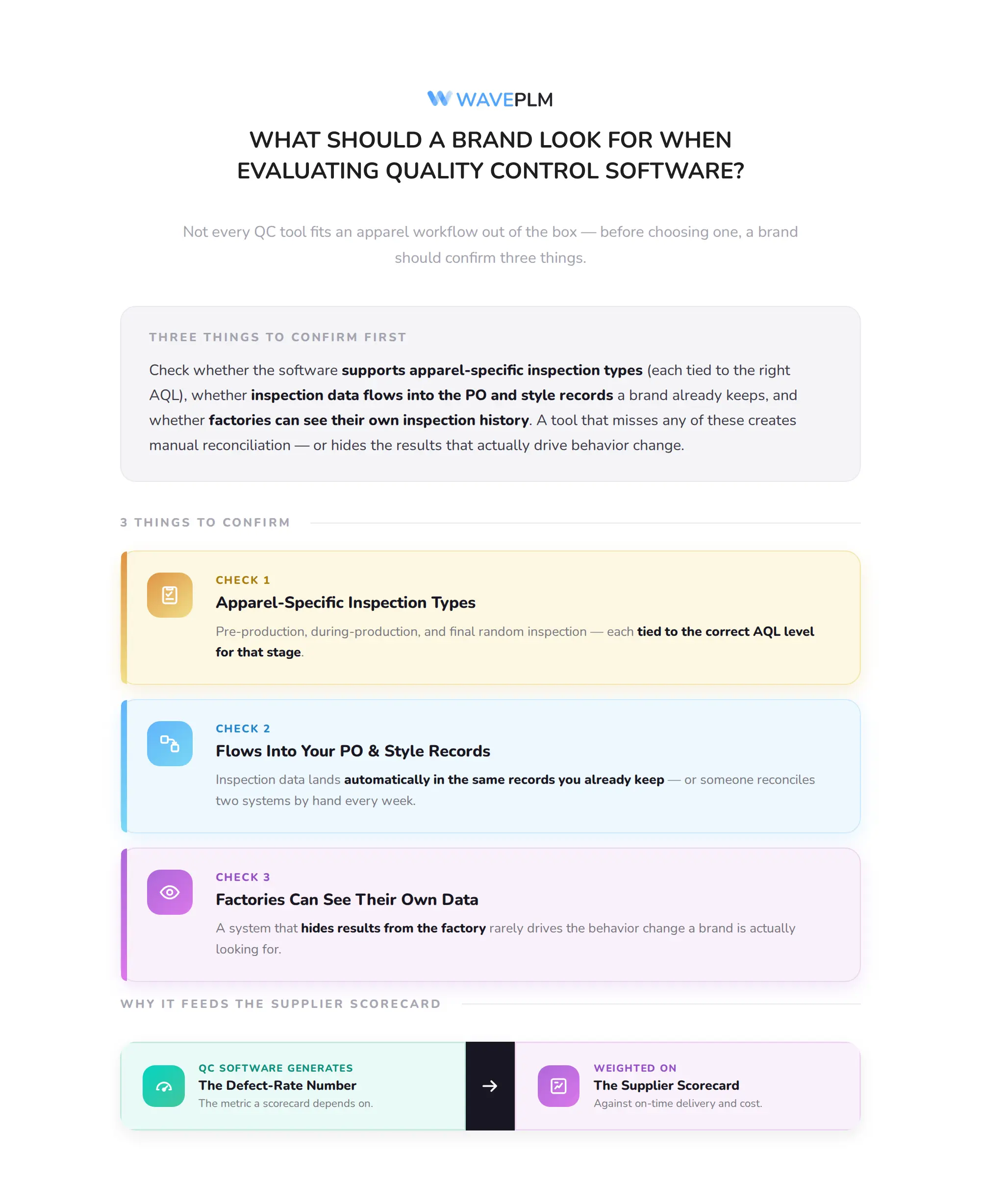
Not every quality control management software fits an apparel workflow out of the box. Before choosing one, a brand should confirm three things. First, whether it supports apparel-specific inspection types: pre-production, during-production, and final random inspection, each tied to the correct AQL level for that stage. Second, whether inspection data flows automatically into the same PO and style records a brand already keeps. Otherwise, someone has to reconcile two systems by hand every week. Third, whether factories themselves can see their own inspection history. A system that hides results from the factory rarely drives the behavior change a brand is actually looking for.
Our supplier scorecard guide covers a related question. Once inspection data exists in one place, how should a brand weight it against on-time delivery and cost variance when scoring a factory overall? Quality control software is what generates the defect-rate number that scorecard depends on in the first place.
How Does Quality Control Software Fit Into a Broader PLM Workflow?
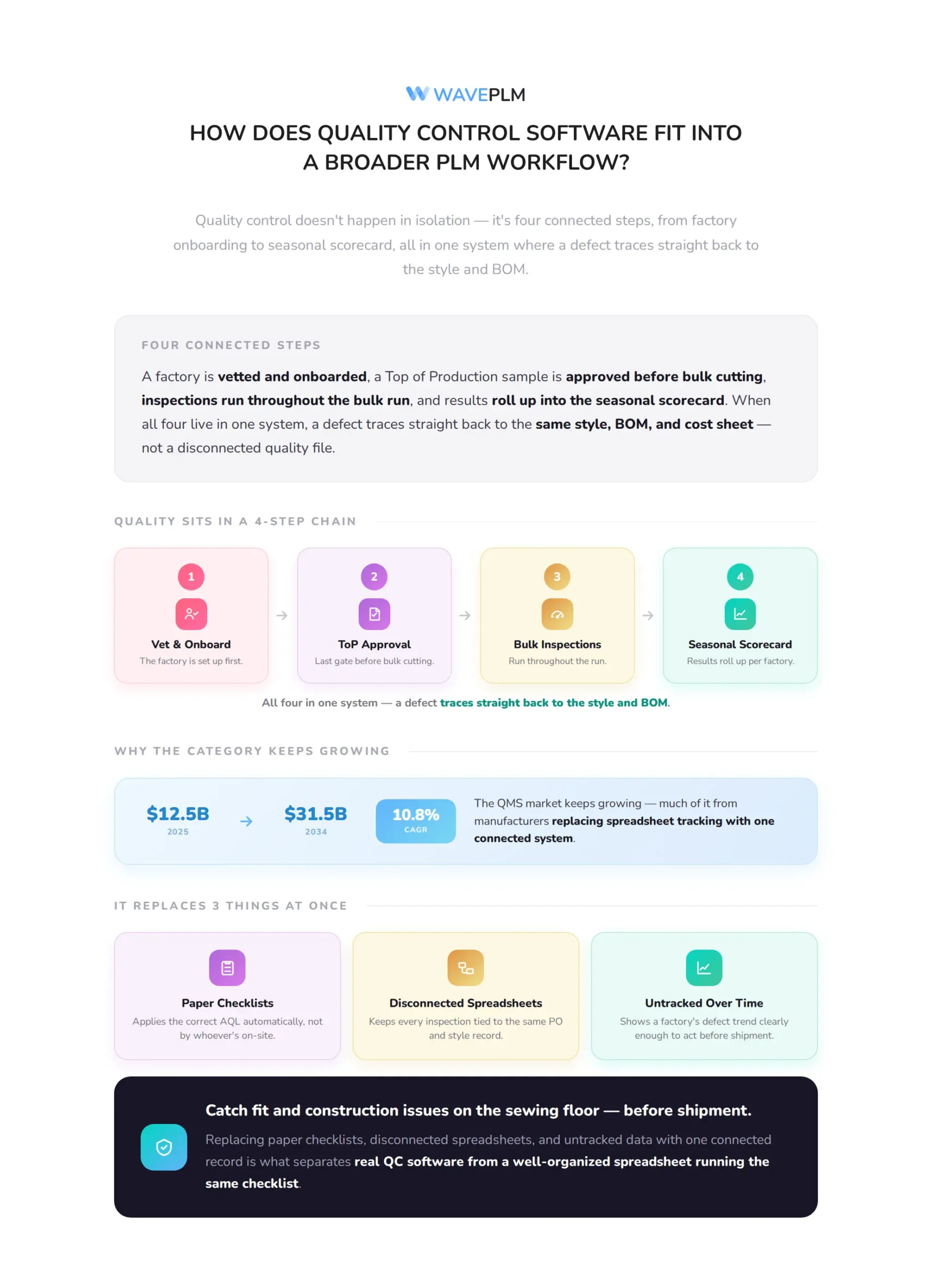
Quality control does not happen in isolation from the rest of production. A factory gets vetted and onboarded first. A Top of Production sample then gets approved as the last gate before bulk cutting. Inspections run throughout the bulk run after that, and the results eventually roll up into that factory’s seasonal scorecard. Our Top of Production guide covers that approval gate in detail. When all four steps live in one system, a defect traces straight back to the same style and BOM. That same record ties to the cost sheet covered in our garment costing guide, instead of sitting in a disconnected quality file.
Why This Category Keeps Growing
That kind of connected record is also why the broader software category keeps growing. The global quality management software market was valued at $12.52 billion in 2025. It is projected to reach $31.54 billion by 2034, a compound annual growth rate of 10.81% (Fortune Business Insights). A meaningful share of that growth comes from manufacturers replacing spreadsheet-based tracking with one connected system instead. Our finding: Wave PLM customers who consolidate inspection and defect data into one system see a real benefit. They typically catch fit and construction issues on the sewing floor. They catch them before a shipment ever leaves the factory, not after. Our fashion PLM software guide covers how that connected record works end to end, from first factory contact through final inspection.
In short, quality control management software matters most when it replaces three things at once: paper checklists, disconnected spreadsheets, and inspection data nobody tracks over time. First, it applies the correct AQL level automatically instead of leaving that judgment call to whoever is on-site that day. Second, it keeps every inspection tied to the same PO and style record, rather than a separate quality file. Third, it shows a factory’s defect trend clearly enough to act on before a shipment ships, not after a customer already noticed. That combination is what separates real quality control management software from a well-organized spreadsheet running the same checklist.
Frequently Asked Questions
What is quality control management software used for in apparel manufacturing?
It centralizes garment inspections, from pre-production checks through final random inspection. It applies the correct AQL level automatically and logs every result in one shared record, instead of scattered paper checklists or spreadsheets.
How is quality control software different from an AQL inspection?
AQL inspection is a statistical sampling method that sets sample size and defect thresholds. Quality control management software is the system that runs that method consistently across every inspection and keeps a record of the trend over time.
How much does poor quality actually cost an apparel brand?
A study of 61 apparel manufacturers found the average cost of quality equaled 14.05% of annual sales, ranging from 3% to 33% by factory. A $20 million brand could gain roughly $1.6 million in profit by cutting that down to about 6% of sales.
What should a brand look for when choosing quality control software?
Confirm it supports apparel-specific inspection types tied to the correct AQL level. Also confirm that inspection data flows automatically into existing PO and style records, and that factories can see their own inspection history.
Can a spreadsheet work instead of dedicated quality control software?
A spreadsheet can work for a brand running one or two factories with a single owner. It typically breaks down once a brand adds a third factory, or needs more than one person entering inspection results at the same time.
How does quality control software connect to supplier scorecards?
Quality control software generates the defect-rate and AQL pass-rate data that a supplier scorecard depends on. Without a consistent inspection record, a scorecard has no reliable quality metric to score a factory against.
Most apparel brands can name the worst defect they remember shipping. Far fewer can say, with real data, which factory’s defect rate has actually been climbing this season. If your team is still reconstructing that answer from old spreadsheets every time a customer complains, that gap is expensive. Wave PLM keeps quality control management software results tied to the same style and PO records your team updates daily.







Leave a Reply