

Lyocell fabric starts as wood cellulose, which producers dissolve directly in a recyclable organic solvent and spin into fibre. As a result, it shares the softness and breathability of viscose but is stronger, especially when wet, and shrinks less. For apparel brands, lyocell fabric is now a mainstream option for shirting, dresses, denim blends, and jersey rather than a premium niche.
However, three points often get muddled in product meetings. First, lyocell and TENCEL are not the same thing. Second, the price gap with viscose has changed. Third, the “closed loop” story only holds if you can prove where your fibre came from. This guide covers all three, along with the specs to write into a tech pack.
What Is Lyocell Fabric?
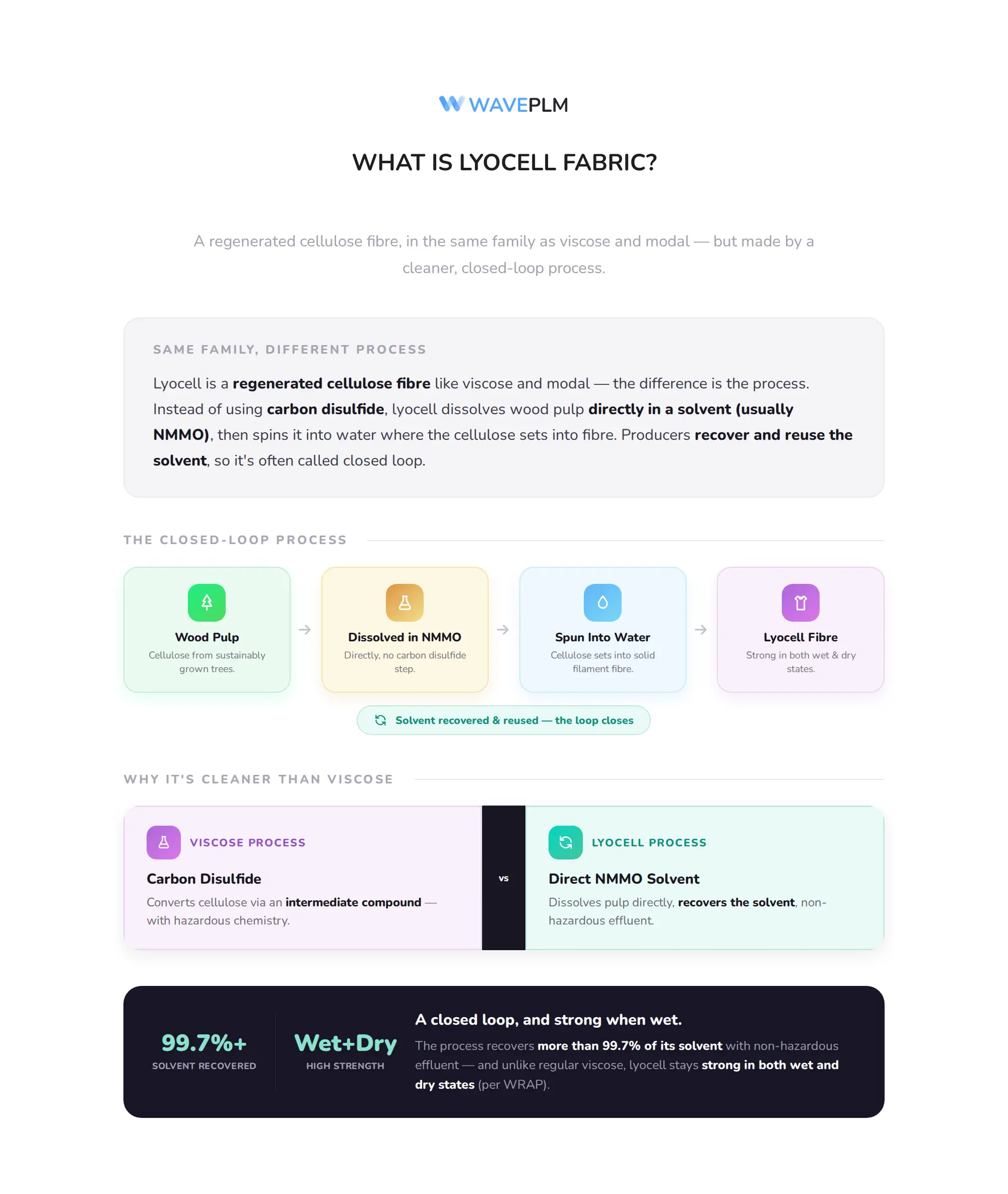
Lyocell is a regenerated cellulose fibre, in the same family as viscose and modal. In particular, the difference lies in the process. Instead of converting cellulose into an intermediate compound with carbon disulfide, the lyocell process dissolves wood pulp directly in a solvent, usually NMMO (N-methylmorpholine N-oxide). The solution is then spun into water, where the cellulose sets into fibre.
Because producers recover and reuse the solvent, people often describe the lyocell process as closed loop. According to WRAP’s Clothing Knowledge Hub, the process recovers more than 99.7% of the solvent, and the effluent is non-hazardous.
Industry data: The lyocell process recovers more than 99.7% of its solvent, and the fibre has high strength in both wet and dry states, according to WRAP’s Clothing Knowledge Hub.
Is Lyocell the Same as TENCEL?
No. Lyocell is the generic fibre name. TENCEL is a trademark that Lenzing uses for its own lyocell and modal fibres. In other words, all TENCEL Lyocell is lyocell, but most lyocell on the market is not TENCEL.
Importantly, the trademark comes with rules. According to the UK Fashion and Textile Association (UKFT, September 2025), a brand needs a product licence from Lenzing to use the TENCEL name on labels and hangtags, and a separate marketing licence for websites and campaigns. In addition, the fabric must carry a valid Lenzing certification number from the mill, and applications go through Lenzing’s E-Branding Service.
- Correct: “60% Lyocell (TENCEL™), 40% Cotton” with a valid product licence.
- Incorrect: “60% Tencel, 40% Cotton”, because the generic fibre name is missing.
- Risky: any TENCEL wording on a fabric where the mill cannot supply a Lenzing certification number.
For that reason, ask your mill early whether it supplies branded or generic lyocell. If it is generic, describe it simply as lyocell.
How Does Lyocell Fabric Compare With Viscose and Modal?
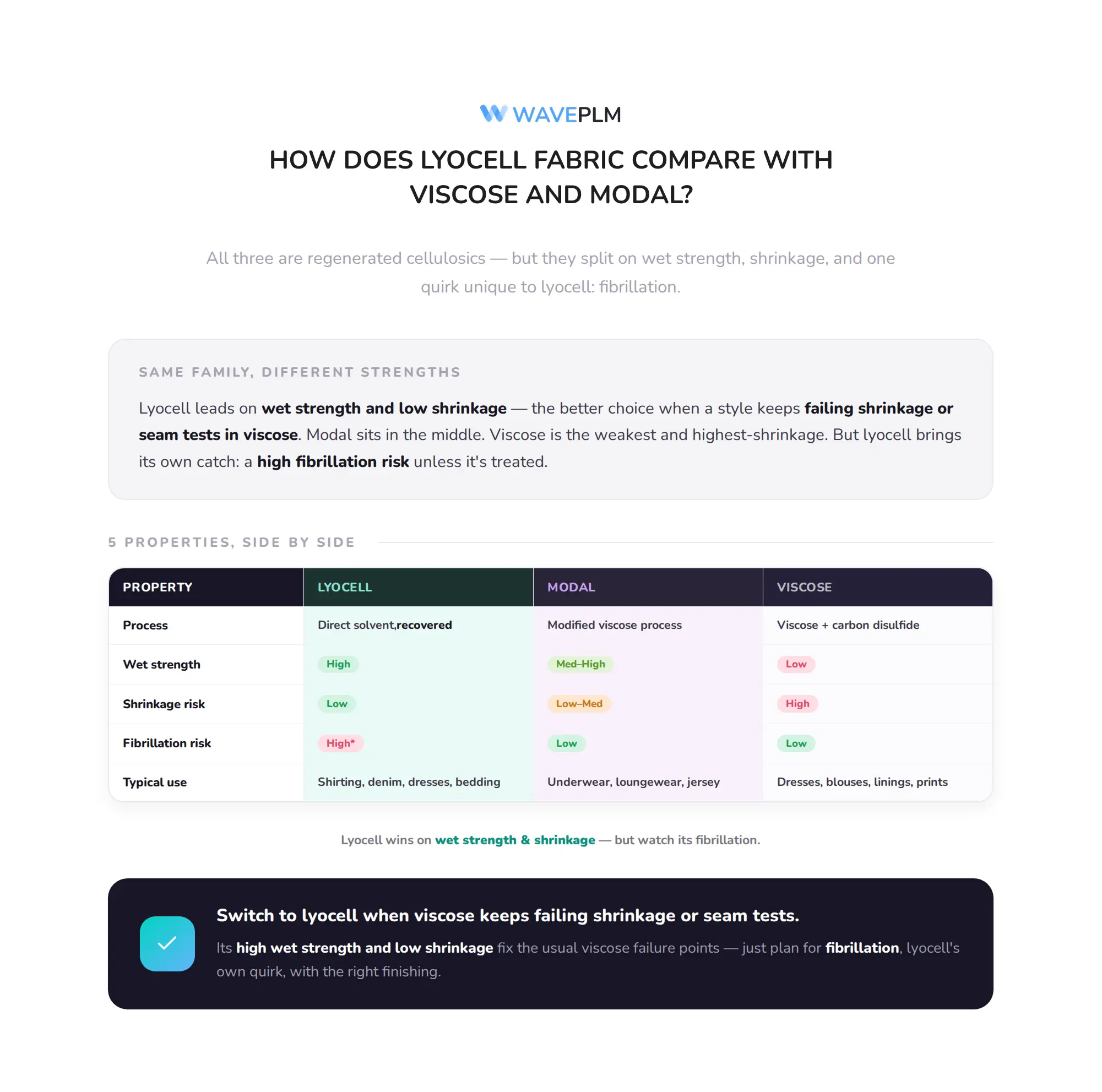
| Property | Lyocell | Modal | Viscose |
|---|---|---|---|
| Process | Direct solvent, solvent recovered | Modified viscose process | Viscose process with carbon disulfide |
| Wet strength | High | Medium to high | Low |
| Shrinkage risk | Low | Low to medium | High |
| Fibrillation risk | High without treatment | Low | Low |
| Typical use | Shirting, denim blends, dresses, bedding | Underwear, loungewear, jersey | Dresses, blouses, linings, prints |
In practice, lyocell fabric is the better choice when a style keeps failing shrinkage or seam tests in viscose. Our guide to viscose fabric explains those failure points in detail. On the other hand, lyocell brings its own quirk: fibrillation, covered below.
Is Lyocell Fabric More Expensive Than Viscose?
Not necessarily anymore. For years, lyocell carried a clear premium over viscose. However, rapid capacity growth in China has changed the picture. According to Swarajya, citing CCFGroup, lyocell fibre sold above 20,000 yuan per tonne when international producers dominated the Chinese market. By mid-2024, the price had fallen to about 13,000 yuan per tonne, and lyocell in China now sells at a discount to viscose.
Industry data: Chinese lyocell fibre prices fell from above 20,000 yuan per tonne to about 13,000 yuan per tonne by mid-2024, while industry operating rates rose from 44% in 2022 to 85% in 2024 (Swarajya, May 2026, citing CCFGroup).
That said, fibre price is only one line on the cost sheet. Branded TENCEL Lyocell still costs more than generic lyocell. Similarly, anti-fibrillation finishing, enzyme washing, and testing add cost at the mill. Therefore, compare quotes at the fabric level, per metre and finished, rather than at the fibre level. Our garment costing guide shows where these lines belong.
What Is Fibrillation, and How Do You Control It?
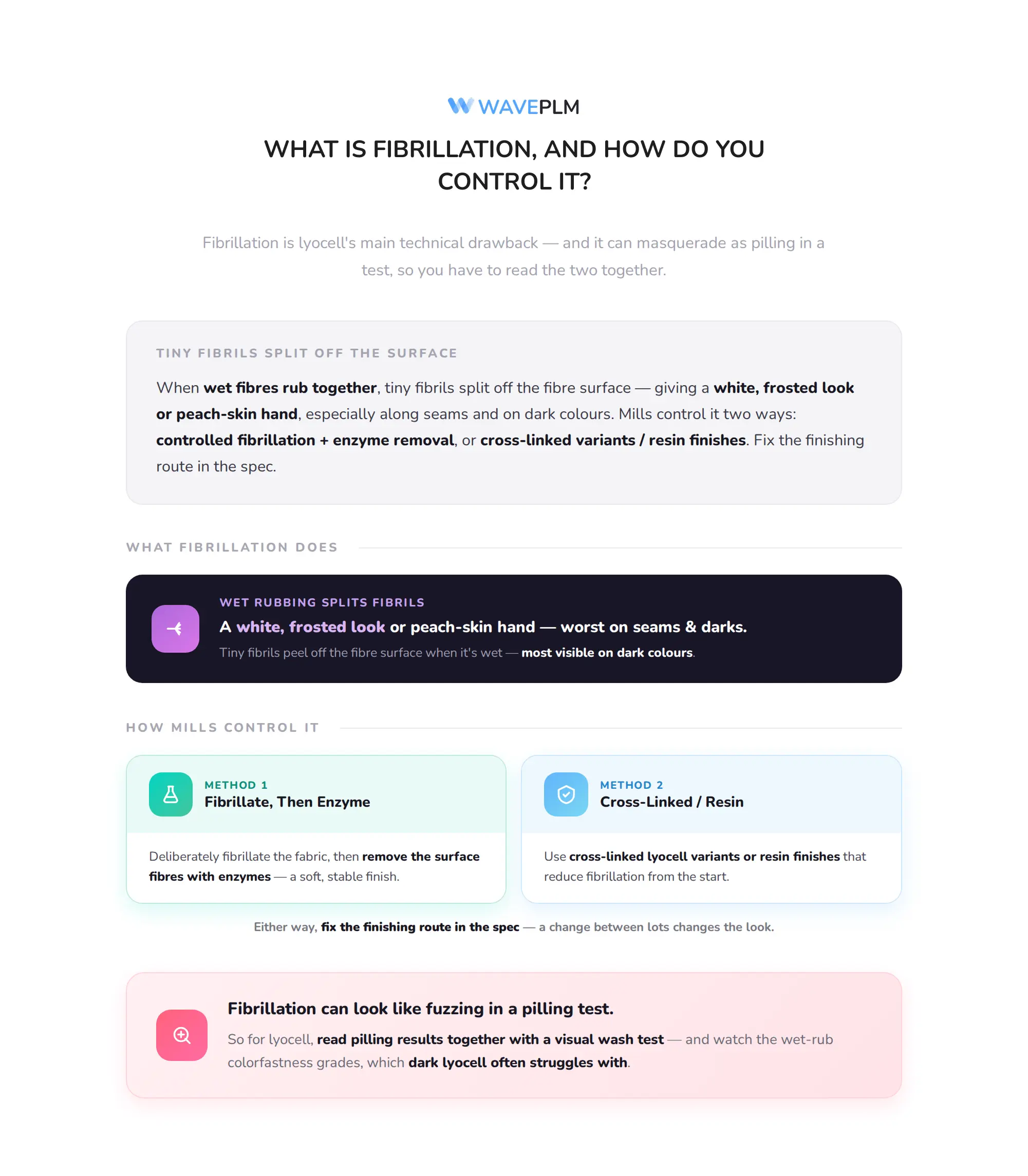
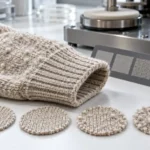
Fibrillation is the main technical drawback of lyocell fabric. When wet fibres rub together, tiny fibrils split off the fibre surface. As a result, the fabric can develop a white, frosted look or a peach-skin hand, especially along seams and on dark colours.
In practice, mills control this in two ways. First, they can deliberately fibrillate the fabric and then remove the surface fibres with enzymes, which creates a soft, stable finish. Second, they can use cross-linked lyocell variants or resin finishes that reduce fibrillation. Either way, fix the finishing route in the spec, because a change between lots also changes the look.
Notably, fibrillation can look like fuzzing in a pilling test. For that reason, read pilling results for lyocell together with a visual wash test. Our guide to fabric pilling tests and grades explains how labs rate surface change, and the colorfastness guide covers the wet rub grades that dark lyocell often struggles with.
Where Lyocell Fabric Works Best by Category
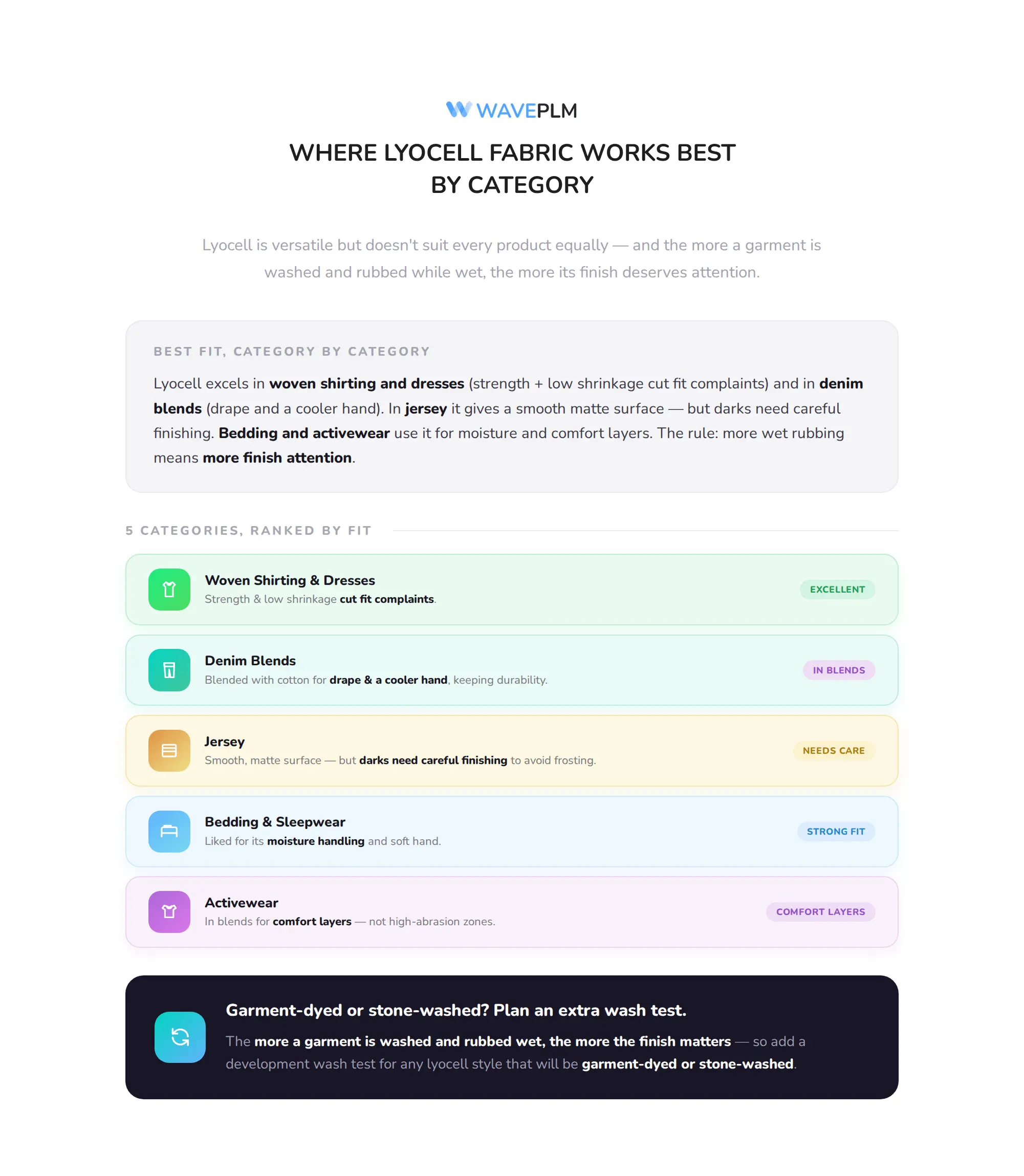
Lyocell is versatile, but it does not suit every product equally. For example, it performs very well in woven shirting and dresses, where its strength and low shrinkage reduce fit complaints. Similarly, denim mills blend it with cotton to add drape and a cooler hand without losing too much durability. In jersey, lyocell fabric gives a smooth, matte surface, although dark colours need careful finishing to avoid frosting.
Meanwhile, bedding and sleepwear brands like lyocell for its moisture handling, and activewear brands use it in blends for comfort layers rather than high-abrasion zones. As a rule, the more a garment is washed and rubbed while wet, the more attention the finish deserves. Therefore, plan an extra wash test in development for any lyocell style that will be garment-dyed or stone-washed.
What Should a Lyocell Fabric Spec Include?
| Spec field | What to write |
|---|---|
| Fibre content | Generic name and percentage, plus branded fibre name only if licensed |
| Fibre source | Fibre producer and certification number for branded fibre |
| Finish route | Enzyme, anti-fibrillation, or cross-linked fibre; fixed per quality |
| Weight | Target g/m² with tolerance |
| Dimensional stability | Test method, wash cycles, tolerance |
| Surface tests | Pilling grade and appearance after washing |
| Colorfastness | Washing and wet rub grades, especially for dark shades |
For the weight line, see our article on fabric GSM. Meanwhile, denim teams using lyocell blends face extra wet processing steps, which our article on denim PLM covers.
Can You Call Lyocell Fabric Sustainable?
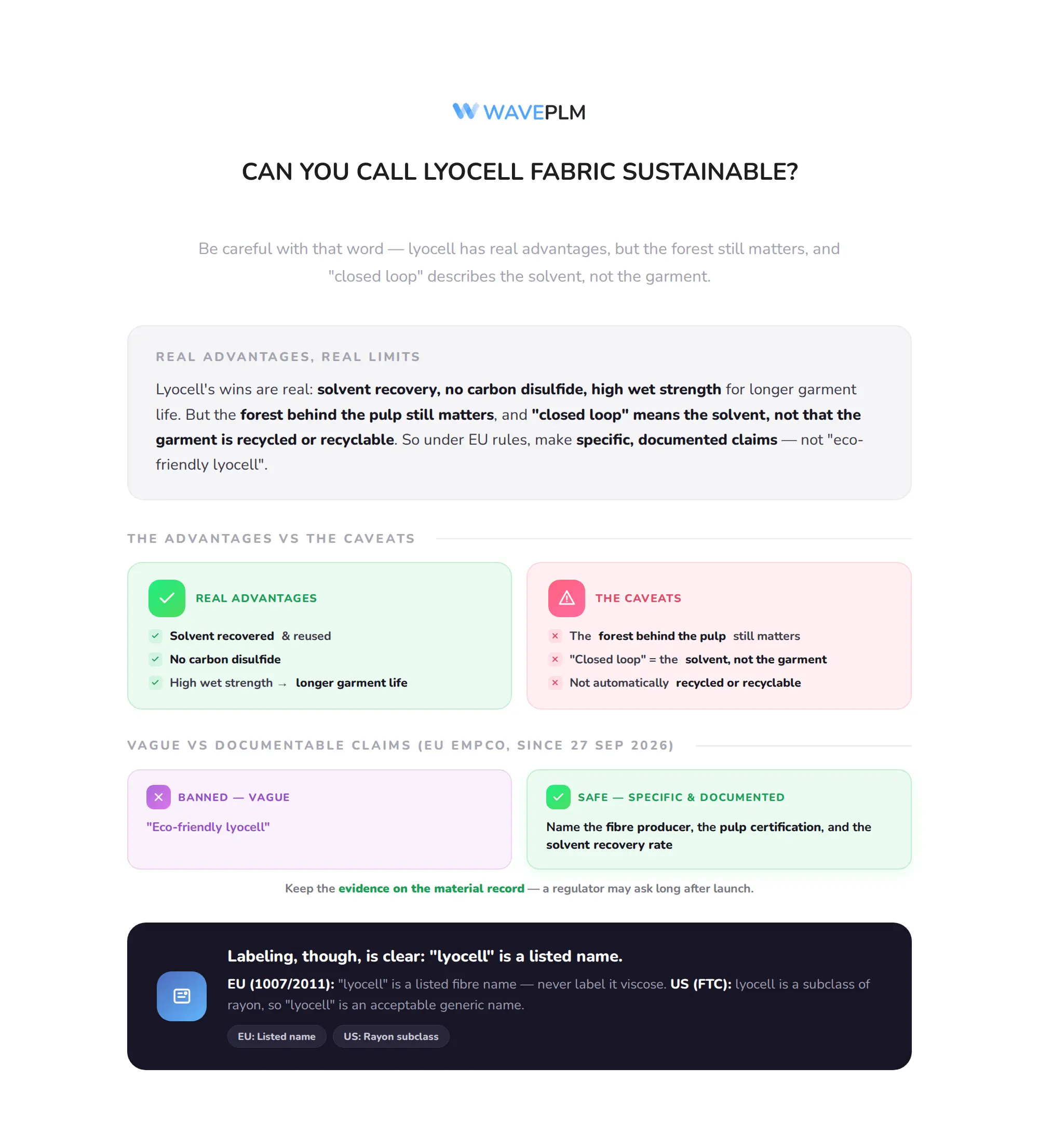
In short, be careful with that word. Lyocell has real advantages: solvent recovery, no carbon disulfide, and high wet strength that supports longer garment life. However, the forest behind the pulp still matters, just as it does for viscose. Moreover, “closed loop” describes the solvent, not the garment; it does not mean the product is recycled or recyclable.
In the EU, the Empowering Consumers Directive has applied since 27 September 2026 and bans generic environmental claims, such as “eco-friendly lyocell”, without proof of recognised excellent environmental performance. Instead, make specific claims you can document, for example the fibre producer, the certification behind the pulp, and the solvent recovery rate. Keep the evidence for each claim on the material record, because a retailer or regulator may ask for it long after launch. Our article on green claims for fashion brands explains what proof regulators expect.
Fortunately, the labeling rules are clearer. Under Regulation (EU) No 1007/2011, “lyocell” is a listed fibre name across the EU, so it should never appear on a label as viscose. Over in the US, the FTC treats lyocell as a subclass of rayon, so “lyocell” is an acceptable generic name on the fibre content label.
A Lyocell Sourcing Checklist
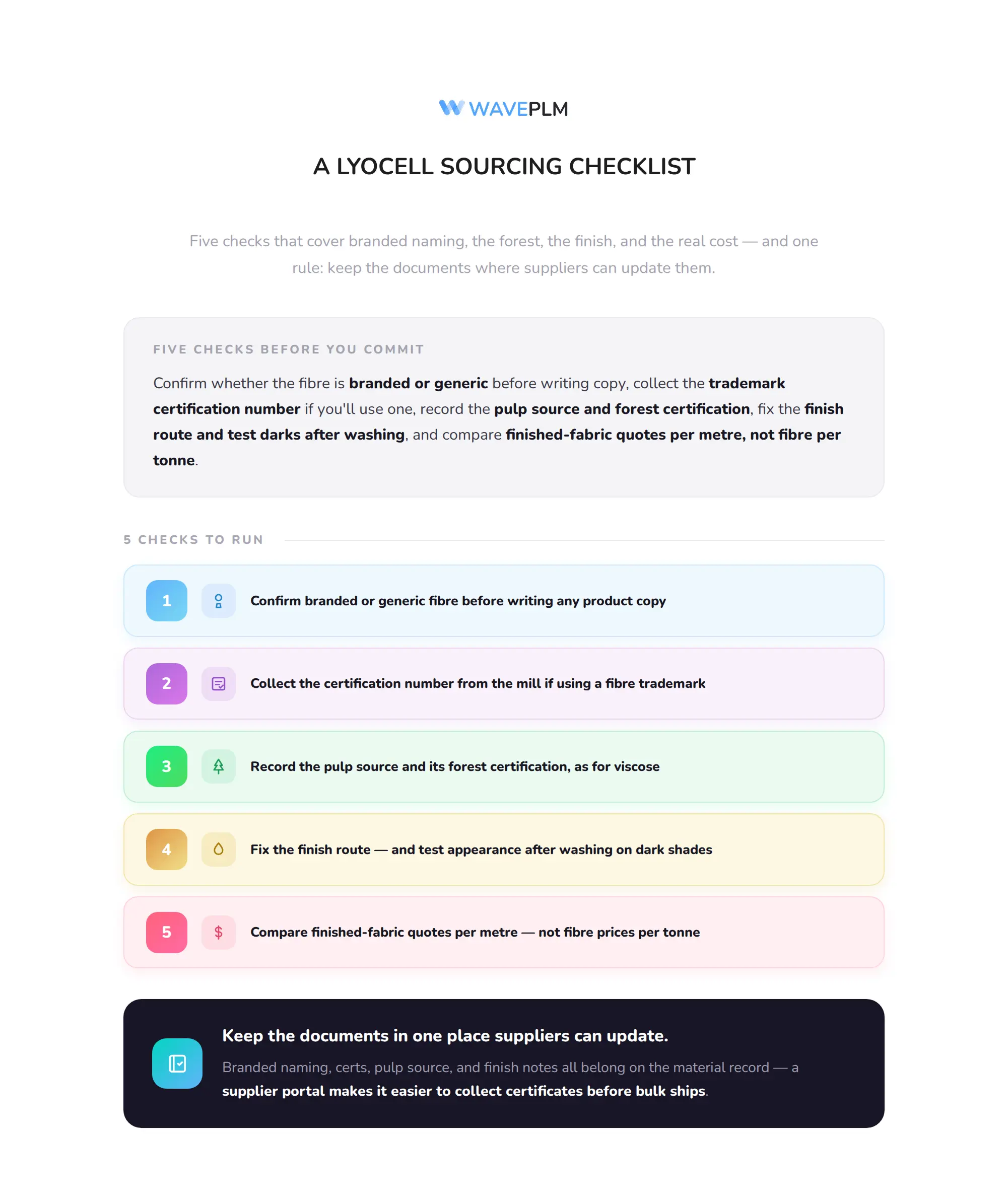
- Confirm branded or generic fibre before you write any product copy.
- Collect the certification number from the mill if you plan to use a fibre trademark.
- Record the pulp source and its forest certification, as you would for viscose.
- Fix the finish route and test appearance after washing on dark shades.
- Compare finished fabric quotes per metre, not fibre prices per tonne.
Finally, keep these documents in one place that suppliers can update. A supplier portal makes it easier to collect certificates before bulk ships.
Frequently Asked Questions
What is lyocell fabric made of?
Lyocell fabric is made from cellulose, usually wood pulp from eucalyptus, beech, or similar trees. The pulp is dissolved directly in a solvent such as NMMO and spun into fibre. Because the solvent is recovered and reused, the process is often called closed loop.
Is lyocell the same as TENCEL?
No. Lyocell is the generic fibre name, while TENCEL is Lenzing’s trademark for its own lyocell and modal fibres. To use the TENCEL name on a product, a brand needs a Lenzing product licence and a valid certification number from the fabric mill.
Is lyocell better than viscose?
For most performance needs, yes. Lyocell has higher wet strength and lower shrinkage, and its process avoids carbon disulfide. However, lyocell fabric can fibrillate if it is not finished correctly, and viscose often drapes more fluidly in lightweight prints.
Does lyocell fabric shrink?
Lyocell shrinks far less than viscose because it keeps its strength when wet. Even so, the final result depends on construction and finishing. Brands should still specify a dimensional stability test, the number of washes, and a tolerance in the tech pack.
Why is my lyocell fabric turning white at the seams?
That frosted look is usually fibrillation. When wet fibres rub together, tiny fibrils split off the surface and scatter light. Enzyme finishing, anti-fibrillation treatments, and gentler wash instructions reduce it, so the finishing route should be fixed in the fabric spec.
Is lyocell fabric expensive?
Less than it used to be. Chinese lyocell fibre prices fell to about 13,000 yuan per tonne by mid-2024, and lyocell in China now sells below viscose. Branded fibre, finishing, and testing still add cost, so compare finished fabric prices per metre.
When Lyocell Is the Right Call
Use lyocell fabric when a viscose style keeps failing shrinkage or wet strength, or when you need a cellulosic denim or shirting blend that holds its shape. Skip it, or spec the finish tightly, for dark, heavily washed garments where fibrillation would show. In both cases, store the fibre producer, the finish route, and any licence number on the material record, so every style that reuses the fabric inherits the right claim. Wave PLM is built to hold exactly that material history. See how Wave PLM manages material data.




Leave a Reply