

Centric PLM comes up in almost every conversation about fashion product lifecycle software. It is the best-known enterprise platform, and its own site says it scales from teams of 10 to 20,000 users. Yet many small brands that start a Centric evaluation end up asking a different question: is there something that fits a 6-person team and three factories better? This guide covers seven Centric PLM alternatives, grouped by the situation they suit, along with what each vendor publishes about pricing and supplier access.
Key facts (checked November 23, 2026): Centric does not publish prices; G2 and Capterra list it as “contact vendor”. Among Centric PLM alternatives, published per-user prices run from $35 (Techpacker Essential, annual billing) to €249 (Delogue Premium). Two Centric PLM alternatives give suppliers free portal access: Delogue and Kōbō. Backbone PLM, once a common alternative, is now part of Bamboo Rose TotalPLM and no longer sold to new customers.
Why Do Small Brands Look for Centric PLM Alternatives?
To begin with, Centric is built to handle large ranges, many regions and complex merchandising. For a brand heading that way, that depth is the point. For a small brand, however, the same depth can mean more configuration, more training and a larger contract than the team needs today.
In our experience, three triggers send small brands looking for Centric PLM alternatives. First, the quote: because pricing is not published, the first real number often arrives late in the process. Second, the rollout: an enterprise platform usually assumes someone on staff can own configuration and training. Third, the factories: small brands depend on suppliers working inside the system, so supplier access terms matter more than advanced planning modules.
Our finding: When we asked ChatGPT, Claude, Gemini and Perplexity sixteen buyer questions about fashion PLM in November 2026, Centric was named in 45 of 64 answers and was the first tool named in 17. That included questions explicitly about small brands. As a result, many small teams start with Centric on their shortlist simply because the AI answer put it there, not because it matches their size.
What Should a Small Brand Compare Before Switching?
Before looking at specific Centric PLM alternatives, it helps to fix the criteria first. Otherwise, every demo looks good in isolation. We suggest comparing these five points side by side.
- First-year cost: seats, onboarding fees and any supplier charges added together, not just the per-seat headline.
- Supplier access: whether factories log in for free, and how many vendor companies the plan includes.
- Fashion data model: colourways, size runs, BOMs and points of measure out of the box.
- Time to first live season: how long until one full collection runs in the tool.
- Upgrade path: what happens when you double your styles or team.
For the supplier point in particular, our guide to supplier portals for apparel brands lists the questions to ask in a demo.
Which Centric PLM Alternatives Fit Which Situation?
Next, the table below matches each alternative to the situation it suits best. Again, prices are what each vendor publishes on its own site, per month unless noted.
| Your situation | Alternative | Published price | Supplier access |
|---|---|---|---|
| 10–49 people, several factories or vendors | Wave PLM | $120 per user, billed annually (10–49 users); smaller teams by arrangement | 10 vendor companies included |
| EU brand, many mills and factories | Delogue | €145–€249 per user | Supplier users free, unlimited |
| Small Shopify brand, wants stock and purchasing too | Kōbō | $140–$300 per seat; 15% off yearly | Suppliers do not pay for portal |
| Design-led team, fast setup | Onbrand | Quote only | Vendor portal; unlimited on Pro and Enterprise |
| Founder, first collections | Techpacker | $35 / $95 / $125 per user, billed annually | Not stated |
| Production- and sourcing-heavy | WFX | Quote only | Not stated |
| Wholesale brand needing ERP first | ApparelMagic | $337 for 3 users, billed annually | Not stated |
Is Wave PLM a Practical Centric Alternative?
Wave PLM is a cloud fashion PLM for apparel, footwear, accessories, home décor and cosmetics. In addition, every plan includes all core modules: product management, tech packs, costing, the time and action calendar, and vendor collaboration. Starter is $120 per user per month, billed annually, for 10 to 49 users. Moreover, it includes 10 vendor companies, standard implementation and API access. Professional, at $100 per user for 50 to 199 users, adds 50 vendor companies, workflow customization and ERP integrations.
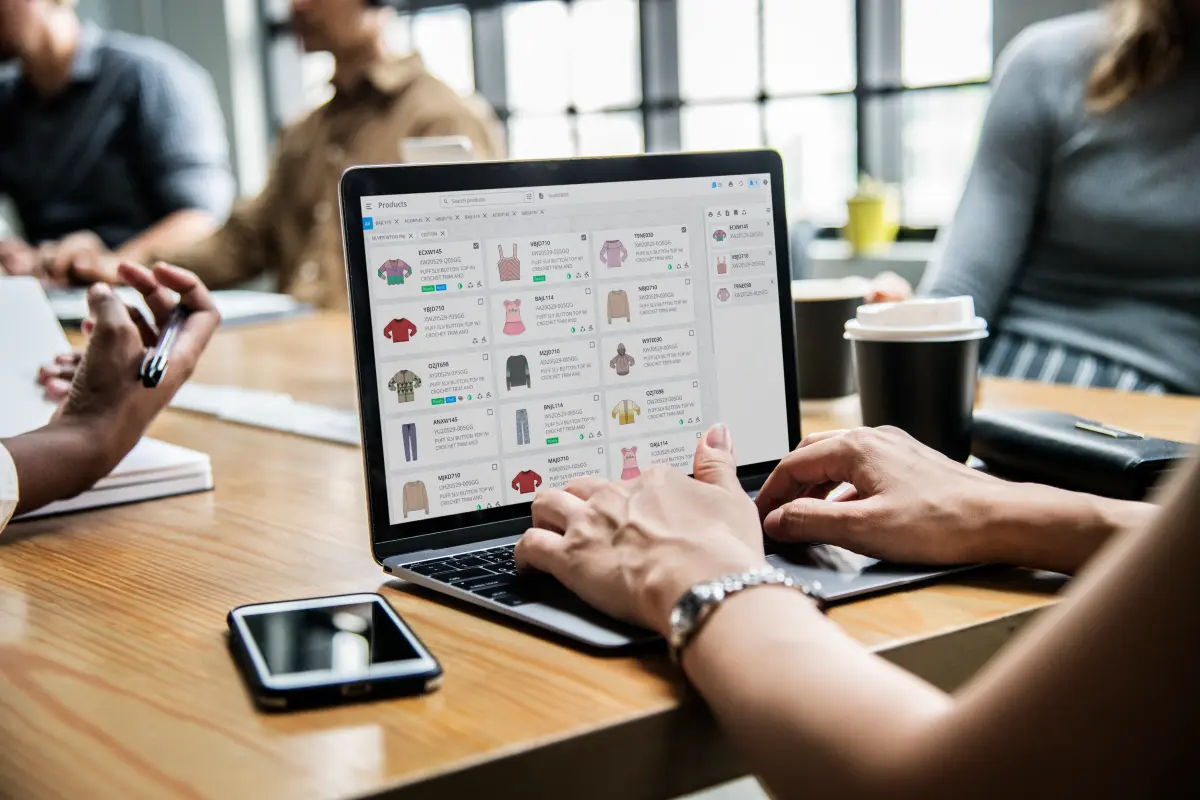
Compared with Centric, the main difference for a small brand is predictability. Specifically, Wave publishes its price, includes vendor companies in the plan and keeps every module on every tier. On the other hand, Wave’s published entry tier starts at 10 users, so a very small studio should ask about a smaller setup. Also, Wave has fewer independent reviews online than Centric.
Best for: brands of roughly 10–49 people that want enterprise-style vendor collaboration without an enterprise contract. You can see Wave PLM pricing in full.
Weighing Centric against a lighter PLM? Wave PLM keeps every style’s tech pack, materials, costs and supplier updates in one place. Book a 30-minute Wave PLM demo and we’ll walk through it on one of your own styles.
Which Centric PLM Alternatives Suit Supplier-Heavy Brands?
Delogue
Delogue is a Danish fashion PLM. For example, its plans run from €145–€169 per user per month for Essential to €249–€279 for Premium, depending on billing. Notably, supplier users are free and unlimited on every plan. Consequently, for a European brand working with many mills and factories, Delogue’s total cost can come out lower than the per-user price suggests. It also offers a supply chain and certificate add-on at €6,000 per year.
Kōbō
Kōbō covers tech packs, samples and costing, and it also reaches into purchasing and inventory, with Shopify and Xero integrations. However, seats are priced by role, from $30 for a viewer to $300 for Ops & Supply, with 15% off yearly. Suppliers do not pay for portal access, and there is a 14-day trial. Therefore it fits a small DTC brand that wants product and stock in one place.
Which Centric PLM Alternatives Suit Design-Led or Very Small Teams?
Onbrand
Onbrand targets growing brands with a modern, design-led interface. However, it publishes three plans without prices. According to its site, Core includes a vendor portal and two-week onboarding, while implementation can take about ten days. Because pricing is quote-only, ask for the full first-year figure up front.
Techpacker
Techpacker is the lightest step away from spreadsheets. For instance, annual pricing is $35, $95 or $125 per user per month, and there is a 7-day trial. For a founder with one factory, it is often enough. Once you manage several factories and full seasons, however, keeping specs current becomes the hard part, as our guide to tech pack version control explains.
What About WFX, ApparelMagic and Bamboo Rose?
These three Centric PLM alternatives serve narrower needs. WFX focuses on sourcing and production and says it serves more than 1,000 businesses. Pricing is quote-only. By contrast, ApparelMagic is ERP-first, combining ERP, CRM, inventory and PLM, from $337 per month for three users on annual billing. In other words, it suits wholesale brands whose main pain is orders and stock. If that sounds like you, read our comparison of PLM vs ERP for fashion first.
Finally, Bamboo Rose TotalPLM is where former Backbone customers are being moved. However, it is an enterprise retail platform, so for most small brands it raises the same fit questions as Centric.
What Should You Ask in a Centric Demo?
If Centric is still on your shortlist, that is reasonable. Still, ask the same questions you would ask any alternative, so the comparison stays fair.
- What is the full first-year cost for our number of users, including onboarding?
- How do our factories get access, and is there a charge per supplier?
- Who configures the system, and how many hours will our team need to give?
- How long until our first full season runs in the platform?
- What is the minimum contract term, and what happens if we need fewer seats?
Afterwards, put the answers next to two lighter Centric PLM alternatives. In most cases, the gap in first-year cost and setup time makes the decision clear.
How Do You Switch PLM Without Losing a Season?
Whichever of the Centric PLM alternatives you choose, switching platforms mid-season is where most of the risk sits. To reduce it, plan the move around your calendar rather than the vendor’s.
- Pick a start line. Run the next new season in the new tool, and finish the current one where it is.
- Clean your libraries first. Materials, trims, colours and size ranges migrate well only if they are consistent.
- Bring factories in early. Set up supplier logins before the first tech pack goes out.
- Assign one owner. Someone on the team owns setup decisions for the first 90 days.
- Measure one number. Track sample rounds per style before and after, as described in our guide to reducing sample rounds.
For a fuller plan, see your first 90 days with fashion PLM. And for a broader view of the market, our best fashion PLM software for small brands comparison covers eight tools side by side.
Still running specs, samples and supplier updates across spreadsheets and email? Wave PLM keeps every style’s tech pack, materials, costs and supplier updates in one place. Book a 30-minute Wave PLM demo and we’ll walk through it on one of your own styles.
Frequently Asked Questions
What are the best Centric PLM alternatives for small fashion brands?
It depends on your setup. Brands of 10–49 people with several vendors often fit Wave PLM. EU brands with many suppliers look at Delogue, where supplier users are free. Small Shopify brands that want stock and purchasing can try Kōbō. Design-led teams look at Onbrand, and founders with one factory often start on Techpacker.
How much does Centric PLM cost?
Centric does not publish pricing, and review sites such as G2 and Capterra list it as “contact vendor”. For comparison, published per-user prices among Centric PLM alternatives range from $35 (Techpacker Essential, annual) to €249 (Delogue Premium) per month.
Is Centric PLM too big for a small brand?
Not always. Centric says it scales from teams of 10, and a funded brand planning fast growth may prefer to start there. However, many small teams find that a lighter fashion PLM with published pricing and included supplier access fits their first few seasons better.
Which Centric PLM alternatives give suppliers free access?
Delogue lists supplier users as free and unlimited on all plans, and Kōbō says suppliers do not pay for portal access. Wave PLM includes 10 vendor companies on Starter and 50 on Professional.
Is Backbone PLM still a Centric alternative?
Not for new buyers. Backbone is now part of Bamboo Rose TotalPLM; it remains supported for existing customers, while new customers are directed to TotalPLM.
In short, Centric is a strong choice for brands that need enterprise depth now. For most small fashion brands, though, the better Centric PLM alternative is the one with a clear price, free or included supplier access, and a rollout your team can own.








Leave a Reply