
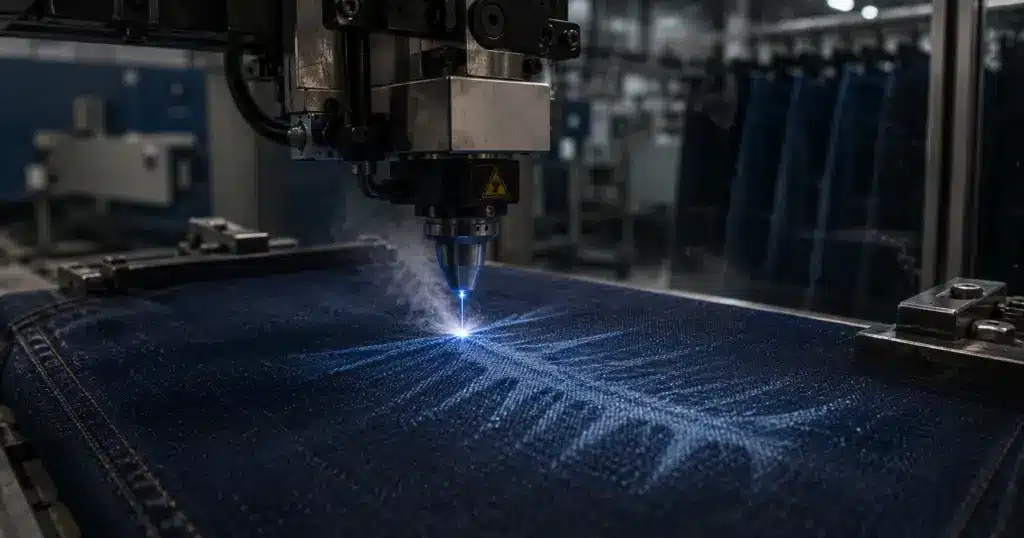
Denim PLM software is product lifecycle management software configured for jeans and denim-based apparel. Specifically, it tracks wash development, dry and wet processing stages, and lot-to-lot indigo consistency. A generic apparel PLM handles style, BOM, and cost sheet data reasonably well for a basic woven shirt. Denim PLM software, however, adds a second development track entirely: the wash recipe. A single style can pass through five or six distinct chemical and mechanical processes before it looks anything like the sample a buyer approved. As a result, each of those processes needs its own structured record, not a line in a comments field. Denim PLM software is essential for tracking this data.
This guide covers what actually separates denim development from a basic woven program. It also walks through the wash and fade data a category-specific PLM needs to hold. Finally, it covers where brands most often lose control once a wash recipe moves from a sample room into bulk production.
Understanding denim PLM software is crucial for optimizing production workflows in the denim industry. Incorporating denim PLM software can significantly enhance efficiency in managing wash recipes.
What Is Denim PLM Software?
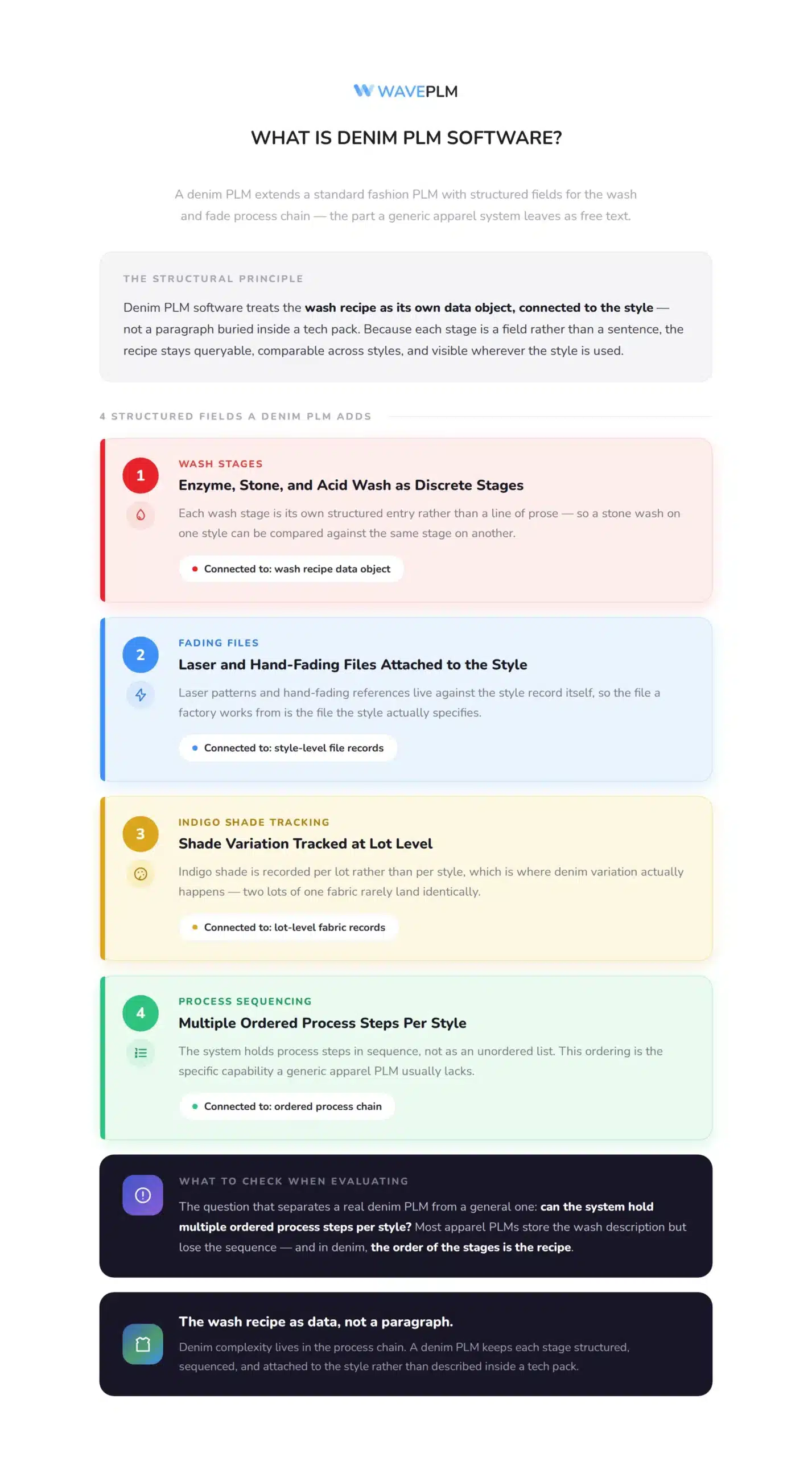
Denim PLM software extends a standard fashion PLM with structured fields for the wash and fade process chain. That specifically means enzyme, stone, and acid wash stages, laser and hand-fading files, and lot-level indigo shade tracking. In other words, it treats the wash recipe as its own data object, connected to the style, rather than a paragraph buried inside a tech pack. A brand evaluating denim PLM software should specifically check whether the system can hold multiple ordered process steps per style, since that sequencing is what a generic apparel PLM usually lacks.
The need for denim PLM software is evident in the complexity of managing various wash processes. Investing in denim PLM software can streamline the tracking of essential wash and fade processes.
What Makes Denim PLM Different From Generic Fashion PLM?
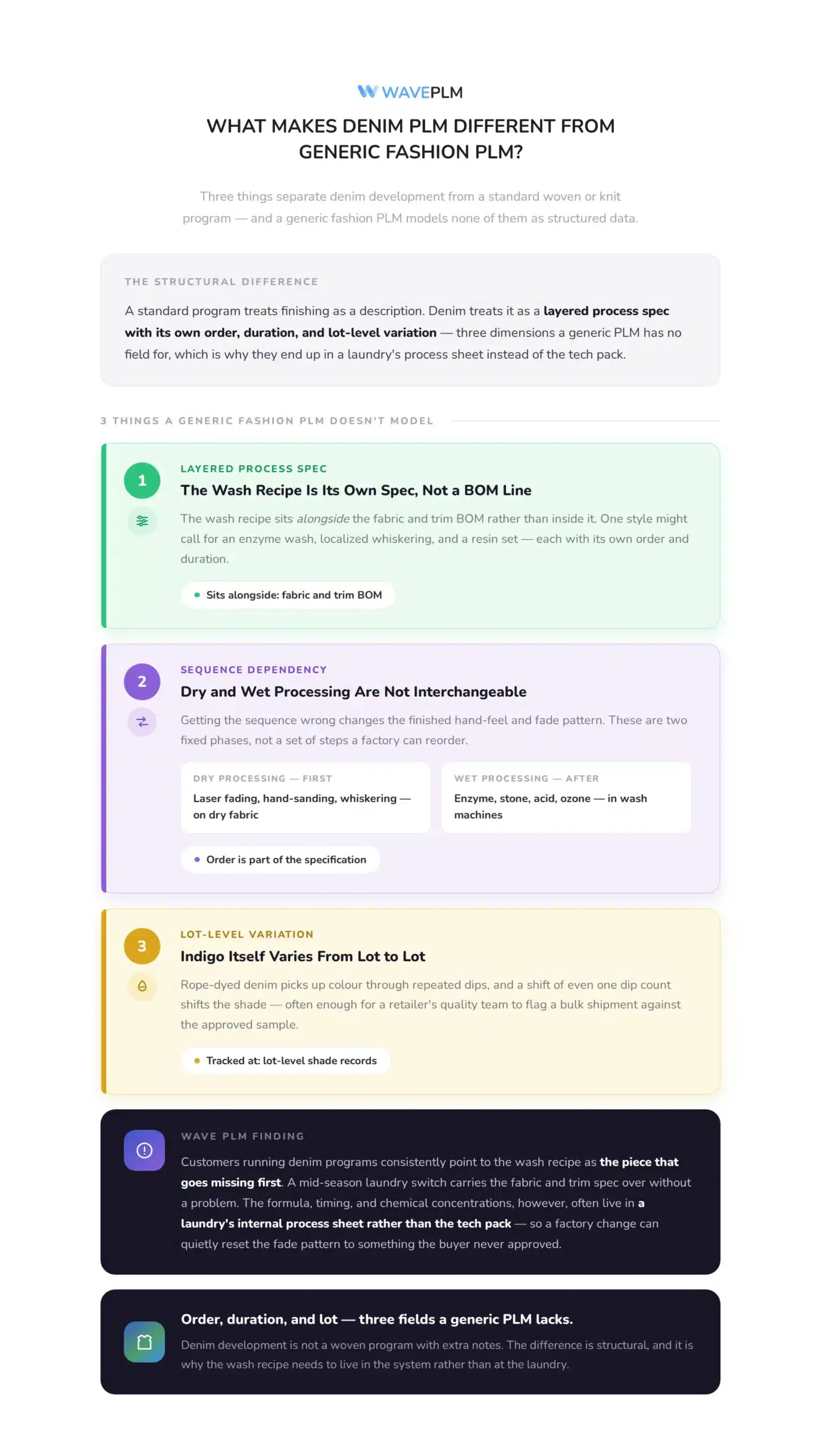
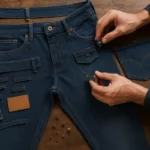
Three things separate denim development from a standard woven or knit program. First, the wash recipe is a layered process spec of its own. It sits alongside the fabric and trim BOM rather than inside it. A single style might call for an enzyme wash, localized whiskering, and a resin set, each applied in a specific order and for a specific duration. Second, dry processing and wet processing are not interchangeable steps. Laser fading, hand-sanding, and whiskering happen on dry fabric before any wash stage. Enzyme, stone, acid, and ozone treatments, by contrast, happen in wet processing machines afterward. Getting the sequence wrong changes the finished hand-feel and fade pattern. Third, indigo itself varies lot to lot. Rope-dyed denim picks up color through repeated dips, and a shift of even one dip count shifts the shade. Consequently, that small shift is often enough for a retailer’s quality team to flag a bulk shipment against the approved sample.
Brands looking to improve their operations should consider denim PLM software as a vital tool. Denim PLM software enables brands to efficiently manage their wash recipes across different production lots. The need for denim PLM software is evident in the complexity of managing various wash processes.
Our finding: Wave PLM customers running denim programs consistently point to the wash recipe as the piece that goes missing first. A laundry switch mid-season carries over the fabric spec and the trim spec without a problem. The wash formula, timing, and chemical concentrations, however, often live in a laundry’s internal process sheet rather than the tech pack, so a factory change can quietly reset the fade pattern to something the buyer never approved.
By utilizing denim PLM software, brands can avoid common pitfalls associated with wash recipe management. Denim PLM software provides the structure needed to effectively evaluate wash stages and processes.
What Wash and Fade Development Data Should Brands Track?
Brands looking to improve their operations should consider denim PLM software as a vital tool. Denim PLM software enables brands to efficiently manage their wash recipes across different production lots.
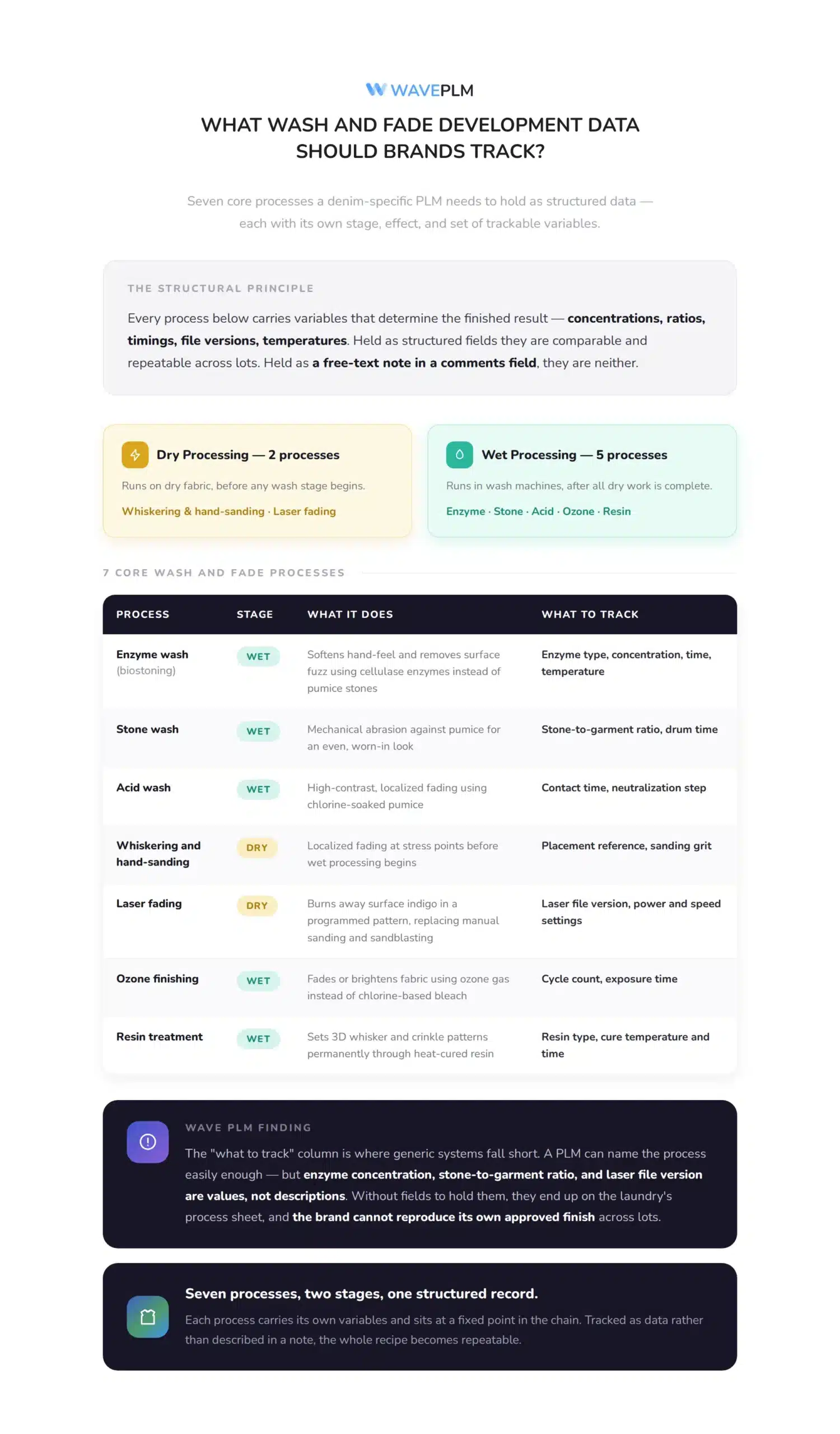
The table below maps the core wash and fade processes a denim-specific PLM needs to hold as structured data, rather than a free-text note in a comments field.
| Process | Stage | What it does | What to track |
|---|---|---|---|
| Enzyme wash (biostoning) | Wet | Softens hand-feel and removes surface fuzz using cellulase enzymes instead of pumice stones | Enzyme type, concentration, time, temperature |
| Stone wash | Wet | Mechanical abrasion against pumice for an even, worn-in look | Stone-to-garment ratio, drum time |
| Acid wash | Wet | High-contrast, localized fading using chlorine-soaked pumice | Contact time, neutralization step |
| Whiskering and hand-sanding | Dry | Localized fading at stress points before wet processing begins | Placement reference, sanding grit |
| Laser fading | Dry | Burns away surface indigo in a programmed pattern, replacing manual sanding and sandblasting | Laser file version, power/speed settings |
| Ozone finishing | Wet | Fades or brightens fabric using ozone gas instead of chlorine-based bleach | Cycle count, exposure time |
| Resin treatment | Wet | Sets 3D whisker and crinkle patterns permanently through heat-cured resin | Resin type, cure temperature and time |
Source: Industry-standard denim wet-processing methods, aggregated 2026.
Industry data: Sandblasting once produced the same distressed look laser fading now delivers, but it came at a severe human cost. A 2012 Clean Clothes Campaign report and a 2016 study in The Lancet Respiratory Medicine both documented silicosis, an incurable and sometimes fatal lung disease, among garment workers who inhaled silica dust during manual sandblasting. Levi’s, H&M, Marks & Spencer, and Versace subsequently banned the practice across their supply chains, and laser fading became the standard replacement for achieving the same distressed effect without the exposure risk. A brand’s wash-recipe records should specify laser or hand-sanding explicitly, not just “distressed,” precisely because the two processes carry very different supply chain compliance implications.
How Does Multi-Stage Wet Processing Change Denim’s BOM and Timeline?
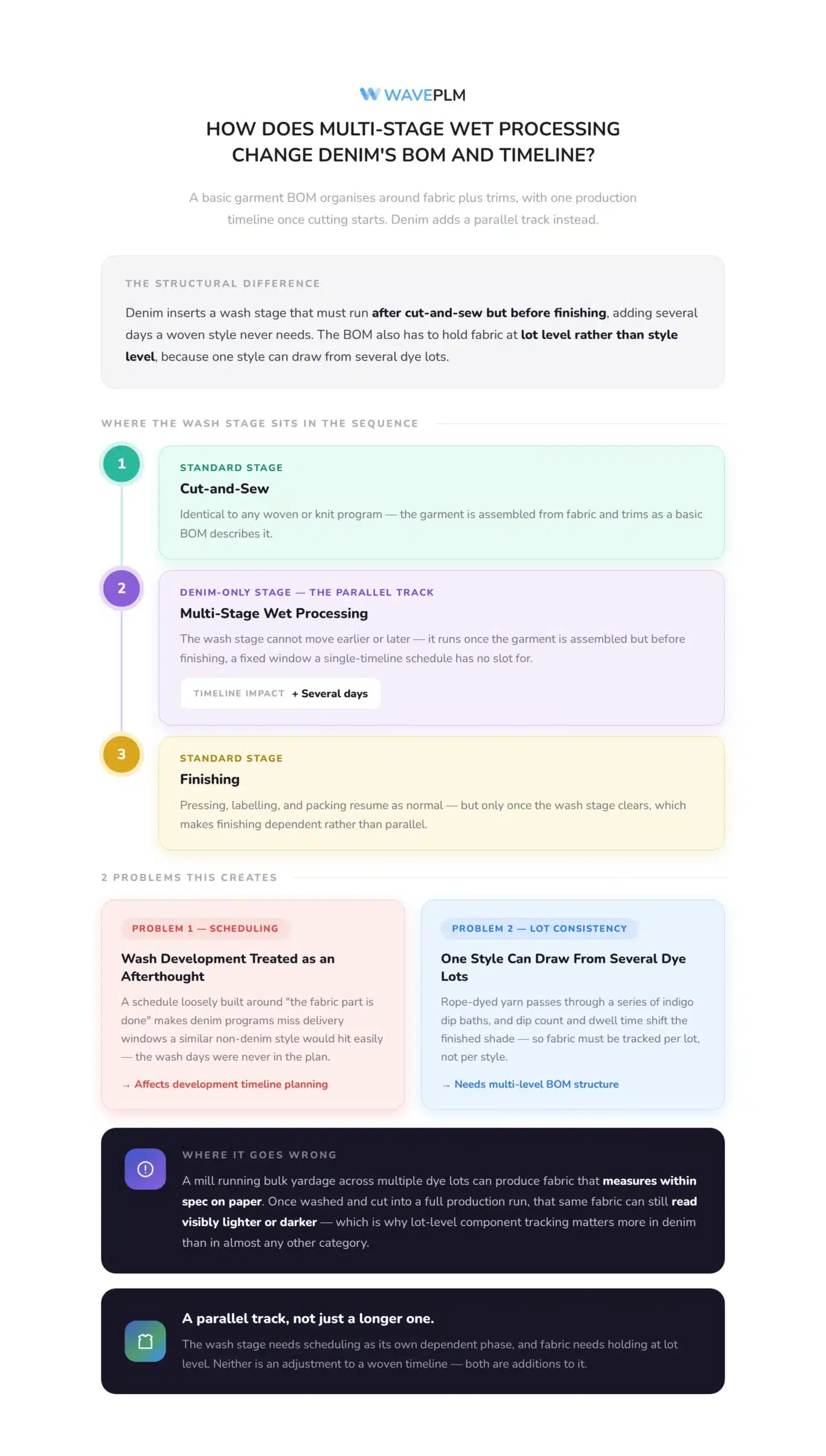
A basic garment BOM organizes around fabric plus trims, with a single production timeline once cutting starts. Denim adds a parallel track instead. The wash stage itself has to run after cut-and-sew but before finishing, and it typically adds several days to a development timeline that a simple woven style never needs. As a result, treating wash development as an afterthought causes real problems. A schedule loosely built around “the fabric part is done” makes denim programs miss delivery windows that a similar non-denim style would hit easily.
Lot-to-lot indigo consistency compounds the problem. Rope-dyed yarn passes through a series of indigo dip baths, and the exact dip count and dwell time shift the finished shade. For example, a mill running bulk yardage across multiple dye lots can produce fabric that measures within spec on paper. Once washed and cut into a full production run, that same fabric can still read visibly lighter or darker. Our guide to multi-level BOM in fashion covers the underlying component structure that makes this kind of lot-level tracking possible. Notably, denim is one of the categories that depends on it most directly, since a single style can draw fabric from several dye lots across one production run.
What Should Brands Look for When Evaluating Denim PLM Software?
Understanding the importance of denim PLM software is key to optimizing production workflows.
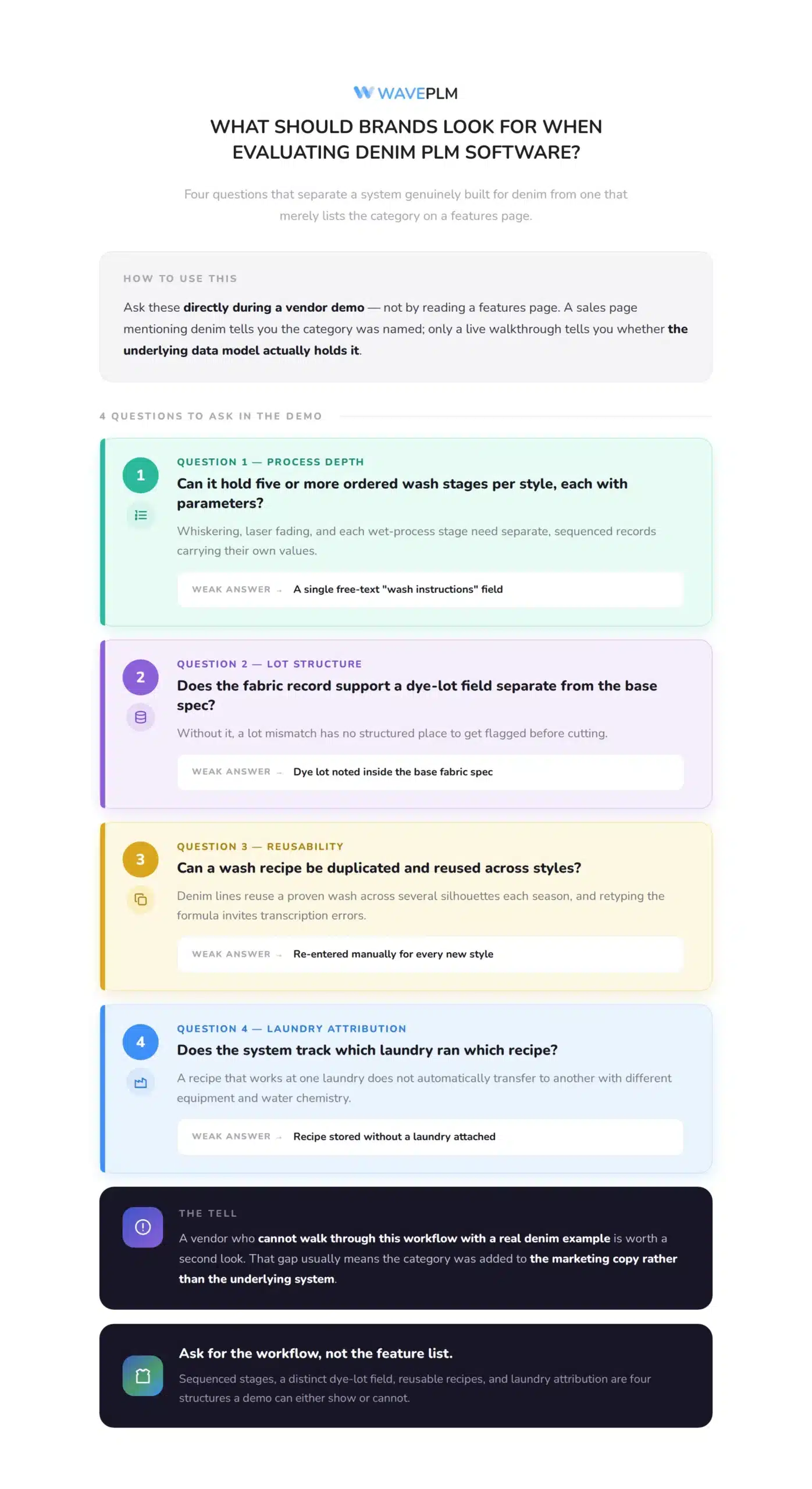
Beyond the wash-stage table above, a few evaluation questions separate a system genuinely built for denim from one that merely lists the category on a features page. Ask these directly during a vendor demo, rather than assuming a feature exists because a sales page mentions denim.
- Can the system hold five or more ordered wash stages per style, each with its own parameters? A single free-text “wash instructions” field is not the same as separate, sequenced records for whiskering, laser fading, and each wet-process stage.
- Does the fabric record support a dye-lot field distinct from the base fabric spec? Without it, a lot mismatch has no structured place to get flagged before cutting.
- Can a wash recipe be duplicated and reused across styles? Denim lines often reuse a proven wash across several silhouettes each season, and retyping the same formula invites transcription errors.
- Does the system track which laundry ran which recipe? A recipe that works at one laundry does not automatically transfer to another with different equipment and water chemistry.
A vendor who cannot walk through this workflow with a real denim example is worth a second look. That gap usually means the category was added only to the marketing copy, rather than to the underlying system.
Denim PLM software makes it easier to keep track of the various processes involved in denim production.
How Is Denim PLM Different From Outerwear or Swimwear PLM?
It helps to place denim next to the other category-specific PLM configurations a growing brand might run. Outerwear PLM centers on multi-layer construction, waterproofing, and insulation fill data. Swimwear PLM, meanwhile, centers on print placement and stretch-fabric construction around the body. Denim shares almost none of that technical fabric testing. Instead, its defining complexity sits entirely in the wash-and-fade process chain and the shade consistency that comes out of it. A brand running denim alongside outerwear or swimwear typically needs separate configuration for each category. After all, the data structure a jacket program needs bears little resemblance to what a five-pocket jean needs.
For brands, implementing denim PLM software can lead to increased efficiency in production timelines.
What Mistakes Do Brands Make Without Category-Specific Denim PLM?
Treating the Wash Recipe as a Style Note, Not Structured Data
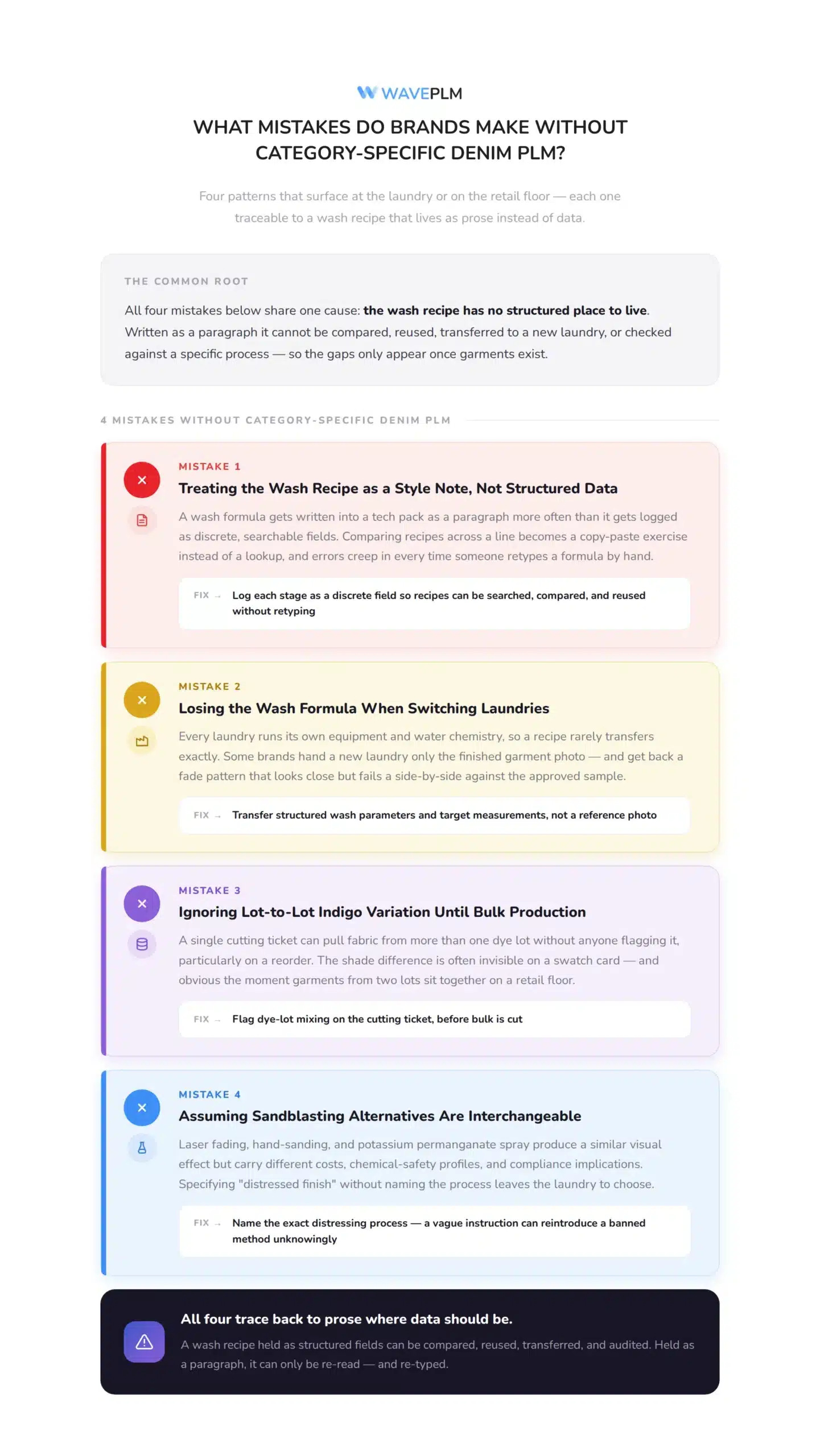
A wash formula gets written into a tech pack as a paragraph of instructions more often than it gets logged as discrete, searchable fields. As a result, comparing wash recipes across a denim line becomes a manual copy-paste exercise instead of a quick lookup. The same holds true for reusing an approved recipe on a new style. Errors creep in every time someone retypes a formula by hand.
Losing the Wash Formula When Switching Laundries
Every laundry runs its own equipment and water chemistry, so a wash recipe rarely transfers exactly. Some brands hand a new laundry only the finished garment photo, instead of the structured wash parameters and target measurements. That shortcut often gets back a fade pattern that looks close but fails a side-by-side comparison against the original approved sample.
Ignoring Lot-to-Lot Indigo Variation Until Bulk Production
Denim PLM software makes it easier to keep track of the various processes involved in denim production.
A single cutting ticket can pull fabric from more than one dye lot without anyone flagging it, particularly on a reorder. Notably, the shade difference is often invisible on a small swatch card. It becomes obvious, however, the moment finished garments from two different lots sit next to each other on a retail floor.
Assuming Sandblasting Alternatives Are Interchangeable
For brands, implementing denim PLM software can lead to increased efficiency in production timelines. Denim PLM software stands out in its ability to manage complex wash recipes effectively.
Laser fading, hand-sanding, and potassium permanganate spray all produce a similar visual distressing effect. However, they carry different cost structures, different chemical-safety profiles, and different compliance implications. Brands that specify “distressed finish” without naming the exact process leave the laundry to choose. Consequently, that vague instruction can reintroduce a banned or higher-risk method without the brand’s knowledge.
How Does Wave PLM Support Denim Development?
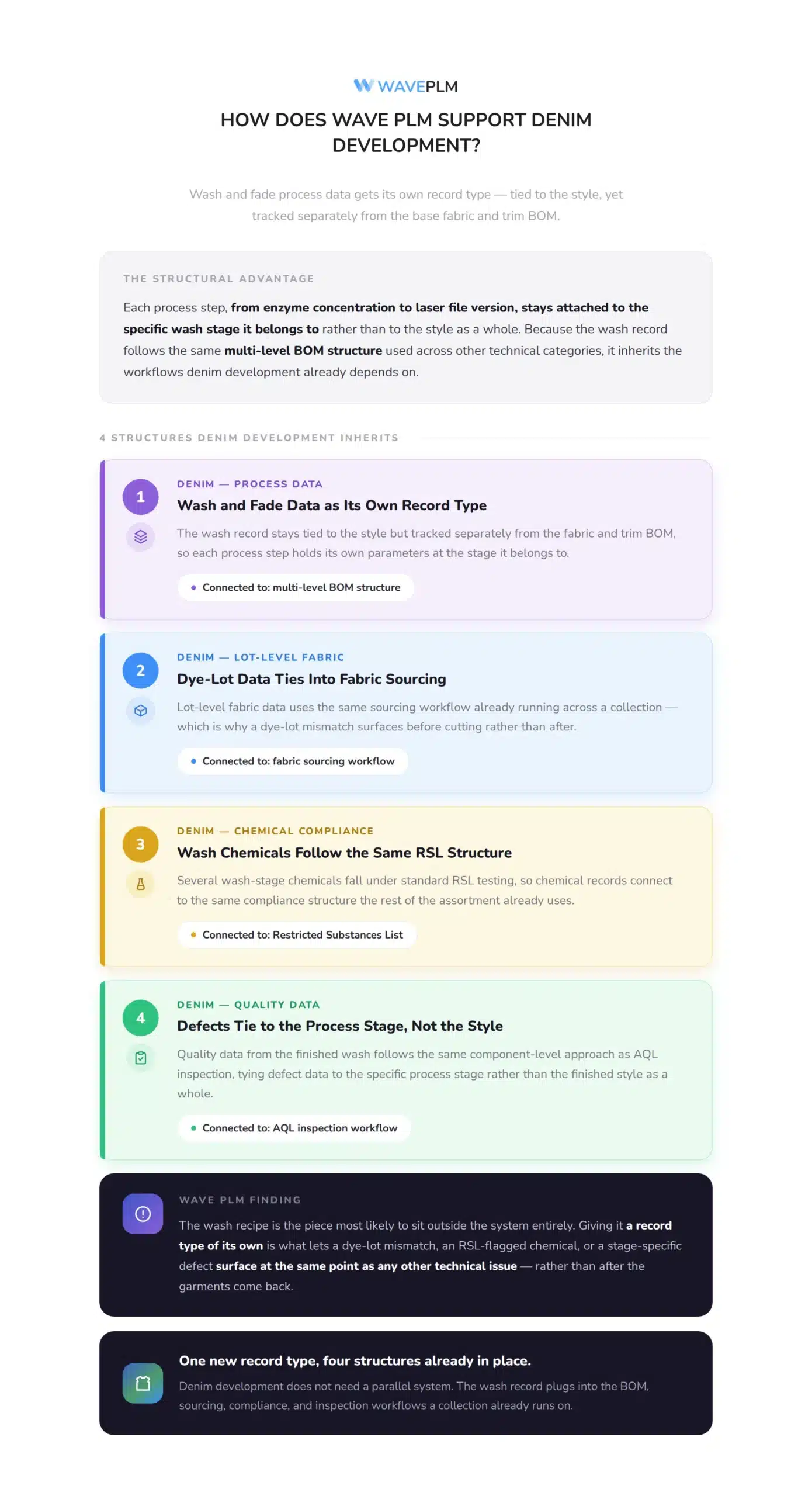
Wave PLM structures wash and fade process data as its own record type. It stays tied to the style, yet tracked separately from the base fabric and trim BOM. Each process step, from enzyme concentration to laser file version, stays attached to the specific wash stage it belongs to. This follows the same multi-level BOM structure used across other technical categories.
Lot-level fabric data, similarly, ties into the same fabric sourcing workflow already used across a collection. As a result, a dye-lot mismatch surfaces before cutting rather than after. Wash chemical records also connect to the same compliance structure covered in our Restricted Substances List guide, since several wash-stage chemicals fall under standard RSL testing. Quality data from the finished wash, in turn, follows the same component-level approach as our AQL inspection guide. That structure ties defect data to the specific process stage, rather than to the finished style as a whole.
Frequently Asked Questions
What is denim PLM software?
Denim PLM software is product lifecycle management software configured for jeans and denim-based apparel. It tracks wash development, dry and wet processing stages, and lot-to-lot indigo consistency as structured data, rather than free-text tech pack notes.
What is the difference between dry processing and wet processing in denim?
Dry processing, such as laser fading, whiskering, and hand-sanding, happens on the fabric before any wash stage. Wet processing, such as enzyme, stone, acid, and ozone treatments, happens afterward in wash machines. Running these out of sequence changes the finished hand-feel and fade pattern.
Why did brands ban sandblasting on denim?
Manual sandblasting exposed garment workers to silica dust linked to silicosis, an incurable lung disease. A 2012 Clean Clothes Campaign report and a 2016 study in The Lancet Respiratory Medicine documented the risk. Following that evidence, brands including Levi’s, H&M, Marks & Spencer, and Versace banned the practice across their supply chains.
What is laser fading in denim production?
Laser fading uses a programmed laser to burn away surface indigo pigment in a specific pattern. This produces a distressed look, but without the silica dust exposure risk of sandblasting or the labor intensity of hand-sanding.
How many wash stages does a typical pair of jeans go through?
A mid-range distressed style commonly passes through five or six distinct stages. These can include whiskering, laser fading, an enzyme wash, a stone or acid wash, and a resin set, each with its own parameters and sequence.
Does denim PLM handle stretch denim differently from rigid denim?
Yes. Stretch denim blends cotton with elastane, which changes shrinkage behavior during washing and requires its own fit and measurement tolerances, tracked separately from a rigid, 100% cotton denim style.
Can generic apparel PLM handle wash development?
A generic apparel PLM can log a wash recipe as a text note. However, it typically lacks structured fields for individual process stages, chemical concentrations, and lot-level indigo tracking. That gap makes recipes hard to reuse, compare, or transfer cleanly between laundries.
Most brands feel the gap between “the fabric is approved” and “the wash matches the sample” at the same moment. That moment usually arrives the first time a reorder pulls fabric from a new dye lot, or a program switches laundries mid-season. That is usually when a wash recipe that lived in someone’s head, or in a laundry’s internal notes, stops being reliable. See how Wave PLM structures wash and fade data for denim programs.





Leave a Reply